
Why the Best Danishes Start With the Pastry in 2026
The best danishes in 2026 start with the pastry, not the filling. A great danish is a laminated pastry: thin layers of dough and butter folded again and again until they bake into something crisp, flaky, and golden on the outside, with a soft, honeycombed crumb inside. The filling — custard, cheese, cherry, almond — should be the accent, not the rescue. This guide explains what makes a great danish, which kinds are worth your money, and how to tell a bakery danish from a factory one before you pay for it.
Key takeaways
- A great danish starts with laminated pastry: crisp, flaky layers outside and a soft, airy crumb inside.
- Real butter is the difference; a danish made with shortening tastes flat and greasy instead of rich and clean.
- The filling should sit in the centre and stay put, not slide off the pastry or soak through the base.
- Look for a deep golden colour and visible layers, and walk away from pale, doughy, or soggy danishes.
- Eat a danish the day it is baked, ideally still slightly warm, because the layers go soft within hours.
How the best danishes were judged
Every danish below was judged on five measures. Pastry quality comes first: the layers should be visible, the outside should shatter lightly, and the crumb should be soft without being doughy. Butter flavour is second, because a danish made with real butter tastes rich and clean, while one made with shortening tastes flat and leaves a greasy film. Filling quality is third: the filling should taste of what it claims to be, whether custard, cheese, or fruit, and it should be generous without overwhelming the pastry. Freshness is fourth, since a danish is at its best within a few hours of baking and fades fast after that. Value is fifth: the real cost once you compare a bakery danish with a supermarket one. The closest relative is the croissant, and our guide to the best croissants explains the shatter and the honeycombed crumb that define that pastry.
Comparison table: the best danishes in 2026
| Rank | Danish type | Best for | Watch out for |
|---|---|---|---|
| 1 | Cheese danish | Classic breakfast, coffee | Watery filling, soggy base |
| 2 | Custard danish | Sweet and creamy mornings | Runny custard, pale pastry |
| 3 | Cherry danish | Fruit lovers, afternoon tea | Syrupy filling, little fruit |
| 4 | Almond danish | Nutty flavour, longer keep | Dry paste, burnt almonds |
| 5 | Apple danish | Autumn flavour, warming spice | Mushy apple, soggy centre |
| 6 | Cinnamon danish | Spiced sweetness, winter | Too sweet, dry pastry |
The best danishes in 2026
1. Cheese danish: the classic worth judging a bakery by
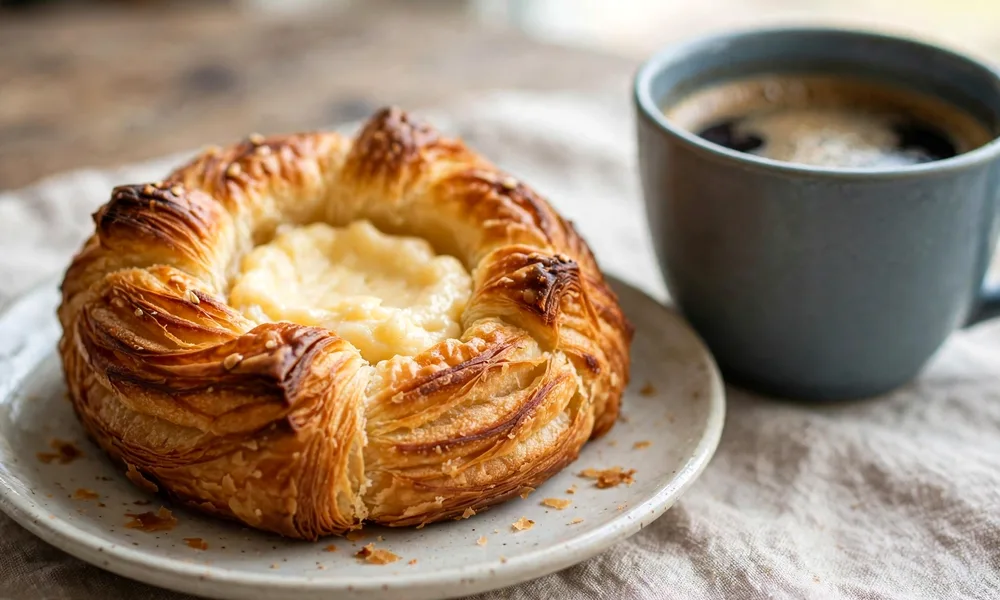
The cheese danish is the simplest danish and the hardest to get right, which is why it is the best test of a bakery. It is a round of laminated pastry with a spoonful of sweetened cream cheese in the centre, sometimes with a little lemon zest or vanilla, baked until the pastry is golden and the filling is just set. A good cheese danish has a crisp, flaky edge, a soft centre, and a filling that tastes of cream cheese rather than sugar. It is the danish most people order with coffee, and the one most often done badly.
2. Custard danish: the creamiest danish
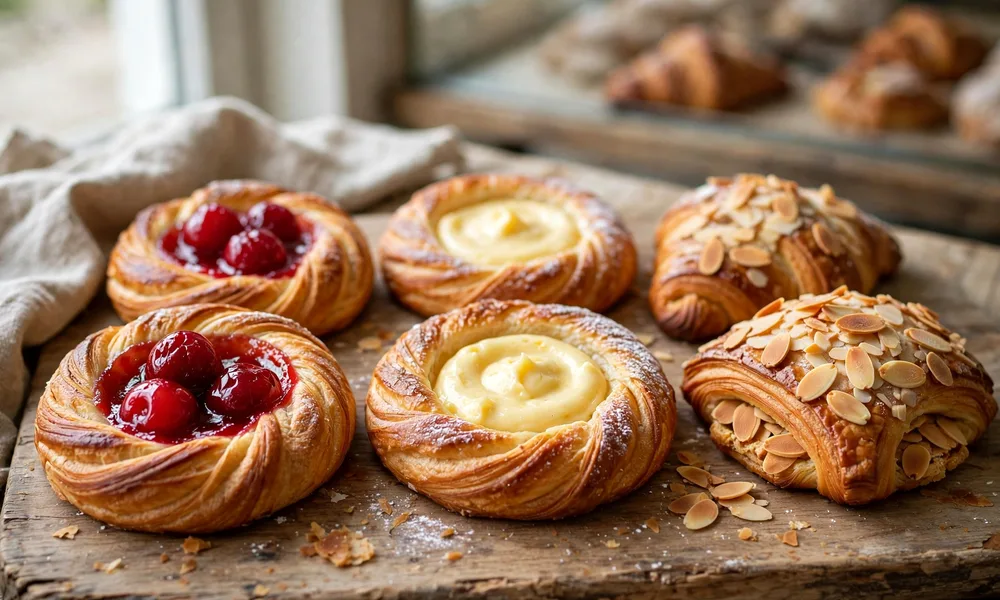
The custard danish is the richest of the classic danishes, with a spoonful of vanilla custard or crème pâtissière sitting in the middle of the pastry, sometimes under a thin apricot glaze. A good one is a study in contrast: crisp, buttery pastry on the outside, cool and creamy custard in the middle, and a glaze that adds shine without adding much sweetness. The custard should be thick enough to hold its shape, with a clean vanilla flavour and a pale gold colour, not a bright yellow that comes from colouring rather than eggs.

3. Cherry danish: the best fruit danish
The cherry danish is the best of the fruit danishes, and the most honest about its filling. It is a round of laminated pastry topped with a spoonful of cherry filling, usually sour cherries in a light syrup, with a lattice or a pinwheel of pastry over the top. A good cherry danish balances the tartness of the fruit against the sweetness of the pastry, so the first bite is bright and fruity rather than simply sweet. The cherries should be whole and visible, not a red jelly with a cherry flavour added.
4. Almond danish: the nuttiest danish
The almond danish is the longest-keeping of the classic danishes, and the most forgiving. It is a strip or a twist of laminated pastry filled with almond paste, often topped with flaked almonds and a light sugar glaze. The almond paste should taste of almonds, slightly sweet and a little bitter, with a texture that is smooth without being greasy. A good almond danish is golden and crisp on the outside, with a filling that stays moist for a day, which is why it is the danish most often sold in supermarkets and still worth buying.
5. Apple danish: the best autumn danish
The apple danish is a seasonal favourite, with a filling of sliced or diced apple, often with cinnamon and a little sugar, folded into laminated pastry. A good apple danish tastes of the fruit first and the spice second: the apple should still have some bite, the cinnamon should be a background note rather than the main flavour, and the pastry should be crisp underneath the filling. It is the danish that most rewards a bakery that cooks its own filling, because a filling made from fresh apples tastes entirely different from one made from a tin.
6. Cinnamon danish: the sweetest spiced danish
The cinnamon danish is the sweetest of the spiced danishes, with a swirl of cinnamon sugar through the laminated pastry, sometimes with a little icing on top. It is the closest danish to a cinnamon roll, but the pastry makes it different: a danish is flaky and crisp where a roll is soft and doughy, and the cinnamon is a layer rather than the whole point. A good cinnamon danish is golden and crisp, with a visible swirl of spice and a sweetness that comes from the sugar rather than from icing.
What makes a danish great: the pastry test
The first test is the layers. Break a danish open and look at the edge. You should see distinct, thin layers of pastry, golden and separate, with small pockets of air between them. If the pastry looks solid and doughy, the lamination was rushed or the butter was too warm when it was folded, and the layers melted into each other before they could bake. That is also why a danish made with real butter tastes so different: butter melts and steams in the oven, lifting the layers apart, while shortening stays greasy and flat. A danish that tastes of nothing but sweetness was probably made with the wrong fat.
The second test is the base. Turn the danish over and look underneath. The base should be golden and crisp, not pale and soft, and it should hold its shape when you pick the danish up. A soggy base means the filling was too wet, the pastry was underbaked, or the danish sat too long after baking. A bakery danish baked in a small batch keeps its base crisp.
The third test is the filling, and it is the one most people notice last and remember longest. A great filling tastes of what it claims to be, whether custard, cheese, cherry, or almond, and it sits in the centre of the pastry rather than sliding off the sides. The other morning pastries make the same point in their own way: our guide to the best muffins shows how a filling or a topping should complement a bake rather than hide it, and our guide to the best scones makes the same case for a tender crumb that stands on its own. Taste the pastry first, then the filling, and judge whether the two work together or whether one is covering for the other.
What to avoid when buying danishes
The most common danish regret is not a bad danish but a stale one. A danish is at its best within a few hours of baking, and it fades fast after that: the layers go soft, the glaze turns sticky, and the filling starts to soak through the base. Avoid the trap by buying from a bakery that bakes in small batches through the morning, and by asking when the danishes were baked. A bakery that cannot answer, or one where the danishes have clearly sat all day, is not worth your money.
At home, the avoidable mistakes are simpler. Do not refrigerate a danish overnight unless you have to, because the cold makes the pastry go leathery and the filling dull. If you must keep one, warm it in a hot oven for three or four minutes rather than a microwave, which steams the pastry soft. Skip any danish whose filling has slid to one side. And do not judge a danish by its shine: a thick, glossy glaze often hides a pale, doughy pastry underneath.
Checklist: choosing a great danish
- Look for visible, distinct layers of golden pastry, crisp outside and soft inside, never pale or doughy.
- Turn it over and check the base: golden and crisp, holding its shape, never pale, soft, or soggy.
- Taste the pastry first, before the filling, and walk away if it tastes flat, greasy, or of nothing at all.
- Check the filling sits in the centre and stays put, tasting of what it claims to be rather than just sugar.
- Ask when it was baked, and choose a danish baked that morning over one that has sat in a display case all day.
- Eat it the day you buy it, because the layers go soft within hours.
Frequently asked questions
What is the difference between a danish and a croissant?
A croissant is an unfilled laminated pastry that shatters when you break it, while a danish is a filled laminated pastry with a sweet filling in the centre. Both use butter and layers, but a danish is judged on its pastry and its filling together, while a croissant is judged on the pastry alone.
Why do danishes go soggy so quickly?
The filling is wet, and the pastry is thin. Once the danish cools, moisture from the filling moves into the pastry and the base softens. Eat it the day it is baked.
Should a danish be eaten warm?
Ideally, yes, or at least at room temperature on the day it was baked. A danish that is still slightly warm has crisp layers and a filling that tastes fresh.
What is the best danish filling?
Cheese is the classic and the best test of a bakery, custard is the creamiest, cherry is the best fruit, and almond is the longest-keeping. The best filling is the one that tastes of what it claims to be and stays in the centre of the pastry rather than sliding off.
Are supermarket danishes worth buying?
The best ones are, especially almond danishes, which hold their texture overnight. Warm them in a hot oven and eat them the same day.
How do I keep a danish fresh overnight?
Keep it in a paper bag at room temperature rather than in the fridge, and warm it in a hot oven for three or four minutes before eating.
Bottom line
The best danishes in 2026 start with the pastry: crisp, flaky layers made with real butter, a golden base that holds its shape, and a filling that sits in the centre and tastes of what it claims to be. Each kind suits a different morning. Buy them the day they are baked, eat them while the layers are still crisp, and the pastry will tell you everything you need to know.


