
A Guide to Buying Carrot Juice in 2026
Buying carrot juice in 2026 is simpler than the chilled aisle makes it look, but only once you know what to ignore. The best carrot juice tastes like a carrot, not like a sweet drink with a carrot on the label. It is bright orange, a little thick, and sweet in a gentle earthy way. This guide explains how the main types differ, how to read a label, and how to tell a juice worth buying from one worth leaving on the shelf.
Carrot juice is the liquid pressed from carrots, with the pulp and most of the fibre removed. That sounds simple, and it is, but the bottle in your hand may contain pure pressed carrots, carrots mixed with apple or orange, carrots that were concentrated and watered down again, or a sweetened drink that is mostly water with a splash of carrot for colour. All four are sold as carrot juice, and they are not the same drink.
Key takeaways
- Buy juice listing carrots first, with nothing you would not add yourself: carrots, and perhaps a little lemon or ginger.
- A small glass of about 150 ml is the sensible serving: carrot juice is naturally sweet, so a pint glass is too much.
- Cold-pressed juice tastes freshest, but it costs more and goes off faster than pasteurised juice.
- Cloudy juice is the honest sign: clear carrot juice has usually been filtered hard, and it tastes thinner for it.
- Keep opened juice in the fridge, shake it before pouring, and finish it within three to five days.
How the best carrot juices were chosen
Every type below was judged on five measures. Taste comes first: sweet carrots, a gentle earthy note, no metallic edge and no sour tang. Texture is second, because a good carrot juice is thick and smooth, not watery and not gritty. The label is third: carrots first, and a short list beats a long one. Freshness is fourth, since the best juice tastes pressed this week, not stored for months. Value is fifth: a dearer juice that tastes like real carrots beats a cheap one tasting of sweetened water.
One note before the list. Carrot juice is a drink, not a meal, and it is judged here as one. It will not replace eating vegetables, and no bottle should claim otherwise. What it can do is give you the flavour of fresh carrots in a small glass with breakfast, or as part of a meal, without any cooking at all. The same label rules apply in our guide to the best fresh juices, which covers the wider aisle from orange and apple to pomegranate.
Comparison table: the best carrot juices 2026
| Rank | Juice type | Best for | Watch out for |
|---|---|---|---|
| 1 | 100% cold-pressed carrot juice | The freshest flavour | Short shelf life, high price |
| 2 | 100% pasteurised carrot juice | Everyday drinking | Flavour slightly duller than fresh |
| 3 | Carrot and apple juice | A sweeter, softer glass | Apple can hide thin carrots |
| 4 | Carrot, orange and ginger juice | Brunch and bright mornings | Ginger can overpower the carrot |
| 5 | Carrot juice from concentrate | Value and long storage | Flatter flavour, check the label |
| 6 | Carrot juice blends | Variety and lighter taste | Carrot may be a small share |
| 7 | Carrot juice drinks | An occasional sweet drink | Mostly water and sugar |
The best carrot juices in 2026
1. 100% cold-pressed carrot juice: the freshest flavour
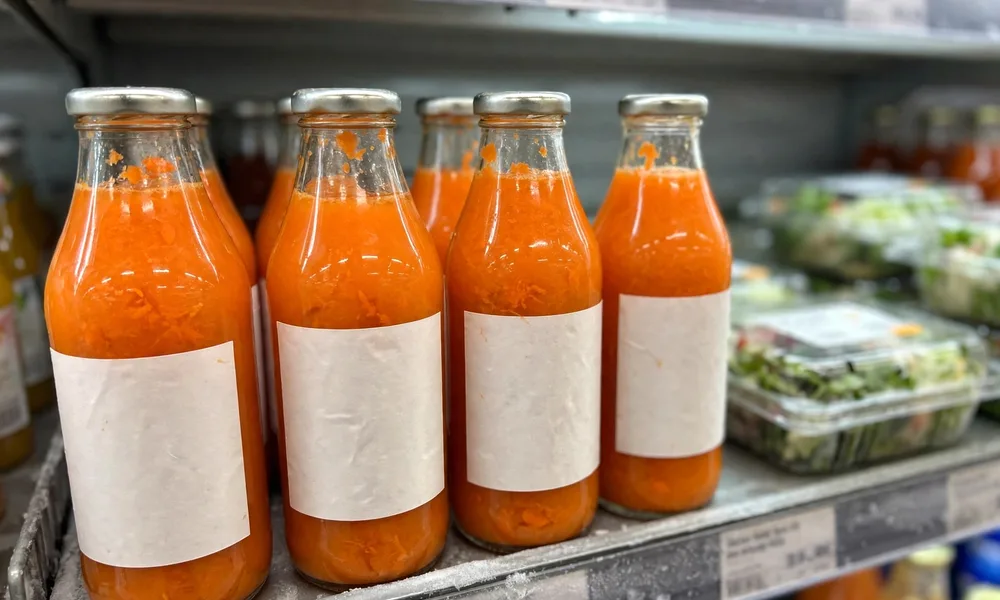
Cold-pressed carrot juice is made by crushing carrots and pressing them slowly under high pressure, without heat. On flavour, it earns its price: it tastes noticeably closer to a freshly pulled carrot than any pasteurised carton does, with a sweet earthy depth and a thick, almost creamy body. The colour is a deep, cloudy orange, and the juice separates as it sits, which is a sign of real juice, not a fault. The downside is price and shelf life. It costs two to three times as much as ordinary juice, must be kept refrigerated, and goes off within a few days.
2. 100% pasteurised carrot juice: the best everyday buy
Pasteurised carrot juice is heated briefly to kill bacteria and yeasts, which makes it safe to keep for weeks or months unopened. The heating changes the flavour slightly and dulls the brightest notes, but the juice is still made from carrots, still tastes sweet and earthy, and costs a fraction of the cold-pressed price. For most households, this is the practical choice: it waits in the cupboard until you need it, pours the same every morning, and works out far cheaper per glass. Choose a bottle that lists only carrots, and perhaps a little lemon juice.
3. Carrot and apple juice: the sweeter, softer glass
Carrot and apple is the most common blend on the shelf, and it works because the two flavours suit each other. Apple softens the earthiness of the carrot and adds a bright sweetness, so the glass tastes rounder and gentler than pure carrot juice. The trap is proportion. A blend that is mostly apple with a little carrot is an apple juice with an orange tint, so check the order on the ingredients list. Carrots should come first, or at least close to it, and the juice content should be 100 percent.
4. Carrot, orange and ginger juice: the bright morning glass
Carrot, orange and ginger is the liveliest bottle in the aisle. Orange lifts the sweetness and adds a sharp citrus edge, while ginger brings a warm bite that wakes the whole glass up. It is the best choice for brunch, or for a morning when plain carrot juice feels too quiet. The balance matters more here than in any other type. Too much ginger and the drink burns; too much orange and the carrot disappears altogether. A good bottle lets you taste all three in turn: carrot first, orange second, ginger as a finish.
5. Carrot juice from concentrate: the value buy
Juice from concentrate is still 100 percent juice, and it deserves a fair hearing. To make it, the juice is heated gently to evaporate most of the water, which makes it cheap to ship and store, and then water is added back at the bottling plant. The process dulls the flavour a little, but the sugar is the carrot’s own, and no sugar is added. It is the sensible everyday choice: cheaper than fresh-pressed juice, available all year, and perfectly good at breakfast. Check that the label says 100 percent juice and lists no added sugar.
6. Carrot juice blends: variety, with a check
Blends mix carrot with other vegetables and fruits: beetroot, celery, cucumber, mango, pineapple and more. The best of them are genuinely good drinks, and they suit people who want variety without buying five bottles. The risk is the same as with any blend: carrot may be a small share of a bottle that wears a carrot on the front. Read the ingredients list, not the picture. If carrot is third or fourth, you are buying the other juice, and you should judge the bottle on that instead.
7. Carrot juice drinks: an occasional sweet drink
A carrot juice drink is not the same as carrot juice, and the name is the giveaway. It is mostly water and sugar, with a splash of carrot juice for flavour and colour, and sometimes added flavourings. The label will show water or sugar first, and the juice content may be as low as 10 or 25 percent. Treat it like a squash, not like a juice, and keep it for the times you want something sweet rather than something fresh.
What to avoid when buying carrot juice
The most common carrot juice regret is not a bad bottle but a wrong match: a sweetened drink bought as a health habit, a cold-pressed bottle left to go off in the fridge, or a large bottle bought for one person that never gets finished. Avoid the trap by checking three things before you pay: the ingredients list, with carrots first and no added sugar; the use-by date, especially on cold-pressed juice; and the size, bought to finish within a few days of opening. The same checks work for other juices too, and our guide to the best tomato juices makes the same point about short labels and small glasses, because the traps are the same everywhere.
Two more things to watch. First, do not be fooled by a cloudy bottle that is cloudy because it was shaken badly, or a clear bottle sold as premium. Cloudy is normal for real carrot juice, but it should settle into layers, not look like a milkshake. Second, watch the sugar. Carrot juice is naturally sweet, and a 150 ml glass holds about 12 grams of natural sugar, roughly the same as a small apple.

Checklist: buying carrot juice
- Look for 100 percent juice on the front label, and check the ingredients list backs it up.
- Put carrots first: if water, sugar or apple comes before carrots, you are buying a different drink.
- Prefer cloudy juice over clear, because it keeps more of the carrot’s natural body and flavour.
- Check the use-by date and pick the freshest bottle, especially for cold-pressed juice.
- Buy the size you will finish in a few days, as opened juice goes off quickly.
- Pour a small glass of 150 ml, drink it with a meal, and shake the bottle before pouring.
Frequently asked questions
Is carrot juice healthy?
Carrot juice is nutritious in small amounts, with vitamin A from beta-carotene and potassium from real carrots. But it is concentrated natural sugar with almost no fibre, so a small glass of 150 ml is sensible, and eating whole carrots is always better.
Is juice from concentrate as good as fresh-pressed carrot juice?
It is still 100 percent juice with no added sugar, and a perfectly good everyday choice. Fresh-pressed juice tastes brighter and thicker, but from-concentrate juice is cheaper, keeps longer, and is available all year round.
What is the difference between carrot juice and a carrot smoothie?
Juice is the liquid pressed from carrots with the pulp and fibre removed. A smoothie blends the whole carrot, so it keeps all the fibre and is thicker and more filling. They are different drinks, and a smoothie needs a blender, not a juicer.
How long does carrot juice last in the fridge?
Fresh-pressed and cold-pressed juice last three to five days once opened, and pasteurised juice lasts five to seven days. Keep the bottle sealed and refrigerated, and throw it away if it smells sour or tastes fizzy.
Can I drink carrot juice every day?
Yes, a small glass of 150 ml a day is reasonable for most adults, ideally with a meal. Diluting it with sparkling water lets you enjoy it more often with less sugar, and water should always be your main drink.
Should I make carrot juice at home instead of buying it?
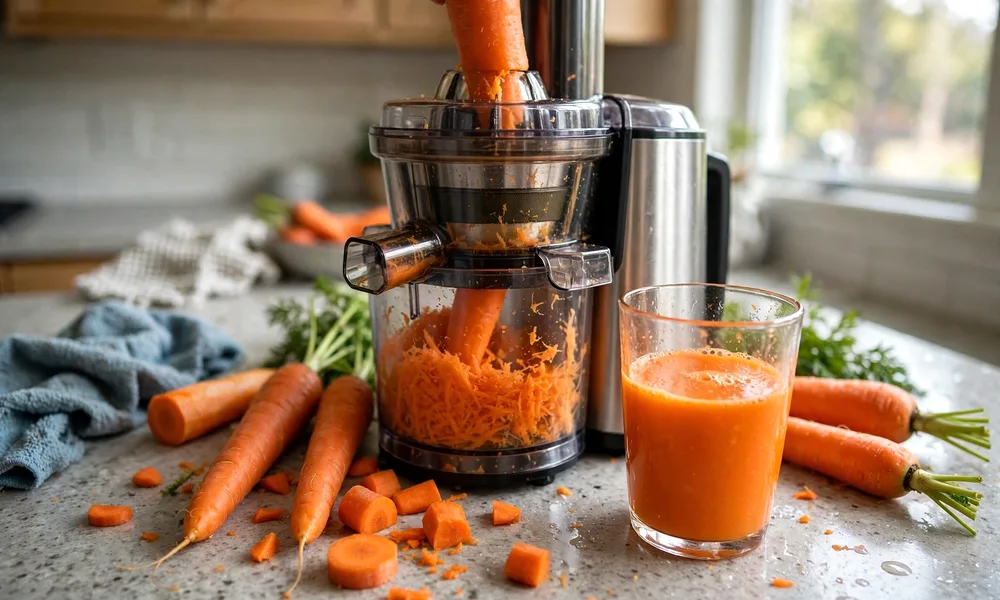
Making it at home gives you the freshest flavour and full control over the ingredients, but it costs more in carrots and time than buying a bottle. Our guide to the best juicers covers the machines, and a slow masticating juicer handles carrots best, though a centrifugal juicer is faster and cheaper.
Bottom line
The best carrot juice in 2026 is the one that tastes like a carrot: 100 percent juice, carrots first on the label, cloudy rather than clear, poured in a small glass and drunk with a meal. Choose cold-pressed for the freshest flavour, pasteurised for everyday value, and from concentrate when you want the cheapest honest bottle. Avoid juice drinks that are mostly water and sugar, and buy a size you will finish in a few days.


