
The best juicers in 2026 turn fresh fruit and vegetables into a glass of juice in minutes, and the difference between a good juicer and a bad one shows up in the very first glass. A good juicer extracts more juice from the same produce, leaves the pulp dry, and cleans up in minutes. A bad one wastes half your fruit, clogs on leafy greens, and ends up gathering dust in a cupboard. The choice comes down to two types of machine, and picking the right one depends on what you juice, how often, and how much patience you have for cleaning.
Juicers are judged on four things: juice yield, the range of produce they handle, noise, and cleanup. A centrifugal juicer is fast and cheap but struggles with greens and wastes more produce. A slow masticating juicer is quieter, extracts more, and handles everything from wheatgrass to carrots, but costs more and works more slowly. This guide compares the strongest options across both types and every budget, with honest advice on what each one does well, what it demands from you, and how to choose the juicer that fits your kitchen and your mornings.
Key Takeaways
- Match the juicer to what you juice most: centrifugal for apples and carrots, masticating for leafy greens and wheatgrass.
- Juice yield matters more than wattage: a good masticating juicer extracts up to a third more juice from the same produce.
- A wide feed chute saves more time than any other feature, because it removes the chopping step.
- Cleanup decides whether you keep juicing: dishwasher-safe parts and a cleaning brush are essential.
- Budget for produce as well as the machine, because a daily juicing habit costs more in fruit and vegetables than in the juicer itself.
How to Choose the Right Juicer
Before you compare models, answer one question honestly: what will you juice most often? If the answer is apples, oranges and carrots for a quick morning glass, a centrifugal juicer is fast, cheap, and perfectly good. If the answer is kale, spinach, celery and wheatgrass, a masticating juicer is the only type that handles them well.
Centrifugal vs Masticating: The Core Choice
A centrifugal juicer spins a flat blade at very high speed, shredding the produce and flinging the juice out through a fine mesh. It works in seconds, takes whole fruit through a wide chute, and costs $80 to $200. A masticating juicer crushes and presses the produce slowly with an auger, squeezing out more juice with less foam. It costs $200 to $500 and handles leafy greens, herbs and wheatgrass that a centrifugal machine barely touches.

Best Centrifugal Juicers
Centrifugal juicers are the choice for people who want a quick glass of juice with no fuss. They are the fastest juicers on the market, they take whole apples and halved oranges through a wide feed chute, and they cost far less than masticating machines. The trade is yield and range: they waste more produce, they struggle with leafy greens, and the juice oxidises faster, so it should be drunk within minutes rather than stored.
What to Look For
Look for a feed chute at least three inches wide, which takes whole apples and removes the chopping step, and two speed settings, so you can run soft fruit slowly and hard vegetables fast. A pulp container large enough for a full batch matters more than it sounds, because stopping to empty it mid-recipe is annoying. A juice jug with a foam separator and a pouring spout keeps the drink smooth. Budget between $80 and $200 for a good centrifugal juicer, and check that the mesh filter and parts are dishwasher-safe, because hand-washing a fine mesh every morning is the fastest way to stop juicing.
Who They Suit Best
Centrifugal juicers suit people who juice two or three times a week, mainly with hard fruit and root vegetables, and who want the whole job done in five minutes. They are a poor choice for a daily green-juice habit, because the yield on greens is low and the pulp stays wet. If you want a fast orange and carrot juice before work, and you are willing to drink it immediately, this is the simplest and cheapest way to start. If you want to compare the wider world of blended drinks, our guide to the best smoothie blenders for home in 2026 covers the machines that keep the fibre in.
Best Masticating Juicers
Masticating juicers are the choice for people who juice every day and want the most from their produce. They work slowly and quietly, extract more juice from everything, and handle leafy greens, herbs, wheatgrass and soft fruit that centrifugal machines struggle with. The juice also keeps longer, staying fresh in the fridge for a day rather than minutes, because the slow pressing introduces less air. They cost more, usually $200 to $500, and they need produce cut into smaller pieces, but for a serious juicing habit they are the better machine by far.

What to Look For
Look for a slow speed, around 40 to 80 revolutions per minute, which extracts well without heating the juice. A reverse function is worth having, because it clears jams without taking the machine apart. Check the feed chute and the auger: a wider chute means less chopping, and a good auger handles fibrous celery without clogging. Budget $200 to $500, and buy from a brand with a long motor warranty.
Who They Suit Best
Masticating juicers suit daily juicers, green-juice drinkers, and anyone who buys organic produce and wants the most from every dollar spent on it. They also suit households where someone juices while others sleep, because they run quietly. They are a poor choice if you only juice occasionally, because the slower pace and higher price do not pay off for a weekly glass. If you juice every morning and you care about yield, this is where the best home juice lives.
Best Budget Juicers
A good budget juicer costs $80 to $150 and makes a far better drink than its price suggests, as long as you use it for the right produce. The compromises at this price are real but manageable: smaller pulp containers, noisier motors, and simpler construction. What matters is a wide feed chute, a mesh filter that is easy to clean, and a machine you will actually use.
Best Juicers for Small Kitchens
Juicers are bulky, and counter space is the most valuable surface in a home kitchen. Before you buy, measure the space where the machine will live and the height under your cupboards, because a tall juicer that does not fit under a cabinet will live on the counter forever or in a cupboard forever. Compact centrifugal juicers and vertical masticating juicers take up the least space.
Storage and Counter Space
If counter space is tight, choose a vertical masticating juicer or a compact centrifugal model, and store the pulp container separately. A machine that lives in a cupboard gets used far less than one that lives on the counter, so the honest question is whether you have a permanent home for it. If the answer is no, think twice before buying any juicer. Our guide to the worst kitchen gadgets that waste counter space names the appliances that earn their square footage and the ones that do not, and it is worth reading before a juicer joins your worktop.
Juice Recipes and Ingredients Worth Trying
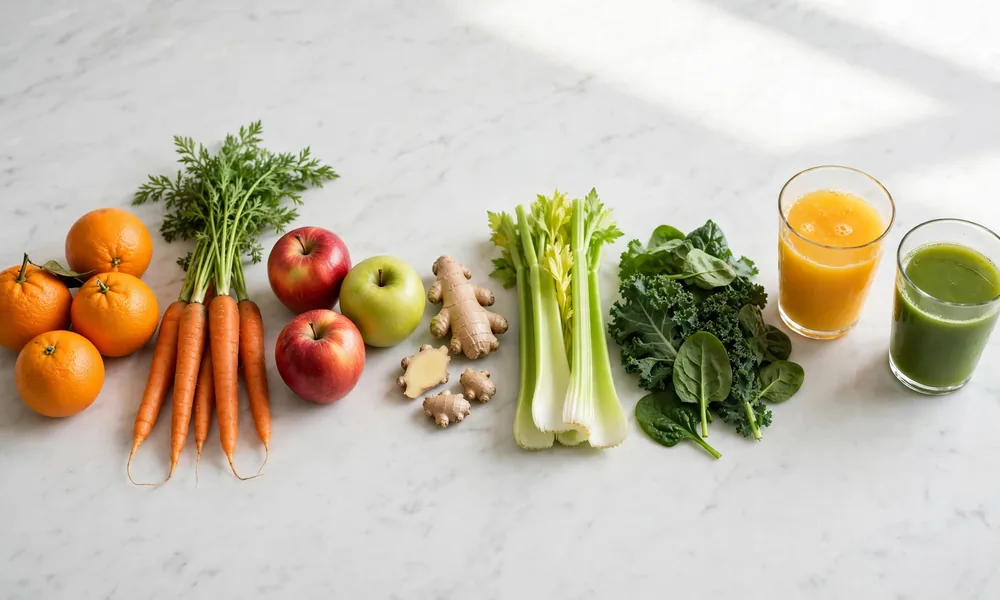
The best juice recipes are simple: three or four ingredients, one of them sweet, one of them fresh. A classic morning juice is orange, carrot and ginger. A green juice is cucumber, celery, apple and a handful of spinach. Start with recipes that use produce you already buy, and add one new ingredient at a time.
What to Juice and What to Skip
Apples, oranges, carrots, cucumbers, celery and beets juice beautifully and give a high yield. Leafy greens juice well in a masticating machine and poorly in a centrifugal one. Bananas, avocados and mangoes do not juice at all: they belong in a blender. Ginger and lemon add brightness in small amounts. Fresh juice is also the secret ingredient in a good home bar, and our guide to the best home bar essentials for 2026 shows how fresh citrus juice transforms cocktails and mocktails alike.
Best Juicers Compared
| Juicer Type | Best For | Typical Price | Juice Yield |
|---|---|---|---|
| Centrifugal | Quick morning juice, hard fruit | $80–$200 | Good on hard produce |
| Masticating, vertical | Daily juicing, small kitchens | $200–$400 | High, all produce |
| Masticating, horizontal | Greens, wheatgrass, sorbets | $250–$500 | Highest, all produce |
| Citrus press | Oranges, lemons, grapefruit only | $40–$150 | Excellent on citrus |
| Budget centrifugal | First-time buyers | $80–$150 | Good on hard produce |
| Cold press, premium | Daily green juice, families | $400–$600 | Highest, all produce |
Juicer Buying Checklist
- Decide what you will juice most often before you compare models, and let that decide the type.
- Check the feed chute width: three inches or more takes whole apples and removes the chopping step.
- Compare juice yield, not wattage, and check that the pulp comes out dry and crumbly.
- Choose dishwasher-safe parts and a cleaning brush, because cleanup decides whether you keep juicing.
- Measure your counter space and the height under your cupboards before you order.
- Budget for fresh produce as well as the machine, because a daily habit costs more in fruit than in the juicer.
Frequently Asked Questions
Which type of juicer is best for beginners?
A centrifugal juicer is the best choice for most beginners. It is fast, affordable, and takes whole fruit through a wide chute, so the first glass takes five minutes. If you already know you will juice leafy greens every day, skip straight to a masticating juicer instead.
Is a masticating juicer worth the extra money?
Yes, if you juice daily or juice leafy greens. A masticating juicer extracts up to a third more juice from the same produce, handles greens and wheatgrass, runs quietly, and the juice keeps for a day in the fridge. For occasional juicing with hard fruit, the extra cost does not pay off.
How long does fresh juice last?
Juice from a centrifugal juicer should be drunk within minutes, because the fast spinning introduces air that oxidises it quickly. Juice from a masticating juicer keeps for up to 24 hours in a sealed container in the fridge, though it is always best fresh.
Can I juice leafy greens in a centrifugal juicer?
You can, but the yield is poor. Leafy greens need the slow crushing action of a masticating juicer to release their juice. In a centrifugal machine, wrap the greens tightly around a hard fruit like an apple or carrot to help push them through, but expect a modest yield.
How do I clean a juicer quickly?
Rinse the parts immediately after juicing, before the pulp dries, and use the cleaning brush on the mesh filter. Most parts are dishwasher-safe, and a quick rinse under the tap takes under two minutes. Never leave a juicer unwashed overnight: dried pulp is far harder to remove.
Is juicing healthier than blending?
Juicing and blending do different things. Juicing removes the fibre and gives you a concentrated drink that is easy to absorb, while blending keeps the fibre and keeps you full for longer. Neither is better in general: juice suits a quick nutrient drink, while a smoothie suits a meal replacement.
The Bottom Line
The best juicers in 2026 are not the most expensive ones. They are the machines that fit the way you actually juice: the centrifugal for the quick morning glass, the masticating for the daily green juice, and the budget machine for the first-time buyer finding out whether juicing is a habit. Buy the type that matches your produce, buy fresh ingredients, clean the machine the same day, and your kitchen will make better juice than any shop within a week. That is what a good juicer really buys you: not just a drink, but a healthier start to every day.


