
What Makes a Great Waffle in 2026?
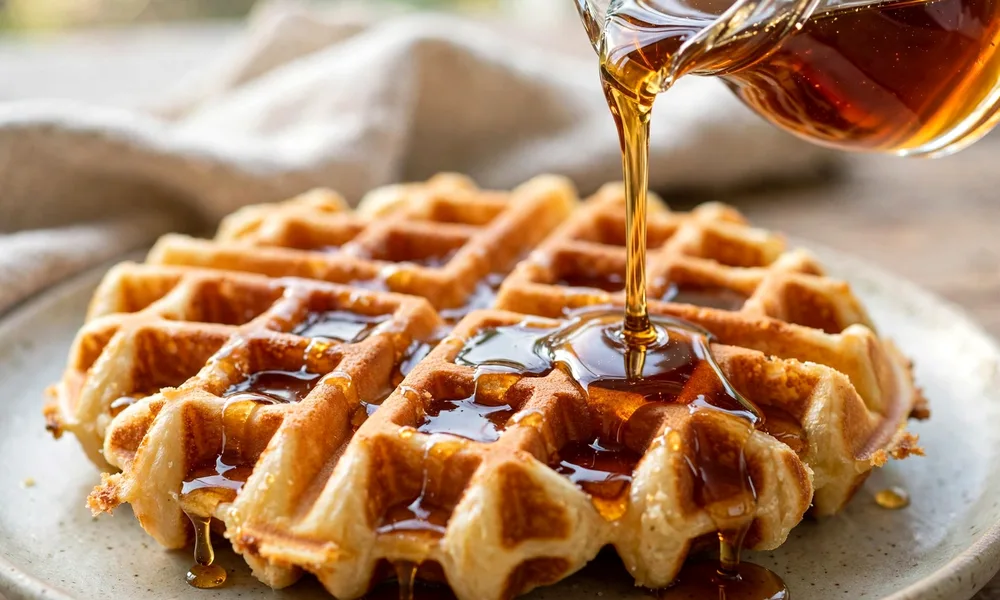
A great waffle in 2026 is easy to recognise and surprisingly hard to find. The outside should be crisp enough to hear when you cut into it, a deep golden brown with edges that hold their shape under syrup. The inside should be soft and fluffy, never doughy, never dry, with pockets deep enough to hold butter and berries without the whole thing collapsing into a soggy stack. This guide explains what separates the best waffles from the rest, which styles are worth your money, and how to judge one before you order it or make it at home.
Key takeaways
- A great waffle is crisp outside and fluffy inside; if it is soft all the way through, it was undercooked or the batter was wrong.
- Belgian waffles are thick and airy with deep pockets, classic waffles are thinner and crisper, and Liège waffles are dense, sweet, and caramelised.
- Rest the batter for five to ten minutes and let the iron get fully hot before the first waffle, or the result will be pale and soggy.
- Serve waffles straight off the iron, because even the best waffle softens within minutes under a cover or in a stack.
- Judge a waffle plain first: if it only tastes good buried under cream and syrup, the waffle itself has failed.
How the best waffles were judged
Every waffle style below was judged on five measures. Crispness comes first: the outside should shatter lightly and stay crisp for at least a few minutes on the plate. Lightness is second, because a waffle should feel airy rather than heavy, with a crumb that pulls apart in soft pieces. Flavour is third: butter, a little vanilla, and a touch of salt, warm and clean, with sweetness that comes mostly from the toppings rather than the batter itself. Pocket depth is fourth, since deep pockets are what hold syrup and fruit instead of letting them slide off the plate. Consistency is fifth: a great waffle should come out the same every time, not crisp once and pale the next.
Comparison table: the best waffles in 2026
| Rank | Waffle style | Best for | Watch out for |
|---|---|---|---|
| 1 | Belgian | Weekend breakfast, berries and cream | Goes soft fast if stacked |
| 2 | Classic | Crisp texture, weekday mornings | Dries out if overcooked |
| 3 | Liège | Sweet snack, eaten plain | Very sweet, heavy after one |
| 4 | Buttermilk | Tangy flavour, tall rise | Needs a batter rest |
| 5 | Savoury | Fried chicken, eggs, salmon | Sweet batter ruins the pairing |
| 6 | Frozen and ready-made | Busy mornings, quick snacks | Often pale and soft |
The best waffles in 2026
1. Belgian waffles: the best weekend waffle
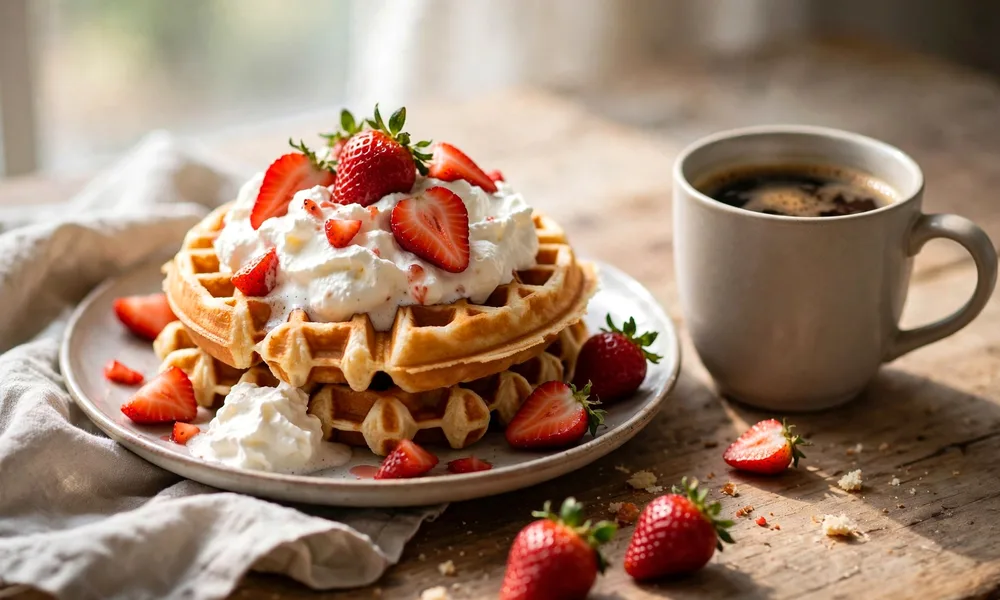
The Belgian waffle is the one most people picture when they think of a great waffle, and for good reason. It is thick, airy, and full of deep square pockets that hold syrup, berries, and whipped cream without spilling. The batter is yeasted or raised with baking powder and enriched with butter and eggs, and it cooks in a deep iron that gives it height. A good Belgian waffle arrives golden and tall, with a crust that crackles and an inside that is soft enough to pull apart with a fork. It is the best choice for a slow weekend breakfast, when you have time to eat it the moment it leaves the iron.
2. Classic waffles: the crispest everyday waffle
The classic waffle is thinner than the Belgian, with a finer grid and a faster cook, usually two to three minutes. The result is lighter and crisper, closer to a wafer than a cake, with a golden surface that stays crunchy even under toppings. It is the waffle of diners and weekday mornings, and it is the easiest to get right at home, because the thin batter cooks through quickly and evenly. If you like your waffle to crunch, this is the style to choose.
3. Liège waffles: the sweetest waffle, best eaten plain
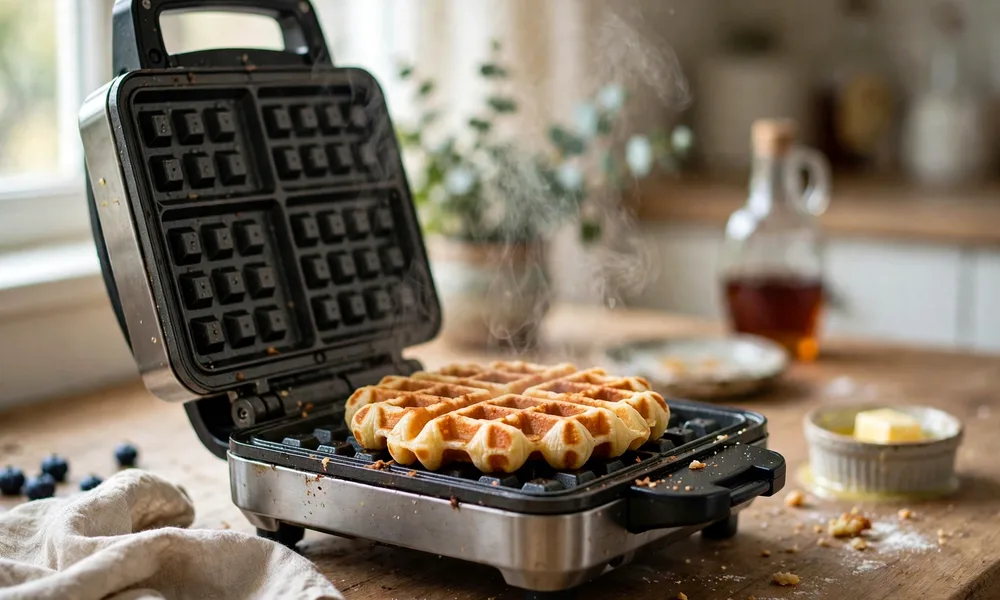
The Liège waffle is a different creature altogether. It is made from a rich, yeasted dough rather than a batter, studded with pearl sugar that caramelises on the iron into crunchy, golden pockets of sweetness. The result is dense, chewy, and deeply flavoured, with a crisp, sugary crust and a soft, bready centre. It needs no topping at all, and in Belgium it is usually eaten plain, warm from the iron, as a street snack rather than a breakfast.
4. Buttermilk waffles: the best flavour
Buttermilk waffles win on flavour. The tang in the buttermilk reacts with the raising agents and lifts the batter higher, giving a tall, tender waffle with a rich, slightly sour note that balances the sweetness of the toppings. The crumb is soft and even, the colour is a deep gold, and the taste is unmistakably homemade. For many cooks, this is the waffle that tastes most like the one they grew up with, and it is the hardest to beat once you have tried it.
5. Savoury waffles: the best waffle for lunch
Savoury waffles are the most underrated style, and the most useful. The same crisp, fluffy base that works with syrup also works with fried chicken, a poached egg, smoked salmon, or mushrooms, provided the batter is made without sugar. A savoury waffle should taste of butter and salt, with herbs or cheese folded through the batter, and it should be sturdy enough to hold a topping without collapsing. The classic pairing is fried chicken and waffles, where the crisp waffle and the crisp chicken meet, and the syrup, if it appears at all, is a drizzle rather than a flood.
6. Frozen and ready-made waffles: the best quick option
Frozen waffles have improved enormously, and the best of them are a genuine convenience rather than a compromise. They cook in a toaster in minutes, they are consistent, and on a busy morning they are the difference between a hot breakfast and none at all. The best frozen waffles are crisp on the outside after toasting, with a soft centre and a clean, buttery flavour that does not taste of the freezer. They are also the best option for children, because they are the same every time.
What makes a waffle great: the three tests
The first test is the sound. A great waffle crackles lightly when you cut into it, and the crust holds its shape under the fork. If the knife slides through without resistance, the waffle was undercooked, or the batter had too little fat. Fat is what crisps a waffle: a batter with enough butter and a little sugar browns properly on the iron, while a lean batter steams and stays pale. That is also why a waffle mix needs more fat than a pancake mix, a point our guide to the best waffle mixes makes in detail.
The second test is the inside. Break the waffle open and look at the crumb. It should be soft, even, and full of small air pockets, not dense or doughy in the middle. A doughy centre means the iron was too cool, or the waffle was pulled too early, and the outside browned before the inside cooked. A dry centre means the opposite: too hot, too long, or too little liquid in the batter. The best waffles are cooked at a steady, high heat, and they are pulled the moment the steam slows, not a minute later.
The third test is the flavour, and it is the one most people notice last and remember longest. A great waffle tastes of butter, vanilla, and a little salt, warm and clean, with a faint sweetness that needs only a little syrup. The best maple syrup matters here too, because a real syrup adds flavour rather than just sweetness, and a thin, sugary syrup flattens even a good waffle. Taste the waffle plain first, before the toppings go on. If it only tastes good once it is buried under cream and berries, the waffle itself has failed.
What to avoid when buying or making waffles
The most common waffle regret is not a bad waffle but a wrong match: a thick Belgian waffle ordered for a quick weekday breakfast, a sweet Liège waffle served with fried chicken, or a frozen waffle judged against a fresh one. Avoid the trap by matching the style to the moment, and by checking three things before you pay or cook. First, the colour: deep, even gold. Second, the timing: ask when it was cooked. Third, the toppings: a cafe that piles on cream and syrup is often hiding a waffle that cannot stand on its own.
At home, the avoidable mistakes are simpler and more common. Do not open the iron early to check, because the waffle tears and the heat escapes. The irons themselves matter too, as our guide to the best waffle makers shows. Do not stack fresh waffles, because the steam from the lower ones softens the upper ones. Do not cover them with a cloth or a lid, for the same reason. And do not pour cold syrup over a hot waffle, because the temperature drop kills the crispness in seconds. Warm the syrup, serve the waffle immediately, and let the crispness do its work.
Checklist: choosing a great waffle
- Look for a deep, even gold colour with crisp edges, not pale patches or dark, burnt corners.
- Break it open and check the crumb: soft, airy, and even, never doughy in the middle or dry at the edges.
- Taste it plain first, before syrup or cream, and walk away if it tastes of nothing without toppings.
- Ask when it was cooked, and choose a waffle made to order over one that has sat under a heat lamp.
- Match the style to the moment: Belgian for a slow weekend, classic for crispness, Liège for a sweet snack.
- Serve and eat immediately, because even the best waffle softens within minutes under a cover or in a stack.
Frequently asked questions
What is the difference between a Belgian waffle and a classic waffle?
A Belgian waffle is thick and airy with deep pockets, made in a deep iron, while a classic waffle is thinner and crisper with a finer grid and a faster cook. Belgian suits slow mornings; classic suits crispness.
Why do my waffles come out soggy?
Usually the iron was not hot enough, the batter was overfilled, or the waffles were stacked or covered after cooking. Let the iron get fully hot, fill it lightly, and serve each waffle straight off the iron so the steam escapes instead of softening the crust.
Should waffle batter rest before cooking?
Yes, five to ten minutes is enough. Resting lets the flour hydrate and the raising agents start working, so the waffle rises taller and cooks more evenly from edge to centre.
What is a Liège waffle?
A Liège waffle is made from a rich, yeasted dough studded with pearl sugar, which caramelises on the iron into crunchy, sweet pockets. It is dense and chewy, best eaten plain and warm, and one is usually enough because it is so sweet and filling.
Can waffles be savoury?
Yes, provided the batter is made without sugar. A savoury waffle tastes of butter and salt, often with herbs or cheese, and works with fried chicken, eggs, or smoked salmon.
Are frozen waffles worth buying?
The best frozen waffles are a genuine convenience: consistent, quick, and crisp after toasting. Toast them twice if needed and serve them immediately.
Bottom line
The best waffles in 2026 are the ones that get the three basics right: a crisp, golden outside, a soft and fluffy inside, and a flavour that stands up on its own before the toppings arrive. Each style suits a different moment. Judge each one plain, eat it the moment it leaves the iron, and the waffle will tell you everything you need to know.


