What Makes a Great Tomato Juice in 2026?
What makes a great tomato juice in 2026 is simpler than the label suggests: ripe tomatoes, a little salt, and nothing else getting in the way. The best tomato juice tastes like a tomato, not like a tin. It is thick enough to feel substantial, bright enough to taste fresh, and balanced enough to drink cold from a small glass without reaching for sugar or spice to fix it. This guide explains how the main types differ and how to read a label, so you can tell a ripe juice from a watery one.
Key takeaways
- Buy juice listing tomatoes first, with nothing you would not add yourself: tomatoes, salt, and perhaps lemon.
- A small glass of about 150 ml is the sensible serving: a pint glass is too much.
- Low-sodium juice tastes thinner at first, so season it yourself with a pinch of salt or a squeeze of lemon instead of buying the saltiest carton.
- Shake before pouring, and keep opened juice in the fridge for no more than three to five days.
- Glass and cartons both keep juice well; what matters is the juice inside, not the pack.
How the best tomato juices were chosen
Every type below was judged on five measures. Taste comes first: ripe tomatoes, sweetness and acidity in balance, no metallic edge. Texture is second, because a good tomato juice is thick and smooth, not watery and not pulpy. The label is third: tomatoes first, and a short list beats a long one. Salt is fourth, since the right amount lifts the flavour while too much buries it. Value is fifth: a dearer juice that tastes like real tomatoes beats a cheap one tasting of flavoured water.
One note before the list: tomato juice is a drink, not a cooking ingredient, and it is judged here as one. Our guide to the best canned tomatoes covers the tins you cook with in full. This guide is about the glass you drink: the juice, the salt, the spice, and the small glass at breakfast.
Comparison table: the best tomato juices 2026
| Rank | Juice type | Best for | Watch out for |
|---|---|---|---|
| 1 | 100% tomato juice, lightly salted | Everyday drinking | Salt varies a lot between brands |
| 2 | Low-sodium tomato juice | Daily drinking, salt watchers | Tastes thinner until you season it |
| 3 | Spiced tomato juice | Brunch and Bloody Marys | Spice hides thin tomatoes |
| 4 | Organic tomato juice | Clean labels, no pesticides | Costs more, same tomato taste |
| 5 | Cold-pressed tomato juice | The freshest flavour | Short shelf life, high price |
| 6 | Tomato-vegetable blend | Variety and extra vegetables | Tomato is not always the main flavour |
| 7 | Single-serve cartons | Lunchboxes and travel | More packaging, higher cost per litre |
The best tomato juices in 2026
1. 100% tomato juice, lightly salted: the best all-round juice
The classic tomato juice is the one to buy first, because it is the standard everything else is judged against. It contains only tomato juice and a little salt, it pours thick and red, and it tastes like a ripe tomato with the edges rounded off. The salt matters: a small amount lifts the flavour and makes the juice taste more like itself, while too much turns it into a salt drink with a tomato afterthought. Check the label for salt per 100 ml and compare brands, because the difference between the saltiest and the lightest is large. Served cold, this is the right default for the fridge.
2. Low-sodium tomato juice: the best for everyday drinking
Low-sodium juice is the same drink with the salt taken out, and it suits anyone who drinks tomato juice every day or watches their salt. It tastes thinner at first, because salt is doing more work in tomato juice than most people realise, but that is easy to fix: add a pinch of salt yourself, or a squeeze of lemon, and the flavour comes back, under your control. A good low-sodium juice still lists tomatoes first; a bad one adds sugar or flavourings to make up for the missing salt. For a daily glass, this is the sensible buy.
3. Spiced tomato juice: the best for brunch
Spiced tomato juice is tomato juice with a point of view: celery salt, black pepper, Worcestershire sauce, hot sauce, or a blend of all four. At brunch it is the base of a Bloody Mary, and on its own it is a savoury drink that suits a slow morning better than anything sweet. The spice is also a warning. A maker can hide thin, watery tomatoes behind enough chilli and salt that you never notice, so taste the juice plain before you buy a spiced one twice. The best spiced juices start with a good plain juice and add spice on top; the worst start with a thin juice and use spice as a disguise. Buy the plain juice first and spice it yourself.
4. Organic tomato juice: the best for clean labels
Organic tomato juice is made from tomatoes grown without synthetic pesticides, and it usually carries the shortest ingredient list on the shelf: tomatoes, salt, sometimes lemon. The taste is not automatically better. An organic tomato grown in poor soil and picked too early makes a worse juice than a conventional tomato picked ripe, and no certificate changes that. What you are paying for is the farming, not a guaranteed flavour, so judge it the same way as any other juice: pour it, taste it, and check the salt. If it tastes like ripe tomatoes and the label is clean, it is worth the extra money.
5. Cold-pressed tomato juice: the best flavour, for a price
Cold-pressed juice is made by crushing tomatoes and pressing them slowly without heat, and on flavour the makers have a point: it tastes noticeably closer to a freshly squeezed tomato than any pasteurised carton does. The downside is price and shelf life. It costs two to three times as much as ordinary juice, it must be kept refrigerated, and it goes off within a few days of opening. For most households it is a treat rather than a daily buy: a bottle for a weekend brunch, or a glass when tomatoes are in season and you want the best version. For daily drinking, a good pasteurised juice is the practical choice.
6. Tomato-vegetable blend: the best for variety
A tomato-vegetable blend starts with tomato juice and adds carrot, celery, beetroot, spinach, or a mix of all four. The best blends taste like tomato juice with more depth: the carrot adds sweetness, the celery adds a green note, and the beetroot adds earthiness. The worst taste like none of the vegetables at all, because the tomato has been diluted and the rest is mostly water and flavouring. Read the label and check that tomato is still the first ingredient and the largest share; if carrot juice or water comes first, you are buying a different drink. For anyone who finds plain tomato juice a little one-note, a good blend is the easiest way to drink more vegetables.
7. Single-serve cartons: the best for lunchboxes and travel
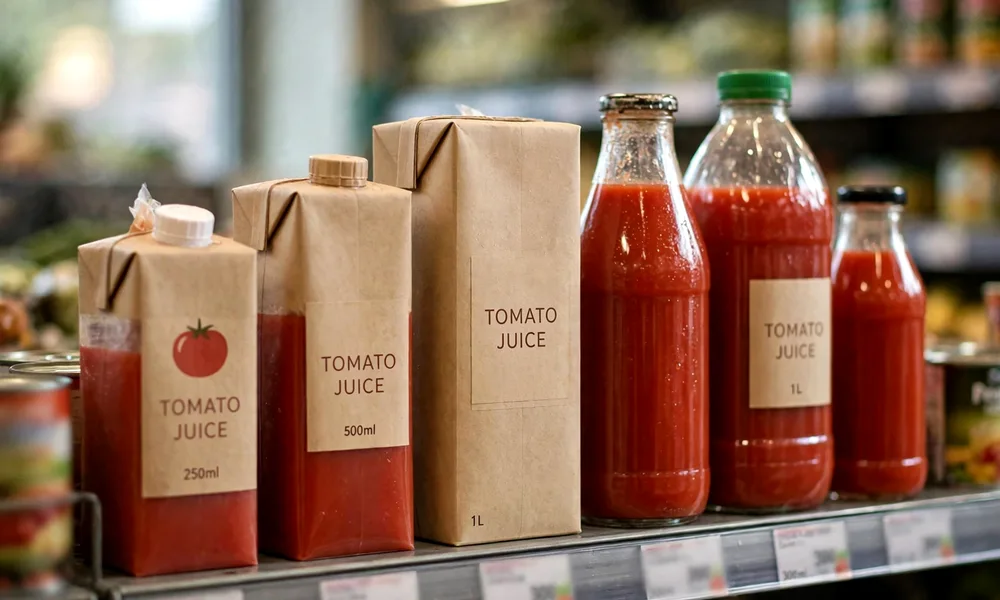
Single-serve cartons are the same juice in a smaller pack, usually 200 ml, and they solve the problem of a large bottle going off in the fridge. A carton in a lunchbox stays cold until lunch, a carton on a train needs no glass, and a carton in a hotel minibar is a better choice than the sweet drinks beside it. The trade-off is cost and waste: you pay more per litre, and you throw away more packaging. For one person, one glass, away from home, the small carton is the right size, and it is the format that turns tomato juice from a fridge staple into a drink you can take anywhere.
What to avoid when buying tomato juice
The most common mistake is buying a juice drink instead of juice. If the first ingredient is water or sugar, you are holding a sweetened drink with a splash of tomato, not tomato juice, and no amount of branding changes that. The second mistake is buying the saltiest carton on the shelf and then wondering why the tomato taste disappears; salt should lift the flavour, not bury it. The third mistake is keeping an opened bottle too long. Tomato juice goes off faster than most juices once opened, so drink it within three to five days, keep it in the fridge, and throw it away if it smells sharp or tastes fizzy. A small bottle finished in three days beats a large one half wasted in a week.
It also helps to know how tomato juice fits into the wider world of juice. Our guide to the best juice explains the difference between 100 percent juice, nectar, and juice drinks in full, and the same label rules apply here: tomatoes first, a short ingredient list, and no added sugar. Our guide to the best orange juice asks the same questions about sweetness, pulp, and pasteurisation. Tomato juice is the savoury member of the family, judged by the same standards.

Tomato juice at breakfast
Breakfast is where tomato juice does its best work. A small glass with eggs and toast is a savoury start that does not need sugar, and the salt in the juice suits the food on the plate. Serve it cold, in a small glass, with a stick of celery or a squeeze of lemon if you like, and keep the serving to about 150 ml. With food, in a small glass, it is one of the easiest good habits in the kitchen.
Checklist: buying tomato juice
- Buy juice that lists tomatoes first, with a short ingredient list and no added sugar.
- Compare salt per 100 ml between brands, and season a low-sodium juice yourself.
- Choose a bottle size you will finish within three to five days of opening.
- Shake the bottle before pouring, because natural tomato juice separates.
- Keep opened juice in the fridge and throw it away if it smells sharp or tastes fizzy.
- Taste a spiced juice plain first, so spice does not hide thin tomatoes.
Frequently asked questions
Is tomato juice healthy?
Tomato juice is a useful drink: it brings vitamin C, potassium, and lycopene, the compound that gives tomatoes their red colour. It is not a replacement for whole tomatoes, since juicing removes most of the fibre, and salt is the main thing to watch.
How much tomato juice should I drink a day?
A small glass of about 150 ml is a sensible daily serving. One small glass with breakfast is enough for most people.
Does tomato juice need to be refrigerated?
Unopened cartons keep in a cupboard, but cold-pressed juice must be refrigerated. Once opened, every tomato juice goes in the fridge and should be finished within three to five days.
Why does my tomato juice taste metallic?
A metallic taste usually comes from the can or from tomatoes that were picked too early and packed with too much acid. Try a juice in a glass bottle or carton instead.
Can I make tomato juice at home?
Yes, and it is simple: blend ripe tomatoes, strain out the skins and seeds, and add a pinch of salt and a squeeze of lemon. Homemade juice tastes fresher, but it goes off within two days, so make only what you will drink.
Is tomato juice the same as tomato soup?
No. Tomato juice is thin, cold, and drunk from a glass, while tomato soup is thicker, served hot, and usually cooked with stock, cream, or butter. They start from the same fruit but are different foods.
Bottom line
A great tomato juice in 2026 is a short label and a ripe tomato: 100 percent tomato juice, lightly salted, served cold in a small glass. Start with the classic lightly salted juice, switch to low-sodium for daily drinking, and save cold-pressed for weekends. Shake it and drink it within a few days of opening.