How to Choose the Right Curry Powder for Your Kitchen in 2026
Curry powder is the shortcut that turns a plain pan of vegetables, lentils or chicken into a meal that tastes like it simmered for hours. The right curry powder for your kitchen in 2026 is not the brightest yellow jar on the shelf, and it is not the hottest one either. It is the blend whose flavour matches the food you actually cook: warm and mild for family suppers, deeper and hotter for slow-cooked dishes, and fresh enough that a single spoonful seasons the whole pan.
Key takeaways
- Curry powder is a blend, usually built on turmeric, coriander and cumin, with fenugreek, ginger and chilli in support.
- Mild curry powder suits family cooking and vegetables; medium suits everyday curries; hot suits slow-cooked meat and lentils.
- Colour is a freshness clue: a good curry powder is a rich golden yellow, while a pale, dusty jar is stale.
- Bloom curry powder in hot oil for about thirty seconds before adding anything else, so it tastes cooked rather than raw.
- Ground curry powder fades within about six months, so buy small jars, store them cool and dark, and replace them when the smell goes.
What curry powder actually is
Curry powder is a pre-mixed blend of ground spices, invented to give home cooks the flavour of a curry in a single spoonful. Its backbone is almost always the same three spices. Turmeric gives it the golden colour and an earthy warmth. Coriander gives it a citrusy, slightly sweet body. Cumin gives it a deep, savoury warmth underneath. Around that core, most blends add fenugreek for a faintly sweet, almost maple-like note, ginger for brightness, black pepper for bite, and chilli for heat. Some add cinnamon, cardamom or cloves for a more aromatic, warming character. The exact mix varies by brand and by region, which is why two jars can taste quite different even when both are called curry powder.
It is important to know what curry powder is not. It is not a single spice, and it is not the same as garam masala, even though the two share ingredients. Garam masala is a warm, aromatic finishing blend, usually added near the end of cooking, and it contains no turmeric, so it adds warmth without colour. Curry powder is a cooking blend, added at the start, and its turmeric colours the whole dish golden. It is also not the same as curry paste, which is a wet blend of fresh aromatics like lemongrass and galangal pounded with dried spices. Paste gives a brighter, fresher flavour and suits Thai-style curries. Powder gives a deeper, earthier flavour and suits the slower, drier curries most home cooks make most often.
Comparison table: curry powder styles for your kitchen in 2026
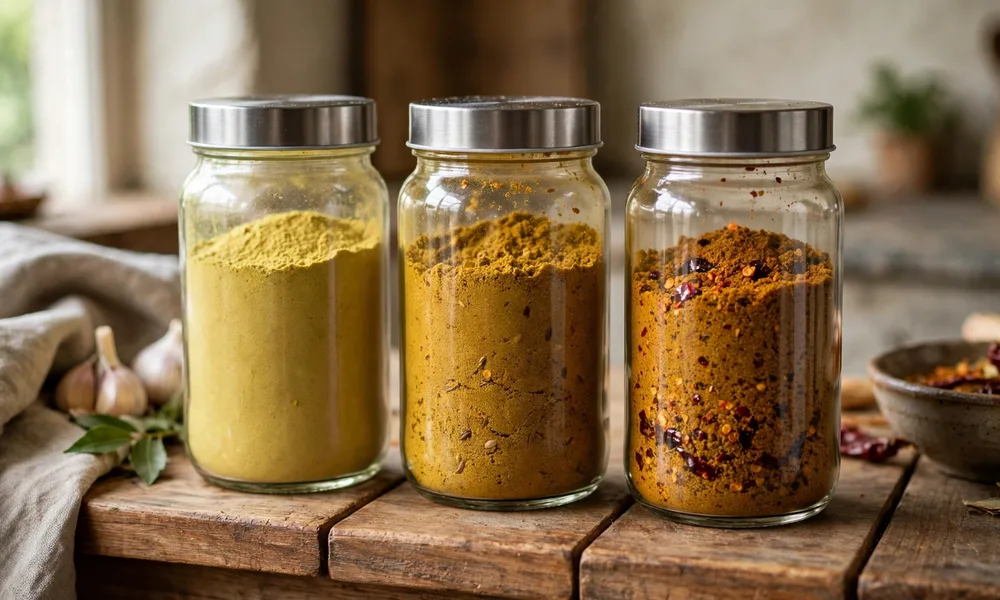
| Style | Heat | Flavour | Best for | Watch out for |
|---|---|---|---|---|
| Mild | Very low | Warm, golden, gentle | Family meals, vegetables, eggs | Can taste flat in slow stews |
| Medium | Moderate | Balanced, earthy, rounded | Everyday chicken and lentil curries | Heat varies a lot between brands |
| Hot | Strong | Bold, fiery, deep | Slow-cooked meat, robust lentils | Too hot for children and mild eaters |
Mild curry powder: the family choice
Mild curry powder is the jar to buy first if you cook for children, for guests who dislike heat, or for yourself on busy weeknights. Its heat is barely there, a gentle warmth rather than a burn, and its flavour leans on turmeric, coriander and cumin rather than chilli. That makes it the most versatile style: it seasons a pan of roast vegetables, a pot of lentil soup, a tray of roast potatoes or a plate of scrambled eggs without changing the character of the food. It colours everything a cheerful golden yellow, which is half its appeal on the plate, and it works in dishes where a hotter powder would be a mistake.
Medium curry powder: the everyday all-rounder
Medium curry powder is the best single jar for most kitchens, because it does the most jobs well. Its heat is noticeable but not challenging, a warmth that builds over a few seconds and then settles, and its flavour is balanced: turmeric and coriander in front, cumin and fenugreek underneath, and enough chilli to give the dish a backbone. It is the powder for a weeknight chicken curry, a pot of lentils, a tray of roasted cauliflower or a pan of curried mince, and it is the style most recipes mean when they simply say curry powder without specifying more.
Hot and Madras curry powders: heat with depth
Hot curry powder and Madras curry powder are the jars for cooks who like their curries to taste bold. Both are built on the same turmeric, coriander and cumin base as mild and medium powders, but with far more chilli and black pepper, and often with extra mustard seed or fenugreek for a sharper edge. The heat arrives fast and stays, and the flavour is deeper and more assertive. They suit slow-cooked dishes best: a beef or lamb curry that simmers for two hours, a pot of robust brown lentils, or a hearty bean stew where the other ingredients are strong enough to stand up to the spice.
Curry powder or curry paste: which one to buy
Many cooks own both, and for good reason: powder and paste do different jobs. Curry powder is dry, earthy and deep, and it suits slow cooking, where its flavour has time to develop. Curry paste is wet, bright and fresh, made from pounded aromatics, and it suits fast cooking, where its freshness is the point. A Thai green curry made from paste tastes bright and herbal in twenty minutes. The same curry made from powder tastes earthier and slower, and it needs longer to come together. Neither is better in general; each is better for its own kind of dish.
How to judge a curry powder before you buy it
Colour is the fastest test, and it works even through a glass jar. A good curry powder is a rich, golden yellow, the colour of fresh turmeric. A pale, greyish-yellow powder has been on the shelf too long, or was made from stale turmeric, and its flavour has gone with its colour. If the jar is opaque, check the date and choose the jar with the longest life left. Smell is the second test once you are home. Open the jar and hold it a few inches from your nose. A fresh powder smells warm and complex, with separate notes you can pick out: turmeric earthiness, coriander sweetness, cumin depth. A stale powder smells faintly of dust, and a powder that smells of nothing at all is past saving.
How to use curry powder properly
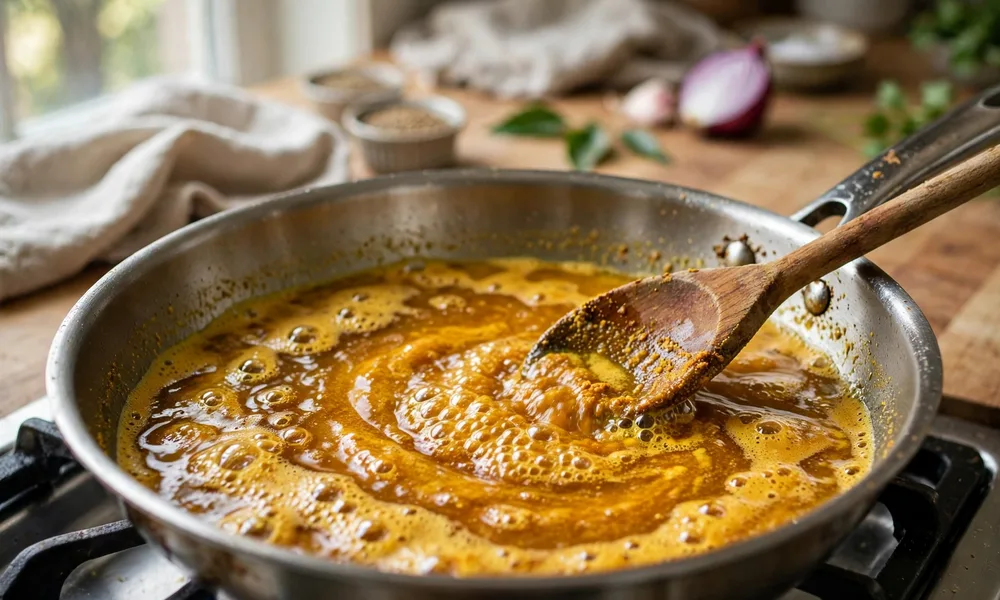
The most common mistake with curry powder is adding it late. Raw ground spice tastes dusty and harsh, and sprinkling it over a finished curry will not fix a bland dish. The better method is to bloom it. Heat a spoonful of oil in the pan, add the curry powder, and stir it for about thirty seconds until it smells fragrant and the oil turns golden. Then add the onions, and let the spiced oil carry the flavour through the whole dish. This one step is the difference between a curry that tastes cooked and a curry that tastes as though someone shook a jar over it at the end.
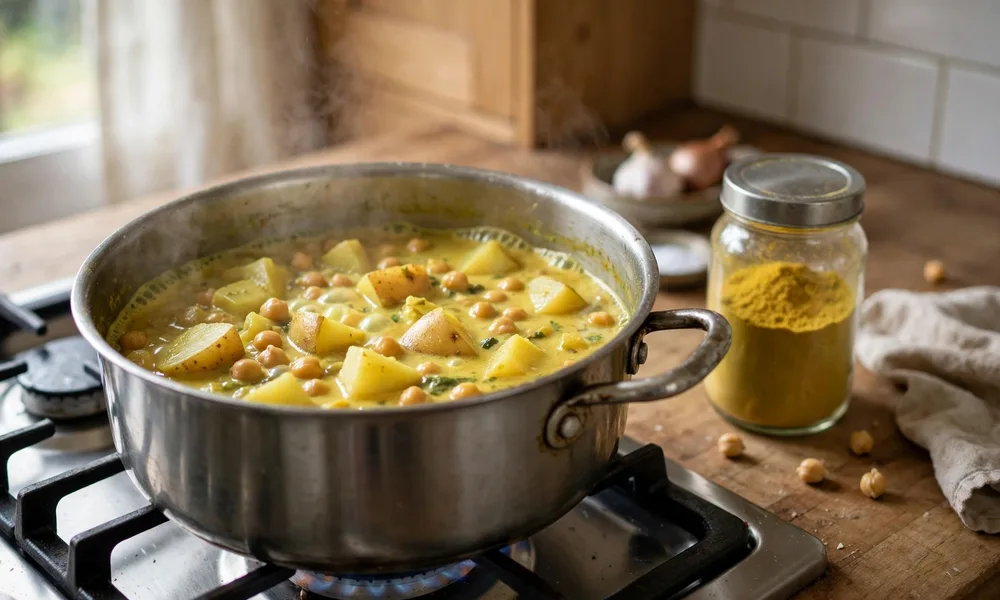
Curry powder also belongs beyond curries. A teaspoon in a lentil soup adds a golden warmth that plain soup lacks. A pinch in scrambled eggs or an omelette makes breakfast taste deliberate. It seasons roasted chickpeas, cauliflower and sweetcorn, and it is the quiet ingredient in many good spice blends, where its turmeric and cumin sit underneath the other flavours. The cooks who get the most from one jar treat it as an everyday seasoning rather than a single-recipe spice, and keep it beside the salt and pepper instead of at the back of the cupboard.
Shop-bought jars versus mixing your own
Shop-bought curry powder wins on speed and consistency. A jar seasons a pan in seconds, the flavour is the same every time, and the blend has already been balanced by someone who has made it thousands of times. The drawbacks are salt and control. Many jars are very salty, and because the salt is mixed in with the spices, you cannot add more seasoning without adding more salt. Some are also surprisingly one-note, tasting mostly of turmeric with little cumin character. The ingredient list is your defence: a short list of recognisable spices, with salt well down it, is the sign of a jar worth buying.
Storage, freshness and the mistakes to avoid
Ground curry powder fades faster than whole spices, and the clock starts the day the spices are ground. In a cool, dark cupboard, a jar keeps its best flavour for about six months, then declines steadily. After a year, even a good powder tastes muted, and after two years it is mostly colour. Buy small jars, write the opening date on the lid, and replace a jar when its colour has faded or its smell has gone, rather than keeping it out of habit. Whole spices last far longer, a year or more, so cooks who use curry powder often sometimes keep whole coriander and cumin and grind small batches as needed.
Checklist: choosing curry powder
- Check the colour first: rich golden yellow means fresh, pale and dusty means stale.
- Read the ingredient list: turmeric, coriander and cumin should lead, salt should sit well down it.
- Buy medium heat for everyday cooking, mild for family meals, hot for slow-cooked dishes.
- Choose a small jar you will finish within six months rather than a large jar that will fade.
- Smell the powder when you open it: warm and complex is fresh, dusty and faint is stale.
- Store it cool, dark and tightly closed, away from the hob and never over a steaming pot.
Frequently asked questions
Is curry powder the same as garam masala?
No. Curry powder is a cooking blend built on turmeric, coriander and cumin, added at the start, and it colours the whole dish golden.
How hot is curry powder?
It depends on the style. Mild is barely warm, medium is noticeable but not challenging, and hot and Madras are strong.
Can I use curry powder instead of curry paste?
Partly. Powder gives a deeper, earthier flavour and suits slow cooking, while paste gives a brighter, fresher flavour and suits fast Thai-style curries.
What is the difference between curry powder and turmeric?
Turmeric is one spice, the golden root that gives curry powder its colour. Curry powder is a blend of many spices, with turmeric as only one ingredient.
How long does curry powder last?
About six months at its best in a cool, dark cupboard, then it fades steadily. After a year it will taste muted, and after two years it is mostly colour.
Why does my curry taste dusty instead of rich?
The powder was probably added raw at the end instead of bloomed in hot oil at the start.
Bottom line
Verdict: The Best. The best curry powder for your kitchen in 2026 is a fresh medium blend with turmeric, coriander and cumin leading the ingredient list and salt well down it, kept in a small jar you finish within six months. Keep a mild jar for family meals and a hot jar for slow-cooked dishes, bloom the powder in hot oil before anything else goes in, and buy small and fresh.