
Finding the best turmeric in 2026 is trickier than it looks, because the golden spice on your kitchen shelf and the turmeric supplement in a capsule are two very different products. Turmeric is the bright yellow root behind curries and golden milk, and its active compound, curcumin, is one of the most studied natural ingredients for joint comfort and inflammation. The catch is that curcumin is poorly absorbed on its own, so the best products are the ones that solve the absorption problem.
The best turmeric supplement pairs a standardised curcumin extract with an absorption enhancer, usually black pepper extract or a lipid-based delivery system, at a dose that matches the research. A plain spoonful of turmeric powder in food is wonderful for flavour and colour, but it delivers far less curcumin than a standardised capsule, and most of what it does deliver passes straight through. This guide explains the difference, compares the main forms, and shows you how to choose a product that actually works.
Key Takeaways
- Look for a standardised curcumin extract with 95 percent curcuminoids, not plain turmeric powder in a capsule.
- Absorption is everything: choose black pepper extract, a phytosome, or another proven delivery system.
- The most-studied dose is 500 mg of curcumin extract twice a day, usually 1,000 mg daily in total.
- For joints, expect noticeable change in four to eight weeks of consistent daily use.
- Cooking turmeric is great for flavour, but it cannot match a standardised supplement for curcumin dose.
What Turmeric Is and How Curcumin Works
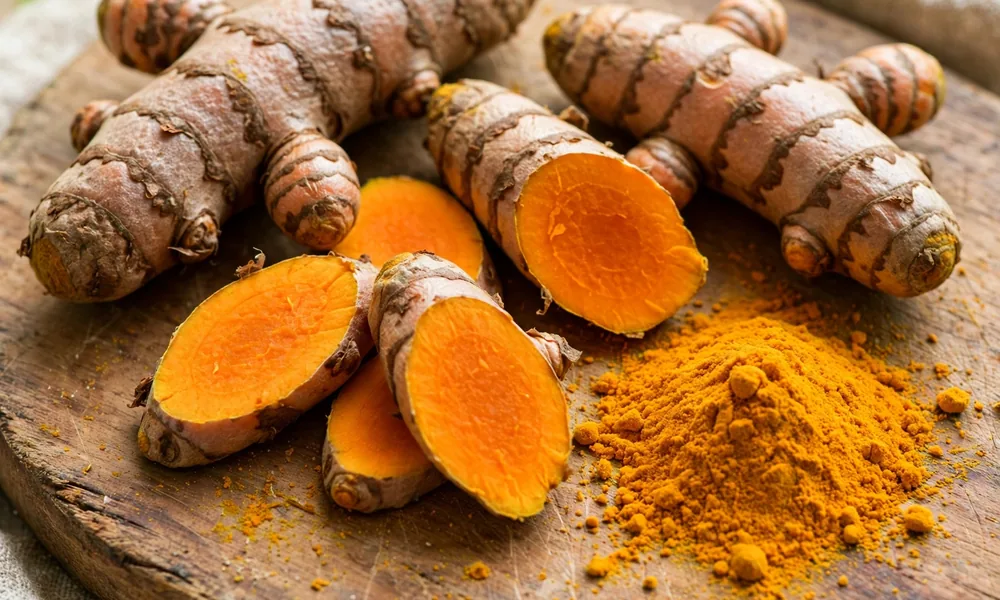
Turmeric is the dried root of Curcuma longa, a plant in the ginger family, and it has coloured and flavoured food across South Asia for thousands of years. Its golden colour comes from curcuminoids, a group of compounds led by curcumin, which is also responsible for most of the effects studied in modern trials. A teaspoon of ground turmeric contains roughly 100 to 150 mg of curcuminoids, but only a small fraction of that is absorbed when eaten plain.
Curcumin is thought to work by moderating inflammatory signalling pathways, including NF-kB, which plays a central role in the body’s inflammatory response. That is why it is studied most for joint comfort and post-exercise soreness, where inflammation is part of the problem. It is not a painkiller, and it does not switch inflammation off, but the trial evidence suggests it can take the edge off low-grade, everyday inflammation when taken consistently at the right dose.
Why Absorption Matters So Much
Curcumin has famously poor bioavailability. It dissolves badly in water, it is rapidly broken down in the gut and liver, and most of a plain dose leaves the body unused. This is the central problem every good turmeric product has to solve, and it is the reason a cheap bottle of plain turmeric powder in capsules is often a poor buy, however natural it sounds.
Manufacturers solve absorption in several ways. The simplest is piperine, the active compound in black pepper, which can increase curcumin absorption many times over by slowing its breakdown. Phytosome technology binds curcumin to phospholipids, the same fats that make up cell membranes, improving uptake. Other approaches use oils, nanoparticles, or water-dispersible forms. All of them beat plain curcumin, and the best products state their absorption technology and the evidence behind it on the label.
Turmeric vs Curcumin: What the Label Means
Turmeric and curcumin are often used as if they were the same thing, and they are not. Turmeric is the whole root, containing curcuminoids at around 3 to 5 percent by weight, plus oils and other compounds. Curcumin is the isolated active compound, usually sold as an extract standardised to 95 percent curcuminoids. A capsule labelled “turmeric 1,000 mg” may contain only 30 to 50 mg of curcuminoids, while a capsule labelled “curcumin extract 500 mg” contains roughly 475 mg.
Best Turmeric Forms Compared
There is no single best form of turmeric, only a best form for your goal and your budget. Standardised curcumin capsules with piperine are the most studied and the best value for joint support. Phytosome and lipid-based capsules cost more but absorb better and suit people who cannot take black pepper extract. Powders are the cheapest per gram and the most versatile in the kitchen, while golden milk lattes and turmeric shots are pleasant daily rituals with modest curcumin content.
Capsules With Black Pepper Extract
This is the classic, most-researched combination: 500 mg of 95 percent curcuminoid extract plus 5 to 10 mg of piperine per capsule, taken twice daily with food. It is widely available, reasonably priced, and backed by the largest body of trials. The main caution is that piperine also increases the absorption of some medicines, so anyone taking prescription drugs should check with a clinician or pharmacist first, and choose a piperine-free formula if advised.

Powders, Golden Milk, and Shots
Turmeric powder is the most versatile form of all. Stirred into curries, soups, smoothies, and golden milk, it adds colour, warmth, and a small amount of curcumin to every meal. Adding a pinch of black pepper and a little fat, such as milk, coconut oil, or olive oil, improves absorption noticeably, and this is the traditional wisdom behind golden milk. Turmeric shots, usually a small bottle of turmeric, ginger, and black pepper juice, are a convenient daily habit, but check the label: many contain less curcumin than a single capsule.
How to Choose the Best Turmeric for You
Start with your goal. For joint comfort, choose a standardised curcumin extract at 1,000 mg a day, with piperine or a phytosome delivery system, and commit to at least eight weeks. For post-workout recovery, the same dose works, taken with food after training or with your largest meal. For general wellbeing and cooking, a good-quality ground turmeric used daily in food, plus a moderate supplement if you want a measurable dose, is a sensible combination.
Dose and Timing
The most-studied regimen is 500 mg of standardised curcumin extract twice daily, 1,000 mg in total, taken with food. Some phytosome formulas use 500 mg once or twice daily. Taking curcumin with a meal that contains some fat improves absorption, and splitting the dose across the day keeps levels steadier than a single large dose. Start with one capsule a day for a week to check tolerance, then move to the full dose.

What the Research Really Shows
The evidence for curcumin is strongest for joint comfort, particularly in osteoarthritis of the knee. Pooled analyses of randomised trials find that curcumin reduces pain and improves function more than placebo, with effect sizes that are modest but meaningful, and in some trials comparable to common anti-inflammatory medicines, with fewer stomach side effects. That is a genuinely useful finding for people who want a gentler long-term option, though it is not a replacement for medical treatment of serious joint disease.
What Turmeric Does Not Do
Turmeric attracts big claims online, and most of them outrun the evidence. There is no good evidence that curcumin prevents or treats cancer, reverses dementia, or detoxes the body, and products that promise those things should be avoided. Its benefits are best understood as a gentle, long-term support for joint comfort and recovery, not a cure-all. If you are considering turmeric alongside other daily supplements, our guide to the best collagen powders of 2026 covers a complementary option for joint and skin support, and our guide to the best vitamin D of 2026 explains how to choose a dose that suits the darker months.
Turmeric Safety: Who Should Be Careful
There are important exceptions. Curcumin can increase the risk of bleeding, so anyone taking blood thinners, or with a bleeding disorder, should talk to a clinician first. It can stimulate the gallbladder, so people with gallstones or bile duct obstruction should avoid high-dose supplements. It may lower blood sugar and blood pressure slightly, so people taking diabetes or blood pressure medication should check with their clinician. Piperine formulas deserve extra care, since piperine can raise the levels of some prescription medicines. If you drink a lot of green tea for its own health benefits, our guide to the best green tea of 2026 is a useful companion read, but the same rule applies: supplements and medicines deserve a proper check, not a guess.
Quality, Testing, and Red Flags
Turmeric Compared: Extract vs Phytosome vs Powder
| Form | Best For | Typical Daily Dose | Absorption | Price per Month |
|---|---|---|---|---|
| Curcumin extract + piperine | Joints, best value | 1,000 mg | High | £12–£22 |
| Phytosome curcumin | Joints, no black pepper | 500–1,000 mg | High | £20–£35 |
| Lipid or nanoparticle curcumin | Maximum uptake | 250–500 mg | Very high | £25–£40 |
| Plain turmeric powder capsules | Budget, mild support | 1,000–1,500 mg | Low | £8–£15 |
| Ground turmeric in food | Cooking, flavour, colour | 1–3 g in meals | Low, better with pepper and fat | £3–£6 |
| Golden milk or shots | Daily ritual | Variable | Moderate | £15–£30 |
Turmeric Buying Checklist
- Pick a standardised extract with 95 percent curcuminoids stated on the label.
- Choose an absorption system: piperine, phytosome, or another proven delivery method.
- Match the dose to the studies: 1,000 mg of curcumin extract daily, split into two doses.
- Check for independent third-party testing and a clear expiry date.
- Avoid proprietary blends and plain powder capsules sold at extract prices.
- Give it eight weeks of consistent daily use with food before judging the result.
Frequently Asked Questions
What is the best turmeric supplement for joints?
The best-supported choice is a standardised curcumin extract with 95 percent curcuminoids, taken at 1,000 mg a day with piperine or a phytosome delivery system. This is the combination used in the trials that showed meaningful improvements in knee pain and function.
Is turmeric powder as good as curcumin capsules?
For flavour and cooking, powder is wonderful, but for a measurable curcumin dose it is not comparable. A teaspoon of ground turmeric contains roughly 100 to 150 mg of curcuminoids, most of which is poorly absorbed, while a standardised capsule delivers around 475 mg of curcuminoids in a form designed to be absorbed.
Should I take turmeric with black pepper?
Yes, unless you take medicines affected by piperine. Black pepper extract is the simplest and cheapest way to improve curcumin absorption, and it is the method used in most trials. If you cannot take piperine, a phytosome or lipid-based formula is the best alternative.
How long does turmeric take to work for joints?
Most people notice a difference in four to eight weeks of daily use at the studied dose, with the clearest results after eight to twelve weeks. It works gradually by moderating inflammation, so consistency matters far more than taking a large occasional dose.
Can I take turmeric every day?
Yes, daily use is how it is studied, typically for eight to twelve weeks or longer. Turmeric in food can be eaten every day without concern, and standardised supplements are generally safe for long-term daily use at studied doses, provided you have checked the cautions around blood thinners, gallstones, and piperine interactions.
Does turmeric help with muscle recovery?
It can help modestly. Trials in active adults link curcumin with less muscle soreness and slightly faster strength recovery after hard training. The effect is small, so it works best as part of a good recovery routine that already includes sleep, protein, and sensible rest days.
The Bottom Line
The best turmeric in 2026 is a standardised curcumin extract, dosed the way the studies dosed it, with a proven absorption system, from a brand that tests its products and states its numbers plainly. For most people that means 500 mg of 95 percent curcuminoid extract with piperine, twice a day with food, or a phytosome formula if black pepper does not suit you. Keep cooking with the golden powder too, because it is delicious and it does help, but do not confuse a spoonful in a curry with a studied dose. Bought well and taken daily for eight weeks, turmeric is a quiet, steady supporter of comfortable joints, and that is exactly what makes it worth taking.


