
A baby playpen is a small, safe space where a baby can play while a parent stays close by. It is not a cot, it is not a babysitter, and it is not a place to leave a baby alone. Used well, it gives a crawling or newly standing baby room to move, reach and explore without wandering into the kitchen, the stairs or the dog’s water bowl. The best baby playpens of 2026 do that job quietly: they are stable, easy to see through, simple to fold away, and comfortable enough that a baby is happy to stay in them for a short while.
The worst playpens fail on the basics. They wobble when a baby pulls up on the side, their mesh sags or tears, their latches are fiddly, or they are so heavy and awkward that nobody ever folds them away. This guide looks at what actually matters when you choose one, the different types on sale, how to use a playpen safely, and the mistakes that are easy to avoid. Everything here is about daytime play, under supervision, for babies who are old enough to sit up and move around on their own.

What a Playpen Is For
A playpen gives a baby a defined patch of floor. Inside it there are a few soft toys, a clean mat and nothing dangerous to grab. Outside it is the rest of the house, which is full of things a baby should not reach: hot drinks, cables, small objects, open doors and stairs. For a parent, that boundary is the whole point. It means you can answer the door, hang up the washing or make a cup of tea while your baby is still in sight, in one place, on a safe surface.
The Three Types Worth Knowing
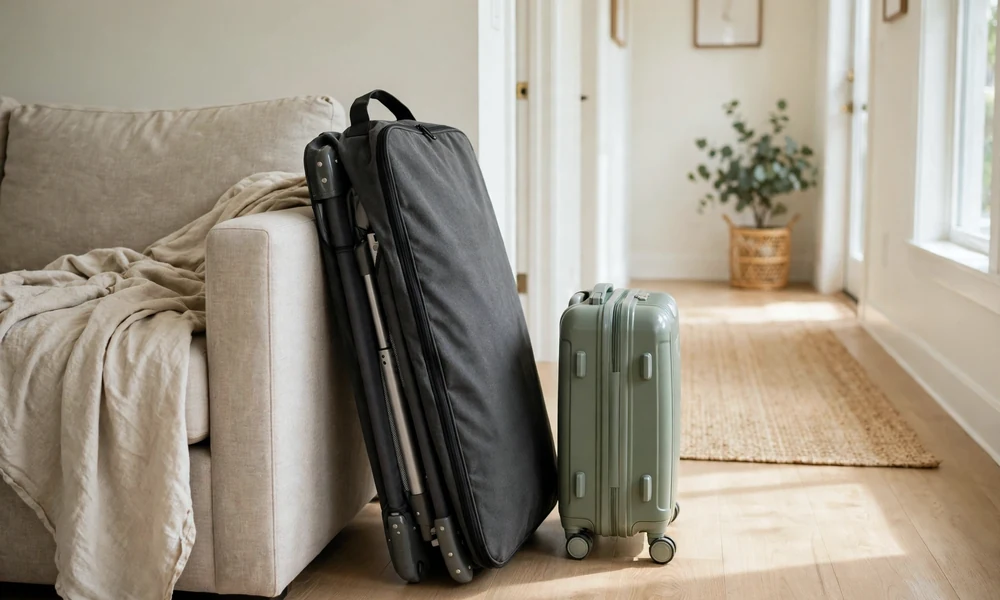
The most common type is the fabric playpen, often sold as a travel cot or pack-and-play style model. It has a folding metal frame, mesh sides and a thin padded base. It folds down into a carry bag, weighs very little, and works at home, at grandparents’ houses and on holiday. Its mesh sides let you see the baby and let the baby see you, which is a real advantage. The trade-off is the base: it is usually thin, so use only the flat, firm play mat the maker supplies, and never add soft bedding.
The second type is the wooden playpen. It looks like a small cot with slats, often in pale beech or white, and it suits a living room far better than a fabric box. Wooden models are heavy and stable, which is good when a baby pulls up hard on the side, and they often adjust in height or fold flat against a wall. They are not travel models, though. They are for one room, in one house, and they need a flat floor to stand safely.
The third type is the large play yard, sometimes called a play fence. It is a set of panels that clip together to make a room-sized enclosure, often two metres across, with a gate in one panel. It is the right choice when you want the baby to have real space to crawl, or when you want to fence off a whole area such as the fireplace or the television. It takes up a lot of floor, it is harder to move, and it needs a rug or mat underneath, but for active babies it is often the happiest option.
How to Choose: The Three Things That Matter Most
Start with stability. Put your hands on the top rail and push. A good playpen barely moves. Then press down on the side as a baby would when pulling up to stand. The frame should feel rigid, the feet should stay flat on the floor, and nothing should rock or lift. If a model tips, folds or slides easily in the shop, it will do the same at home, only with a baby inside it.
Next, look at the mesh. It should be fine, taut and firmly stitched to the frame, with no loose threads, holes or sagging panels. Hold it up to the light: you should be able to see through it clearly, and your baby should be able to see you. Mesh that is too loose can catch small fingers, and mesh with a tear is a reason to stop using the playpen at once. Run your hand over every panel when you first open the box, and check again every week or two.
Finally, look at the base and the floor. The base should be flat, firm and easy to clean. A wipe-clean surface is worth more than a pretty fabric one, because babies dribble, spill and have accidents. Put a thin, firm play mat inside if the maker supplies one, and keep the floor underneath level. Never use a playpen on a slope, on a soft bed, or on top of a rug that bunches up underneath it. If you are setting up a nursery and weighing sleep furniture too, our guide to the best cribs of 2026 covers proper sleeping places in detail.
Safety First: The Rules That Matter
The most important rule is also the simplest: a playpen is for supervised play only. Stay in the same room, keep the baby in sight, and check on them often. A playpen keeps a baby in one place, but it does not watch them. Babies can get tangled in loose fabric, chew on a rail, or try to climb out, and those things need an adult nearby. Never leave a baby in a playpen while you go out, and never use it as a way to leave a baby alone for a long stretch.
The second rule is that a playpen is not a place for sleep. Babies should sleep on a firm, flat surface, on their back, in their own cot or bassinet, with no pillows, blankets, bumpers or soft toys. A playpen base is not designed as a sleep surface, and the soft sides and extra padding some models add are not safe for sleep. If your baby falls asleep while playing, lift them gently into their cot. If you are unsure about safe sleep, ask your paediatrician or your health visitor, who can advise you for your own baby.
Finally, place the playpen well. Put it on a flat floor, away from radiators, fires, cookers, windows and blind cords. Keep it out of direct sun, which can make a fabric pen hot to touch, and keep it away from anything the baby could reach through the mesh and pull over. A playpen next to a bookshelf is only safe if the shelf is fixed to the wall and nothing on it can be pulled down. When the baby outgrows the pen and starts moving around the house, a stair gate becomes the next boundary, and our guide to the best baby gates of 2026 can help you choose one.
What to Put Inside, and What to Leave Out
Inside a playpen, less is more. Choose three or four items: a soft toy, a teether, a board book and perhaps a small rattle. Rotate them every day or two, so the same toys feel new again. Babies get bored with a pile of twenty toys, and a crowded pen is harder to keep clean and harder for a baby to move around in. A single toy that makes a sound, one that is soft to chew and one with a bright pattern is a good mix.
Wash soft toys regularly and throw away anything cracked, torn or shedding stuffing. If a toy is too big to fit comfortably in the pen, it does not belong there. A clean, uncluttered pen is also easier for a baby to move around in, which is the point of the space.

Playpens at Home
At home, the best place for a playpen is the room where you spend the most time, usually the living room or the kitchen. Put it near a window for daylight, but not in direct sun, and near enough that you can see the baby while you cook or work. Keep the baby’s toys in a basket beside it, so you can swap them quickly, and keep a cloth nearby for wiping the base. A playpen that lives in a spare room will be used far less than one that lives where the family lives.
Cleaning and Looking After Your Playpen
A playpen gets dirty quickly, so choose one that is easy to clean. Fabric sides should wipe down with a damp cloth and mild soap, and the base should come out so you can wash it. Wooden slats wipe clean, but check the joints for crumbs and dribble that can build up where the slats meet the frame. Wash any fabric mat that the maker says is washable, and dry it fully before you put it back, because damp fabric can smell and can grow mould.
Common Mistakes to Avoid
One mistake is using the playpen for too long at a stretch. A baby who is left in a pen for hours will get frustrated, bored and upset, and a frustrated baby is a baby who tries to climb out. Short, happy sessions are the goal: fifteen to thirty minutes of play, then a change of scene, a cuddle, a feed or a walk. If your baby cries every time they go into the pen, stop and try again another day, in a different spot, with a different toy. A playpen should feel like a pleasant place, not a punishment.
Another mistake is forgetting that a playpen is only one part of a safe home. It keeps a baby in one place for a short time, but the rest of the house still needs to be safe for a crawling baby: low cupboards locked, small objects picked up, cables hidden, and stairs gated. For the nursery, a video monitor can help you keep an eye on the baby in another room, and our guide to the best baby monitors of 2026 explains what to look for.
The Bottom Line
The best baby playpen is the one that is stable, easy to see through, simple to fold and comfortable for your baby for a short, supervised play session. For most families, that means a light fabric model with fine mesh sides and a firm base, or a large play yard if you have the space and an active crawler. A wooden model is a good choice for a single room where looks matter and the pen will stay put. A travel model is the right pick if you are often away from home.
Whichever type you choose, the rules do not change: keep the baby in sight, keep the inside empty of soft bedding and cords, respect the weight and height limits, stop using it when your baby can climb out, and never use it as a place to sleep. Buy the largest size your room can hold, check the mesh and the locks every time you open it, and retire it promptly when your baby outgrows it. A playpen used that way is a genuinely useful piece of baby kit: a small, safe patch of floor where a baby can play happily while you stay close by.


