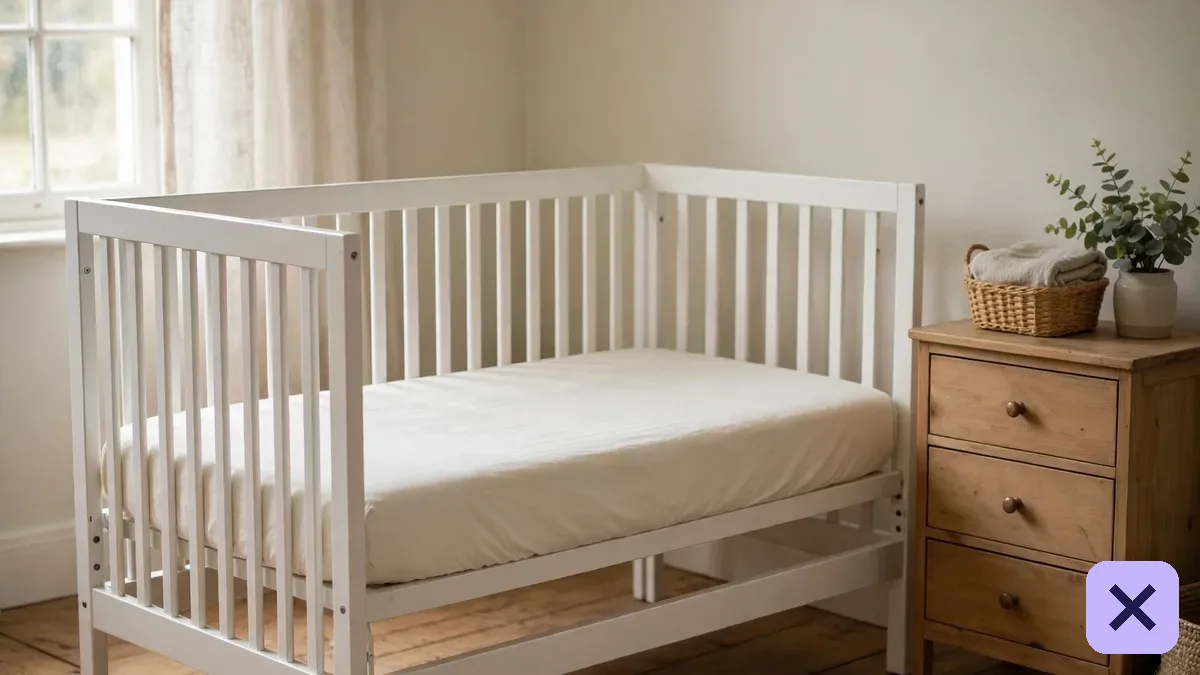
A baby spends more hours in a crib than anywhere else in the first two years of life, which makes the crib the most important purchase in the nursery. The best cribs of 2026 are not the prettiest ones in the catalogue. A good crib also grows with your baby, converting into a toddler bed so one purchase covers two or three years.
Choosing badly has real consequences. A crib with loose rails or wide slats is a safety risk, not a bargain, and a mattress that leaves a gap is a hazard however soft it feels.
Key Takeaways
- A safe crib has fixed sides, slats no more than 6 cm apart, and a frame that does not wobble.
- Convertible cribs are the best value: one purchase covers the crib years and the toddler bed years.
- The mattress must be firm, flat, and snug, with no gap wider than two fingers at the sides.
- A bare sleep space is right for a newborn: fitted sheet only, no pillows, blankets, or bumpers.
- Lower the mattress as your baby grows, and move to a toddler bed when your child can climb out.
What Makes a Crib Safe
Safety comes before style with a crib, every time. The frame should be solid wood or sturdy metal, with tight joints and hardware that stays put. Shake the crib firmly as soon as it arrives: a good one barely moves, while a cheap one rattles and flexes at the corners.
Drop-side cribs, where one side slides down, are not worth the risk, however convenient they look. The moving mechanism is the part that fails, and a side that drops or leaves a gap is dangerous. Modern safety standards favour fixed sides throughout, and every crib worth buying in 2026 has them.
Slat Spacing and the Mattress Fit
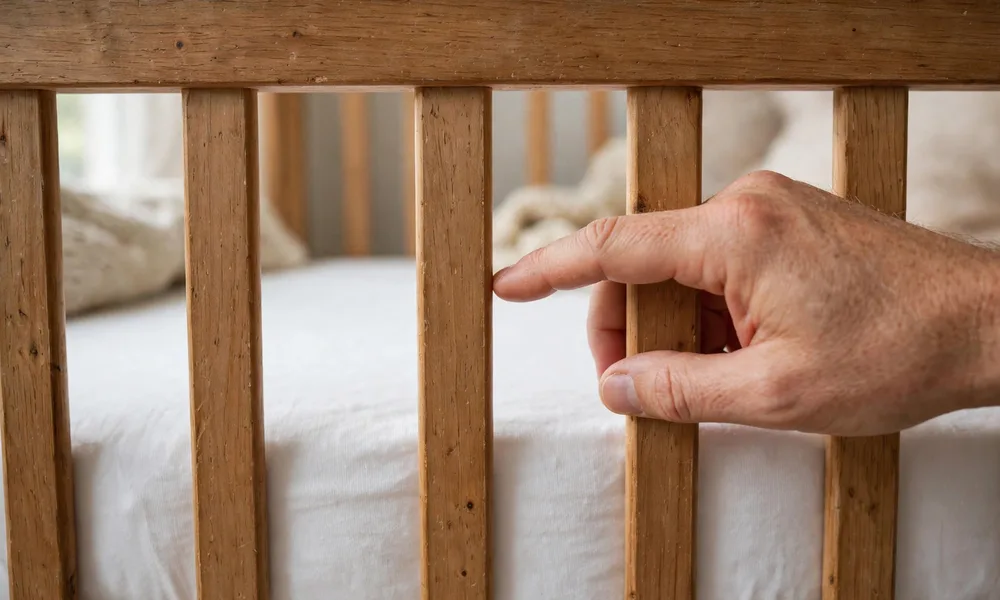
The slats are the first thing to measure. They should be no more than 6 cm apart, close enough that a small head cannot pass between them, all the way around the crib, including at the corners. If you can fit a drinks can between two slats, the gaps are too wide.
The mattress matters just as much as the frame. Press it with your palm and it should feel firm and spring back at once, not sink under your hand. The fit is the real test: no gap wider than two fingers between the mattress and any side of the crib.
The Crib Styles That Grow With Your Baby
Not all cribs are built to last, and the differences matter more after the first year than on the first night. A standard crib does one job well and then needs replacing. A convertible crib is designed to change as your child grows.
The Convertible Crib: The Best Overall Choice
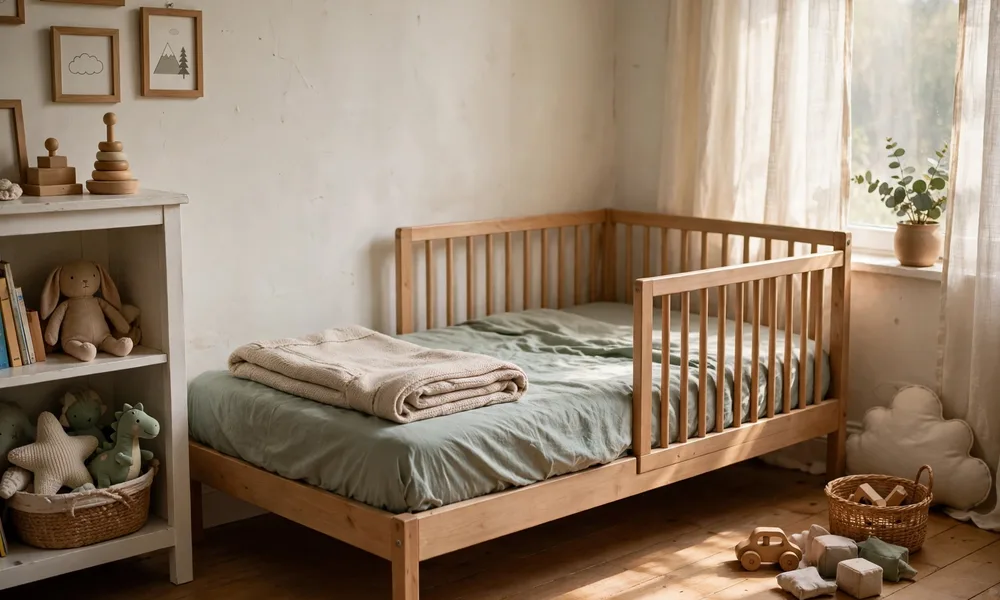
The best overall crib of 2026 is a standard-size convertible crib in solid wood, with three or four mattress heights and a kit that turns it into a toddler bed and then a daybed. It starts as a newborn crib with the mattress at its highest setting, so you can lift a small baby out without straining your back. When your toddler is ready, one side comes off, a low safety rail goes on, and the same frame becomes a first big-kid bed.
Conversion kits are the detail to check before you buy. Some brands include the toddler rail in the box, others sell it separately, and a few discontinue the kit for older models. Ask whether the kit is included, what it costs alone, and whether it will still be available in two years.
The Standard Crib: Simple and Sturdy
A standard full-size crib is the straightforward option. It takes a standard-size mattress, fits the usual fitted sheets, and lasts from birth until your child is ready for a toddler bed, usually between eighteen months and three years. It costs less than a convertible model, and every crib accessory is designed to fit it. The trade-off is a second purchase later: you will need to buy a separate toddler bed.
The Mini Crib: The Small-Space Answer
A mini crib is the right choice when space is tight, or when you want the baby beside your bed for the first months. Most babies outgrow a mini crib between six and twelve months, so plan the next step early: a standard crib waiting in the nursery, or a convertible model that takes over.
The Portable Crib and the Travel Cot
A portable crib folds flat, weighs little, and works as a travel bed, a downstairs nap spot, and a safe place to put the baby while you work in another room. It will not replace a full-size crib at home, because the mattress is thinner and the frame is lighter.
Cribs Compared: Size, Lifespan, and Value
The table below sums up the main crib styles at a glance. Match a crib to your space, your budget, and how long you want it to last.
| Crib style | Best for | Typical size | How long it lasts | Value |
|---|---|---|---|---|
| Convertible crib | Most families, long-term use | Standard, about 135 by 70 cm | Birth to around 4 years | Best overall |
| Standard crib | Simple, sturdy first bed | Standard, about 135 by 70 cm | Birth to around 2 to 3 years | Good |
| Mini crib | Small rooms, bedside sleeping | About 95 by 60 cm | Birth to around 6 to 12 months | Good for stage one |
| Portable crib | Travel, grandparents, naps | Folds flat, varies | Birth to around 2 years | Best second bed |
| Round or oval crib | Style-led nurseries | Round, about 110 cm across | Birth to around 18 months | Style over value |
Choosing the Right Mattress and Bedding
The mattress is half the purchase, and it deserves half your attention. Buy the mattress made for your exact crib model, because sizes still vary slightly between brands, and a mattress even a couple of centimetres short leaves a gap. A waterproof cover is worth having: it protects the mattress from leaks and wipes clean in seconds. Keep two fitted sheets in rotation, so a middle-of-the-night change takes a minute.
Bedding for a newborn is simple on purpose. A fitted sheet that stays taut is all the bedding a newborn needs. No pillows, no duvets, no blankets tucked around the baby, no bumper pads tied to the rails, and no soft toys in the sleep space. Dress the baby in a sleep sack instead, which keeps them warm without anything loose in the crib.
Setting Up the Crib and the Sleep Space
Where the crib goes matters as much as which crib you buy. Put it away from windows, radiators, and dangling blind cords, and clear of shelves that could fall. The room should be dark, quiet, and between 16 and 20 degrees. A dark room helps more than any gadget, so a good blackout blind is one of the best nursery purchases you can make.
Sound is the other half of the sleep space. A steady, low background sound can mask the creaks of a house at night, and our guide to the best white noise machines will help you choose one that stays on all night. To check on your baby without opening the door, our guide to the best baby monitors covers the cameras that work in a dark room at 3 a.m.
The rest of the room should support the crib. Our guide to the best nursery essentials walks through the changing station, the feeding chair, and the storage that make night feeds manageable. A changing surface at the right height, a chair with good arm support, and baskets you can reach one-handed matter more at 3 a.m. than any decoration.

From Crib to Toddler Bed: When and How
Most children move out of the crib between eighteen months and three years. If your child can climb out, it is time to move, because a fall from crib height is worse than a low toddler bed. If your child has grown tall, around 90 cm, or the rail reaches only to their chest when they stand, the crib has done its job. Do not rush a younger child who still sleeps well: there is no prize for leaving the crib early.
The move goes better when the bed stays familiar. With a convertible crib, remove one side, fit the toddler rail, and keep the same mattress, sheets, and spot in the room. Let your child help choose the new bedding, and talk about the big-kid bed for a few days first so it feels like a promotion.
Crib Buying Checklist
- Check the slats are no more than 6 cm apart and the sides are fixed, with no drop-side mechanism.
- Shake the frame hard: it should not wobble, rattle, or flex at the corners.
- Confirm the mattress is firm, flat, and snug, with no gap wider than two fingers anywhere.
- Ask whether the toddler conversion kit is included, what it costs alone, and whether it will still be sold in two years.
- Measure your room and doorways before you buy, and check the crib fits through the nursery door assembled.
- Keep the sleep space bare: fitted sheet only, no pillows, blankets, bumpers, or soft toys for a newborn.
Frequently Asked Questions
When should I buy a crib?
Buy the crib in the second trimester, once you know your space and whether you want a mini crib beside the bed first. Assemble it at least a month before the due date, so you can air it out and fix any missing parts without a deadline.
What size mattress does a crib need?
A standard crib takes a mattress of about 135 by 70 cm, but sizes vary slightly, so buy the mattress made for your exact model. The fit is what matters: no gap wider than two fingers at any side.
Are convertible cribs worth the extra money?
Yes, for most families. A convertible crib costs more upfront, but it replaces the toddler bed and sometimes the daybed, so one purchase covers three or four years. The saving only holds if the conversion kit is included or affordable.
Is a second-hand crib safe?
It can be, if you check it carefully. Confirm the model meets current safety standards, check no parts are missing or damaged, and make sure the sides are fixed. Always buy a new mattress: an old one may be worn or the wrong size.
When should I lower the crib mattress?
Start at the highest setting for a newborn, so you can lift the baby out easily. Lower it when your baby can sit up unaided, and again when they pull up to standing. Once the rail is only chest-high, the mattress stays at its lowest setting.
How do I know my baby is ready for a toddler bed?
The clearest sign is climbing: if your child can climb out, move them before they fall. Height is the other sign, around 90 cm, or when the rail is only chest-high while they stand. Age alone is not a reliable guide.
The Bottom Line
The best crib is the safe one that fits your home, fits your baby, and keeps working as your baby grows. For most families that means a solid wood convertible crib with fixed sides, close slats, a firm snug mattress, and a conversion kit you can buy when the time comes. Buy it early, set it up bare, lower the mattress as your baby grows, and let the same bed carry your child to their first big-kid bed.