A baby monitor looks like a simple purchase. A camera, a screen, a bit of night vision. Yet the gap between the best baby monitors and the worst ones in 2026 is wide enough to decide whether you sleep through the night or spend it staring at a frozen screen at 3 a.m. The best monitors show you a clear picture in the dark, warn you only when something is actually happening, and hold their connection all night. The worst drop out, cry wolf over every shadow, and show you a blurry shape where your baby should be. This guide puts the two sides head to head, so you can tell them apart before you pay.
We judged every monitor on the same five things: how clear the picture is day and night, how reliable the connection is, how honest the alerts are, how long the parent unit lasts on a charge, and how simple the whole thing is to set up and use when you are half asleep. The winners pass all five. The losers fail at least two.
Key Takeaways
- The best monitors give a sharp picture in the dark, because most checks happen at night.
- A dedicated monitor with its own parent unit is the most reliable choice: no Wi-Fi, no app, no subscription.
- Wi-Fi monitors offer the best picture and remote viewing, but they need a strong home network and good security.
- False alerts are the clearest sign of a bad monitor; good ones only sound when something is actually happening.
- Check whether video history or smart alerts need a monthly subscription before you buy.
How We Judge a Baby Monitor
A baby monitor has one job: to tell you quickly and reliably when your baby needs you. The picture is the first thing to check. Look for at least 1080p video on a Wi-Fi monitor and a clear 720p screen on a dedicated unit, because anything less turns your baby into a blurry shape. You need to see whether your baby is sleeping, stirring or crying, and a soft, smeared image cannot tell you that.
Night vision is the feature you will use most, because most baby checks happen in the dark. Infrared night vision turns the nursery into a clear black-and-white picture, and the best systems show your baby sharply enough to see breathing movements.
Range and battery decide whether the monitor works in your real home. A dedicated monitor should reach through two or three walls and at least one floor, with a parent unit battery that lasts a full night on a single charge. Wi-Fi monitors have no range limit at all, because they work anywhere your phone has internet, but they are only as good as your home network.
Finally, we looked at alerts. A good monitor tells you when your baby cries, moves or makes a sound that matters, and stays quiet the rest of the time. A bad one alerts you every time a car passes outside, the heating clicks on, or a shadow moves across the wall.

The Best Side: What the Best Baby Monitors Get Right
The best monitors share a simple quality: they fade into the background and only speak up when it matters. You set the camera above the cot, you switch the parent unit on, and it works. The picture is clear, the sound is clean, and when your baby stirs at 2 a.m., you know in seconds whether to go in or go back to sleep. The best models do this night after night without a dropped connection, a dead battery or a mystery alert, and they do it simply enough that a tired grandparent can use them without a manual.
What sets them apart is honesty. A good monitor shows you what is really happening in the cot, tells you the truth about its battery and its range, and does not hide its best features behind a subscription.
Best for Most Families: Dedicated Video Monitors
A dedicated monitor with its own parent unit is the safest pick for most families. There is no Wi-Fi to set up, no app to log into, and no account that can be hacked. The camera talks directly to the parent unit over a private radio link, so the picture appears the moment you switch it on, and it keeps working even when your internet goes down. For a fuller picture of the best options in this category, our guide to the best baby monitors of 2026 compares the leading dedicated and Wi-Fi models side by side.
Best for Remote Checking: Wi-Fi App Monitors
Wi-Fi monitors are the best choice if you want to check on your baby from anywhere. The picture is usually sharper than a dedicated unit, often true 1080p or better, and you can watch from your phone at work, in the garden or at the grandparents’ house. The trade-off is dependence on your network. Buy one only if your Wi-Fi is strong in the nursery, and choose a brand that offers two-factor login and regular security updates, because a camera in your baby’s room is not a place to cut corners on security.
Best for Extra Reassurance: Breathing and Movement Monitors
Breathing and movement monitors add a layer of reassurance that a camera alone cannot give. They track your baby’s breathing or movement through a sensor pad under the mattress or a small wearable, and they sound an alarm if nothing is detected for twenty seconds. For anxious parents, especially in the first months, that alarm is worth more than any camera feature. They are not medical devices, and they cannot diagnose or prevent illness. If you are setting up the room from scratch, our roundup of the best nursery essentials for 2026 covers the crib, the mattress and the changing station that go with the monitor.
The Worst Side: What the Worst Baby Monitors Get Wrong
The worst monitors do not look bad in the shop. They look sleek and modern, with a glossy box promising high definition, smart alerts and all-night battery life. The faults show up at home, usually in the first week. The picture freezes just as your baby starts crying. The parent unit dies at 4 a.m. The app logs you out in the middle of the night and asks for a password you cannot remember. None of this is obvious on the shelf. All of it becomes obvious when you are tired and your baby needs you.
The worst models also lie about what they do. A box that says 1080p may mean a sensor that records at that resolution and a screen that shows far less. A claim of all-night battery may mean eight hours on the lowest brightness with the sound off, which is not how anyone uses a monitor. And a smart alert that promises to tell crying from background noise may simply alert you to everything, which is the same as alerting you to nothing.
Worst Fault 1: Connections That Drop at Night
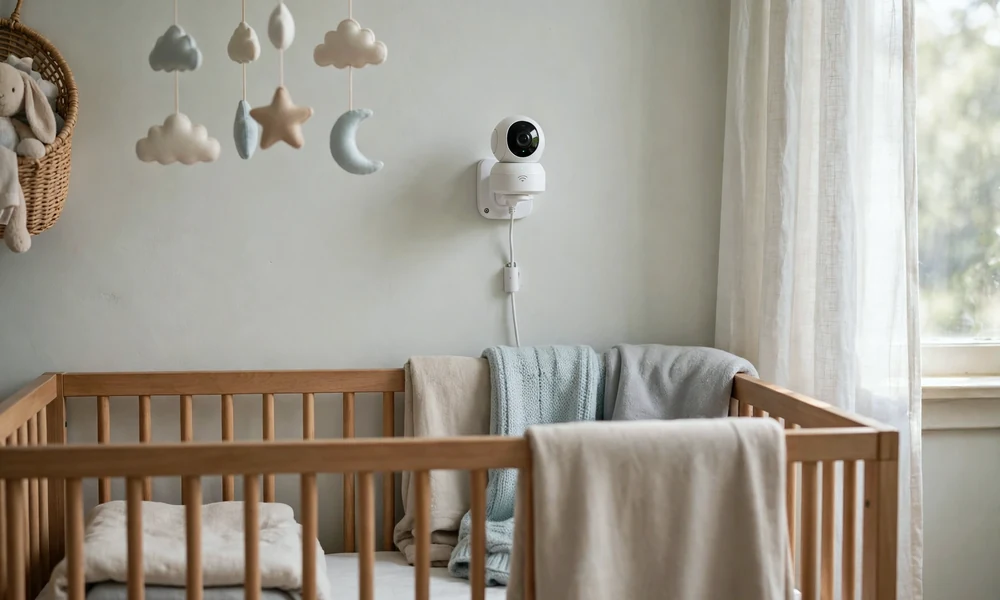
A dropped connection is the most serious fault a baby monitor can have, and it is also the most common in cheap models. The camera and the parent unit lose each other through walls, floors or interference from other devices, and the screen goes blank or freezes on an old frame. The danger is that a frozen picture looks like a sleeping baby, so you may not notice for an hour that you are watching a still image. Good monitors reconnect in seconds and warn you loudly when the signal is lost. Bad ones fail silently, and that silence is the fault that matters most.
Worst Fault 2: False Alerts All Night Long
False alerts are the second great fault, and they wear parents down fast. A cheap monitor with a sensitive microphone will alert you to traffic, a boiler switching on, a dog barking two streets away, or the rustle of a curtain. After a few nights of this, most parents turn the alerts off or stop checking the monitor, and then the one real alert gets missed. The best monitors let you tune the sensitivity and learn to ignore steady background noise. The worst give you one setting, too sensitive to live with, and no way to fix it.
Worst Fault 3: Subscriptions Hiding the Best Features
The third fault is a monitor that works properly only if you pay every month. Some Wi-Fi monitors record video history, save motion clips or offer smart crying detection only on a paid plan, and the free version is little more than a live picture. That is not always a bad deal if the price is clear, but the worst brands hide it. The box promises video history and smart alerts in large letters, and the subscription appears only in small print or inside the app after you have set the camera up. Before you buy, check the app listing and the maker’s website for the words subscription and plan, and work out the real yearly cost.
Best vs Worst: Head to Head
Put the two sides together and the difference is not about price alone. It is about trust. A good monitor earns your trust by doing the same thing every night: a clear picture, a steady connection, an alert only when it counts. A bad one spends your trust quickly, because every frozen screen and every false alarm teaches you not to believe it, and a monitor you do not believe is a monitor you stop using. Some mid-priced monitors beat luxury models on the things that matter, because they spend their budget on a good sensor and a strong radio rather than on packaging and branding.
Who Each Side Is For
The best monitors are for any parent who wants to sleep knowing they will be told when their baby needs them. If your nursery is close to your bedroom and your internet is unreliable, a dedicated monitor is the right pick. If you travel, work away from home or want to check in from another room, a Wi-Fi monitor earns its keep. Parents who lie awake worrying will get the most from a breathing monitor as well, as long as they understand it is reassurance, not medicine.
The worst monitors are for nobody, but they end up in the hands of people who buy on price alone, or who replace a broken monitor in a hurry before a trip. If that is you, the honest advice is to pause and spend a little more on a model with a real track record for holding its connection. It does not need to be the most expensive model on the shelf. It needs to pass the five tests above, and to keep passing them every night.
The Verdict
The verdict is clear. The best baby monitors of 2026 win on every measure that matters: a sharp picture in the dark, a connection that holds all night, honest alerts, and a battery that lasts until morning. The worst lose on all of them, and they lose quietly, one frozen screen and one false alarm at a time, so the cost only becomes clear when you need the monitor most. If you look after a baby, buy the best monitor you can afford and match the type to your home: dedicated for reliability, Wi-Fi for remote checking, and breathing sensors only for extra peace of mind.
If you are still building the sleep routine, start with our guide to the best noise machines for sleep in 2026, which covers the gentle background sound that helps many babies settle, and the same questions of honest features and real-world reliability. A good monitor and a calm, dark, quiet nursery are the pair that helps everyone in the house sleep better.