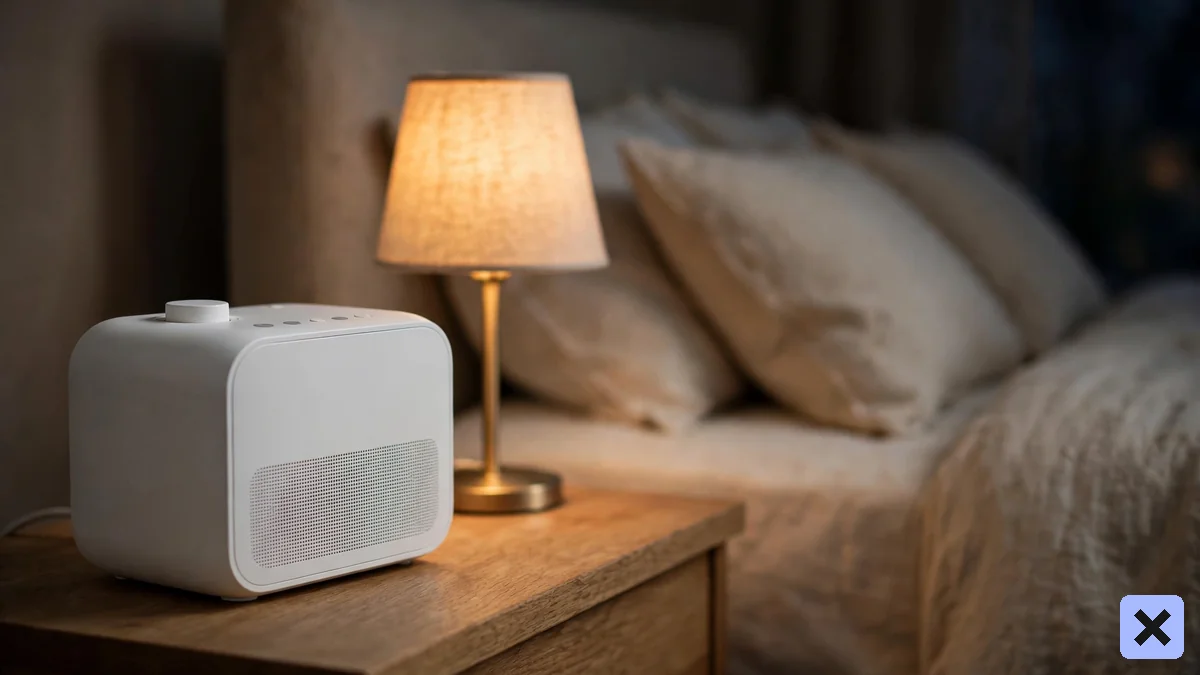
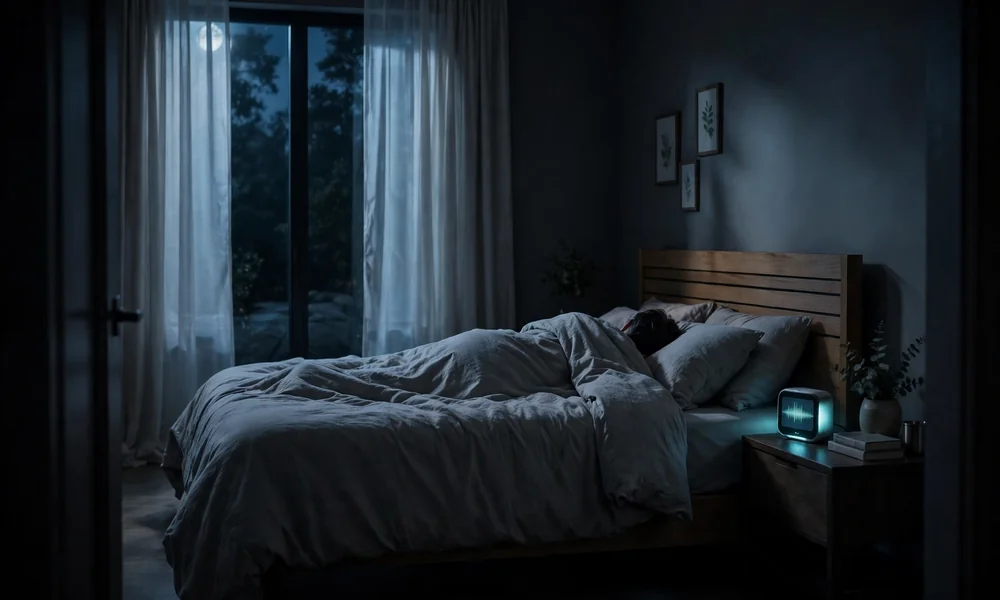
The best noise machines for sleep in 2026 turn a restless bedroom into a calm, steady soundscape. A good machine masks traffic, a snoring partner, a barking dog, or the creaks of an old house with a smooth, even sound, so small noises stop jerking you awake.
The brain reacts to sudden changes in sound far more than to steady background noise. A door slamming at two in the morning wakes you because it breaks the quiet, not because it is loud. A noise machine removes that contrast by raising the baseline of sound, so the slam becomes a small ripple instead of a shock.
This guide explains how noise machines work, compares the main types of sound, and rounds up the best for 2026. Whether you need a bedside unit, a pocket-sized travel companion, or a gentle nursery machine, you will find a pick that fits.
Key takeaways
- A noise machine masks sudden sounds, helping you fall asleep faster and wake up less often.
- White noise suits light sleepers and noisy streets, while pink and brown noise feel softer, deeper, and more relaxing to many people.
- Choose a machine with a real speaker, a wide volume range, and continuous play.
- Keep the volume about as loud as a quiet conversation, and place the machine across the room rather than beside your ear.
- Pair your machine with a dark, cool bedroom, and give yourself a week to adjust.

Why a Noise Machine Can Change Your Sleep
Most bedrooms are not as quiet as they seem. Even in a peaceful neighbourhood, the night brings dripping taps, humming pipes, and distant sirens. Your sleeping brain monitors all of it, and any sudden sound can pull you toward wakefulness. Over a full night, those micro-wake-ups add up to lighter sleep.
A noise machine smooths out the sound environment. It creates a constant layer of sound that your brain quickly learns to ignore, and that layer hides the sharp peaks of other noises. Light sleepers, shift workers, parents of young children, and apartment dwellers benefit most. Travellers swear by them too, because a familiar sound can make a strange hotel room feel like home.
How Noise Machines Actually Work
Not all noise is the same. Understanding the main types helps you choose a sound you will enjoy at three in the morning.
White Noise
White noise contains every frequency at equal intensity, producing a steady hiss like a fan running on high. It is the most effective type for masking sharp sounds, because its broad spectrum covers the widest range of intruding noises. Light sleepers and people on busy streets usually do best with white noise, although some find its hiss a little harsh.
Pink and Brown Noise
Pink noise lowers the higher frequencies, so it sounds softer and warmer, more like steady rainfall. Brown noise goes further still, emphasising deep, low tones that feel like a low rumble or a distant waterfall. Many sleepers find pink and brown noise more comfortable for long nights, and some small studies suggest pink noise may support deeper sleep.
Nature Sounds and Fan Sounds
Many machines also offer rain, ocean waves, and thunderstorms, plus the sound of a real fan without the breeze. These can feel more pleasant than pure static, especially if you find white noise boring. The catch is that recordings can loop, and an obvious repeating pattern can become distracting, so look for long, non-looping recordings.
The Best Noise Machines for Sleep in 2026
The machines below earned their place by doing the basics well: a pleasant, non-looping sound, a speaker that stays clear at low volume, and simple controls you can use in the dark. Treat the price bands as a guide, since prices change through the year.
Best Overall: A Full-Featured Bedside Machine
The best overall pick is a full-featured bedside machine with a real speaker, dozens of sounds, and a simple dial or button layout. It should offer white, pink, and brown noise alongside rain and fan sounds, with a volume range from a whisper to loud enough to cover a snoring partner. A night light and a timer are useful extras, and a mid-range machine should last for years of nightly use.
Best for Light Sleepers: A High-Masking Machine
Light sleepers need a machine that masks aggressively without sounding harsh, so look for a larger speaker with a strong white noise mode and fine volume steps. Look for a fan-based sound option, which many light sleepers find easier to sleep through than digital static. Place it between you and the source of the noise, and you will notice the difference on the first night.
Best Budget Pick: A Simple, Reliable Machine
You do not need to spend a lot to sleep better. A good budget machine offers a handful of sounds, a clear speaker, and a simple on-off switch. The trade-offs are fewer sound choices, a smaller speaker, and no extras such as a night light or an app. For a spare room or a first try, a budget machine is a sensible start, and you can always upgrade later.
Best for Babies and Nurseries: A Gentle Machine
A nursery machine needs to be gentle, simple, and safe to run all night. Look for soft lullabies or womb-like sounds, a warm night light, and a cry sensor that restarts the sound if the baby stirs. Keep the volume low and place the machine at least a couple of metres from the cot. A consistent sound helps babies link sleep cycles, which can mean longer sleep for the household.
Best Portable Pick for Travel: A Pocket-Sized Machine
Travellers need a machine that fits in a carry-on and runs all night on a single charge. The best portable picks sit on a hotel nightstand, charge over USB, and offer at least ten hours of play. A clip or small stand helps you position it near the bed, and simple buttons mean you can start it in a dark room without fumbling. A good travel pillow completes the setup for hotel sleep, as our guide to the best travel pillows for 2026 explains.
Noise Machine Comparison at a Glance
The table below sums up the five picks above. Think about your room, your budget, and the noises you need to mask.
| Pick | Best For | Sound Options | Price Band |
|---|---|---|---|
| Full-featured bedside machine | Everyday use at home | White, pink, brown, rain, fan | Mid-range |
| High-masking machine | Light sleepers | White, fan, brown | Mid-range |
| Simple budget machine | First-time buyers | White, rain, fan | Budget |
| Gentle nursery machine | Babies and nurseries | Lullabies, womb sounds, white | Mid-range |
| Pocket-sized travel machine | Travel and hotels | White, pink, rain | Mid-range |
How to Choose the Right Noise Machine
Sound quality, volume range, and the way the machine fits your room count for far more than the number of features on the box. A machine with thirty sounds you never use is worse than a machine with five sounds you love.
Sound Quality and Speaker Size
A bigger speaker usually means a fuller, less tinny sound at low volume. Small, cheap speakers can sound thin or buzzy, and that harshness becomes irritating. If possible, listen to a machine before you buy it, or choose a retailer with a generous return policy. The best test is a full night of sleep, not five minutes in a shop.
Volume Range and Timer Options
Look for fine volume steps and a maximum volume loud enough to mask a snoring partner or street noise. A timer is useful if you prefer the sound to fade out, but many sleepers do better with continuous play, since a machine that switches off can leave you exposed at four in the morning. A mains-powered machine never runs out of charge, while a rechargeable model moves easily between rooms.
Your Noise Machine Setup Checklist
Use this checklist on the first night with your new machine.
- Place the machine across the room, between you and the noise source.
- Set the volume to a comfortable level, about as loud as a quiet conversation.
- Choose a sound you enjoy, and try pink or brown noise if white noise feels harsh.
- Run the machine all night for the first week.
- Keep the bedroom cool and dark.
- Stick with the same sound for at least a week.

Mistakes That Keep People Awake
The most common mistake is turning the volume up too high. A machine at full blast can damage your hearing over time and make it harder to fall asleep. If you need to raise your voice to talk over it, the machine is too loud.
Another common mistake is giving up too quickly. Your brain needs a few nights to learn that the new sound is safe. Many people find the first night strange and the third or fourth night normal, with the benefits showing up after a week. Switching sounds every night is another mistake, since it stops your brain settling into a routine. Pick one sound and keep the volume steady.
Finally, do not expect a noise machine to fix a bedroom that works against sleep. It helps with noise, but it cannot fix a room that is too hot, too bright, or filled with screens. A dark room matters just as much as a quiet one, and a sleep mask can make a real difference on bright mornings, as our roundup of the best sleep masks for 2026 shows. If light leaks around your curtains, fixing that will help as much as any machine, and our comparison of curtains versus blinds for bedrooms covers the options in detail.
Frequently Asked Questions
Are noise machines safe to use every night?
Yes, for most people, as long as you keep the volume moderate and the machine away from your head. Keep the sound at or below the level of a quiet conversation and give your ears a break during the day. If you have a hearing condition, check with a clinician first.
How loud should a noise machine be?
About as loud as a quiet conversation, roughly a running shower heard from the next room. It should be loud enough to soften sudden noises but quiet enough that you can still hear an alarm or a baby crying. Start low and raise it only until outside sounds fade into the background.
Can a noise machine help with snoring?
A noise machine cannot stop snoring, but it can mask the sound so you fall asleep and stay asleep more easily. Place the machine between you and your partner, choose a steady white or brown noise, and set the volume high enough to soften the snoring.
Is white noise or pink noise better for sleep?
White noise masks a wider range of sounds and suits light sleepers and noisy streets, while pink and brown noise sound softer and warmer, and many people find them more relaxing over a full night. Try each for a few nights and keep the one that helps you fall asleep fastest.
Do noise machines work for babies?
Many parents find that a gentle, low-volume machine helps babies settle and sleep longer, because the steady sound mimics the womb and masks household noise. Keep the volume low, place the machine well away from the cot, and use a continuous, non-looping sound.
Should the machine run all night or switch off?
Most sleepers do better with continuous play, because a machine that switches off can leave you exposed to sudden noises in the early hours. A timer with a gentle fade-out suits people who only need help falling asleep. Try continuous play first.
The Bottom Line
The best noise machines for sleep in 2026 fade into the background and let your brain rest. Pick a machine with a sound you enjoy, a speaker that stays clear at low volume, and a volume range that covers your noisiest nights. Set it up across the room, keep the volume moderate, and give yourself a week to adjust.