The best travel pillows 2026 can turn a long flight from an endurance test into genuine rest. Anyone who has landed after an overnight journey with a stiff neck and a foggy head knows the difference a good pillow makes. The right one holds your head steady, supports your neck and lets you drift off without sliding forward.
Yet most travel pillows fail at exactly that job. Thin, floppy designs offer no real support, while oversized ones feel bulky and hot, and some push your chin into your chest. Learning from the worst pillows for neck pain is a useful starting point, because the same flaws that ruin a pillow at home are even worse at 35,000 feet.
This guide compares the travel pillows that genuinely work in 2026, explains what separates the best from the rest, and shows you how to pick the right style for the way you travel, so you arrive rested rather than wrecked.
Key takeaways
- Memory foam U-shaped pillows give the most reliable neck support for sleeping upright on planes.
- Inflatable pillows are the lightest option and pack down small, but they offer less comfort than foam.
- Wrap and scarf-style pillows suit side sleepers and travellers who want something discreet and soft.
- Fit matters more than brand: the pillow should fill the gap between head and shoulder without pushing the chin forward.
- A removable, washable cover is essential for any pillow you will use again and again.
What Makes a Great Travel Pillow
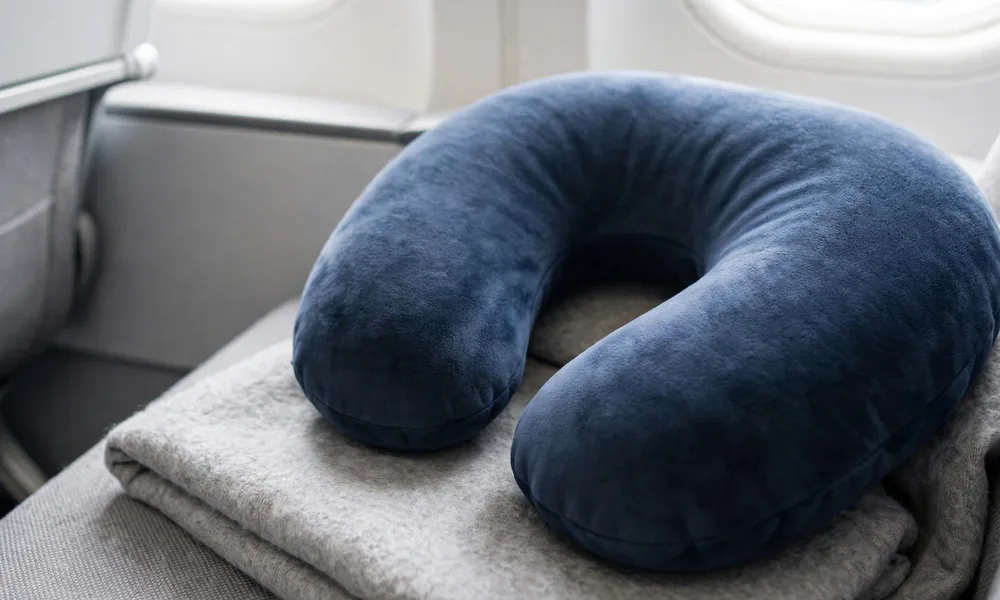
A great travel pillow does one job well: it keeps your head in a neutral position while you sleep sitting up. When your head falls forward or sideways for hours, the muscles in your neck stay stretched and strained, and you wake up sore. A pillow that fills the space around your neck and gently cradles your head prevents that drift, so your muscles can actually relax. The best designs are firm enough to hold their shape, soft enough to feel comfortable, and shaped to match the way people really sleep on planes, trains and buses. They also stay put, because a pillow that slips or needs constant readjusting wakes you every time it moves.
Neck Support and Shape
Shape is the first thing to get right. The classic U-shape works because it supports both sides of the neck at once, catching your head whichever way it leans. Look for raised sides that reach up towards your jaw and ears, rather than a flat ring that sits low around your neck, and consider a design with a higher back or a chin support at the front if you tend to nod forward as you fall asleep. Window leaners benefit from a firmer side; those who tilt back need more support behind the neck.
Materials That Matter
Memory foam remains the most popular filling for a reason. It moulds to the shape of your neck, spreads pressure evenly and keeps its support consistent through the night, and high-density foam holds its shape far better than cheap, soft foam that flattens within an hour. Microbeads are lighter and cooler but compress over time, while inflatable pillows let you control firmness with air yet can feel bouncy and hard. Whatever filling you choose, look for a soft, breathable cover in velour, bamboo or cotton, and avoid plasticky covers that make you sweat on a warm cabin.
Size, Weight and Packability
A travel pillow has to earn its place in your bag. The best memory foam pillows compress to roughly half their size and clip to your luggage, while inflatable pillows pack down to the size of a phone. Weight matters too: a pillow over 400 grams starts to feel like a burden around your neck, so aim for something under 300 grams if you can. The best travel backpacks for 2026 often include a dedicated strap or pocket for a pillow, which keeps it accessible without taking up space inside.
The Main Types of Travel Pillow Compared
Travel pillows fall into a few clear families, and each one suits a different kind of traveller. The table below gives a quick overview before we look at each type in detail.
| Type | Support | Packability | Best for |
|---|---|---|---|
| Memory foam U-shaped | Excellent | Good | Long-haul flights |
| Inflatable | Moderate | Excellent | Light packers |
| Wrap and scarf | Good | Good | Side sleepers |
| Microbead | Moderate | Fair | Short trips |
| Lumbar and wedge | Good | Fair | Back support |
Knowing which family fits your travel style narrows the choice quickly. From there, the details of fit, fabric and firmness decide the winner.

Memory Foam U-Shaped Pillows
Memory foam U-shaped pillows are the best all-round choice for most travellers, and they dominate the best travel pillows 2026 lists for good reason. The foam moulds around your neck, the raised sides stop your head from flopping sideways, and the firmness stays consistent through a long flight. The drawback is bulk: even compressible foam pillows weigh around 250 to 350 grams, so choose one that compresses into its own carry bag and clips to your luggage handle.
Inflatable Travel Pillows
Inflatable pillows are the lightest and most packable option available. Deflated, they roll up smaller than a pair of socks, and you can adjust the firmness by adding or releasing air, which makes them a favourite with ultralight travellers and anyone who only uses a pillow occasionally. The trade-off is comfort: air chambers can feel hard, and the plastic surface is less pleasant than soft foam, although newer inflatables with a velour or fleece cover are much better. They can also spring a leak, so check the valve quality before relying on one overnight.
Wrap and Scarf Pillows
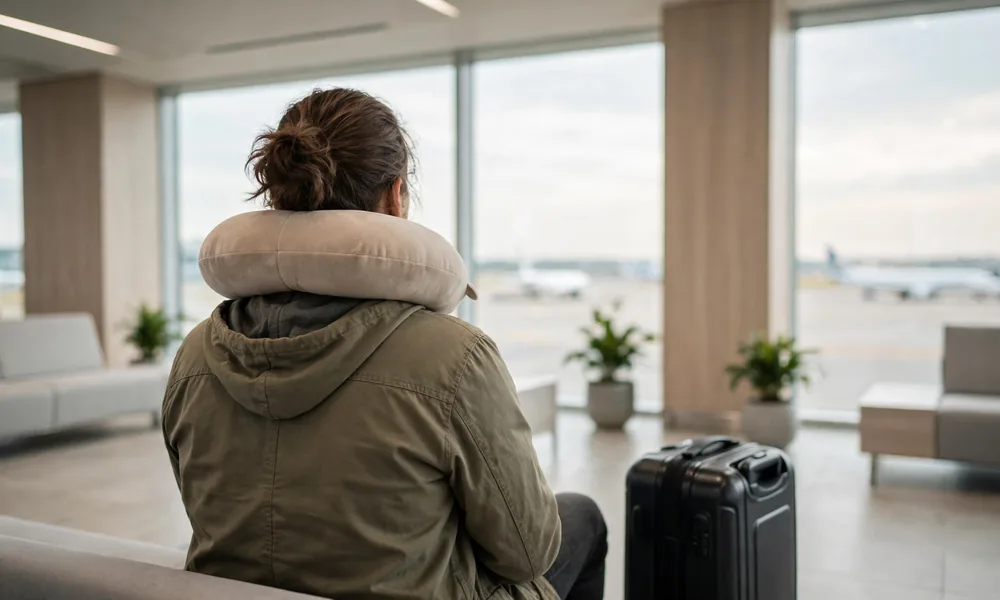
Wrap pillows look like a soft scarf with hidden support inside, and they wrap around your neck in a full circle. They are discreet, comfortable and easy to wear through the airport, and the wrap also supports your chin, which helps if you nod forward when you sleep. They suit side sleepers well, filling the gap between head and shoulder on the side you lean towards. The downside is warmth: a thick wrap can feel hot on a warm plane, so choose a lighter wrap with breathable fabric if you tend to run warm.
How to Choose the Right Pillow for Your Trip
Choosing well starts with an honest look at how you travel. A pillow that is perfect for a twelve-hour flight may be overkill for a two-hour train ride, and the lightest option may not give you the support you need on an overnight journey, so match the pillow to the trip rather than the other way round. Try it before you travel: wear it at home for twenty minutes and check whether your chin stays level. If your head tips forward or the pillow presses on your throat, it is the wrong fit.
For Long-Haul Flights
Long-haul flights demand the most support, so memory foam is the natural choice. Look for a pillow with raised sides, a firm core and a washable cover, and pair it with a good sleep mask and earplugs for the best chance of real sleep. Window seats help, since you can lean against the cabin wall as well as the pillow, while aisle sitters need stronger side support and a front closure.
For Trains, Buses and Road Trips
Trains and buses offer more room to shift position, so a slightly softer pillow often works well. Wrap pillows and microbead designs shine here, since you can adjust them as you change posture, while on a road trip you have no weight limit, so bring the most comfortable pillow you own. Motion matters on the road: a pillow with a strap or grippy cover stays in place when the vehicle turns or brakes.
For Light Packers
If you travel with a single small bag, every item has to justify its space. An inflatable or compressible foam pillow is the sensible choice, and a wrap pillow that doubles as a scarf earns its place twice over. Clip the pillow to the outside of your bag so it takes up no room inside. The worst luggage choices travellers make often come down to bringing the wrong bag or overpacking, so choose your luggage as carefully as your pillow, and a well-packed bag with a good pillow clipped outside is the simplest recipe for a comfortable journey.
Common Mistakes to Avoid
Most travel pillow disappointments come from a handful of avoidable mistakes. Run through this checklist before you buy, and again before you pack.
- Buying the cheapest pillow without testing the fit or the firmness first.
- Choosing a pillow that is too soft to hold your head upright for more than an hour.
- Forgetting to check whether the cover is removable and washable.
- Wearing the pillow backwards, with the opening at the back instead of the front.
- Picking a pillow that is too hot for warm cabins or summer travel.
- Leaving the pillow at home because it seemed too bulky to carry.
The last mistake is the most common. A pillow only helps if it is with you, so choose one you will actually carry — a slightly less supportive pillow that travels with you beats the perfect one sitting in a drawer.
How to Care for Your Travel Pillow
A travel pillow touches your face and neck for hours at a time, so keeping it clean matters. Wash the cover after every trip on a gentle cycle, but check the label first, because some foam cores must never go in the washing machine. Memory foam cores can be spot cleaned with a damp cloth and mild soap, then left to air dry fully before you pack them away. Never tumble dry foam, and never store a damp pillow in a sealed bag, which invites mould and stale smells. Store your pillow loosely rather than compressed for months, since foam squashed in a stuff sack for a year may never fully recover its shape.
Frequently Asked Questions
Are travel pillows worth it?
Yes, for most travellers. A good travel pillow supports your neck, reduces the chance of waking up sore, and makes it much easier to sleep sitting up.
Which type of travel pillow is best for sleeping on a plane?
Memory foam U-shaped pillows are the best choice for sleeping on a plane. They offer the firmest, most consistent support and stop your head from falling sideways while you sleep.
How do I stop my head from falling forward?
Choose a pillow with a front closure or chin support, tightened so it sits snugly around your neck. Sitting upright with your seat slightly reclined also helps.
Can I wash a travel pillow?
Most travel pillows have a removable, machine-washable cover. The core usually needs spot cleaning only, so check the care label first, and air drying is safer than tumble drying.
Do inflatable travel pillows really work?
Inflatable pillows work well for light packers and short trips, and you can adjust their firmness with air pressure. They rarely match memory foam on long flights, but a good inflatable with a soft cover beats no pillow at all.
What size travel pillow should I buy?
Choose a pillow that fills the gap between your head and shoulder without forcing your chin up or down. Most adults suit a standard size, but a longer neck or broader shoulders call for a larger or adjustable model.
The Bottom Line
The best travel pillows 2026 fit your neck, suit your sleeping style and travel with you every time. Memory foam U-shaped pillows lead the field for long flights, inflatables win for light packing, and wrap pillows are the most comfortable choice for side sleepers. Pick the type that matches how you travel, test the fit before you fly, and keep the cover clean, and you will step off your next flight feeling rested instead of stiff.