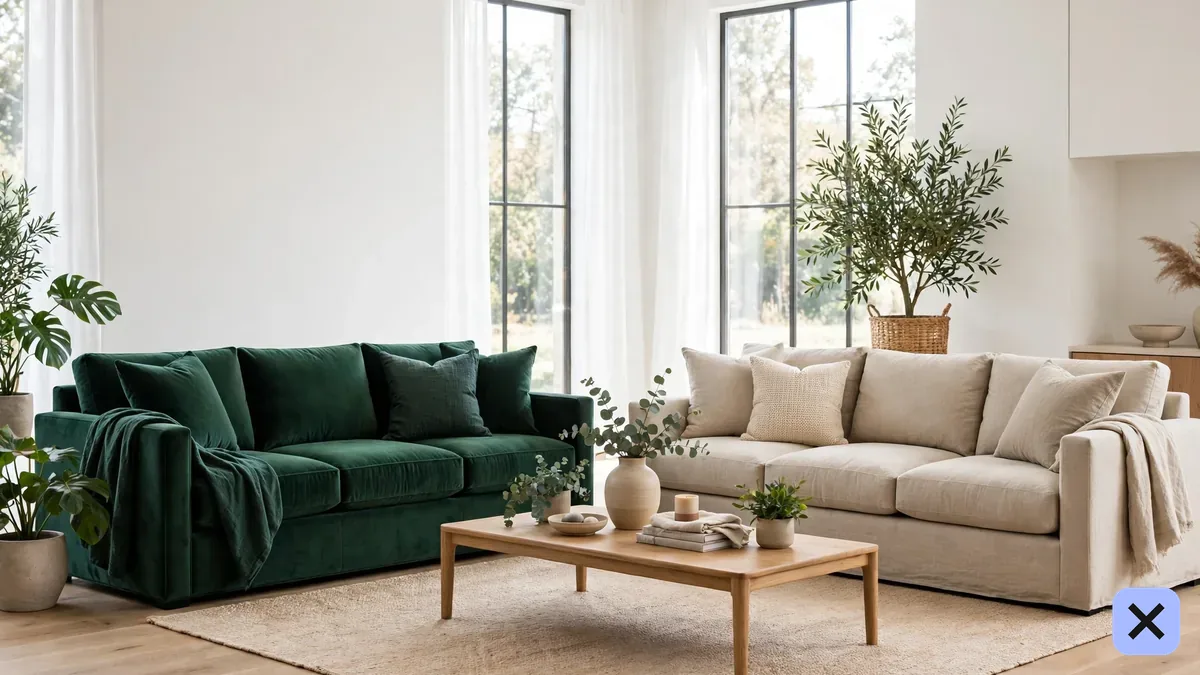
Choosing between velvet vs linen sofas is one of the most satisfying decisions in furnishing a home, because the two fabrics could hardly be more different. Velvet is soft, rich and dramatic, with a deep pile that catches the light. Linen is light, textured and relaxed, with a natural weave that gives a room an easy warmth.
The sofa is usually the largest piece of furniture in a living room and the one your household uses most. It is where you read, watch films and host friends. The fabric has to survive pets, children, sunlight and spills while still looking like something you are proud to own.
This guide compares velvet and linen sofas honestly, across comfort, durability, cleaning, style and cost. By the end, you should know which fabric fits your household, your budget and your taste.
Key takeaways
- Velvet feels richer and more luxurious, while linen feels cooler, lighter and more relaxed.
- Linen handles busy family life better, but it wrinkles and fades in strong sunlight.
- Velvet shows pressure marks and needs brushing, yet performance velvet resists stains.
- Linen usually costs less than good velvet and suits casual, coastal and Scandinavian rooms.
- The best choice depends on your household: pets and children favour linen, formal rooms favour velvet.
What Velvet Really Is
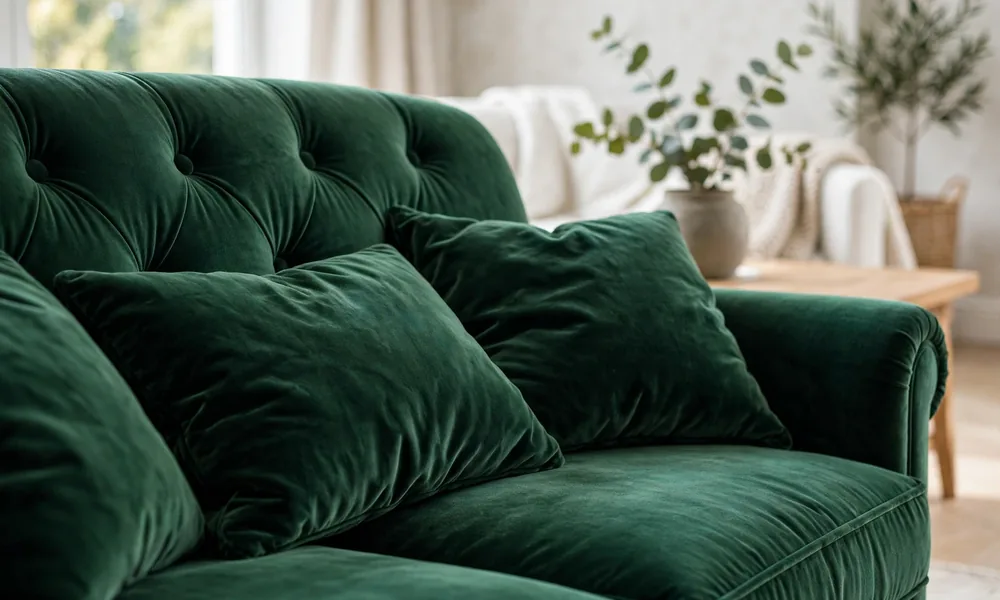
Velvet is a woven fabric with a short, dense pile that stands upright, giving it a soft touch and a shade that shifts in changing light. Traditional velvet was silk. Today most velvet sofas use cotton, polyester or a blend, and quality varies enormously.
Cotton velvet feels the most luxurious, but it is also the most vulnerable to water marks and crushing. Polyester velvet, often called performance velvet, is tougher and more stain resistant. A blend often gives the best balance.
One surprise for first-time buyers is how velvet marks. Sit in one spot for an evening and you will leave a visible impression where the pile was pressed down. This is normal, not a fault. A quick brush restores the pile in seconds. Still, if you dislike a sofa showing where people have sat, velvet will test your patience.
The Look Velvet Gives a Room
Velvet brings drama. A velvet sofa in emerald, navy, rust or blush becomes the centre of a room. That strength is also a risk: velvet can overwhelm a small or very casual room, and cheap velvet can look flat and shiny rather than rich.
What Linen Really Is
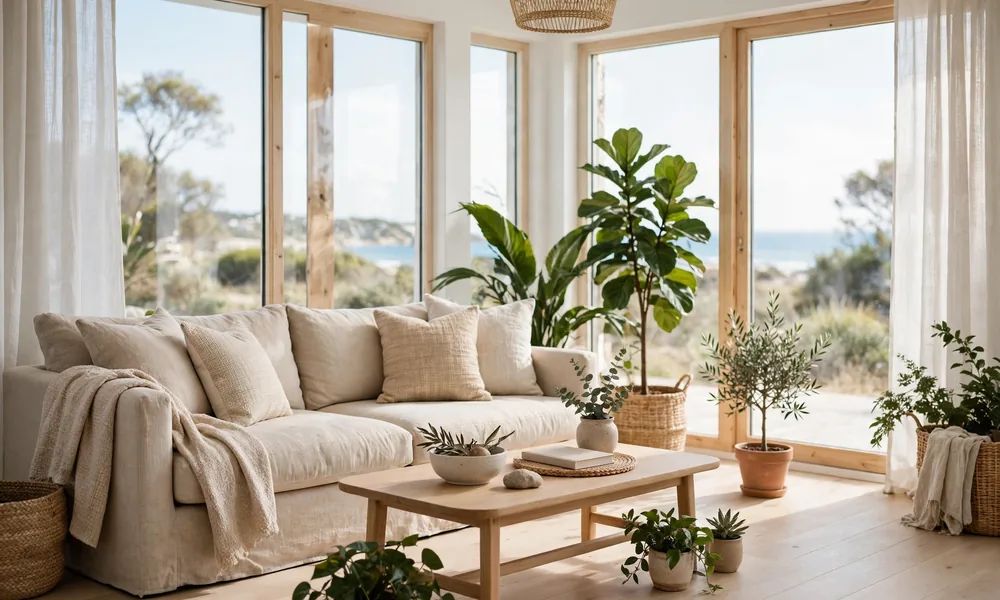
Linen is woven from flax fibres. It has a visible weave, an uneven texture and a matte finish. A linen sofa looks relaxed from day one, and only grows more comfortable looking as it softens.
Most linen sofas are not pure linen. Many are a blend with cotton or viscose, which improves durability and reduces wrinkling while keeping the natural look. Pure linen is breathable and strong, but it creases readily and feels stiff when new. A good blend keeps the texture with a softer drape.
Linen also has a practical advantage in warm homes: it breathes. It stays cool against the skin in summer, which is why linen sofas are so popular in coastal and sunny houses. In winter a throw is all it needs to feel cosy.
The Look Linen Gives a Room
Linen brings calm. A linen sofa in natural, stone or soft grey makes a room feel light and airy, suiting Scandinavian, coastal and country styles. The trade-off is that linen rarely makes a statement on its own, so it needs cushions and throws to avoid looking plain.
Comfort and Feel
Comfort is where personal preference matters most, because the two fabrics feel completely different. Velvet is warm, smooth and enveloping. On a cold evening, velvet feels instantly welcoming.
Linen is cooler and drier to the touch, with a crisp texture that some people love and others find less inviting. It does not cling to skin in warm weather, so it suits hot climates. Over time, linen softens considerably, and a well-used linen sofa develops a supple, broken-in feel owners come to prefer.
Durability and Everyday Life
Both fabrics can last for years, but they fail differently. Velvet crushes and wears on the arms and seat edges. Linen fades, wrinkles and, in lower-quality weaves, pills.
For households with children and pets, linen usually has the edge. Its matte texture hides pet hair, and slipcovers can often be removed and washed. Velvet shows pet hair clearly on dark colours, and claws can catch in the pile. A tightly woven performance velvet can still be surprisingly tough in a dark colour.
Sunlight is the enemy of both fabrics, but linen fades faster. A linen sofa in front of a south-facing window will lose colour within a couple of years unless the room has blinds or curtains. Velvet fades more slowly. Keeping the sofa out of direct sun is the best thing you can do for its lifespan.
When you are weighing how sofa fabrics cope with daily use, it helps to see how leather and fabric sofas hold up over time. The fabric that suits your household is the one whose weaknesses you can live with.
Cleaning and Maintenance
Cleaning is where the two fabrics divide buyers most clearly. Velvet needs regular, gentle attention. A weekly vacuum keeps dust out of the pile, and a soft brush restores the nap. Blot spills immediately, never rub: rubbing pushes liquid deeper into the pile.
Linen is more forgiving in some ways and less in others. Many linen sofas have removable covers that can be machine washed, which makes spills far easier to deal with. The catch is that washing can shrink covers slightly, so wash them cold and dry them naturally. Non-removable linen needs professional cleaning for stains, like velvet.
Stain Resistance in Real Life
Modern performance fabrics have changed the old rules. Performance velvet resists water and stains, and spills often bead long enough to be blotted away. Performance linen blends offer similar protection. If stains worry you, ask for a performance fabric: the treatment matters more than the fibre.
Looks and Style
Style is subjective, but the two fabrics point in different directions. Velvet suits rooms with a sense of theatre: deep colours, bold art and rich materials, like reading corners with a brass lamp. Linen suits rooms with a sense of ease: pale walls, natural materials and soft light.
Colour behaves differently on each fabric. Velvet deepens colour, so navy velvet looks richer than navy linen. Linen softens colour, so sage linen looks gentler than sage velvet. Look at a large swatch in your own room, day and evening, before you commit. Small swatches lie.
Styling a sofa is never only about the sofa. The wall behind it sets the tone, so it is worth deciding whether wallpaper or paint for a feature wall behind your sofa will frame the fabric better. A bold velvet sofa needs a quiet wall, while a pale linen sofa can carry a stronger pattern.
Cost and Value
Price varies more by brand and construction than by fabric, but some patterns hold. Good velvet, especially cotton velvet, costs more than comparable linen, because the weaving is more complex. Polyester velvet closes the gap, and at the budget end the two often cost much the same.
The real question is cost per year of use. A well-made sofa in either fabric that lasts ten years beats a cheap one that sags and fades in three. Spend on the frame, suspension and cushion filling first; the fabric is the second decision.
Velvet vs Linen at a Glance
| Feature | Velvet Sofa | Linen Sofa |
|---|---|---|
| Feel | Warm, smooth, soft pile | Cool, crisp, natural texture |
| Look | Rich, dramatic, luxurious | Relaxed, light, casual |
| Durability | Pile crushes, wears on edges | Fades in sun, wrinkles, may pill |
| Cleaning | Weekly brushing and vacuuming | Removable covers often washable |
| Pets and children | Shows hair, claws catch pile | Hides hair, covers wash well |
| Best rooms | Formal, cosy, low-traffic rooms | Bright, casual, family rooms |
| Typical cost | Higher for cotton velvet | Usually more affordable |
Which Suits Your Home?
Match the fabric to the room and the household, not to which is better in the abstract. Velvet suits a formal living room, a reading room or a bedroom sitting area, used gently. It also suits a small flat where the sofa must carry the style of the whole room.
Linen suits a busy family room, a coastal home or a sunny flat, anywhere everyday life comes first. It is also better if you change cushions and throws with the seasons, because linen is a neutral base that accepts any accent.
Room size matters too. In a small room, velvet can feel like a lot of sofa, while pale linen keeps the space feeling open. That is why many people start by working out whether a sofa or an armchair works better in a small living room, since size and shape matter as much as fabric.

Homes Where Velvet Wins
Velvet wins in homes with a formal living room used for entertaining, and in apartments where the living room doubles as a showcase. It also wins for anyone who loves rich colour and will brush the pile once a week for that depth.
Homes Where Linen Wins
Linen wins in homes with children, pets, or a relaxed attitude to housekeeping. It wins in bright, sunny rooms and coastal houses, where its breathability and pale palette feel natural. It also wins for anyone who wants a sofa that improves with use.
Before You Buy Checklist
- Order large swatches of both fabrics and live with them for a week.
- Check whether the covers are removable and washable, and how they should be cleaned.
- Ask if the fabric is a performance version, and what stain protection it includes.
- Test the sofa in person: sit, lie down, and check the arms.
- Measure your doorways, stairs and lift before ordering, not after delivery day.
- Place the sofa away from direct sunlight, or add blinds to protect it.
Frequently Asked Questions
Are velvet sofas hard to maintain?
Velvet needs regular light care, not hard work. A weekly vacuum and a quick brush keep the pile fresh, and spills should be blotted at once. Performance velvet is far easier to live with.
Do linen sofas wrinkle badly?
Yes, linen wrinkles, and that is part of its character, not a defect. Blended linen wrinkles less than pure linen. If crisp upholstery matters to you, linen will frustrate you, and velvet is a better fit.
Which fabric is better for pets?
Linen is usually safer for pets: it hides hair better and many linen covers can be removed and washed. Velvet shows hair on dark colours and claws can snag the pile. Performance velvet in a mid-tone colour is the best compromise.
Do velvet sofas fade in sunlight?
Velvet fades more slowly than linen, but still fades in strong sunlight. Keep any sofa out of the sunniest spot, and use curtains or blinds during the brightest hours.
Is a linen sofa a good choice for a small room?
Yes. Pale linen reflects light and keeps the space feeling open, while its relaxed texture stops the room feeling formal or cramped.
Which sofa fabric lasts longer?
Both can last a decade or more with a well-made frame and cushions. Velvet shows wear on the pile first, while linen fades and softens first. Construction matters more than fabric.
The Bottom Line
Velvet vs linen sofas is not a contest with one winner, because the two fabrics serve different homes. Choose velvet if you want richness, drama and warmth, and you are willing to give the sofa a little weekly care in return. Choose linen if you want ease, coolness and a relaxed room that forgives daily life. Match the fabric to your household, light and habits, and your sofa will feel right for years, not just on delivery day.


