Choosing a sofa vs armchair for a small living room looks simple until the furniture arrives. A sofa gives you more seats and a place to stretch out, while an armchair takes up less floor and leaves the room feeling open. In a small room, the wrong choice can block a walkway, crowd a window, or make the space feel smaller than it is.
Neither option is always right. A compact two-seat sofa suits a couple who watch films together each evening, while a single armchair suits a reader who lives alone and wants room for a desk, a plant, or space to move. The best answer depends on how many people use the room and how much space remains once doors and walkways are counted.
This guide compares a sofa vs armchair for a small living room in practical terms: size, comfort, layout, cost, and room feel. By the end, you will know which option fits your space, when a combination works better, and what to measure before you buy.
Key takeaways
- A compact two-seat sofa suits two people who sit together often; a single armchair suits one person or a flexible room.
- Measure the wall, walkways, and door swing first, because a sofa that fits on paper can still block movement.
- Armchairs keep a small room open, but seat only one person and rarely suit couples or guests.
- Low backs, slim arms, and raised legs make either choice look lighter and leave more visible floor.
- The best setup is often a compact sofa with one armchair, or two armchairs with a small table between them.
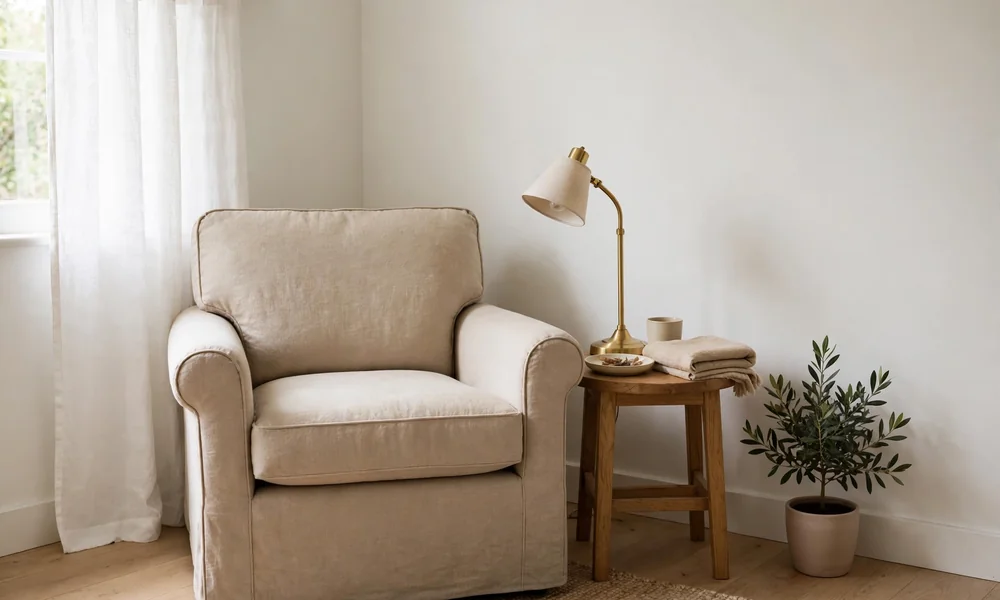
The Short Answer: Which One Wins in a Small Living Room?
For most small living rooms, a compact two-seat sofa wins if two people use the room together every day. It gives you a shared place to sit, a focal point for the television, and enough length to lie down for a short rest. A standard three-seat sofa is usually too long, and it can dominate the wall so nothing else fits beside it.
An armchair wins when the room is very small, when one person uses it regularly, or when the layout must stay flexible. One chair leaves space for a desk, a bookshelf, or a clear path to a balcony door.
Ask how many people need to sit at the same time, most days. If the answer is two, start with a compact sofa. If it is one, start with an armchair and add a second seat only if space allows.
Sofa vs Armchair at a Glance
| Feature | Compact Sofa | Single Armchair |
|---|---|---|
| Seats | Two people | One person |
| Typical width | 140 to 170 cm | 70 to 90 cm |
| Typical depth | 85 to 95 cm | 80 to 90 cm |
| Floor space | Moderate to high | Low |
| Best for | Couples, shared evenings | Solo readers, flexible rooms |
| Room feel | Anchors the room | Keeps the room open |
| Storage | Some models offer it | Rarely offers it |
| Typical cost | Higher | Lower |
| Moving | Harder through narrow doors | Easier to move |
How Much Space Each One Really Needs
A sofa needs more than its width and depth. You also need space to walk past it, open nearby doors, and place a coffee table in front of it. Leave at least 75 centimetres for a main walkway and 45 centimetres between the seat and the coffee table.
An armchair needs the same walkway space, but its narrow width makes it easier to fit beside a window, radiator, or bookshelf. That matters where the living room also serves as a route to the kitchen or bedroom. A single chair can sit at an angle in a corner and still leave a clear path.
Measure Before You Buy
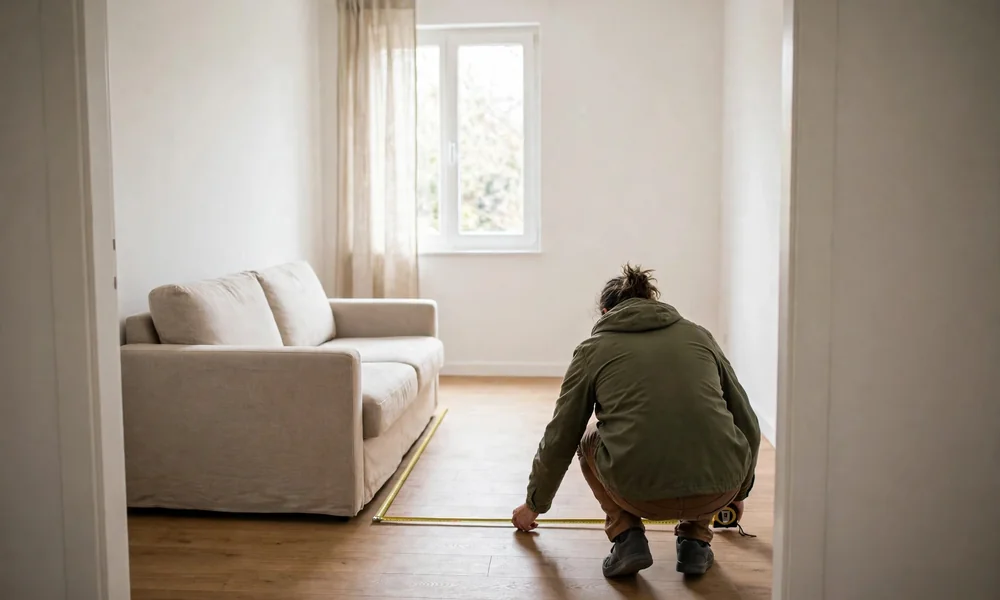
Measure the wall, then subtract space for side tables and lamps. Measure doorways and stairwells on the delivery route, because a sofa that fits the room may not fit through the front door. Tape the outline on the floor and live with it for a day. Walk around it, open the doors, and check that you can reach the window without squeezing past.
Measure depth too. Many people focus on width and forget depth, yet depth decides whether you can walk in front of the seat without turning sideways. A slim sofa at 85 centimetres deep can feel far roomier than a deep one at 100 centimetres, even at the same width.
Walkways, Doors, and Windows
Doors cause the most problems in a small living room. A sofa too close to a door can block it from opening fully, while an armchair is easier to shift a few centimetres. A tall sofa back can also block light, while a low chair leaves the window clear. Keep seating low near a single window so light reaches the rest of the room.
Comfort: Sitting, Lounging, and Lying Down
Comfort is where a sofa usually wins. Two people can sit side by side, share a blanket, and watch television without elbowing each other. A sofa also lets one person lie down for a nap, which an armchair cannot do. For long evenings, that extra length makes a real difference.
An armchair can be more comfortable for one person. A good chair supports your back, holds you upright for reading, and lets you tuck your feet up without sharing the space.
Seat depth and height matter more than brand names. A depth of 55 to 60 centimetres suits most adults for sitting upright, while a height of 45 to 48 centimetres makes standing up easy. Sit in the exact model before you buy, and test it in the position you use most. Also check sofas that disappoint on comfort and durability before you commit, because a cheap sofa that sags within a year is worse than no sofa at all.
How Each One Changes the Look and Feel of the Room
A sofa anchors a room. It defines where people sit, where the television goes, and how other furniture is arranged. The risk is that a large, dark sofa dominates the room.
An armchair leaves the room more open. You can see more floor, wall, and light, which makes the space feel larger. That openness helps in a studio flat, though one chair can look lost alone, so add a rug and a small side table to make it feel intentional.
Colour also changes the effect. Light colours reflect light and make a small room brighter, while dark colours can make it feel smaller. A bold armchair can act as an accent without overwhelming the room. Window dressing matters too, and curtain choices that make rooms feel smaller are worth avoiding when every bit of light counts.
Everyday Living: Guests, Work, Pets, and Storage
Daily life decides more than style. If you work from home, an armchair leaves space for a desk you can move aside in the evening. If you have children, a sofa gives them a place to sit together and leaves the floor free for play.
Guests often push people towards a sofa that is too large. In practice, most guests visit for a few hours, and a compact sofa plus an armchair seats three people comfortably. A pouffe or folding chair can add a fourth seat without taking up space daily.
Storage is another practical point. Some compact sofas offer storage under the seat for blankets or board games, while armchairs rarely do. If your flat has little storage, that can tip the balance towards a sofa. Before choosing a large piece, review furniture that wastes space in small rooms, because the wrong extra table can undo the benefit of a smaller seat.
Cost, Durability, and Value for Money
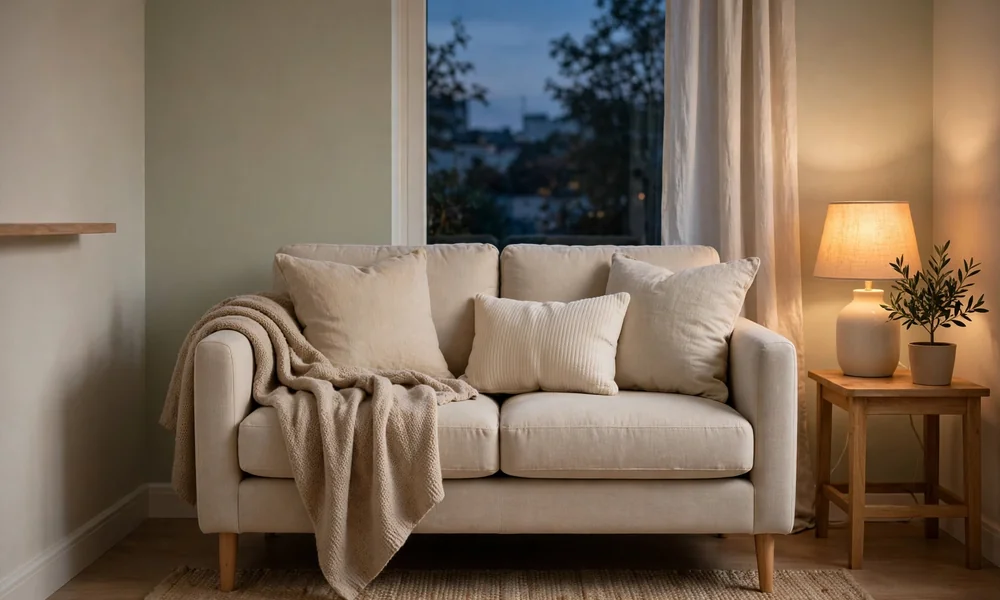
A single armchair usually costs less than a sofa, sometimes less than half as much at a similar quality level. That leaves money for a rug or lighting. A sofa is a larger investment, so spend a little more for a solid frame and good fabric, because a sofa that sags will annoy you every day.
Durability depends on construction, not just price. A hardwood frame, high-density foam, and stain-resistant fabric last longer than a cheap frame with thin cushions. Removable covers help, because you can wash or replace them.
Best Combinations for Small Living Rooms
The best answer is often a combination. A compact two-seat sofa with one armchair seats three people and still leaves a clear walkway. Place the sofa against the longest wall, the chair at an angle near the window, and a small round coffee table between them. A round table is easier to walk around than a square one.
Two armchairs with a small table between them suit couples who prefer their own space, or a room that doubles as a home office. Either chair can move to another room when needed.
Checklist: Choose the Right Seat for Your Small Living Room
- Measure the wall, depth, and doorways on the delivery route, then tape the outline on the floor.
- Count how many people sit together on a normal day, not only when guests visit.
- Leave 75 centimetres for walkways and 45 centimetres between the seat and coffee table.
- Choose slim arms, a low back, and raised legs to keep light and visible floor.
- Sit in the exact model first, and test it for reading, television, and lying down.
- Pick durable fabric with removable covers, and check the frame guarantee before you pay.
Frequently Asked Questions
Is a sofa or an armchair better for a very small living room?
An armchair is usually better for a very small room, because it leaves walkways clear and keeps the space open. A compact sofa can still work if two people use the room daily and the wall is long enough, but a three-seat sofa rarely fits well.
Can a two-seat sofa fit in a small living room?
Yes, if it is 140 to 170 centimetres wide and no more than 95 centimetres deep. Measure the wall, leave space for walkways and a coffee table, and choose a slim design with raised legs to keep more floor visible.
How many armchairs do I need instead of a sofa?
Two armchairs usually replace a two-seat sofa and give each person a defined seat. They offer more flexibility, because you can move one chair to another room. Add a small table between them and a pouffe for guests.
What size armchair is best for a small room?
An armchair 70 to 90 centimetres wide and 80 to 90 centimetres deep usually fits well. Slim arms and a low back make it look smaller, while raised legs show more floor. Avoid oversized wingback chairs unless they fit a corner without blocking light.
Should I choose a sofa bed for a small living room?
A sofa bed helps if guests stay overnight often, but it is usually heavier and less comfortable for daily sitting than a standard compact sofa. Test both first; for occasional guests, an air mattress may use space better.
How do I make a small living room with a sofa feel bigger?
Keep the sofa low and slim, use light colours, and leave floor visible around the rug. Use a round coffee table, wall-mounted lighting, and sheer curtains. Avoid extra large furniture and keep surfaces clear.
The Bottom Line
Choose a compact two-seat sofa if two people sit together every day, and choose an armchair if one person uses the room most or you need a flexible layout. Measure first, leave clear walkways, and pick a slim, low design with durable fabric. The best small rooms are not those with the most furniture, but those where every piece earns its space.