The best travel backpacks for women in 2026 are finally designed for the people who actually carry them. For years, most travel packs were simply smaller versions of men’s hiking bags, with straps set too wide, hip belts in the wrong place, and torso lengths that ignored shorter frames. This year’s best options fix all of that, with women-specific fits, lighter fabrics, and layouts built around real trips.
A great travel backpack should disappear on your back, swallow a week of clothes, and still slide into an overhead bin without a fight. The packs in this guide do exactly that, chosen for capacity, weight, comfort, organisation, and value across city breaks, long weekends, and multi-week journeys.
Whether you want a single carry-on for a two-week trip or a compact day pack that doubles as your personal item, the right choice comes down to fit first and features second. Below, you will find the standout packs of the year, a comparison table, and a practical packing guide.
Key takeaways
- Fit matters most: a women-specific torso length and narrower straps prevent sore shoulders and a bouncing pack.
- For carry-on-only travel, look for 30 to 45 litres; 20 to 28 litres suits weekends and personal-item use.
- Clamshell opening beats top loading for travel, because you can pack and unpack like a suitcase.
- A padded laptop sleeve, a hidden passport pocket, and lockable zippers are worth paying extra for.
- Keep the loaded pack under 10 kilograms, and test it fully packed before you travel.

What Makes a Great Travel Backpack for Women
The best travel backpacks for women share qualities that set them apart from unisex packs. The shoulder straps sit closer together and curve comfortably across the chest, the hip belt rests on the hips rather than the waist, and the back panel is shorter to match a typical women’s torso. Over a long day of walking, these details make the difference between arriving fresh and arriving aching.
Weight matters just as much as fit. A pack that weighs two kilograms empty has already eaten a fifth of a typical 10-kilogram carry-on allowance, so the best packs in 2026 use lightweight ripstop nylon or recycled polyester that stays strong near one kilogram, with reinforced stitching and water-resistant coatings for durability.
Fit and Comfort Come First
Before you fall in love with a colour or a clever pocket, check the torso length. Most women’s packs come in one or two sizes, and the right one should place the hip belt squarely on your hip bones with the shoulder straps curving smoothly over your shoulders. Adjustable torso systems are a bonus, especially if you are between sizes or sharing the bag with someone else.
Padding should be firm rather than soft. Dense foam in the straps and hip belt distributes weight evenly, a ventilated mesh back panel keeps air moving on warm days, and an adjustable sternum strap adds stability. Load-lifter straps that pull the top of the pack closer to your body are another sign of good design.
Size and Carry-On Rules
Capacity is measured in litres, and for travel the sweet spot is narrower than most people expect. A 40-litre pack holds roughly a week of warm-weather clothes, toiletries, and a laptop, and it fits the carry-on limits of most major airlines. Go bigger than 45 litres and you risk a forced gate check; go smaller than 25 litres and you will be washing clothes every other day on longer trips.
Airline limits vary, so measure the packed bag rather than trusting the label. Soft-sided packs have an advantage here, because you can compress them to fit the sizing box at the gate, but always check your airline’s current dimensions before you fly, especially on budget carriers.
Security and Smart Design
Good design protects your belongings without making the bag awkward to use. Lockable main-compartment zippers let you secure the pack with a small travel lock, while a hidden pocket against the back panel keeps your passport, cards, and phone out of reach of pickpockets. Some packs add slash-resistant fabric or a zipper that tucks away under a flap, both worth having in busy cities and crowded stations.
Organisation is the other half of smart design. A clamshell opening makes packing far easier than a top-loading design, internal compression straps hold clothes flat, mesh dividers separate clean from dirty laundry, and a quick-access pocket keeps headphones and boarding passes within reach.
The Best Travel Backpacks for Women in 2026
The packs below were chosen for women’s fit, carry-on-friendly sizing, and real-world comfort. Each suits a different style of travel, so match the bag to your trips rather than chasing the biggest capacity.
Best Overall: The 40-Litre Carry-On Pack
The standout all-rounder of 2026 is a 40-litre clamshell pack with a women-specific harness, a padded 16-inch laptop sleeve, and an empty weight just over one kilogram. It opens flat like a suitcase, so packing is quick and everything stays visible, and internal compression straps keep clothes from shifting in transit.
What sets this pack apart is balance. Fully loaded, it sits close to the body without pulling you backwards, and the ventilated back panel stays comfortable in warm climates. A hidden security pocket, lockable zippers, and a water-resistant finish cover the practical side.
Best Lightweight: The 30-Litre Weekender
If you travel light, the 30-litre weekender is the pack to beat. It weighs under 900 grams empty, yet the frame sheet and padded hip belt keep it stable when loaded. The main compartment opens wide for easy packing, and it fits under most aeroplane seats, which means no waiting at the baggage carousel.
The trade-off is capacity: you will need to pack carefully and choose versatile clothes. The reward is a bag you can carry all day without noticing it, ideal for short trips and warm-weather travel.
Best for Long Trips: The 45-Litre Convertible Pack
For journeys of two weeks or more, a 45-litre convertible pack offers extra room without becoming unmanageable. It converts between backpack and duffel carry, with hideaway straps and a grab handle, and the women’s fit version has a shorter torso and a contoured hip belt for heavy loads.
Inside, the layout is generous: a large clamshell compartment, a padded laptop sleeve, a mesh divider, and quick-access pockets. At 45 litres it sits at the upper edge of carry-on sizing, so check your airline’s limits before you fly.
Best Budget: The 35-Litre Everyday Travel Pack
You do not need to spend a fortune to get a genuinely good travel backpack. The best budget pick of 2026 offers a 35-litre clamshell layout, a padded laptop sleeve, and a comfortable women’s harness at a price well below the premium brands, in sturdy recycled polyester with a water-repellent coating.
Where it saves money is in the extras: no lockable zippers, a simpler hip belt, and fewer hidden pockets. For most trips those omissions barely matter, and the money saved buys a lot of travel.
How to Pack a Travel Backpack Like a Pro
Packing a backpack well starts before you open the bag. Lay out everything you plan to take, then remove a third of it: most travellers pack for imagined emergencies rather than real days. Choose versatile pieces in a single colour palette so every top works with every bottom, and pack layers rather than one bulky item.

Roll soft clothes and fold structured ones. Rolling saves space and reduces creases, while folding keeps shirts and dresses looking smart. Place heavy items close to your back and low in the pack, where they keep the centre of gravity stable, and lighter items towards the front and top.
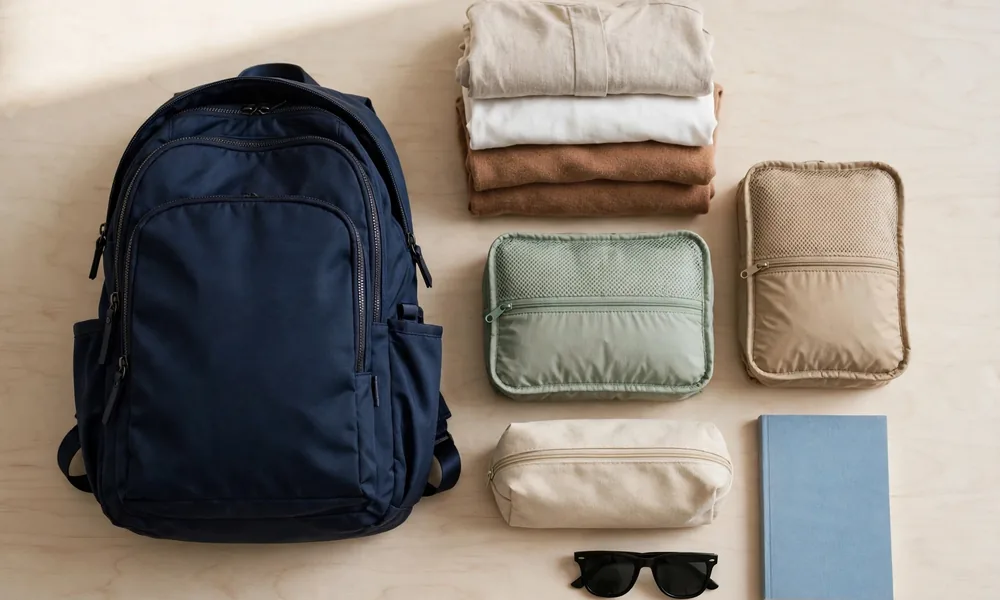
Packing cubes transform a backpack from a jumbled sack into a tidy set of drawers: one cube for tops, one for bottoms, and one for underwear and socks keeps everything findable without unpacking the whole bag. If you have never used them, our guide to the best travel packing cubes explains which sizes work best in a backpack. Compression cubes squeeze out air and free up to a third more space.
Travel Backpack vs Rolling Suitcase
Backpacks and rolling suitcases both have loyal fans, and the right choice depends on how you travel. A backpack wins on rough streets, stairs, and crowded public transport, where wheels are useless. A suitcase wins on smooth airport floors and for travellers who struggle with weight on their shoulders.
| Feature | Travel Backpack | Rolling Suitcase |
|---|---|---|
| Best for | Cobblestones, stairs, buses, and trains | Airports and smooth pavements |
| Carry-on fit | Soft sides compress to fit sizing boxes | Rigid shell must match limits exactly |
| Hands free | Yes, both hands available | One hand always on the handle |
| Weight on body | Carried on shoulders and hips | Pulled along the ground |
| Packing style | Clamshell or top loading | Flat, suitcase-style layout |
| Versatility | Doubles as a day pack | Needs a separate day bag |
Many experienced travellers use both: a backpack as the main bag and a small rolling case for longer trips. If your journey involves hiking or uneven terrain, a backpack is the clear winner, and our roundup of the best hiking backpacks covers packs built for trails as well as travel.
Comfort on the Move: Shoes, Straps, and Daily Carry
A backpack is only half of a comfortable travel setup; the other half is what you wear on your feet. Good walking shoes reduce fatigue far more than any pack feature, because sore feet make every kilogram feel heavier. If your trip involves long days on foot, read our guide to the best walking shoes for travel before you pack, and break new shoes in at home.
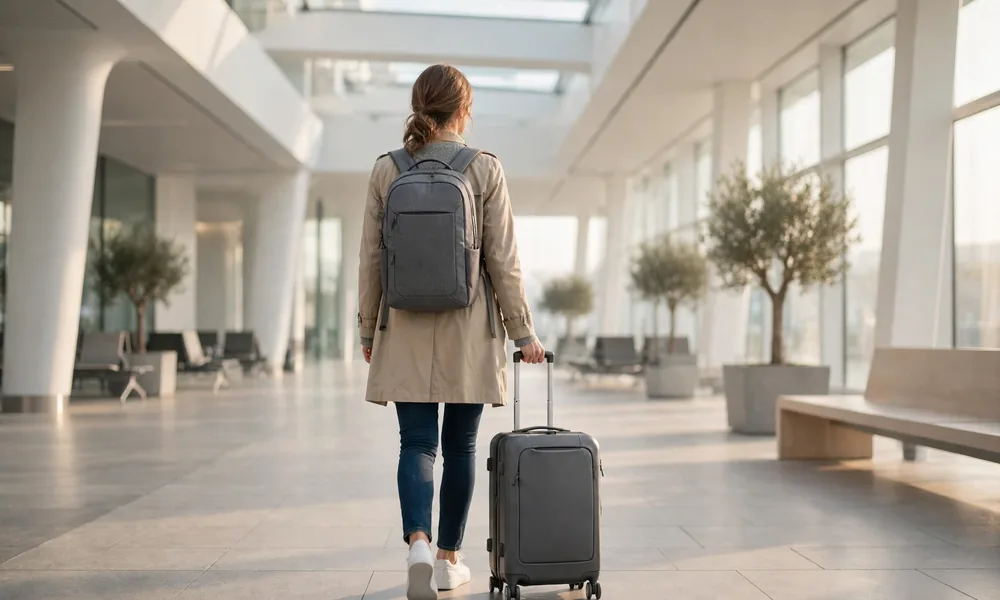
Adjust your straps every time you put the pack on. Start with the hip belt snug on your hip bones, then tighten the shoulder straps until the pack sits close to your back, and finish with the sternum strap at chest height. Small adjustments through the day prevent the hotspots that turn into blisters and sore muscles.
Packing Checklist for Your Next Trip
Use this checklist when you pack your new backpack, and adjust it to your destination and the season.
- Passport, tickets, and travel insurance details in a quick-access pocket
- Phone, charger, and a small power bank for long travel days
- Two to three versatile outfits in a single colour palette, plus layers
- Toiletries in a leak-proof bag, with liquids under the airline limit
- Comfortable walking shoes and a pair of lightweight sandals or flats
- Packing cubes, a laundry bag, and a reusable water bottle
Frequently Asked Questions
What size travel backpack is best for women?
For most trips, 30 to 45 litres is ideal. A 30-litre pack suits weekends and warm-weather travel, while a 40 to 45-litre pack covers a week or more and still fits most airline carry-on limits.
Are women-specific travel backpacks really different?
Yes. Women-specific packs have shorter torso lengths, narrower shoulder straps set closer together, and hip belts shaped for a woman’s frame. These differences improve comfort noticeably on long days, especially when the pack is fully loaded.
Can a 40-litre backpack be used as carry-on luggage?
In most cases, yes. A soft-sided 40-litre pack usually fits within major airlines’ carry-on limits, but budget carriers have stricter rules, so always check your airline’s limits before you fly.
How much should a travel backpack weigh when packed?
Aim for under 10 kilograms, including the bag itself. Many airlines also set a 7 to 10-kilogram carry-on limit, so staying light keeps you within the rules and saves your shoulders.
Is a clamshell or top-loading backpack better for travel?
Clamshell opening is better for travel, because the bag opens flat like a suitcase and you can see everything without unpacking. Top-loading packs suit hiking better, where a narrow profile and weather protection matter more.
How do I keep my belongings safe in a travel backpack?
Use the hidden security pocket for your passport and cards, lock the main-compartment zippers when you leave the bag unattended, and keep valuables in a small pouch. In crowded places, wear the pack on your front or keep it between your feet.
The Bottom Line
The best travel backpacks for women in 2026 combine a women-specific fit with smart, carry-on-friendly design, and the right choice is the one that matches your trips. A 40-litre clamshell pack is the best all-rounder, a 30-litre weekender suits light packers, and a 45-litre convertible covers the longest journeys. Choose for fit first, pack light, and enjoy the journey.