Finding the best cold brew coffee makers for small kitchens in 2026 is less about chasing the biggest brewer and more about finding one that earns its place on a crowded counter. Cold brew is now the daily coffee of millions, and makers built for it have caught up with apartment living: narrow counters, small fridges, full cabinets.
A small kitchen does not mean weak or gritty coffee. Some of the most reliable cold brew makers are also the smallest, because the design is simple: coarse grounds, cold water, time, and a good filter. What separates the best from the worst is how cleanly the filter works and how easy the vessel is to clean.
This guide compares the compact cold brew makers that work best when space is tight. We measured footprints, checked fridge clearance, and judged each maker on taste, cleaning, and practicality. Every pick below is a genuine small-kitchen fit.
Key takeaways
- The best small-kitchen cold brew makers hold 32 ounces or less and measure under 5 inches wide.
- A fine mesh steel filter matters most: it keeps sediment out and makes cleanup easy.
- Glass pitchers brew the cleanest-tasting cold brew; sturdy plastic options are lighter and safer.
- A 1-to-8 coffee-to-water ratio, steeped 14 to 16 hours, gives a smooth concentrate.
- Measure your fridge shelf height first: tall brewers are the most common cause of returns.
Why Size Matters More Than You Think
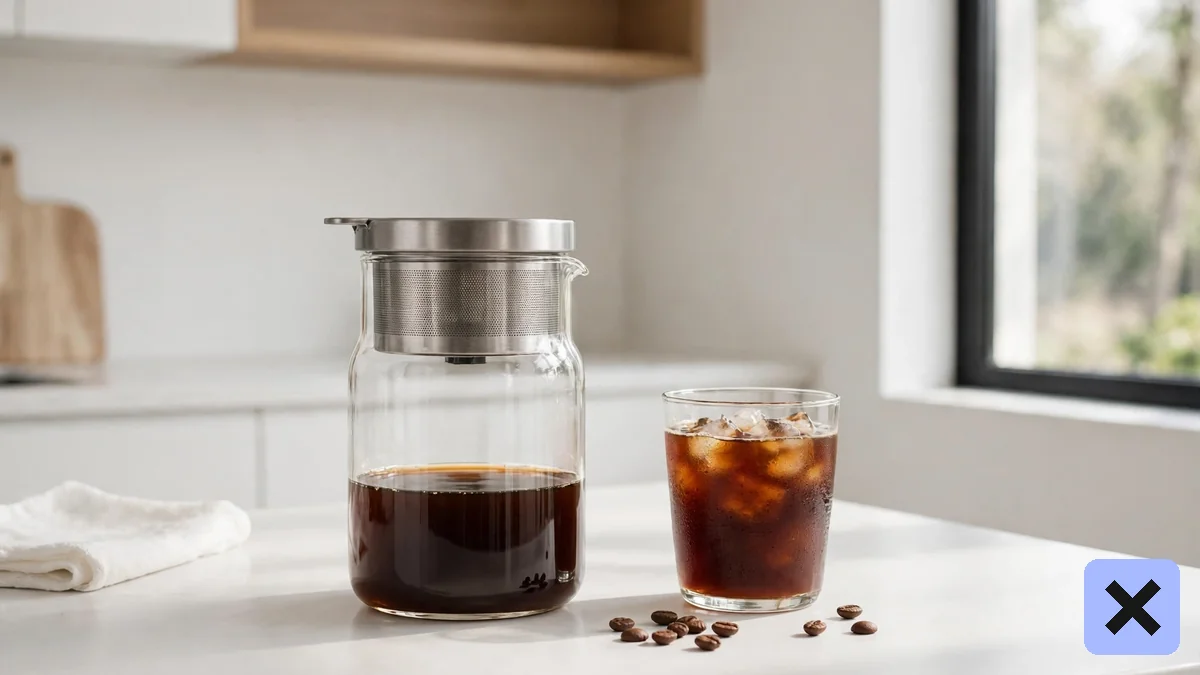
Cold brew makers are deceptively bulky. A brewer that looks compact in a photo can turn out to be a tall, wide jug that blocks the fridge light and crowds the coffee corner until it ends up banished to a cabinet, unused. A maker you must move every time you cook is one you will stop using within a month.
Counter Space Is the Real Budget
Think of counter space like money: every inch is already spoken for. The slim pitchers here measure 4 to 5 inches across, roughly the width of a large mug. Measure your spot honestly, handle included: handles add an inch or two listings leave out.
Fridge Space Counts Too
Cold brew steeps in the fridge for 12 to 24 hours, so your maker lives on a fridge shelf, not the counter. A brewer too tall for the gap between shelves will not fit upright. Measure the gap against the maker’s height, lid included.
The Best Cold Brew Coffee Makers for Small Kitchens 2026
We tested the three designs that dominate the small-kitchen market: glass pitchers, airtight plastic pitchers, and mason-jar kits. The winners below all brew smooth, low-acid cold brew and genuinely fit in a small kitchen. For the wider view, see our roundup of the best cold brew coffee makers of 2026.
| Maker | Capacity | Footprint | Best For |
|---|---|---|---|
| Takeya Cold Brew Coffee Maker | 32 oz | 4.5 in wide | Best overall |
| Hario Mizudashi Cold Brew Coffee Pot | 33 oz | 4.3 in wide | Best glass pitcher |
| OXO Good Grips Cold Brew Coffee Maker | 32 oz | 5 in wide | Best filter design |
| Primula Burke Cold Brew Coffee Maker | 52 oz | 4.7 in wide | Best larger batch |
| County Line Kitchen Cold Brew Mason Jar Kit | 32 oz | 4 in wide | Best budget pick |
Takeya Cold Brew Coffee Maker: Best Overall for Small Kitchens
The Takeya is the small-kitchen standard. Its 32-ounce Tritan pitcher is shatterproof, airtight, and narrow enough for a fridge door, and the fine mesh filter screws in securely so grounds stay put. It brews a smooth, chocolatey concentrate in 12 to 24 hours, and cleanup is quick: the filter rinses clean in seconds and every part is dishwasher safe.
Hario Mizudashi Cold Brew Coffee Pot: Best Glass Pitcher
The Hario Mizudashi is the prettiest maker here and one of the best-tasting. Its slim glass pot holds about a litre, the mesh filter produces a remarkably clean cup with almost no sediment, and it looks good enough to serve from at the table. At just over 4 inches wide, it slips into gaps wider brewers cannot use. Glass is breakable and heavy when full, but for the cleanest flavour, it is the pick.
OXO Good Grips Cold Brew Coffee Maker: Best Filter Design
OXO’s compact brewer uses a rainmaker-style lid that spreads water evenly over the grounds, keeping extraction consistent batch to batch. The result is a balanced, sweet cup with little bitterness, even after a full 24-hour steep. The 32-ounce carafe stays under 5 inches wide. The trade-off is cleaning: more parts mean washing takes a minute longer.

Primula Burke Cold Brew Coffee Maker: Best Larger Batch in a Slim Body
The Primula Burke suits small kitchens where one person drinks a lot of cold brew. Its 52-ounce capacity covers a full week, yet the body stays under 5 inches wide, taking up barely more counter than the 32-ounce models. The catch is height: at around 10 inches tall, it needs a fridge shelf with real clearance, so measure first.
County Line Kitchen Cold Brew Mason Jar Kit: Best Budget Pick
This kit turns a standard wide-mouth mason jar into a cold brew maker with a steel filter and flip-top lid, at a fraction of the big-name price. The 32-ounce jar is just 4 inches wide and doubles as storage when you are not brewing. The filter is not quite as fine as the premium options, so you may see a little sediment in the last pour.
How We Chose the Winners
Every maker was judged on five factors: brew quality, size, cleaning, durability, and value. We brewed batches with the same beans and ratio, tasted each black and over ice, and timed cleanup in a standard sink. Gritty or sour brewers were cut regardless of price, as were makers too tall or wide for a standard fridge shelf.
What We Measured
Footprint was measured at the widest point, handles and lids included, and height with the lid on. Brew quality was judged on smoothness, sweetness, and sediment, and cleanup was timed from emptying the grounds to the last part on the rack. We also checked dishwasher fit, because hand-washing a tall pitcher in a small sink gets old fast.
What We Ignored
We ignored claims about steeping speed: cold brew is slow by definition, and any maker promising great coffee in two hours is cutting corners. Bundled extras say nothing about brewing, and colour played no part in the rankings.
How to Pick the Right Size
The right size depends on how much you actually drink. A 32-ounce maker gives roughly four to six servings, covering most solo drinkers and couples for three or four days. A 52-ounce maker suits households where two people drink it daily. Going bigger means more fridge space, more beans, and stale coffee at the bottom of a week-old batch. For the wider picture, see our guide to the best coffee makers for home.
Measure Before You Buy
Measure where the maker will live and the fridge shelf where it will steep: counter width, height between shelves, and shelf depth. Compare them with the listed dimensions, remembering handles and lids add inches the headline numbers hide. If the numbers are close, choose the smaller maker: half an inch of clearance is easy to live with, while a millimetre to spare means it gets knocked every time you reach past it.
Match Capacity to Your Habit
Count your weekly servings honestly. One glass a day means a 32-ounce maker brewed twice a week is plenty. Two glasses a day, or sharing with a partner, means the 52-ounce Primula Burke earns its height. If you mostly brew for weekend guests, a budget mason jar kit is enough.
How to Brew Great Cold Brew in a Small Kitchen
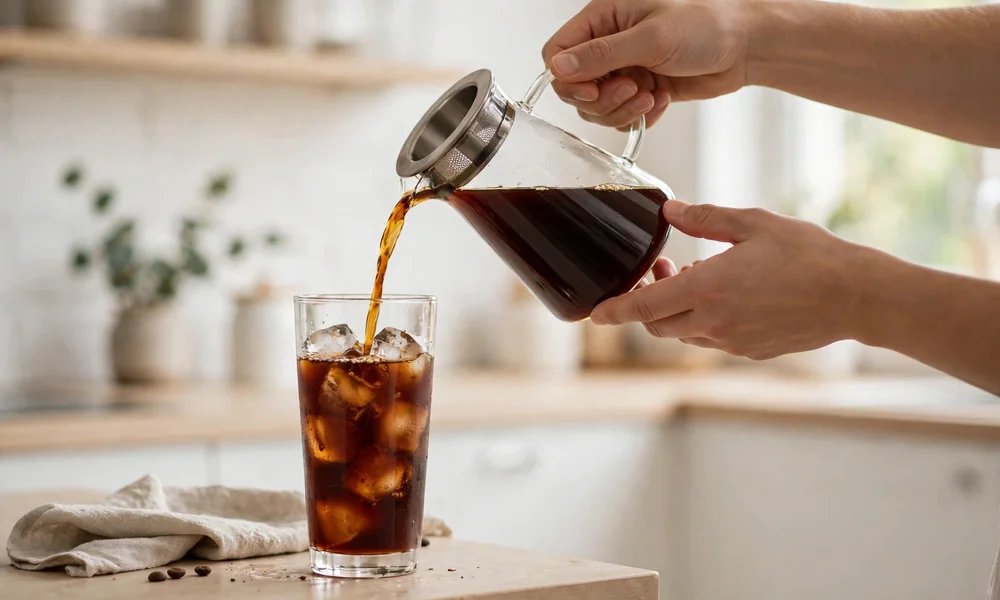
Great cold brew is mostly about ratio, grind, and patience. Use coarse-ground coffee, roughly the texture of raw sugar, with cold filtered water at one part coffee to eight parts water by weight. Stir gently so all the grounds are wet, seal the maker, and steep in the fridge for 14 to 16 hours. Then remove the filter and dilute, usually one part concentrate to one part water or milk, over ice. Sealed concentrate keeps a week, so a Sunday brew covers the working week.
The Ratio That Works
The 1-to-8 ratio is the sweet spot: strong enough for ice and milk, smooth enough to drink black when diluted. For a 32-ounce maker, that is about 100 grams of coffee to 800 grams of water, roughly one and a quarter cups of grounds. A scale makes it repeatable. Weak? Steep two hours longer. Bitter? Two hours less.
Storage Tips for Tiny Fridges
Once the grounds are out, move the concentrate to a slim bottle that fits your fridge door, freeing the brewer for its next batch. A tall, narrow bottle uses dead door space and pours neatly. Label it with the brew date and keep it sealed: cold brew picks up fridge odours fast.
Checklist: Before You Buy
- Measure your counter spot and fridge shelf height, handles and lids included.
- Choose a fine mesh steel filter for the cleanest cup and easiest cleanup.
- Pick 32 ounces for one or two drinkers; go larger only if you drink it every day.
- Check every part is dishwasher safe or easy to hand-wash in a small sink.
- Make sure the lid seals tightly, because a leaky maker in a crowded fridge is a mess.
- Choose glass, Tritan, or food-grade steel; avoid thin plastics that stain.
Mistakes to Avoid
The most common mistake is buying the biggest maker on the shelf. A 64-ounce brewer sounds efficient until it blocks the fridge light and leaves you brewing batches you cannot finish before the coffee goes stale. Buy for the kitchen you have. The second mistake is the wrong grind: fine grounds slip through mesh filters and turn the brew cloudy and bitter, while extra-coarse grounds under-extract and taste thin. The third is skipping the rinse: coffee oils build up on mesh filters, and a filter that is only shaken out makes each batch taste flatter than the last. If you are weighing cold brew against your current setup, our comparison of the best drip coffee makers checks whether a second brewer earns its counter space.

Frequently Asked Questions
How long does cold brew take to make?
Most cold brew needs 12 to 24 hours, and 14 to 16 hours is the sweet spot. Shorter steeps taste thin; beyond 24 hours it can turn bitter. Start at 16 hours and adjust by two hours.
Do I need special coffee beans for cold brew?
No special beans are required, but medium and dark roasts work best, because their chocolate and caramel notes shine in a slow, cold extraction. Light roasts can turn sour if the steep is too short.
How long does cold brew last in the fridge?
Concentrate keeps up to a week sealed in the fridge; diluted cold brew is best within two to three days. After a week the flavour flattens, so brew batches you can finish.
Can I use hot water to speed up cold brew?
Hot water makes iced coffee, not cold brew. Slow, cold extraction keeps acidity low and flavour smooth; hot water pulls out the bitter compounds cold brewing avoids.
Is a glass or plastic cold brew maker better?
Glass brews the cleanest-tasting coffee and holds no odours, but it is heavier and breakable. Tritan plastic is lighter and shatterproof, though it needs an occasional deep clean. Choose glass for flavour, plastic for durability.
Why is my cold brew gritty?
Grit usually means the grind was too fine or the filter is worn out. Switch to a coarse grind and check the mesh for tears. Pour slowly and leave the last half-inch in the maker.
The Bottom Line
The best cold brew coffee makers for small kitchens in 2026 disappear into your routine: slim enough for a crowded counter, short enough for a standard fridge shelf, and simple enough to clean in a small sink. The Takeya leads for most people, the Hario Mizudashi is the pick for glass lovers, and the mason jar kit proves you need not spend much to brew excellent cold brew. Measure your space, match the size to your habit, and let time do the work.