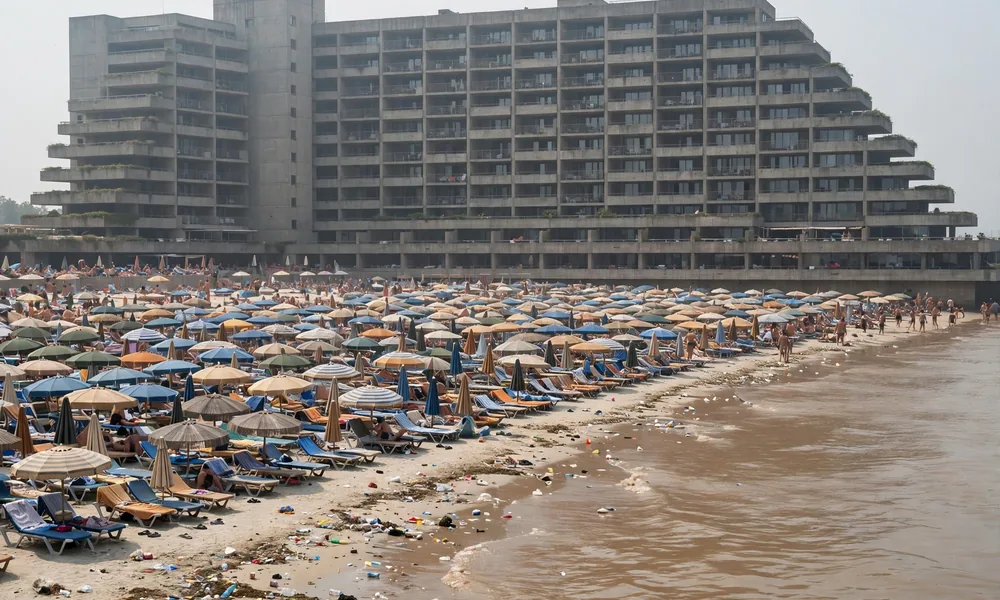
The worst beach resorts share a cruel trick: they sell you a dream in the brochure and hand you a disappointment at check-in. The turquoise water in the photos turns out to be a murky strip of sea behind a concrete wall, the private beach is a crowded patch of sand shared with three neighbouring hotels, and the room that looked bright and airy online smells of damp. Worst beach resorts do not fail in one dramatic way. They fail in dozens of small ways that add up until the holiday you saved for feels like a chore.
A bad beach resort is not simply a cheap one. Plenty of modest, affordable places by the sea are clean, honest and well run. The resorts on a worst list promise far more than they deliver, charge premium prices for tired facilities, and treat complaints as an inconvenience.
This guide covers what goes wrong at the worst beach resorts, how to spot the warning signs before you book, and what to do if you arrive and find the place is nothing like the pictures.
Key Takeaways
- The worst beach resorts fail on the basics: dirty rooms, broken air conditioning, murky pools and crowded, littered beaches.
- Heavily edited photos, vague claims about a private beach and a run of short, vague five-star reviews often hide a resort in decline.
- Hidden costs are a hallmark: charges for loungers and towels, plus resort fees that appear only at check-out.
- Read recent reviews that mention specific details, check the date on guest photos, and confirm the beach and pool situation before you pay.
- If the resort is awful on arrival, document everything, ask for a room change in writing, and contact your booking provider the same day.

What Makes a Beach Resort One of the Worst
A resort earns its reputation one guest at a time, and the worst ones share the same pattern. The building is old and has not been properly maintained for years: paint peels, corridors smell stale, and the furniture looks as though it has survived decades of sun and salt without ever being replaced. Yet the worst beach resorts still charge as though nothing has changed since the property was new.
The second pattern is overcrowding. A resort built for four hundred guests sells rooms for six hundred, and the beach, the pool and the restaurant all buckle. Sun loungers vanish before breakfast and the pool is so full that swimming becomes a slow shuffle between strangers. The third pattern is indifference: staff are stretched thin, a broken shower stays broken, and a complaint is met with a shrug.
The Beach Is Not the Beach in the Brochure
For a beach resort, the beach is the whole point. Some resorts sit a long walk from the shore, across a busy road or down a steep path that is never mentioned. Others have a beach, but it is narrow, rocky or shared with the public. Before booking, check a map rather than the resort website. If you are weighing up different kinds of seaside stays, reading a guide to choosing between a hotel and a resort for a beach holiday can help you decide whether a big resort is even the right format for your trip.
The Rooms: Where the Disappointment Moves In
The room is where a bad resort stops being an abstract disappointment and becomes personal. The worst beach resorts cut corners exactly where guests notice them most: mattresses that sag in the middle, pillows as thin as folded towels, air conditioning that rattles all night without cooling anything, Damp is the most common complaint: without constant maintenance, mould creeps in.
Noise is the other room killer. Thin walls, doors that do not seal and entertainment that runs late into the night all add up to broken sleep. Beach resorts attract families, groups and late-night drinkers, so soundproofing matters. The worst combine paper-thin walls with a bar below the bedrooms.
Tired Fixtures and Thin Walls
The details tell you how the resort is run. Stained carpets, chipped furniture, cracked tiles and light switches that do not work are all signs of a maintenance backlog that no fresh bed linen can hide. The worst hotel check-in experiences often start exactly this way, with a room nothing like the one requested and a reception team unwilling to help, as travellers describe in accounts of the worst hotel check-in experiences they have endured.
Cleanliness That Fails the Basics
Cleanliness is the complaint that angers guests most. Stained sheets, dusty surfaces and a floor that sticks to bare feet are failures of housekeeping, and they destroy trust in the whole resort, including the kitchen and the pool. Check the sheets and the bathroom grout on arrival. If the room fails, photograph it and ask for another room before you unpack.

The Pool, the Food and the Service
Outside the room, the pool and the restaurant are where a beach resort earns its keep, and where the worst ones cut the deepest. A pool should be the centrepiece: clean water, enough space to swim and loungers that are not falling apart. At the worst beach resorts the pool is cloudy, the tiles are cracked, and the loungers are claimed by towels at dawn. If the water looks cloudy, do not swim in it: it can hide bacteria.
Food is the next let-down. All-inclusive buffets at bad resorts run on repetition and cost-cutting: the same lukewarm dishes every night and drinks served in tiny plastic cups. Service ties it together: too few staff, paid too little and given no power to solve problems. Good service can rescue a tired building; bad service can ruin a beautiful one.

Worst Beach Resorts vs Good Ones: A Side-by-Side Comparison
The difference between a bad beach resort and a good one is rarely a single luxury. It is a long list of small things done properly, every day, without fuss.
| Feature | Worst Beach Resorts | Good Beach Resorts |
|---|---|---|
| Rooms | Stained carpets, sagging beds, damp smell | Clean, dry, quiet rooms with fresh linen |
| Beach | Narrow, crowded or rocky; murky water | Wide, clean sand with clear, swimmable water |
| Pool | Cloudy or green water, cracked tiles, too few loungers | Clear water, maintained daily, enough space and shade |
| Food | Repetitive lukewarm buffet, hidden restaurant charges | Fresh, varied food and honest pricing |
| Service | Too few staff, complaints ignored, no power to fix problems | Enough staff, problems solved quickly |
| Costs | Resort fees and supplements appear after booking | Price quoted is the price paid |
| Reviews | Recent reviews repeat the same faults | Recent reviews are specific and mostly positive |
Use the table as a filter. One bad review about a cloudy pool could be a one-off problem. A dozen recent reviews mentioning the same faults is the resort telling you who it is.
The Hidden Costs That Turn a Bad Stay Into an Expensive One
The worst beach resorts have a second talent beyond disappointment: they are very good at charging you for things you assumed were included. The headline price looks competitive, and then the extras begin. A daily resort fee, a charge for the safe, for beach towels, for sun loungers, and for wifi that barely works. By the end of the week, the cheap deal has cost more than the honest resort down the road.
The supplements are the worst version of this: guests pay for an all-inclusive package, then find the good restaurant, the branded drinks and the beach loungers all cost extra. Ask for the total price in writing before you pay. If the resort cannot give you a clear total, that is your answer.
How to Spot a Bad Beach Resort Before You Book
Ignore the resort’s own website and look at what independent travellers say. Read the most recent reviews first, not the highest rated ones, and look for specific complaints that repeat: dirty rooms, broken air conditioning, a beach that is not as described. One complaint is noise. The same complaint from ten different people across three months is a fact.
Check the dates: a glowing review from three years ago tells you nothing today. Look at the newest guest photos and confirm the geography on a map. If you are still deciding where to go, read up on the best beach destinations in Europe for 2026 first, so you choose a coastline that suits the holiday you want.
Checklist: Six Checks Before You Book a Beach Resort
- Read the twenty most recent reviews and note any complaint that appears more than twice.
- Look at guest photos from the last three months and compare them with the official gallery.
- Check a map to confirm the real distance to the beach, and whether the beach is private, shared or public.
- Ask for the full price in writing, including all fees and supplements.
- Confirm the pool, restaurant and beach are open on your dates, with no renovation planned.
- Book a rate you can cancel if the reviews turn bad before you travel.
What to Do When You Arrive and It Is Awful
Sometimes you do everything right and the resort is still awful. The first thing to do is document it. Photograph the room, the bathroom and the pool, and keep the time stamps. Then ask reception for a room change, and put the request in writing so there is a record.
If the resort cannot fix it, contact whoever you booked through the same day. And do not suffer in silence: a detailed, factual review with photos helps the next traveller more than anything else you can do.
Frequently Asked Questions
What is the number one sign of a bad beach resort?
Repeated recent reviews that mention the same specific faults, such as dirty rooms, a murky pool or a beach that does not match the photos. One bad review can be bad luck; the same complaint over months is a reliable warning.
Are cheap beach resorts always bad?
No. Many affordable beach resorts are clean, honest and well run. Price is not the problem. The problem is a resort charging premium prices for tired rooms and poor food, or hiding charges until you arrive.
How can I tell if resort photos are real?
Compare the official gallery with recent guest photos, and check satellite maps to confirm the distance to the sea. Search the resort name with words like dirty or broken to find the reviews the marketing hides.
Should I trust five-star reviews of a beach resort?
Trust detailed reviews more than star ratings. A useful review names specific things: the state of the pool, the quality of the food, the attitude of the staff. Be suspicious of short, vague five-star reviews with no detail.
Can I get a refund from a bad beach resort?
Sometimes. If the resort is materially different from what was advertised, ask for a room change or a refund in writing on the day you arrive, and contact your booking provider immediately. Keep photos and copies of everything.
Is it better to book a hotel or a resort for a beach holiday?
It depends on the trip you want. A resort suits travellers who want everything in one place, while a smaller hotel suits those who prefer a quieter base and eating out locally. Compare both formats honestly before you commit.
The Bottom Line
The worst beach resorts are not ruined by one disaster. They are ruined by neglect: rooms that are never properly renovated, pools that are never properly cleaned, beaches that are oversold and staff who are never given the power to help. The warning signs are almost always visible before you book: recent reviews, guest photos and a price that hides its real total. Check them, and your next beach holiday will be the one the brochure promised.