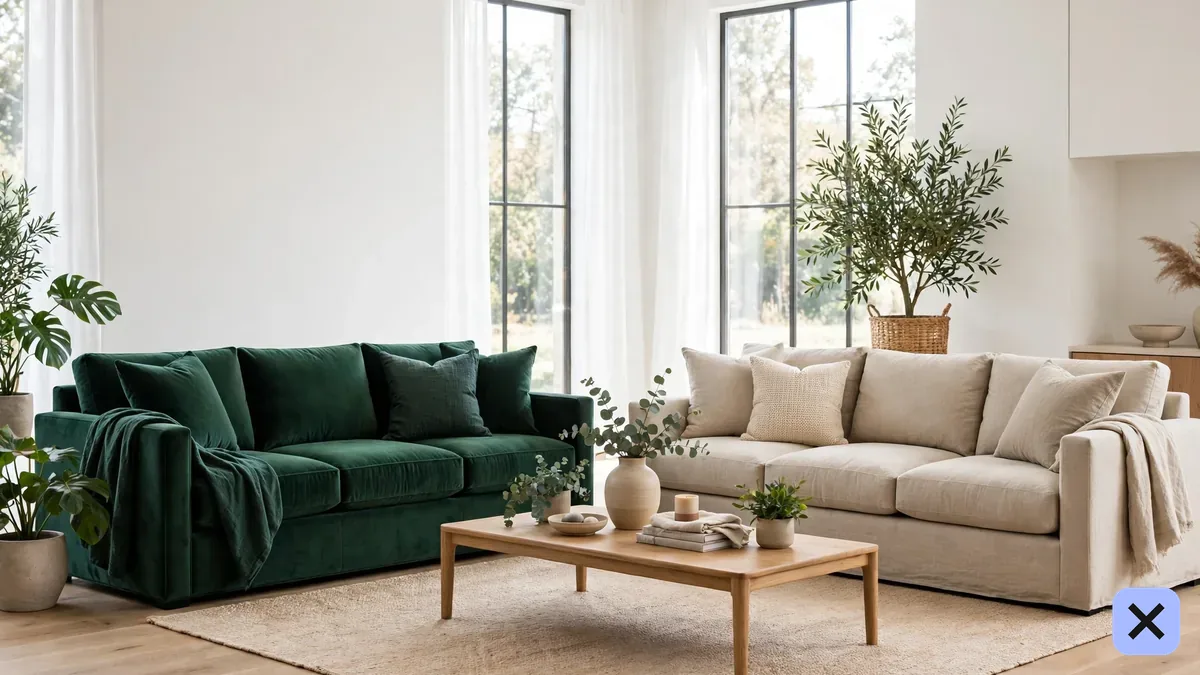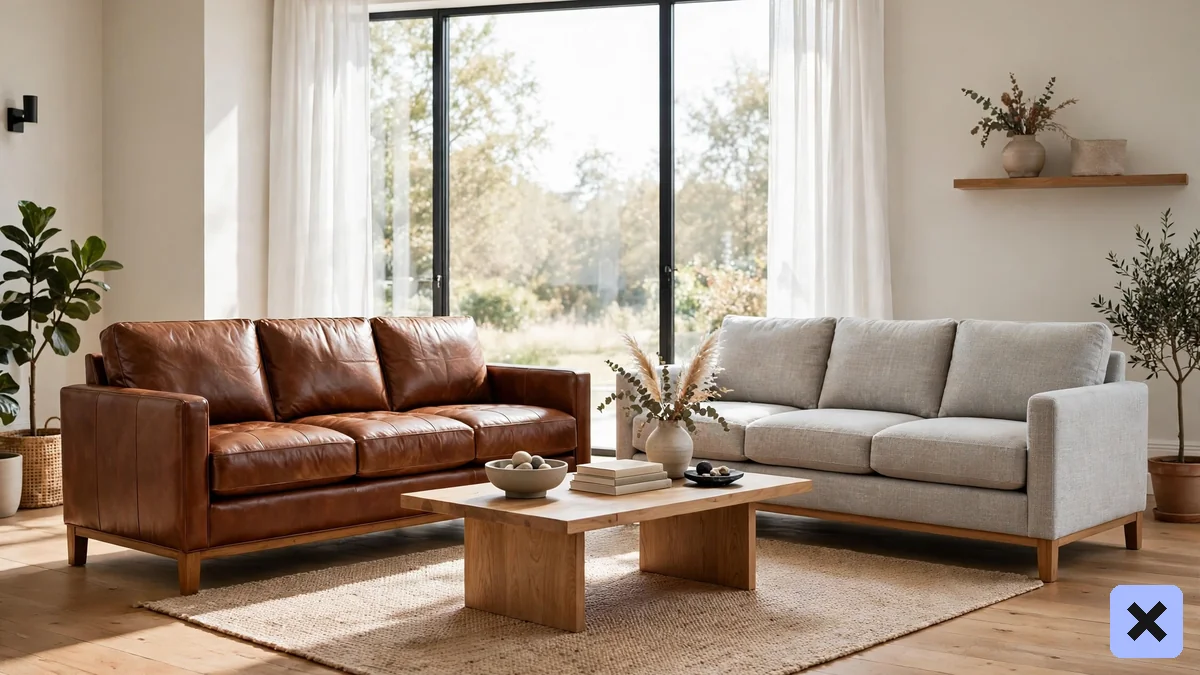
A sofa is the hardest-working piece of furniture in most homes. It hosts film nights, naps and coffee spills, so the choice between leather vs fabric sofas deserves more than a quick sit-test in a showroom. The material decides how the sofa looks in five years, how much cleaning it needs, and what it costs over its whole life.
Neither material wins outright. Leather lasts longer and wipes clean, making it the stronger choice for busy households. Fabric wins on warmth, softness and choice, with far more colours and textures at every price. The best sofa depends on who sits on it and what kind of mess your household makes.
This guide compares the two across durability, comfort, cleaning, cost, pets and style.
Key takeaways
- Leather sofas generally last longer, often 15 to 20 years against 7 to 10 for fabric, and good leather improves with age.
- Fabric feels warmer and softer from day one, and offers far more colours, patterns and textures to match your room.
- Leather wipes clean after spills, while fabric absorbs liquid fast.
- Fabric is cheaper to buy and easier to re-cover, while leather costs more upfront but often works out cheaper per year.
- The best choice depends on your household: leather for durability and cleaning, fabric for comfort, variety and budget.
Leather Sofas: The Case for the Best Long-Term Investment
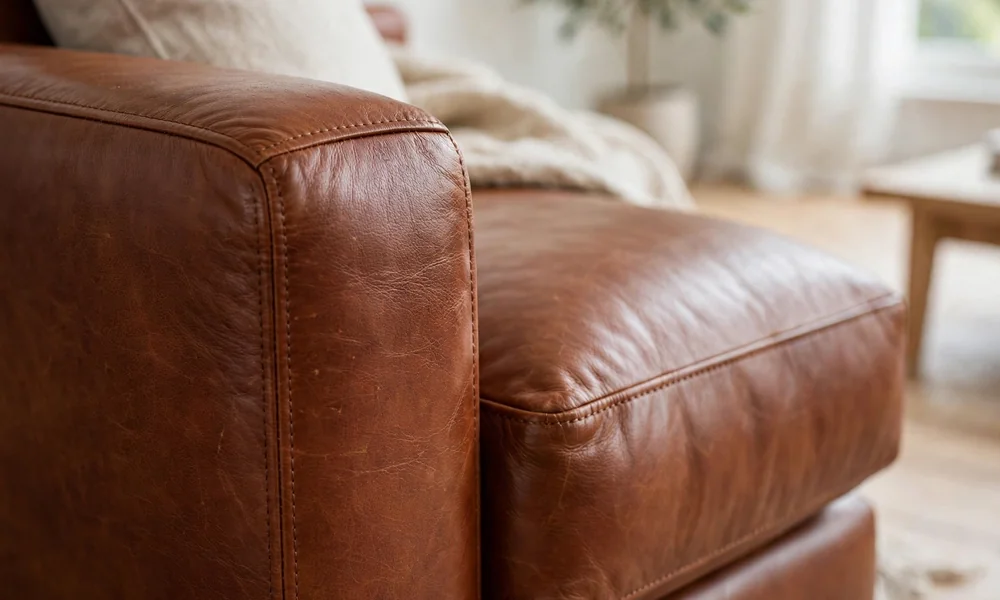
Leather has been the premium sofa material for generations because it lasts. A well-made leather sofa pairs a hardwood frame with a hide that resists tearing and sagging. Where fabric thins and fades, leather develops a soft sheen called patina, which makes an old leather sofa look better, not worse.
Not all leather is equal, and this is where many buyers go wrong. Full-grain leather is the top layer of the hide, the strongest and most natural, and it ages best. Top-grain is lightly sanded and more uniform in colour. Cheaper corrected-grain and bonded leather crack and peel within a few years. If durability matters, full-grain or top-grain is the only leather worth paying for.
How Long Leather Really Lasts
A quality leather sofa lasts 15 to 20 years with basic care. It resists punctures and tears far better than woven fabric and does not fray at the seams. Cushions may need re-stuffing after a decade, but the covering usually outlives the frame, which is why leather sofas hold their value second-hand.
Leather has weaknesses too. It scratches, and a cat’s claws or a belt buckle can leave marks It feels cold in winter and sticky in summer, and direct sunlight dries it out. A leather sofa also needs conditioning every six to twelve months to stop it cracking.
Leather and Everyday Family Life
For families, leather’s biggest advantage is cleaning. A spilled drink, a muddy paw or a sticky hand can be wiped off with a damp cloth in seconds, and most spills never reach the foam. That makes leather the practical pick for homes with small children or pets, even though pets can scratch it.
Fabric Sofas: Comfort, Colour and Everyday Warmth
Fabric sofas win the first impression. They feel warm the moment you sit down, they breathe in summer, and they invite you to curl up in a way leather rarely does. Modern fabrics range from hard-wearing linen blends and velvet to tough synthetics like microfibre. A fabric sofa is also the easy way to bring colour into a room, from soft sage to deep navy, without the cost of leather.
Comfort is fabric’s strongest card. The woven surface grips gently instead of sliding, cushions stay put, and the sofa feels cosy in every season. For pure sitting pleasure, most people choose fabric.
How Long Fabric Really Lasts
A good fabric sofa lasts 7 to 10 years, though a high-quality frame with a tough, tightly woven fabric can stretch further. The weak points are the fabric itself, which thins on the arms and seat edges, and the colour, which fades in sunlight. Removable covers help enormously, since they can be washed or replaced, and some of the best fabric sofas are designed so the whole look can be refreshed for a fraction of a new sofa.
Fabric’s main weakness is staining. It absorbs liquid quickly, so a glass of red wine or a cup of coffee can leave a mark in seconds if it is not blotted straight away. Food, pet hair and dust settle into the weave, and light colours show every mark. Stain-resistant treatments and performance fabrics help, but they add cost and need reapplying over time.
Fabric and Everyday Family Life
For households with pets, fabric is a mixed blessing. It does not show scratches the way leather does, and claws rarely tear a tight weave, but pet hair clings to it and needs regular vacuuming. Children love fabric sofas, so a washable cover or a dark, patterned fabric is wise if your sofa doubles as a dining table.
Durability Head to Head
Durability is where the two materials part company most clearly. Leather resists wear, tears and stains better than almost any fabric, and it ages by improving. Fabric is comfortable and forgiving, but it wears visibly and fades. The same trade-off shows up underfoot: choosing between carpet or hardwood floors for bedrooms is a similar balance of softness against longevity.
| Factor | Leather | Fabric |
|---|---|---|
| Typical lifespan | 15 to 20 years | 7 to 10 years |
| Stain resistance | Excellent, wipes clean | Poor to fair, absorbs spills |
| Scratch resistance | Fair, marks show | Good, weave hides marks |
| Sun fading | Slow, dries out instead | Noticeable over time |
| Pet friendliness | Easy to clean, can scratch | Holds hair, resists claws |
| Ageing | Improves, gains patina | Thins, sags and fades |
The table tells the story plainly: leather wins on lifespan and stain resistance, fabric wins on scratch-hiding and initial comfort.
Comfort and Everyday Living
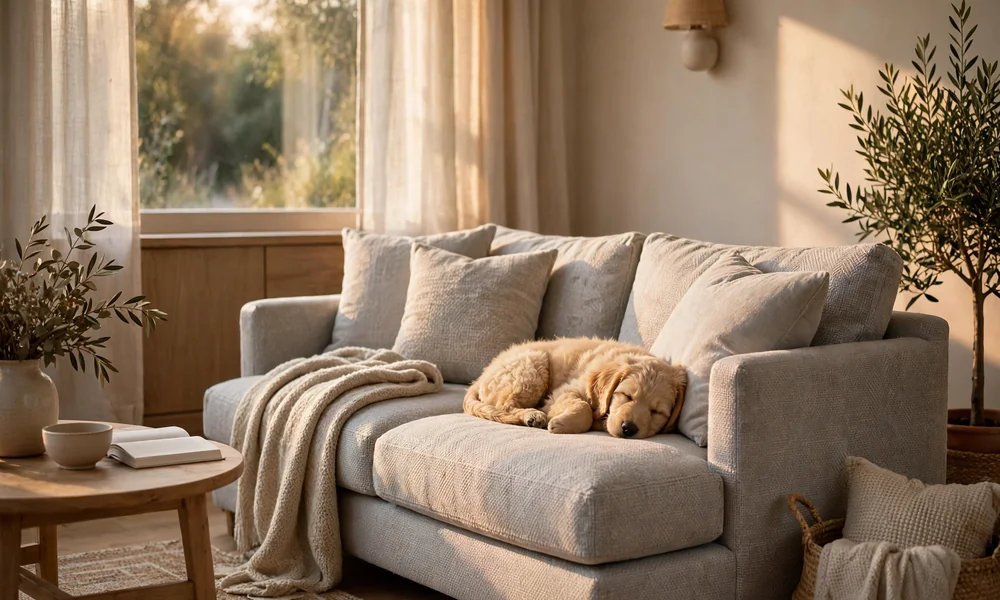
Comfort is personal, but most people find fabric softer and warmer from the first sit. It breathes, it grips, and it never feels cold against bare skin on a winter morning. Leather starts cool, warms to your body temperature, and in a hot room it can feel sticky after a long film.
Size and shape matter as much as material. A deep seat suits lounging, a firm seat suits upright sitting, and a sofa that is too deep or too shallow will annoy you whatever it is covered in. If space is tight, the choice between a sofa or an armchair for a small living room matters as much as the material, so measure your room before you fall for a showroom display.
Cleaning and Maintenance
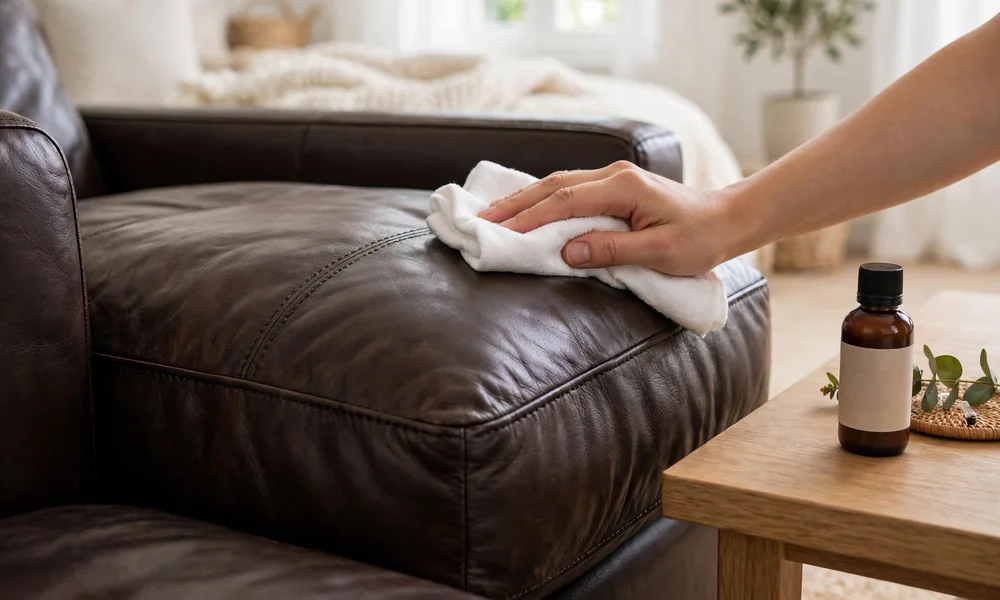
Cleaning is leather’s clearest win. A weekly wipe with a damp cloth and conditioning every six to twelve months is usually all it needs, and spills are dealt with in seconds. Avoid harsh cleaners, keep the sofa out of direct sunlight, and the leather will stay supple for decades. Skipping the conditioning is the fastest way to shorten a leather sofa’s life.
Fabric needs more frequent attention. Vacuum the cushions weekly to keep dust and crumbs out of the weave, brush off pet hair, and treat spills the moment they happen by blotting, never rubbing. Removable covers can go in the wash, which is a genuine advantage, but fixed upholstery may need a professional clean once a year.
Allergies are worth a mention too. Leather does not trap dust mites, pollen or pet dander the way woven fabric can, so it is often the better choice for allergy-prone households.
Cost Over Ten Years
Leather costs more upfront, often twice as much as a comparable fabric sofa, and that price gap stops many buyers. Looked at over ten years, the picture changes. A leather sofa that lasts fifteen years costs less per year than a fabric sofa replaced after eight, and it may still have resale value. It is the same long-view thinking behind deciding between hardwood or laminate floors, where the dearer material often wins over a decade of daily use.
Fabric wins on entry price and flexibility. A good fabric sofa leaves money for the rest of the room, and if your taste changes, a new cover or a replacement sofa is affordable. The risk is the replacement cycle: two fabric sofas over fifteen years can cost more than one leather sofa.
Which Sofa Holds Up Better for Your Home?
For most households, leather holds up better. It lasts longer, cleans faster, resists stains and ages with character, which is why it is the best choice for busy family rooms, homes with children and anyone who wants to buy once and forget about it. The higher price is real, but the cost per year of use is usually lower.
Fabric holds up better in a different sense: it stays comfortable, warm and welcoming, and it adapts to changing tastes and budgets. It is the best choice for a cosy snug, a rented home, a tight budget or a household that values colour and softness over maximum lifespan.
The deciding questions are simple. Do you have young children or pets that make messes? Choose leather. Do you want the softest seat and the widest choice of colours? Choose fabric. Answer those honestly and the right material picks itself.
Checklist: Before You Buy Either Sofa
- Sit on it for ten minutes in your usual position, not just a quick showroom bounce.
- Check the frame is hardwood and the joints are glued and screwed, not just stapled.
- Ask whether the leather is full-grain or top-grain, or whether the fabric is stain-treated.
- Measure your doorways, stairs and lift before ordering, and check the sofa comes apart if needed.
- Ask how the material handles water, wine and pet hair.
- Read the care label and be honest about whether you will follow it for years.
Frequently Asked Questions
Do leather sofas last longer than fabric sofas?
Yes, in most cases. A quality leather sofa lasts 15 to 20 years, while a good fabric sofa lasts 7 to 10 years. The gap narrows with cheap bonded leather, which can peel within a few years, so buy full-grain or top-grain leather if longevity matters.
Which is better for homes with dogs?
It depends on your dog. Leather wipes clean after muddy paws and does not hold smells, but claws can scratch it. Fabric hides scratches better but traps hair and absorbs odours.
Are fabric sofas cheaper than leather sofas?
Yes, usually by a wide margin. A good fabric sofa often costs half as much as a comparable leather one. Leather can still work out cheaper per year because it lasts roughly twice as long, but the upfront saving with fabric is real.
Do leather sofas get hot in summer?
Leather can feel sticky in warm weather because it does not breathe like woven fabric. A light throw removes most of the discomfort. Fabric stays cooler and drier in summer.
Can fabric sofas be made stain-proof?
No fabric is fully stain-proof, but performance fabrics and stain-resistant treatments help a lot. They give you time to blot a spill before it soaks in. Removable, washable covers are the most practical defence for family homes.
Which sofa is best for allergies?
Leather is generally better for allergies because its smooth surface does not trap dust mites, pollen or pet dander. Fabric can be managed with weekly vacuuming and washable covers, but it will always hold more allergens than leather.
The Bottom Line
Leather vs fabric sofas is a contest leather wins on durability and fabric wins on comfort, so the best sofa is the one that matches your household. Choose leather if you want a sofa that lasts, wipes clean and ages beautifully. Choose fabric if you want warmth, colour and softness at a kinder price. Either way, buy the best quality you can afford.