Hardwood vs laminate floors looks simple in a showroom and gets complicated once you live with it. Both can look warm, natural and expensive at first glance, and both work in living rooms and bedrooms. The difference only shows up over time, in how each floor handles scratches, spills, sunlight, pets and daily traffic.
The real question is not which floor is better in the abstract. Hardwood is a natural material cut from a tree, while laminate is a manufactured product designed to imitate it. Hardwood can be sanded and refinished for decades, making it the long-term choice for a forever home. Laminate is cheaper, tougher against surface scratches and easier to replace, making it the practical choice for a rental or a busy family home.
This comparison puts the two side by side on cost, durability, appearance, installation, maintenance and resale value, so you can see which floor suits your rooms, your budget and your tolerance for upkeep.
Key takeaways
- Hardwood is real wood that can be sanded and refinished several times, so it can last fifty years or more.
- Laminate is a photographic image of wood over a fibreboard core, so it cannot be refinished and usually lasts fifteen to twenty-five years.
- Laminate costs roughly half as much as hardwood, and it is far more forgiving of scratches from pets and furniture.
- Neither floor belongs in a wet bathroom, and both need spills wiped up promptly to avoid lasting damage.
- Hardwood adds more to resale value, while laminate wins when budget, speed and low maintenance matter most.

What Hardwood Flooring Really Is
Hardwood flooring is made from solid planks of timber or from engineered boards with a real wood veneer over a plywood base. Solid hardwood is a single piece of wood, nailed or glued to the subfloor. Engineered hardwood has a thin layer of real wood over plywood, making it more stable when humidity changes. Both are genuine wood: the grain, the colour variation and the way the surface ages are all real.
The Strengths of Hardwood
The greatest strength of hardwood is its lifespan. A solid hardwood floor can last a century if it is cared for, and engineered hardwood with a thick veneer can be refinished two or three times. That changes the maths: a floor that costs more up front can work out cheaper per year than one you replace twice. It also ages gracefully and can be restained when tastes change.
The Weaknesses of Hardwood
Hardwood is not indestructible. It dents under high heels and heavy furniture, and it scratches when grit is dragged across it. It expands and contracts with humidity, so gaps can appear in dry winters. It is also vulnerable to water: a leak left overnight can stain and warp boards.
What Laminate Flooring Really Is
Laminate flooring is built in layers: a clear, hard-wearing top coating, a high-resolution photographic image of wood beneath it, a dense fibreboard core, and a backing layer that stabilises the board. The result looks like wood, feels reasonably like wood, and costs far less than wood.
The Strengths of Laminate
Laminate’s greatest strength is value: it typically costs a third to a half of what hardwood costs, including installation. It is also highly resistant to surface scratches, fading and stains, shrugging off pet claws and dragged chairs far better than a hardwood finish.
The Weaknesses of Laminate
Laminate’s main weakness is that it cannot be repaired the way hardwood can. A deep scratch or a swollen board cannot be sanded out; the plank has to be replaced, and finding an exact match years later is not guaranteed. Water is the other enemy: if moisture gets into the fibreboard core, the board swells and the damage is permanent.
Laminate also sounds and feels different. Without a good underlay it can sound hollow underfoot, and it lacks the warmth and subtle variation of real wood. A home that works quietly, with materials that feel settled rather than showy, often comes down to these small sensory details, and that is worth weighing alongside price.
Hardwood vs Laminate: Head-to-Head Comparison
The table below summarises the comparison at a glance. The sections that follow explain the differences that matter most in real homes.
| Feature | Hardwood | Laminate |
|---|---|---|
| Material | Real wood | Printed image over fibreboard |
| Typical lifespan | 50 to 100 years with refinishing | 15 to 25 years |
| Installed cost | High, about double laminate | Low to moderate |
| Scratch resistance | Moderate, scratches show | High, hard top layer resists scuffs |
| Water resistance | Poor unsealed, fair sealed | Fair for spills, poor for floods |
| Refinishing | Yes, several times | No, boards must be replaced |
| Installation | Slower, often professional | Fast, click-lock, often DIY |
| Appearance | Unique grain, ages naturally | Convincing imitation, consistent |
| Comfort underfoot | Warm, solid, quiet | Can feel hollow |
| Resale value | Strong, buyers pay more | Neutral to modest |
Cost: What You Will Actually Pay
Cost is where laminate wins clearly. Materials run from a few dollars per square foot for basic ranges to the mid-range for premium products with better textures and thicker wear layers. Installation is quick, and many homeowners fit it themselves, removing labour cost entirely. For a whole house, the saving can run into thousands.
Hardwood costs more at every stage: materials are dearer, installation takes longer and usually needs a professional, and site-finished floors add sanding and coating. The counter-argument is lifespan: a floor that lasts fifty years costs less per year than one replaced after twenty, but that only helps if you stay long enough to benefit.
Durability and Everyday Wear
Durability depends on what kind of wear your home produces. In a house with dogs, children and heavy furniture, laminate’s hard top layer is a genuine advantage: it resists the fine scratches that dull a hardwood finish and does not dent as easily under dropped toys or chair legs.
Over a longer period, hardwood pulls ahead: its finish can be renewed, its dents sanded out, and its boards replaced individually. Laminate’s wear layer eventually thins, its edges can chip, and once the core is damaged there is no recovery. Laminate is tougher on the surface, hardwood tougher over a lifetime.
Looks and Feel: Can You Tell the Difference?
At a glance, good laminate is convincing, and in a furnished room most visitors will not notice the difference. The gap appears on closer inspection: laminate repeats its grain pattern, its knots are printed rather than real, and its surface can look too perfect.
Hardwood has a depth that laminate cannot copy: the grain runs through the board, the colour shifts subtly from plank to plank, and the surface catches light differently across the room. Hardwood is solid and warm under bare feet, and it stays quiet when you walk across it. Laminate over a thin underlay can sound hollow, though a quality underlay closes much of the gap.
Installation: Speed, Mess and Skill
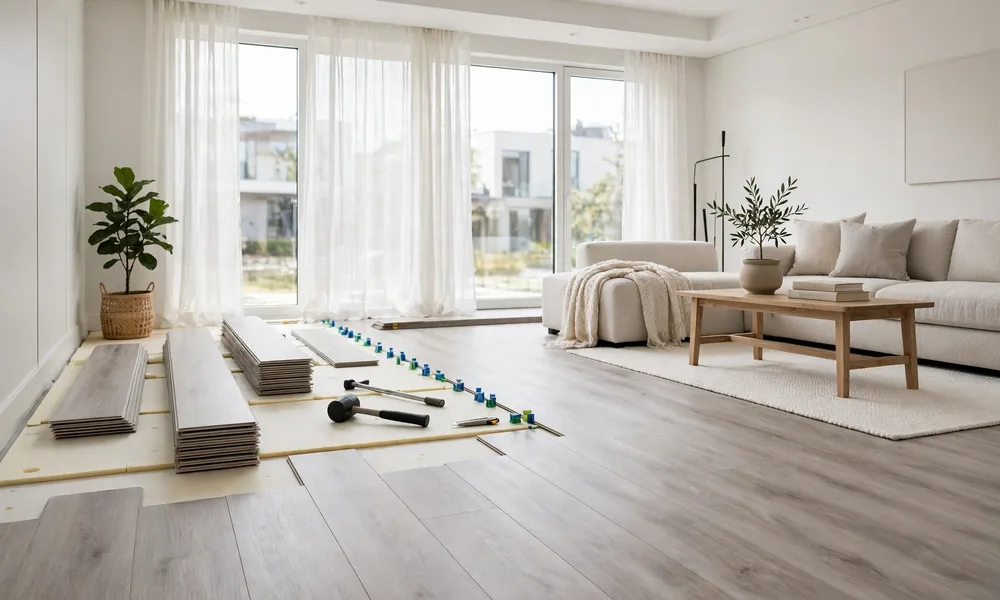
Laminate installation is one of its biggest selling points. Click-lock planks go down quickly, often a room in a day, with little mess and no drying time. A confident DIYer can do it with basic tools, and because the floor floats, it can go over many existing floors. You need a level subfloor, the right underlay and an expansion gap around the edges.
Hardwood installation is slower and more skilled. Solid hardwood is nailed or glued down, which takes time and creates dust and noise. Site-finished floors need sanding and several coats of finish, each with drying time, which can keep a room out of use for days. Engineered hardwood is faster, but still benefits from a professional.
Maintenance and Cleaning
Day-to-day cleaning is similar for both floors: sweep or vacuum regularly, use a damp mop rather than a wet one, and clean spills promptly. Hardwood needs a little more care: avoid harsh cleaners, use felt pads under furniture and keep grit off with doormats. Laminate is more forgiving, since its sealed surface resists stains, but never flood-mop it.
Resale Value: What Buyers Actually Pay For
Hardwood is the clear winner on resale value: buyers will pay more for a home with hardwood floors, and it is one of the features buyers actively look for. It signals quality and photographs well in listings. Laminate does not hurt resale value, but it does not add much either, and in a higher-value home buyers may factor in the cost of replacing it.
Which Floor for Which Room
Living rooms and bedrooms suit both floors, and the choice comes down to budget and how long you plan to stay. If this is your long-term home, hardwood is worth the investment. If you are furnishing a rental or a first home, laminate gives you the look for far less money. Hallways and stairs take the hardest wear, so pick a thicker wear layer for laminate or a hard species for hardwood.
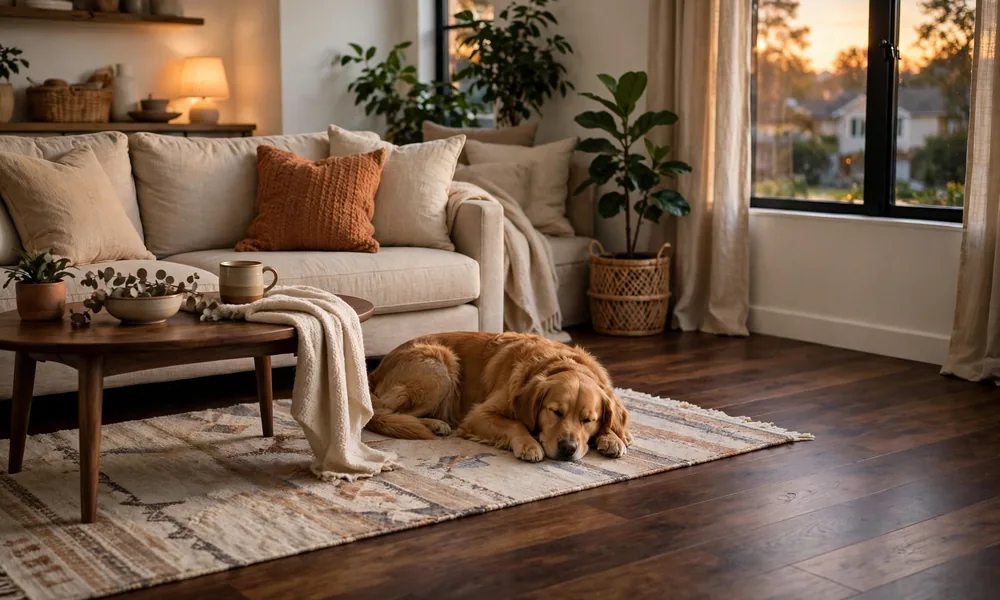
Children’s rooms and playrooms are a strong case for laminate: toys, spills and craft projects are kinder to a hard laminate surface than to a hardwood finish, and a damaged board is cheaper to replace. Knowing the rug choices that make rooms look worse helps you avoid hiding a good floor badly, and some home design trends date fast, so pick a floor you will still like in ten years.
Checklist: Before You Buy Either Floor
- Measure every room, add ten percent for cutting waste, and compare full installed prices, not just material cost.
- Check the wear layer and warranty: for laminate, look for a thick wear layer and a warranty of at least fifteen years; for hardwood, check the veneer thickness on engineered boards.
- Order samples and live with them for a week, checking the colour in morning and evening light.
- Confirm the floor suits your subfloor, your underfloor heating, and the rooms you plan to use it in.
- Ask about moisture: check for damp, fix any leaks first, and confirm the water-resistance rating in writing.
- Plan the details before ordering: underlay, trims, thresholds, skirting and the expansion gap.
Frequently Asked Questions
Is laminate flooring really that much cheaper than hardwood?
Yes, in most cases laminate costs roughly a third to a half of hardwood once installation is included. Hardwood can work out cheaper per year over a very long period, but the upfront saving is substantial.
Can laminate flooring be refinished like hardwood?
No. Laminate has a printed image layer rather than real wood, so sanding it would remove the pattern. A damaged board has to be replaced, so keep a spare box. Hardwood, by contrast, can be sanded and refinished several times.
Which floor is better if you have dogs?
Laminate is usually better for dogs, because its hard top layer resists claw scratches far better than a hardwood finish. Hardwood can still work if you choose a hard species and keep nails trimmed.
Does hardwood flooring increase home value?
Yes. Hardwood is one of the few flooring choices that reliably adds to resale value, because buyers associate it with quality. Laminate is neutral: it does not reduce value, but buyers do not pay a premium for it.
Can either floor go in a kitchen?
Both can work in a kitchen with care, but neither is ideal where water is a daily risk. For bathrooms and laundry rooms, tile or vinyl is safer.
How long does each floor last?
A solid hardwood floor can last fifty to a hundred years with periodic refinishing, and engineered hardwood typically lasts thirty years or more. Laminate usually lasts fifteen to twenty-five years.
The Bottom Line
Choose hardwood if this is a long-term home, if you value real materials and the ability to refinish, and if resale value matters to you. Choose laminate if budget matters most, if you have pets or children who will test the floor daily, or if you expect to redecorate within a decade. The worst choice is the wrong floor for your home, bought in a hurry without samples, without a proper quote and without thinking about water, sunlight and the way you actually live.