A rug should anchor a room, soften hard floors, and pull the furniture together into one settled arrangement. But the worst rug choices for rooms do the opposite. They shrink the space, fight with the furniture, curl at the corners, and make even good furniture look like it was placed by accident.
The problem is rarely the rug itself. Most rugs are perfectly fine objects. The mistake is the match: the wrong size for the room, the wrong pile for the traffic, the wrong pattern for the rest of the decor, or the wrong material for a household with children, pets, or a dining table. A rug is one of the largest surfaces in a room, so a bad choice is impossible to ignore.
This guide looks at the rug choices that cause the most regret, room by room, and explains why each one fails.
Key takeaways
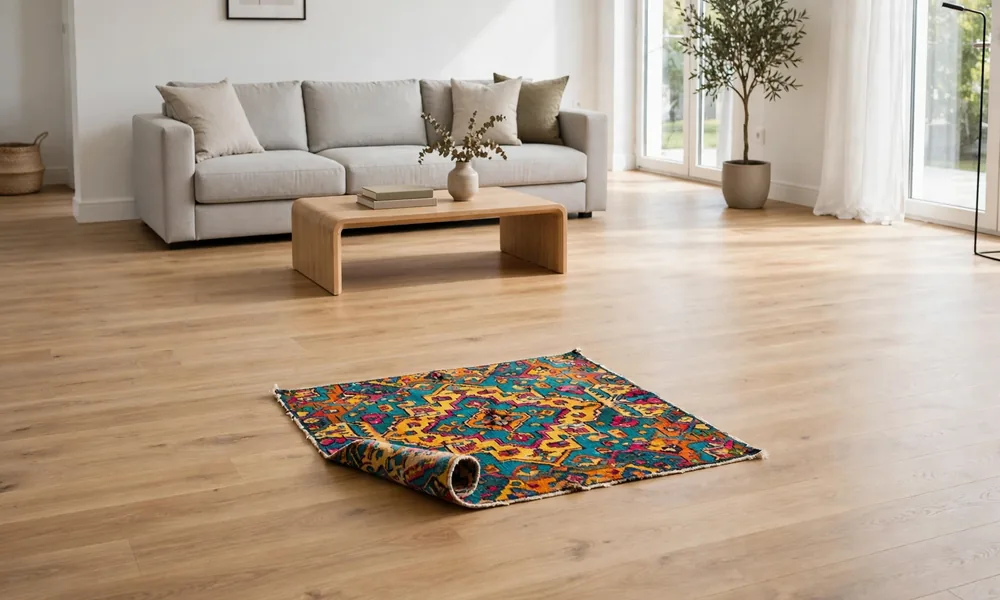
- A rug that is too small is the single most common mistake, and it makes the whole room look smaller and less settled.
- Busy patterns clash with patterned wallpaper, curtains, and upholstery, so one strong pattern per room is usually enough.
- High-pile and delicate rugs fail fast in hallways, dining rooms, and homes with pets or small children.
- A rug without a proper pad slips, bunches, and curls, which is both untidy and a tripping hazard.
- Measure the furniture layout first, then buy the rug to fit it, not the other way around.
Why the Wrong Rug Can Ruin a Room
A rug covers a large share of the visible floor, so its colour, pattern, and size set the tone for everything above it. A loud or badly sized rug competes with all of them at once, and the room starts to feel restless rather than restful.
The Rug Sets the Room’s Proportions
Think of the rug as the frame for the furniture arrangement. In a living room, the front legs of the sofa and chairs should sit on the rug, or all four legs should sit on it. That single rule fixes most sizing mistakes.
A Bad Rug Is Hard to Live Around
Unlike a cushion or a lamp, a rug cannot be moved aside when it annoys you. It is underfoot all day, it collects dust and crumbs, and it is the first thing your feet meet in the morning. A rug that sheds, slips, or stains easily becomes a daily irritation.
The Worst Rug Choices for Rooms
The choices below are the ones that generate the most complaints, returns, and replacements. Some are mistakes of size, some are mistakes of material, and some are mistakes of taste.
1. A Rug That Is Far Too Small
The tiny rug floating in the middle of a large room is the classic error. It usually happens because a larger rug feels expensive, so the buyer settles for the size that fits the budget rather than the size that fits the room. The result looks worse than no rug at all: it draws attention to the empty floor around it and makes the furniture look oversized.
2. A Busy Pattern That Fights Everything Else
A bold, multicoloured pattern can be beautiful on its own, but it becomes a problem when the room already has strong patterns elsewhere. Patterned wallpaper, patterned curtains, a patterned sofa, and a patterned rug in one room create visual noise, and nothing gets to be the star. The same discipline that stops people making the worst wallpaper choices for rooms applies here: one loud surface is a feature, three loud surfaces are a mess.
3. High-Pile Rugs in High-Traffic Areas
Thick, shaggy rugs feel wonderful under bare feet, but they are a poor choice for hallways, entrances, dining rooms, and family living rooms. They trap dust, crumbs, and pet hair, they are hard to vacuum properly, and they flatten into uneven patches where people walk every day. Save the deep pile for a bedroom, where traffic is light.
4. The Wrong Material for the Room
Delicate fibres such as silk and viscose look luxurious, but they stain easily, show water marks, and wear quickly underfoot. They belong in a low-traffic bedroom, not in a family living room or a hallway. Wool is the most forgiving natural choice for most rooms: it is durable, it resists dirt well, and it recovers from compression. A good synthetic rug can be an excellent choice for a dining room or a home with pets.
5. A Rug With No Pad Underneath
A rug pad is the least glamorous part of the purchase, and the one most often skipped. Without one, a rug on a hard floor slides, bunches up, and curls at the corners. On carpet, it wrinkles and creeps. Both are tripping hazards, and both make the rug wear unevenly. A pad also protects the floor, adds cushioning, and helps the rug last longer.
6. White and Very Pale Rugs in Busy Households
A white or cream rug can make a room look bright and expensive in a photograph. In a home with children, pets, muddy shoes, or a dining table, it can look tired within weeks. Every mark shows, spills stain quickly, and the rug needs constant cleaning to keep its original colour. But in the rooms where life actually happens, a mid-tone rug with a subtle pattern hides everyday marks far better.
7. A Rug That Clashes With the Floor
A rug should relate to the floor underneath it, not fight it. A warm, orange-toned rug on a cool grey floor can look jarring. A rug that is almost the same colour as the floor disappears and adds nothing. A rug with a strong red tone on a reddish wood floor can make the whole room look muddy.
8. The Wrong Shape for the Room
Most rooms are rectangular, and most rugs are rectangular, so the shape is easy to get right. The mistakes come with round rugs in rectangular rooms, runner rugs used as room rugs, and square rugs under long dining tables. A round rug under a rectangular dining table leaves the corners of the table hanging over bare floor, and chairs at the ends sit half on and half off the rug.
9. Matching the Rug to the Curtains Instead of the Room
It is tempting to buy a rug that matches the curtains exactly, or to pick a rug in the same colour as the sofa. A better approach is coordination: pick up a secondary colour from the curtains or the artwork in the rug, rather than repeating the dominant colour. Just as the worst curtain choices for rooms often come from matching curtains to the walls instead of the room as a whole, the worst rug choices often come from matching the rug to one item instead of the whole scheme.
10. Cheap Rugs That Shed, Smell, or Fall Apart
A very cheap rug can seem like a bargain until it starts shedding fibres all over the floor, smells strongly of chemicals for weeks, or loses its backing within a year. Check the edges and the backing before you buy. Bound edges should be neat and tight, not fraying, and the backing should be firm and even. Spending a little more on a well-made rug usually costs less than replacing a cheap one twice.
What Size Rug Does Each Room Need?
Guessing rug sizes is how most mistakes happen. The table below gives a practical starting point for the most common rooms. Always measure your own furniture before ordering, because sofas, tables, and beds vary, but these sizes will keep you in the right range.
| Room | Recommended rug size | Key rule |
|---|---|---|
| Living room, small | 160 x 230 cm | Front legs of sofa and chairs on the rug |
| Living room, large | 200 x 290 cm or larger | All furniture legs on the rug if possible |
| Bedroom, double bed | 200 x 290 cm or 240 x 300 cm | Rug extends 60 cm beyond bed sides and foot |
| Dining room, six seats | 240 x 300 cm | Chairs stay on the rug when pulled out |
| Hallway | Runner, 60 to 80 cm wide | Leave a border of floor visible on both sides |
| Home office | 160 x 230 cm | Chair area covered, no curling under wheels |
When you measure, use painter’s tape on the floor to mark the outline of the rug you are considering. Live with the tape outline for a day, walk around it, and check how the doors open and how the chairs move.
How to Choose a Rug That Actually Works
Choosing well is less about taste and more about method. Start with the room and the people who use it, then work through size, material, and colour in that order. Measure the furniture arrangement and mark it with tape. Think honestly about traffic, pets, children, and spills. Choose the material that fits that life, not the material that looks best in a showroom.
Comfort matters too, especially in a living room where people sit close to the floor. The worst sofas for comfort and durability disappoint for the same reason a bad rug does: they look fine in the shop and fail in daily use.
Rug Checklist Before You Buy
- Measure the furniture layout with tape on the floor and confirm the rug size fits it.
- Check the pile height and material against the room’s traffic, pets, and spill risk.
- Look at a sample in your own room, in natural light, against your floor.
- Confirm the pattern does not clash with wallpaper, curtains, or upholstery.
- Buy the correct rug pad for your floor type and check the rug stays put.
- Read the cleaning instructions and make sure you can realistically follow them.
Frequently Asked Questions
What is the biggest rug mistake in a living room?
Buying a rug that is too small. A small rug makes the seating look scattered and the room look smaller. The front legs of the sofa and chairs should sit on the rug
Should a rug match the sofa or the curtains?
Neither exactly. A rug should coordinate with the room as a whole, picking up a secondary colour from the curtains, the artwork, or the cushions. Matching one item exactly makes the room look flat.
Are high-pile rugs a bad choice everywhere?
No, they work well in bedrooms and quiet sitting areas where traffic is light.
How do I stop a rug from slipping or curling?
Use a proper rug pad for your floor type, sized slightly smaller than the rug. A pad stops slipping, reduces curling, and protects the floor. If the rug still moves, it may be too light or too small.
Can I put a rug on top of carpet?
Yes, but choose a low-pile rug with a firm backing, and use a pad designed for carpeted floors. A thick rug on soft carpet will bunch and wrinkle, so a flat-weave rug usually works best.
How often should a rug be replaced?
A well-made wool rug in a living room can last ten to fifteen years with regular cleaning. A cheap rug in a high-traffic area may need replacing within two or three years.
The Bottom Line
The worst rug choices for rooms are rarely about taste. They are about size, material, and fit: a rug too small for the furniture, a pile too deep for the traffic, a pattern that fights the rest of the room, or a material that cannot handle the life lived on it. Measure the furniture first, choose the material for the room’s real use, keep the pattern calm if the room is already busy, and always use a pad.