The worst wallpaper choices for rooms rarely look bad in the shop. Under bright showroom lights, on a small sample card, almost any pattern can look charming. It is only once the paper covers a whole wall, in your light, next to your furniture, that the problems appear: the room feels smaller, the pattern fights everything else in it, and the colour you loved suddenly looks tired. Wallpaper is one of the hardest finishes to undo, which is why a bad choice costs far more than the rolls themselves.
Most wallpaper mistakes fall into a few familiar traps. People choose a pattern they love in isolation instead of one that suits the room. They paper every wall instead of one. They pick a dark colour for a dim room, a shiny finish for a bumpy wall, or a delicate paper for a steamy bathroom. Together they turn a room that should feel calm into one that feels busy, cramped or dated within months.
This guide walks through the choices that cause the most regret: the prints, colours, finishes and placements that age badly, the rooms where wallpaper simply does not belong, and the practical problems — matching repeats, removal, moisture — that people only discover too late. It also shows what to choose instead.
Key takeaways
- Busy, large-scale patterns overwhelm small rooms and make them feel cramped and restless.
- Dark colours in dim rooms, harsh brights and short-lived trendy shades are the fastest route to a dated wall.
- Glossy, metallic and heavily textured finishes show every wall flaw and fail fast in damp or greasy rooms.
- Wallpaper struggles in steamy bathrooms and above cookers, where moisture and grease shorten its life.
- Order samples, test them in your own light for a few days, and paper one wall before committing to a whole room.
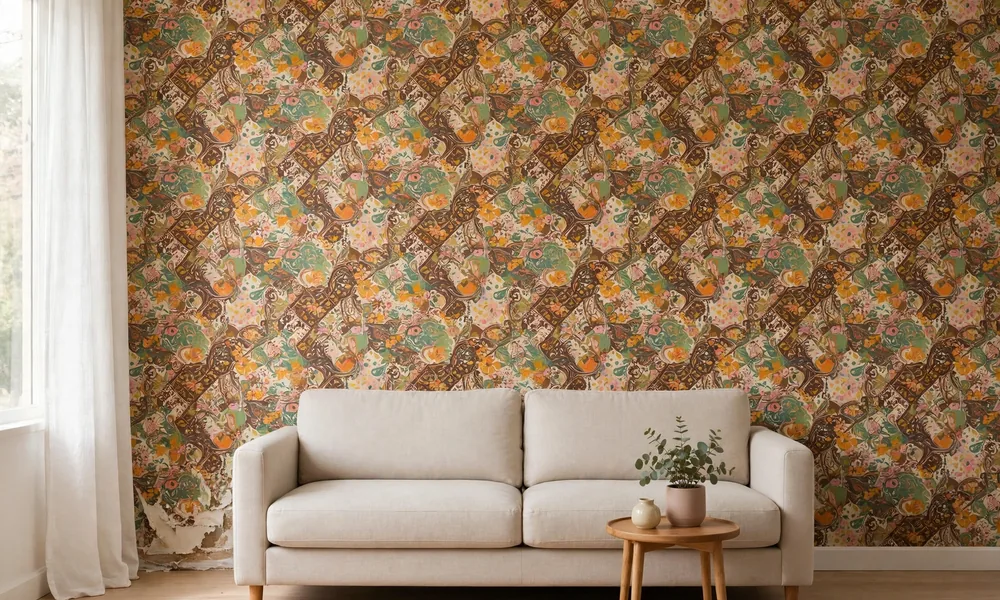
Why Wallpaper Goes Wrong So Often
Wallpaper fails differently from paint. A bad paint colour can be fixed in a weekend with a roller and a fresh tin. Bad wallpaper means steaming, scraping, repairing plaster and starting again, which is why people live with choices they dislike for years.
The second problem is scale. A sample the size of a postcard hides the repeat and the way a pattern behaves across a wide wall. This is why so many home design trends that date fast start with wallpaper: the pattern that felt bold in the shop becomes the first thing that dates the room.
Light is the third factor people underestimate. A colour that looks warm under shop spotlights can turn grey, green or muddy in a north-facing room.
Patterns That Fight the Room
Pattern is where most wallpaper regret begins. The print sets the mood of the whole room, and when it is wrong, no amount of furniture or styling can rescue it.
Oversized Prints in Small Rooms
Large-scale prints need space to breathe. In a small bedroom, a giant floral or oversized geometric motif gets cut off by corners, doors and furniture, so the eye never sees the full design — only fragments of it, repeated at an uncomfortable scale.
Tiny, Fussy Repeats
At the other extreme, tiny, dense repeats can be just as tiring. A small, high-contrast motif repeated hundreds of times across a wall creates a buzzing, restless surface that is hard to look at for long.
Clashing Patterns on Every Wall
One patterned wall can be a feature. Four patterned walls, plus patterned curtains and patterned cushions, is a competition with no winner. When every surface demands attention, the room has no resting place for the eye, and even good furniture looks lost.
Colours That Shrink, Darken or Date a Room
Colour does more than set a mood — it changes how big and how bright a room feels. The wrong colour on four walls can undo good furniture, good flooring and good light in a single stroke
Dark, Heavy Colours in Low Light
Deep navy, charcoal and dark green can look dramatic in a large, well-lit room. In a small room with one window, they absorb the little light there is and make the walls feel as if they are closing in. Much like the paint colours that make small rooms feel smaller, dark wallpaper shrinks a space instead of warming it.
Harsh Brights That Tire the Eyes
Acid yellow, vivid red and electric turquoise might feel energising for a day, but as a full-wall colour they are exhausting to live with. Bright wallpaper dominates everything placed against it, clashes with most furniture, and makes it hard to relax in the room.
Trendy Colours With a Short Shelf Life
Every year brings a new “colour of the year” and a wave of papers built around it. The problem is that a trendy shade dates the moment the trend moves on, and wallpaper is far harder to change than a cushion cover. Millennial pink, sage overload, terracotta everything — each had its season, and each now marks a room with a date stamp. Classic, muted colours cost no more and last far longer.
Finishes and Textures That Cause Trouble
The finish of a wallpaper matters as much as its pattern. It decides how the paper handles light, moisture, marks and cleaning
High Gloss on Imperfect Walls
Glossy and vinyl-coated papers reflect light, which sounds like a good way to brighten a room — until the light hits a bump, a crack or an uneven join. Every flaw in the plaster is magnified, and seams become visible lines across the wall.
Heavy Texture in Kitchens and Bathrooms
Deeply textured papers — grasscloth, heavy embossing, fabric effects — look luxurious in a dry living room, but they trap grease, steam and dust in kitchens and bathrooms. They are hard to wipe clean, they absorb smells, and moisture can lift them from the wall.
Metallic and Glitter Finishes
Metallic and glitter papers catch the light beautifully in a showroom, then spend their lives catching it at the wrong angle at home. They show every join, they can look cheap under warm domestic lighting, and they are notoriously hard to remove, with flakes that get everywhere.
Wallpaper in the Wrong Room
Some rooms are simply hostile to wallpaper. Heat, steam, grease and hard knocks all shorten its life
Bathrooms and Steam
Steam is wallpaper’s quiet enemy. In a bathroom without strong extraction, moisture seeps behind the paper, loosens the paste and encourages mould at the edges. Even “bathroom-suitable” papers need good ventilation and careful sealing around baths and showers.
Kitchens and Grease
Cooking throws grease and steam into the air, and wallpaper above a cooker or sink absorbs both. Splashes stain, grease yellows the paper, and cleaning a textured surface only spreads the marks around.
Busy Family Rooms and Hallways
Hallways, stairwells and children’s rooms take more knocks than any other walls in the house — bags, shoes, toys and pets all leave their mark. Delicate papers scuff, tear and show fingerprints quickly, and a busy pattern makes every scuff more visible, not less.
Scale, Placement and Matching Mistakes
Even a good paper can fail if it is hung badly or placed without thinking.
Papering All Four Walls
Covering every wall in a strong pattern leaves the room with no visual breathing space. It also makes the pattern the only thing anyone notices, which is rarely the effect people want.
Ignoring the Pattern Repeat
Every patterned paper has a repeat — the distance before the design starts again — and ignoring it is expensive. A large repeat means more waste at every join, because each strip must be cut to match the last.
Feature Walls in the Wrong Spot
A feature wall should be the wall you naturally look at — behind the bed, behind the sofa, the wall you face when you walk in. The lighting mistakes that flatten a room often share this cause: a strong feature fighting with bad light and a broken-up wall, so neither the paper nor the room gets a chance to shine.
Practical Problems People Forget
Beyond looks, wallpaper carries practical risks that paint does not. These are the issues that turn up after the decorating is done
| Choice | The problem | A better option |
|---|---|---|
| Cheap, thin paper | Tears when hung, shows paste stains, hard to remove cleanly | Mid-range paste-the-wall paper with a solid backing |
| Dark paper in a rented home | Removal damages plaster and risks losing a deposit | Light, removable paper or a painted feature wall |
| Pattern with a large repeat | High waste, extra rolls, batch shade differences | Small repeat or plain textured paper for big rooms |
| Non-washable paper with children or pets | Marks cannot be cleaned and show quickly | Scrubbable vinyl in family and hallway spaces |
| Wallpaper over damaged plaster | Bumps, bubbles and peeling within months | Repair, fill and line the walls before papering |
Removal deserves special attention. Some papers strip cleanly in sheets; others come off in fingernail-sized pieces and take the top layer of plaster with them.
How to Choose Wallpaper That Actually Works
Good wallpaper choices are rarely dramatic.
- Order full samples, not swatches, and pin them up for at least three days.
- Check the sample in morning, evening and artificial light before deciding.
- Match the pattern scale to the room: smaller repeats for small rooms, larger ones only where there is space.
- Keep strong patterns to one wall and let the other walls stay plain and calm.
- Choose washable, scrubbable finishes for kitchens, hallways and family rooms.
- Buy all rolls from the same batch and add ten percent extra for matching and mistakes.
Frequently Asked Questions
What is the worst wallpaper for a small room?
Large-scale, high-contrast patterns and very dark colours are the worst combination for a small room. They make the walls feel closer and the pattern feel too big for the space.
Does wallpaper make a room look dated?
It can, when the pattern or colour belongs to a short-lived trend. Strong trend-led papers date faster than any other finish because they are so recognisable.
Can you put wallpaper in a bathroom?
You can, but only with good ventilation, a moisture-resistant paper and careful sealing around wet areas. In a small bathroom with a shower and weak extraction, wallpaper will peel and encourage mould. Tiles or bathroom paint are safer in those rooms.
Is it better to wallpaper one wall or all four?
One wall is usually better for a strong pattern. It gives the room character without overwhelming it, uses fewer rolls and is far easier to change later.
How do I know if a wallpaper will suit my room?
Order a large sample and live with it on the wall for a few days. Look at it in daylight and at night, with the curtains open and closed, and next to your furniture and flooring.
What wallpaper is easiest to remove?
Paste-the-wall non-woven papers are generally the easiest to remove, often peeling off in full strips. Traditional paste-the-paper and heavily textured papers are harder, and metallic or glitter finishes are the worst of all.
The Bottom Line
The worst wallpaper choices for rooms are not the ugliest papers — they are the right papers in the wrong place: a giant print in a tiny room, a dark colour in a dim one, a delicate finish in a steamy bathroom, or a bold trend on all four walls.