Choosing between carpet vs hardwood floors bedrooms is one of the most personal decisions in home design, because the bedroom is where you start and end every day. It is the first surface your bare feet touch in the morning and the last thing you feel before sleep, so comfort matters just as much as looks, cost, and upkeep.
The honest answer is that neither floor wins on every point. Carpet wins on softness, warmth, and quiet, while hardwood wins on durability, easy cleaning, and resale value. The best choice depends on how you sleep, whether you have allergies or pets, how cold your winters get, and how long you plan to stay in your home.
This guide compares carpet and hardwood across the factors that actually matter in a bedroom, with real cost ranges, cleaning routines, and style advice, plus a simple checklist to help you decide. By the end, you will know which floor suits your bedroom, your budget, and your daily life. That daily first step is worth getting right.
Key takeaways
- Carpet is warmer, softer, and quieter underfoot, making it the cosier choice for cold bedrooms and light sleepers.
- Hardwood lasts decades longer than carpet, cleans more easily, and usually adds more to a home’s resale value.
- Carpet needs regular vacuuming and deep cleaning, while hardwood needs sweeping and occasional refinishing.
- Allergy sufferers usually do better with hardwood, since carpet can trap dust, pollen, and pet dander.
- The smart middle ground is hardwood with a large, washable area rug beside the bed.

Comfort and Warmth Underfoot
Comfort is where carpet has its clearest advantage. Stepping out of bed onto a soft, warm surface on a cold morning feels completely different from stepping onto bare wood. Carpet insulates the floor, holds warmth, and cushions every step, which matters most in upstairs bedrooms and homes with cold winters.
Hardwood feels firm and cool by comparison, especially in winter. That coolness can be refreshing in a warm climate, but in a cold one it can make the whole room feel chilly. Many hardwood owners solve this with thick socks, slippers, or a bedside rug, and those fixes work well.
Noise and Sleep Quality
Bedrooms should be quiet, and carpet is the better sound absorber. It muffles footsteps, softens the sound of dropped items, and reduces echo in the room. This matters if you share a home with early risers or children, and even more in apartments, where noise travels through floors to the rooms below. Hardwood amplifies sound instead: every step and every dropped phone echoes a little louder.
Durability and Lifespan
Hardwood is the clear winner on lifespan. A well-made solid hardwood floor can last fifty years or more, and it can be sanded and refinished several times to look new again. Even engineered hardwood typically lasts twenty to thirty years with normal care.
Carpet has a much shorter life. Even good-quality bedroom carpet usually needs replacing after eight to fifteen years, and high-traffic paths beside the bed can flatten sooner. Stains and pet accidents shorten its life further, and once carpet is matted or stained in patches, cleaning rarely restores it fully. If you are comparing wood options more broadly, our guide to hardwood vs laminate floors explains how the main wood-style floors differ in durability and price.
Cleaning and Maintenance
Day-to-day cleaning is simpler with hardwood. A quick sweep or a pass with a dry mop removes dust and hair, and a damp mop handles spills in minutes. There is nowhere for dirt to hide, so the floor looks clean as soon as the surface is clean.
Carpet hides dust better between cleans, which can feel like less work, but the dirt is still there, sitting deep in the fibres. Proper care means vacuuming at least twice a week, spot-cleaning stains immediately, and deep-cleaning with a steam cleaner every six to twelve months.
Cost Comparison
Carpet costs less to buy and install. Typical fitted carpet for a bedroom runs from around three to eight dollars per square foot including underlay and fitting, depending on fibre and quality. Hardwood is a bigger investment, usually from eight to twenty dollars per square foot installed, with premium species and wide planks at the top of that range.
The lifetime picture is closer than the upfront prices suggest. Carpet will likely be replaced at least once during the life of a single hardwood floor, and each replacement means new material, new fitting, and disruption to the room. Hardwood needs refinishing eventually, but that cost is usually lower than a full carpet replacement.

| Factor | Carpet | Hardwood |
|---|---|---|
| Upfront cost per sq ft | $3–$8 installed | $8–$20 installed |
| Typical lifespan | 8–15 years | 30–50+ years |
| Comfort underfoot | Soft and warm | Firm and cool |
| Cleaning effort | Vacuum often, deep clean yearly | Sweep often, mop weekly |
| Allergy friendliness | Traps dust and dander | Easy to keep allergen-free |
| Noise | Quiet, absorbs sound | Echoes footsteps |
| Resale value | Neutral to slightly negative | Usually adds value |
| Best for | Cold rooms, light sleepers | Allergies, pets, long-term homes |
Allergies and Air Quality
For allergy sufferers, hardwood is usually the better bedroom floor. Carpet fibres trap dust mites, pollen, pet dander, and mould spores, and every step releases a small puff of them back into the air. Regular vacuuming with a HEPA filter helps, and steam cleaning reduces the load, but carpet can never be made as allergen-free as a hard surface.
Hardwood does not hold allergens in the same way. Dust and dander sit on the surface, where a damp mop or a vacuum removes them completely. But if allergies are a daily problem, hardwood removes one major source of irritation from the room where you spend a third of your life.
Style, Design, and Resale Value
Hardwood has a timeless quality that suits almost every bedroom style, from modern minimal to classic traditional. Its natural grain adds warmth and character, and it makes small rooms feel larger because the eye travels across an unbroken surface. Buyers love it too: hardwood floors help homes sell faster and for more money, particularly in main bedrooms. It is one of the few flooring choices that is both a design feature and an investment.
Carpet offers a different kind of style freedom. It comes in endless colours, patterns, and textures, and it can make a bedroom feel cocooning and luxurious in a way hard floors cannot. A deep-pile carpet in a soft neutral can turn a plain room into a retreat, but carpet dates faster, and worn carpet is one of the first things buyers notice. Getting the soft furnishings right matters too, and knowing the worst rug choices for rooms will help you avoid rugs that clash, shed, or trip you up in a carpeted or hardwood bedroom alike.
Window dressings and bedding finish the look your floor starts. Heavy drapes add the same warmth and sound softening that carpet provides, while light sheers suit the bright, open feel of hardwood. The colours should work with the floor, not fight it: warm wood tones pair well with cream, sage, and soft grey, while grey carpet suits cooler bedding and crisp white curtains. Before you buy, check the worst curtain choices for rooms so your window dressings do not clash with your new floor or block the daylight that makes a bedroom feel calm and spacious.
Who Should Choose Carpet, and Who Should Choose Hardwood
Choose carpet if warmth, softness, and quiet matter most to you. It is the best pick for cold bedrooms, upstairs rooms, light sleepers, and anyone who loves walking barefoot. It also suits renters and budget-conscious renovators, since it costs less up front and is quick to install.
Choose hardwood if you want a floor that lasts decades, cleans easily, and adds value to your home. It is the best pick for allergy sufferers, pet owners, warm climates, and anyone planning to stay put for many years.
The Best of Both Worlds
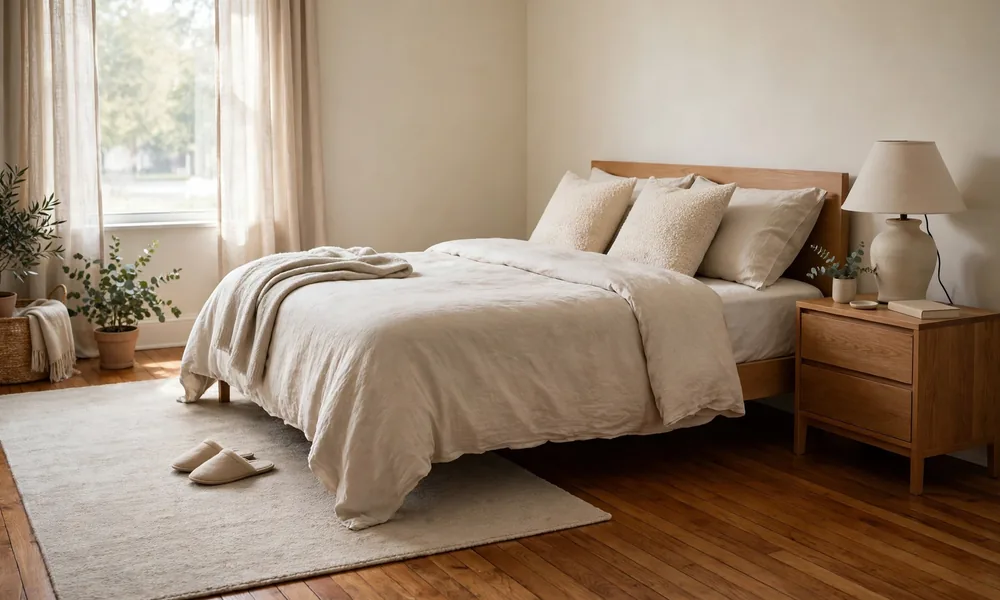
The most popular compromise is hardwood with a large area rug, and it is popular for good reason. You get the durability, easy cleaning, and resale value of wood, plus a soft, warm landing spot beside the bed where it matters most. Choose a rug large enough to extend at least two feet beyond each side of the bed, use a non-slip pad underneath, and pick a washable material. Change the rug when your taste changes, and the floor underneath stays beautiful for decades.
Bedroom Flooring Checklist
Use this checklist before you spend any money, and answer each point honestly for your own home.
- Measure your bedroom and get quotes for both carpet and hardwood, including underlay, fitting, and removal of the old floor.
- Check your climate: if winters are cold and the bedroom is upstairs, carpet’s warmth counts for more.
- List your household honestly: allergies, asthma, pets, and young children all push the decision toward hardwood.
- Test samples at home: walk barefoot on carpet and wood samples morning and evening before choosing.
- Plan your cleaning routine: be realistic about how often you will vacuum, mop, or deep clean.
- Think about resale: if you may sell within five years, hardwood usually returns more of its cost.
Frequently Asked Questions
Is carpet or hardwood better for bedrooms?
Carpet is better for warmth, softness, and quiet, while hardwood is better for durability, cleaning, allergies, and resale value. The right choice depends on your climate, health, household, and budget rather than a single winner.
Does hardwood make a bedroom cold?
Hardwood feels cooler underfoot than carpet, especially in winter, because wood conducts heat away from your feet. A bedside rug, slippers, and underfloor heating all solve the problem, and in warm climates the cool feel is often a benefit.
Is carpet bad for allergies?
Carpet can trap dust mites, pollen, and pet dander, which may worsen allergy and asthma symptoms. Regular HEPA vacuuming and steam cleaning help, but hardwood is easier to keep allergen-free and is usually the better choice for allergy sufferers.
How long does bedroom carpet last?
Good-quality bedroom carpet typically lasts eight to fifteen years, depending on fibre, foot traffic, pets, and cleaning. High-traffic areas beside the bed usually show wear first, while low-use guest bedrooms can last longer.
Does hardwood increase home value?
Yes, hardwood floors usually increase a home’s value and appeal to buyers, especially in main bedrooms and living areas. Well-maintained hardwood is a feature buyers actively look for, while old carpet is often seen as a cost to replace.
Can I put a rug on hardwood in the bedroom?
Yes, and it is the most popular compromise. A large rug beside the bed adds warmth and softness where you step each morning, while the hardwood underneath stays easy to clean and durable. Use a non-slip pad to keep the rug safely in place.
The Bottom Line
Carpet vs hardwood floors bedrooms comes down to what you value most in the room where you sleep. If you want the warmest, softest, quietest bedroom and you are happy to vacuum often and replace the floor in a decade, carpet is the best choice. If you want a floor that lasts for decades, cleans in minutes, keeps allergies down, and adds value to your home, hardwood is the best choice. For most people, the smartest answer is hardwood with a large, soft rug beside the bed: the durability and value of wood, with the comfort of carpet exactly where your feet land each morning.