
A baby bottle sterilizer is one of those nursery buys that sounds optional until the third night of washing bottles at midnight. A newborn can go through six to eight bottles a day, and each one needs to be washed, sterilized and dried before the next feed. Doing that by hand, bottle by bottle, in a pan of boiling water, is slow, fiddly and easy to get wrong when you are tired. The best baby bottle sterilizers of 2026 take that whole job off your hands: load the bottles, press a button, and come back to clean, dry bottles that are ready to use.
Why Sterilizing Matters in the First Year
A baby’s immune system is still developing, and in the first year of life it is far less able to fight off the germs that an adult would shrug off. Milk is also a perfect place for bacteria to grow. A bottle that looks clean can still carry traces of milk in the nipple, the valve or the screw ring, and those small hidden corners are exactly where germs multiply between feeds. That is why health guidance in many countries recommends sterilizing all feeding equipment for at least the first twelve months, and why so many parents keep a sterilizer on the kitchen counter long after the early weeks.
Washing alone is not the same as sterilizing. Hot soapy water removes visible milk and most surface dirt, but it does not reach the level of cleanliness that sterilizing does. A sterilizer uses steam or ultraviolet light to kill the germs that washing leaves behind, including in the narrow parts of a bottle that a brush cannot easily reach. It is not about being anxious or overcareful. It is about giving a tiny digestive system one less thing to fight, and about giving parents a routine they can trust when they are running on very little sleep.
How Baby Bottle Sterilizers Work
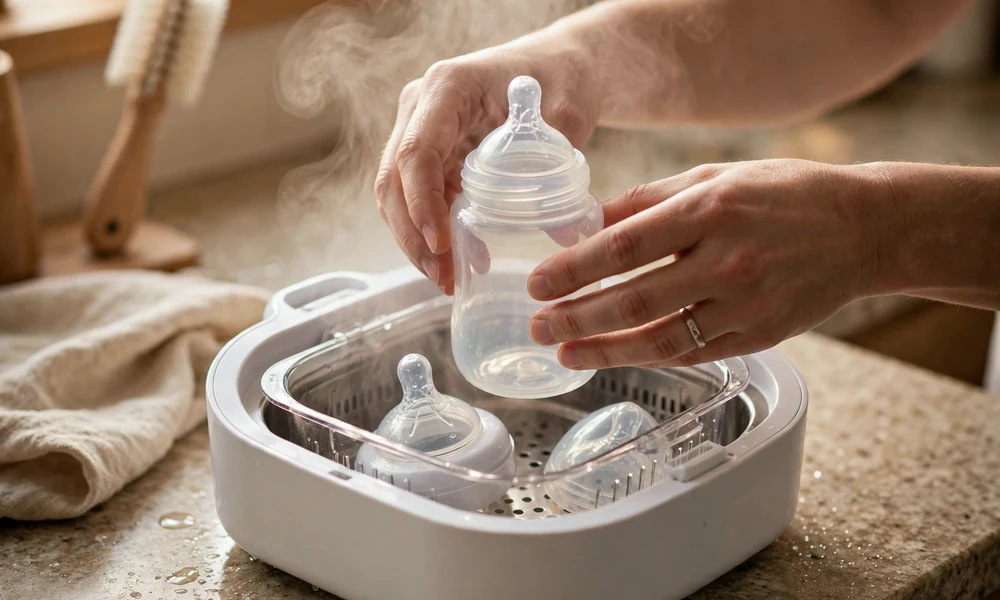
Most electric sterilizers work with steam. A small amount of water is heated in the base until it produces steam, which fills the chamber and surrounds the bottles, nipples, rings and caps. The steam reaches every surface, including the inside of the nipple and the tiny air vent, and the high temperature does the work. A typical steam cycle takes between six and fifteen minutes, depending on the model and how full it is. Some machines then dry the contents with warm air, so the bottles come out ready to fill rather than dripping wet.
Ultraviolet sterilizers work differently. They use UV-C light inside a closed cabinet to sterilize the items placed on its racks. There is no water involved, so there is no steam, no descaling and nothing to dry afterwards. UV models are often quieter than steam models, and they can usually sterilize items that cannot be steamed, such as some electronic toys or a phone, though bottles and feeding parts are their main job. They tend to cost more than steam models, and the bulbs or lamps inside them need replacing after a certain number of hours, so it is worth checking the running cost before you buy.
The Main Types Compared
For most families, an electric steam sterilizer is the best starting point. It is fast, it works without a microwave, it handles a full day’s bottles in one cycle, and the better models dry as well, which removes the whole second step of laying bottles out on a rack. If your kitchen is small, look for a compact model that holds four bottles instead of six, or a modular one that can be split into a smaller unit for quick cycles and a larger one for a full load. A sterilizer that is too big for your counter will end up in a cupboard, and a sterilizer in a cupboard does not get used.

Capacity and Fit: What Actually Holds Your Bottles
Capacity is where many parents get caught out. A sterilizer that claims to hold six bottles may hold six of the manufacturer’s own slim bottles, and only four of the wide-neck bottles you actually use. Wide-neck bottles, angled bottles and bottles with handles all take up more room than the standard shape. Before you buy, check the dimensions of your own bottles against the sterilizer’s chamber, and look for photos or reviews showing the exact bottles you own loaded inside it. A machine that holds your full daily set in one cycle saves a second run every single day.
Speed, Drying and the Daily Routine
Speed matters most at night. A sterilizer that takes fifteen minutes plus another thirty to dry is fine in the afternoon, but at three in the morning it feels endless. The fastest steam models finish a cycle in around six minutes, and models with a built-in dryer can have bottles ready in under forty minutes from start to finish. If you run the sterilizer last thing at night and let it dry while you sleep, a slower machine is no problem at all. The trick is to match the machine to your routine, not to the fastest number on the box.
Routine is everything with a sterilizer. The families who get the most from one are the families who build it into the day: wash the bottles after each feed, load them into the sterilizer in the evening, run a cycle, and wake to a full set of clean bottles. It becomes part of the same wind-down as the last feed and the nursery lights going low. If you are still setting up the nursery, our guide to the best baby monitors of 2026 covers the other half of that evening routine, so the night feeds themselves are calmer too.
What to Look For Before You Buy
Start with the material of the bottles you own. Most sterilizers handle the common bottle materials, but always check the manufacturer’s guidance for your exact bottles and nipples before you buy, because some materials and some specialist nipples have temperature limits or need a particular cycle. If you use glass bottles, make sure the sterilizer is rated for glass, and check that the racks hold them securely without rattling or tipping. A sterilizer that suits your bottles is worth more than one with a longer list of features.
Look for simple controls. A sterilizer should be operable with one hand and half an eye open, because that is how you will use it most of the time. A single button for sterilize, a single button for dry, and a clear display showing how long is left is all you need. Touchscreens look modern but can be hard to use with wet hands, and a machine with five modes you will never use is a machine that costs more for no reason. An auto shut-off is worth having, because it means the machine stops safely if the water runs low or the cycle is interrupted.
Cleaning and Looking After Your Sterilizer
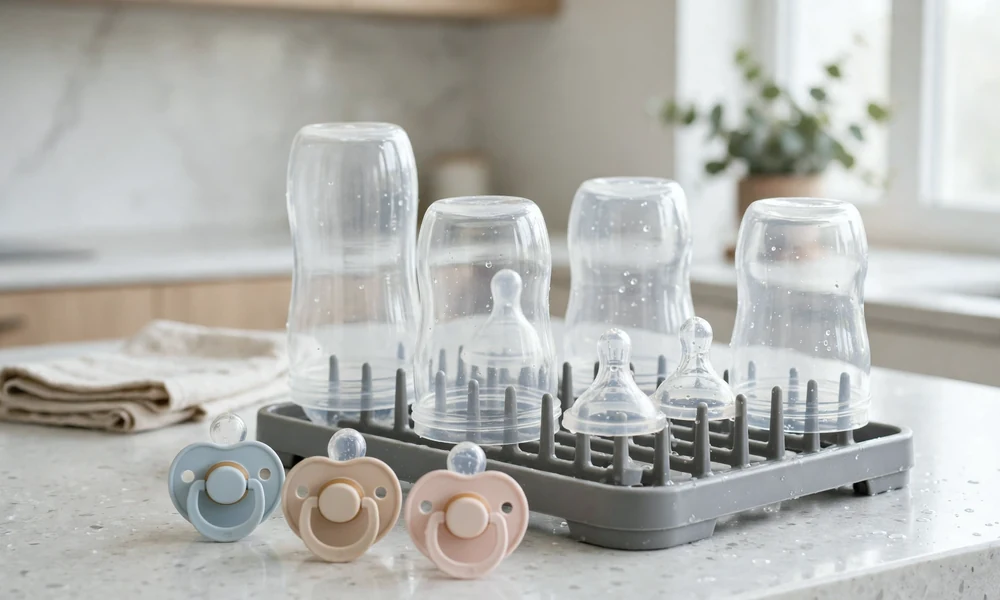
A sterilizer only works well if it is clean. Rinse the water reservoir after each use and wipe the inside dry, because standing water leaves marks and can carry smells into the next cycle. Wash the racks and trays in warm soapy water regularly, and let them dry fully before putting them back. If your model has a filter for the drying air, check it every few weeks and clean or replace it as the manual says. A clean machine sterilizes better and lasts longer.
What to Avoid When Buying a Baby Bottle Sterilizer
Avoid buying on capacity alone. A sterilizer that holds eight bottles sounds generous, but if it takes up half the counter, needs a long cycle and never dries properly, you will use it less than a compact four-bottle model that runs quickly and fits your kitchen. Capacity only helps if the machine is convenient enough to run every day, and convenience comes from size, speed and simple controls, not from the biggest number on the box.
Avoid the temptation to skip washing before sterilizing. A sterilizer is not a dishwasher. Bottles should be washed in hot soapy water and rinsed before they go in, because milk residue left on a bottle can shield germs from the steam and leave a film behind. It only takes a minute per bottle, and it makes the sterilizer’s job far easier. The same goes for nipples: turn them inside out, wash them gently and check the hole is clear before they go into the machine.
Making the Nursery Routine Easier
A sterilizer is only one part of the nursery, but it is the part you will touch most often. The rest of the room should work just as hard. A comfortable place to sit for feeds, a changing station with everything in reach, and a soothing spot for the baby to rest after a feed all make the long days easier. Our guide to the best baby swings of 2026 looks at the soothing side of that routine, and a good swing can give you both hands free while the sterilizer runs its cycle in the kitchen.
For the daytime hours, a bouncer can do a similar job in a smaller footprint, keeping the baby close and content while you wash and load the next set of bottles. Our guide to the best baby bouncers of 2026 covers the options that suit small spaces. The pattern is the same across all three: a good nursery is not about owning everything, it is about owning the few things that make each part of the day run smoothly, and a sterilizer is near the top of that list.
Frequently Asked Questions
Do I need a sterilizer if I wash bottles well? Washing removes milk and dirt, but sterilizing goes further by killing germs that washing leaves behind, including in the narrow parts of the nipple and valve. Health guidance in many countries recommends sterilizing feeding equipment for at least the first year, so most parents find a sterilizer worth having even though washing is still the essential first step.
Can I sterilize breast pump parts and pacifiers too? Yes, in most models. Pump parts, pacifiers, teething rings and small feeding accessories usually fit on the racks or in the small-parts tray. Always check the manufacturer’s guidance for each item first, because some parts have temperature limits or need a shorter cycle, and some electronic pump parts should never go into a steam sterilizer.
Is a UV sterilizer better than a steam sterilizer? Neither is better in every way. Steam is faster per cycle, cheaper to buy and widely available. UV is quieter, uses no water, needs no descaling and can sterilize items that cannot be steamed. The right choice depends on your kitchen, your budget and what else you want to sterilize. Both do the main job well when used as the manufacturer directs.
The best baby bottle sterilizer is the one that fits your bottles, your kitchen and your daily routine, and that you will actually run every day. Choose a model with the right capacity for your bottles, a drying cycle if you want bottles ready straight away, and controls simple enough to use at three in the morning. Get that right, and the sterilizer quietly becomes one of the most-used things in the house, giving you clean bottles on demand and one less thing to think about in the first year.


