
A baby bouncer is one of those small purchases that ends up doing a surprising amount of work. It gives a newborn somewhere safe and comfortable to rest while you make lunch, it gives an older baby a seat with a view of the room, and it gives a tired parent two free hands for a few precious minutes. The best baby bouncers of 2026 do all of that with a sturdy frame, a soft washable seat and a gentle bounce that responds to the baby’s own movements, and the worst ones wobble, tip or leave a baby slumped in a position that is hard to get comfortable in.
What a Baby Bouncer Is, and What It Is Not
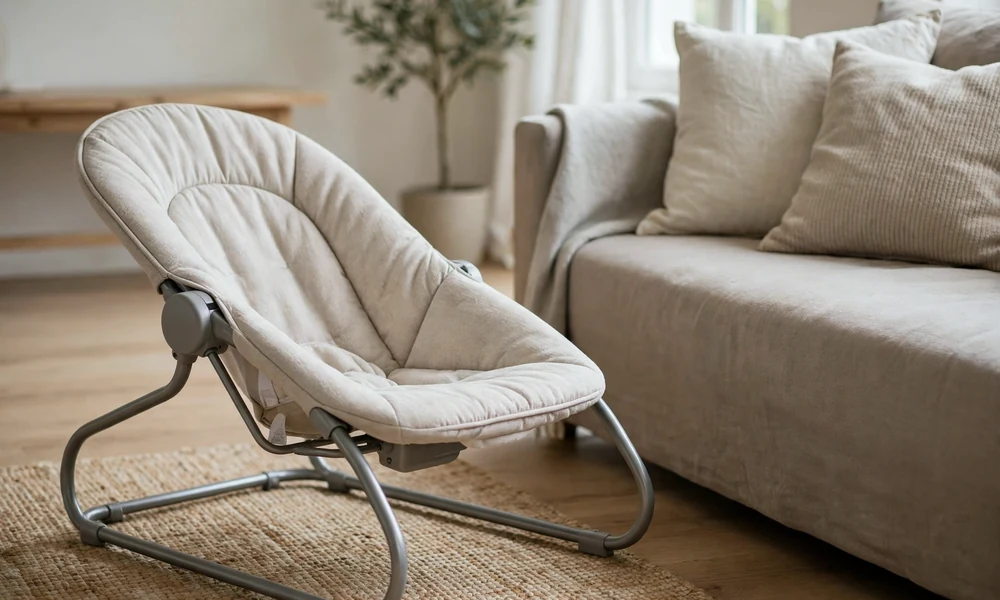
A bouncer is a low, lightweight seat that sits on the floor. The baby reclines in a fabric sling stretched over a metal frame, and the seat bounces gently when the baby kicks or wriggles. There is no motor, no plug and no swinging arm. That simplicity is the point. A bouncer is easy to move from room to room, easy to fold away, and easy to keep clean, which matters more than most first-time parents expect.
It is not a cot, a car seat or a place for a baby to sleep overnight. A bouncer is for short, supervised periods of awake time, and the baby should always be within sight and hearing of an adult while using it. It is also not a substitute for floor time. Babies need time on their tummies and time to kick freely on a mat, and the bouncer works best as one part of a day that includes plenty of both. Our guide to the best baby play mats of 2026 covers the other half of that balance, the soft, safe surface where a baby can stretch, roll and practise lifting their head.
How to Choose: What Matters Most
Start with the frame. A good bouncer frame is wide, stable and hard to tip. Put your hands on it in the shop if you can and give it a firm push from the side. It should stay put. The feet should grip the floor rather than slide, and the whole thing should feel solid rather than springy in the wrong places. A frame that flexes sideways is a frame that will worry you every time the baby leans, and worry is the opposite of what a bouncer is for.
Next, look at the seat itself. The fabric should be soft against a baby’s skin, breathable enough for warm days and firm enough to hold its shape. A seat that sags in the middle leaves a baby curled up like a comma, which is uncomfortable and makes it harder for them to lift their head and look around. The best bouncers hold a baby in a gentle recline with the head supported, the back straight and the hips in a natural, open position. If you are unsure, ask your paediatrician what position to look for, and check the maker’s guidance on age and weight before you buy.
The Best Baby Bouncers by Age and Stage
For a baby of six to nine months, the bouncer is on borrowed time, and that is normal. Once a baby can sit up unaided, roll over or push themselves up, they are ready to move on, and keeping them in a bouncer past that point is not safe. This is the moment to think about what comes next. Some families move to a high chair for mealtimes and a play mat for floor time, while others start looking at the next piece of baby gear. When the time comes, our guide to the best baby walkers of 2026 is worth reading, but only once your baby is at the right stage for it, and only with the safety guidance in that guide kept firmly in mind.
Safety First: Supervised Use, Weight Limits and Surfaces
Safety is not a footnote with a bouncer. It is the whole subject, and it starts with supervision. A baby in a bouncer should always be in the same room as an adult, and that adult should be able to see and hear the baby at all times. A bouncer is not a place to leave a baby while you go to another room, and it is not a place for a baby to sleep. If a baby falls asleep in the bouncer, move them to a flat, safe sleeping surface as soon as you can.
Always use the harness, every single time, even for a minute. A baby who seems too small to move can surprise you, and a baby who can roll can tip a bouncer far more easily than most parents expect. Fasten the harness snugly, with no slack, and check that the buckle has clicked properly. If the straps are twisted, untwist them before you fasten them, because a twisted strap can press on a baby’s skin and does not hold as well.
Place the bouncer on a flat, stable surface on the floor, never on a table, a bed, a sofa or a raised surface of any kind. A bouncer on a raised surface can fall, and a baby in it can be hurt badly. Keep it away from stairs, heaters, open fires and dangling cords, and never put it near water. The floor is the only safe place for a bouncer, and a rug or mat underneath it can help it grip and soften the bounce.
Respect the weight and age limits printed by the maker, and stop using the bouncer when your baby reaches either one. The limits are there because the frame and fabric are tested to hold a baby up to that size, and a bigger baby changes the balance of the seat. If you are ever unsure whether your baby has outgrown the bouncer, ask your paediatrician, who can advise based on your baby’s size and development.

Keeping Watch While the Baby Rests
A bouncer works best when it is part of a supervised routine rather than a way to step away. Set it up where you can see the baby while you work, cook or fold laundry, and check on them often, even when they seem settled. A baby who is quiet is not always a baby who is comfortable, so look for signs of restlessness, slipping down in the seat or a harness that has loosened, and adjust or lift the baby out when you see them.
Some parents find a monitor useful for the moments when they need to be in the next room, but a monitor is a help, not a replacement for being there. It cannot fasten a harness or lift a baby out of a seat, and it should never be the reason a baby is left alone in a bouncer. Our guide to the best baby monitors of 2026 explains what to look for if you do want one, from clear audio to a reliable connection, and when a simple audio monitor is enough.
Fabric, Cleaning and Everyday Care
A bouncer that is easy to clean is a bouncer that gets used. Look for a seat that comes off the frame without a fight, and check the washing instructions before you buy. Most good seats are machine-washable on a gentle cycle, and the best ones dry quickly, which matters when the only clean seat is the one in the wash. Keep a spare cover if you can, especially in the early months, so that a spill does not mean a day without the bouncer.
Bouncer, Swing or Rocker: Which One Fits Your Home
A bouncer, a swing and a rocker all do a similar job, but they do it in different ways. A bouncer is powered by the baby, which makes it light, quiet and easy to move. A swing is powered by a motor or batteries, which makes it heavier and noisier but useful for a baby who needs constant motion to settle. A rocker sits somewhere in between, with a curved base that rocks gently on the floor. The right choice depends on your home and your baby, and many families end up with a bouncer first because it is the simplest and the easiest to live with.
What to Avoid When Buying a Baby Bouncer
Avoid a bouncer with no harness, or one where the harness feels like an afterthought. A bouncer without a proper harness is not a bargain, whatever the price, and it is not safe to use. Avoid a seat that sags deeply in the middle, because a baby who is curled up cannot breathe as easily or look around, and will not settle. Avoid a frame that wobbles when you push it from the side, and avoid a model where the recline adjustment feels loose or does not lock.

Setting It Up on Day One
Put the bouncer together before the baby arrives, and test it yourself first. Press down on the seat, check that the frame is stable, fasten and unfasten the harness a few times, and practise changing the recline position. Read the maker’s instructions properly, including the weight limit and the cleaning guidance, and keep the instructions somewhere you can find them. A bouncer that is set up properly on day one is a bouncer you will trust, and trust is what lets you relax while the baby rests in it.
Introduce the baby to the bouncer gently, at a calm moment rather than when they are already tired or hungry. Place them in the seat, fasten the harness, and stay close, talking to them and letting them get used to the gentle bounce. Some babies settle straight away, while others need a few short tries before they enjoy it. Keep the first sessions short, and lift the baby out while they are still happy, so that the bouncer becomes a place they like rather than a place they are left.
Frequently Asked Questions
How long can a baby stay in a bouncer? Keep sessions short, usually no more than twenty to thirty minutes at a time, and always supervised. A bouncer is for awake time, not for long naps, and a baby who falls asleep should be moved to a flat, safe sleeping surface. If you are unsure how long is right for your baby, ask your paediatrician.
Is a bouncer safe for a baby’s hips and spine? A well-designed bouncer holds a baby in a supported recline with the hips in a natural position, and it is safe when used as directed, for short supervised periods, with the harness fastened. A seat that lets a baby slump or curl tightly is not a good fit. If you have any worries about your baby’s hips or spine, ask your paediatrician before choosing a bouncer.
The best baby bouncer is the one that fits your baby, your home and your daily routine. Choose a stable frame, a supportive seat, a harness you will actually use and a fabric you can wash, and the bouncer will be one of the most useful things you buy. Choose on price or looks alone, and you will be choosing again far sooner than you planned.


