Top Chili Powders for Everyday Cooking in 2026
Chili powder is the jar most home cooks reach for without thinking, and it is also the jar most often bought badly. The best chili powder for everyday cooking in 2026 is not the hottest one on the shelf, and it is not the cheapest per gram either. It is the one whose flavour you can actually taste in the finished dish: warm, a little smoky, a little sweet, with heat that builds slowly instead of arriving all at once and drowning everything else.
Key takeaways
- Most jars labelled chili powder are a blend of ground chillies, cumin, oregano and garlic, not a single ground chilli.
- Colour is the fastest freshness test: a good chili powder is a deep brick red, while a faded brown-red jar is stale.
- Buy mild or medium heat for everyday cooking and add cayenne separately when you want more fire.
- Bloom chili powder in a little hot oil for thirty seconds before adding the main ingredients, so it tastes cooked rather than raw and dusty.
- Ground chili powder fades within about six months, so buy small jars, store them cool and dark, and replace them rather than keeping a stale jar.
What chili powder actually is
Chili powder is one of the most misunderstood labels in the spice aisle, because the same two words mean two different things. In most supermarkets, a jar labelled chili powder is a blend: ground dried chillies mixed with cumin, dried oregano, garlic powder, onion powder and sometimes paprika and salt. It was designed as a shortcut for chilli con carne, a single spoonful that seasons a whole pan. In shops selling Mexican or South American ingredients, chili powder can mean one thing only: a single variety of dried chilli, ground to a powder, with nothing added. Ancho chili powder is ground ancho chillies. Chipotle chili powder is ground smoked jalapenos. The jar does the same job in both cases, but the flavour, the heat and the way you use it are quite different, and buying the wrong one is the most common reason a dish tastes wrong.
The blend is the right choice for most everyday cooking. Its cumin gives it an earthy warmth, its oregano adds a herbal edge, and its garlic rounds the flavour out, so a spoonful seasons a pan of mince, beans or roasted vegetables in one step. The single-chilli powders are sharper tools. Ancho is sweet and mild, chipotle is smoky and medium-hot, cayenne is pure heat with almost no other flavour, and each one does a narrower job better than a blend can. Chili powder is also not paprika, and it is not cayenne, even though all three are red powders in similar jars. Paprika is ground sweet peppers, mild and sweet, with no cumin and no oregano. Cayenne is ground hot chillies, almost pure heat. Chili powder sits between them: warmer and more complex than paprika, more rounded and less purely hot than cayenne.
Comparison table: the best chili powders for everyday cooking in 2026
| Type | Heat | Flavour | Best for | Watch out for |
|---|---|---|---|---|
| American-style blend | Mild to medium | Warm, earthy, cumin-led | Chilli con carne, tacos, beans | Some jars are mostly salt |
| Ancho chili powder | Mild | Sweet, raisin-like, gentle | Sauces, rubs, slow cooking | Can taste flat if stale |
| Chipotle chili powder | Medium to hot | Smoky, deep, lingering | Barbecue, beans, roast vegetables | Smoke can overpower delicate dishes |
| Cayenne pepper | Hot | Clean heat, little else | Adding heat to any dish | Easy to overdo; add a pinch at a time |
The American-style blend: the everyday workhorse
The American-style chili powder blend is the jar to buy first, because it is the one that seasons the most dishes with the least thinking. A good blend leads with ground chillies and cumin, follows with paprika, garlic powder, onion powder and dried oregano, and keeps salt low or leaves it out entirely. It is the powder behind a good chilli con carne, the backbone of taco seasoning, and the fastest way to make a pan of roasted vegetables taste deliberate instead of plain.
Ancho chili powder: sweet heat for slow dishes
Ancho chili powder is ground ancho chillies, which are dried poblano peppers, and it is the mildest single-chilli powder worth owning. Its heat is gentle, and its flavour is what makes it special: sweet and dark, almost like raisins or dried plums, with a soft earthiness underneath. Stirred into a slow-cooked stew, a pot of black beans or a tomato sauce, it adds a dark, fruity richness that a blend alone cannot give, and it does so without making the dish hot, which makes it the best single-chilli powder for households where some people like heat and some do not.

Chipotle chili powder: smoke in a spoonful
Chipotle chili powder is ground smoked jalapenos, and it is the powder to reach for when a dish needs smoke as much as heat. The smoking process gives it a deep, almost campfire flavour that sits underneath a medium-to-hot warmth, and a single teaspoon can make a pan of beans, a tray of roast sweet potatoes or a pot of tomato soup taste as though it spent time over real fire. Smoke is a strong flavour, and in a delicate dish, a soup made with fresh spring vegetables or a light fish stew, chipotle can take over completely and leave nothing else to taste. It is a natural partner for barbecue rubs, where smoke is the point.
Cayenne: pure heat, used carefully
Cayenne is not really a chili powder in the blend sense at all. It is ground hot chillies, usually cayenne peppers, with nothing added, and it brings almost pure heat with very little other flavour. When a dish tastes right but needs more fire, cayenne is the tool, because it raises the heat without changing the flavour profile the way a spoonful of blend would. A pinch in a soup, a stew, a tomato sauce or a pan of fried rice lifts the whole dish, and because it is so concentrated, a small jar lasts a long time.
How to judge a chili powder before you buy it
Colour is the fastest test in the shop, and it works even through a glass jar. A good chili powder is a deep, rich brick red, the colour of a ripe dried chilli held up to the light. A faded, brownish-red powder has been on the shelf too long or stored in the light, and its flavour has gone with its colour. If the jar is opaque, check the date instead, and choose the jar with the longest life left. Smell is the second test once you are home. Open the jar and hold it a few inches from your nose. A fresh powder smells warm, slightly sweet and distinctly of chillies, with the cumin and garlic notes of a blend easy to pick out. A stale powder smells faintly of dust, and a powder that smells of nothing at all is past saving.
How to use chili powder properly
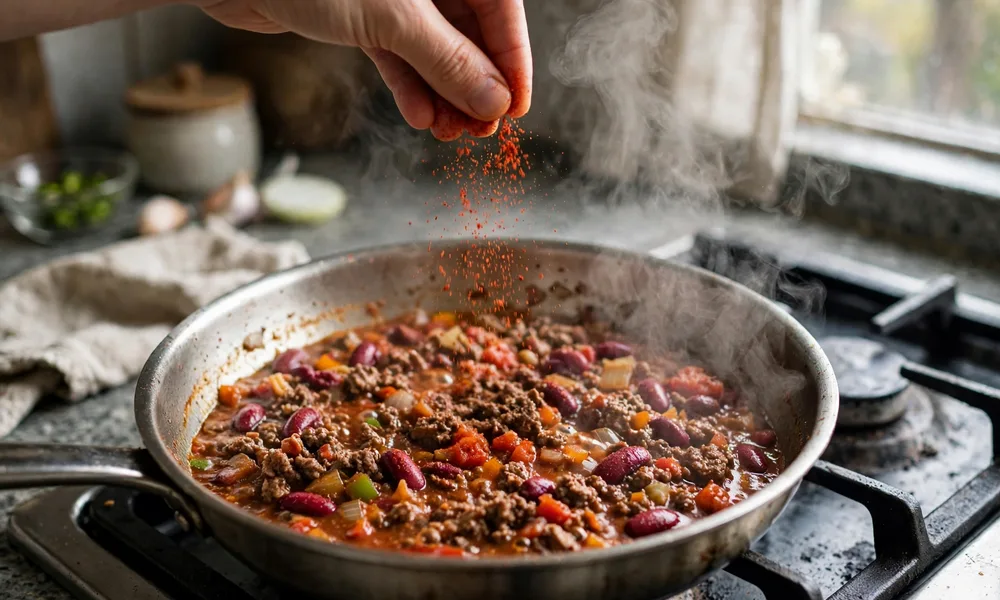
The most common mistake with chili powder is sprinkling it over finished food. Raw ground spice tastes dusty and harsh, and no amount of stirring at the table will fix it. The better method is to bloom it. Heat a spoonful of oil in the pan, add the chili powder, and stir it for about thirty seconds until it smells fragrant and the oil turns a deep red. Then add the onions, the meat or the tomatoes, and let the spiced oil carry the flavour through the whole dish. This one step is the difference between a chilli that tastes cooked and a chilli that tastes as though someone shook a jar over it at the end.
Amount matters as much as method. For a family-sized pot of chilli con carne, start with one tablespoon of blend per 500 grams of mince, then taste after ten minutes of simmering and add more only if the flavour is still thin. For roasted vegetables, a teaspoon tossed with oil before roasting is enough for a whole tray. For beans, add the powder with the onions at the start, so it has the full cooking time to soften into the dish. And remember that chili powder needs salt and acid to show its best.
Shop-bought jars versus mixing your own
Shop-bought chili powder wins on speed and consistency. A jar seasons a pan in seconds, the flavour is the same every time, and the blend has already been balanced by someone who has made it thousands of times. The drawbacks are salt and control. Many jars are very salty, and because the salt is mixed in with the spices, you cannot add more seasoning without adding more salt. Some are also surprisingly one-note, tasting mostly of paprika with little cumin character. The ingredient list is your defence: a short list of recognisable spices, with salt well down it, is the sign of a jar worth buying.

Storage, freshness and the mistakes to avoid
Ground chili powder fades faster than whole spices, and the clock starts the day the chillies are ground. In a cool, dark cupboard, a jar keeps its best flavour for about six months, then declines steadily. After a year, even a good powder tastes muted, and after two years it is mostly colour. Buy small jars, write the opening date on the lid, and replace a jar when its colour has faded or its smell has gone, rather than keeping it out of habit.
Checklist: buying chili powder
- Check the colour first: deep brick red means fresh, faded brown-red means stale.
- Read the ingredient list: chillies and cumin should lead, salt should sit well down it.
- Buy mild or medium heat for everyday cooking and add cayenne separately for more fire.
- Choose a small jar you will finish within six months rather than a large jar that will fade.
- Smell the powder when you open it: warm and sweet is fresh, dusty and faint is stale.
- Store it cool, dark and tightly closed, away from the hob and never over a steaming pot.
Frequently asked questions
Is chili powder the same as paprika?
No. Paprika is ground sweet peppers, mild and sweet, with no cumin or oregano.
How hot is chili powder?
It depends on the type. An American-style blend is mild to medium, ancho is mild, chipotle is medium to hot, and cayenne is hot.
What is the difference between chili powder and chili flakes?
Chili powder is finely ground and spreads evenly through a dish, releasing its flavour quickly. Chili flakes are coarser pieces of dried chilli that add visible heat and a slower, sharper bite.
Can I use chili powder instead of taco seasoning?
Partly. Taco seasoning is built on chili powder and cumin, so chili powder covers most of its flavour, but a packet also adds more garlic, onion and oregano.
How long does chili powder last?
About six months at its best in a cool, dark cupboard, then it fades steadily. After a year it will taste muted, and after two years it is mostly colour.
Why does my chilli taste dusty instead of rich?
The powder was probably added raw at the end instead of bloomed in hot oil at the start.
Bottom line
Verdict: The Best. The best chili powder for everyday cooking in 2026 is a fresh, mild-to-medium American-style blend with chillies and cumin leading the ingredient list and salt well down it, kept in a small jar you finish within six months. Add ancho when you want sweet depth, chipotle when you want smoke, and cayenne when you want heat, and bloom the powder in hot oil before the main ingredients go in.