A Guide to Buying Fresh and Dried Basil in 2026
Buying basil in 2026 sounds simple until you stand in front of the shelf: sweet Genovese for pasta, Thai for curries, lemon for fish, purple for salads, dried in jars and frozen in cubes, and bunches that look identical but taste completely different. The best basil is the one that matches the dish you are cooking, bought at the right moment and stored the right way, so its fragrance survives until it reaches the plate. This guide explains how to choose fresh and dried basil, what each type is good for, and the mistakes that turn a fragrant herb into a dull garnish.
Key takeaways
- Fresh basil should smell sweet and peppery; a bunch with no scent will have no flavour either.
- Sweet Genovese basil suits pasta, salads and pesto, while Thai basil suits curries and stir-fries; the two are not interchangeable.
- Dried basil works in slow-cooked sauces and soups, but it cannot replace fresh basil in a salad or as a finishing garnish.
- Buy basil with bright, unbruised leaves and firm stems, and avoid bunches with black spots, slime or a sour smell.
- Store fresh basil like cut flowers in water on the counter, not loose in the fridge, where the cold turns it black.
How the best basil was judged
Every form of basil below was judged on five measures. Fragrance comes first: good basil announces itself the moment you crush a leaf, with a sweet, peppery scent. Flavour is second, judged on whether the herb tastes of something distinct or merely green. Freshness is third, because basil loses its perfume within days of being cut. Versatility is fourth: the best types earn their place across several dishes. Value is fifth, comparing the real cost per use.
Basil is a tender herb, and it behaves nothing like the woody herbs that sit happily in a fridge for a fortnight. It hates the cold, bruises at a touch and loses its scent fast, so most of the skill in buying basil is skill in handling it afterwards. If you want to keep a bunch going once it is home, our guide to herb keepers that keep fresh herbs crisp for weeks explains which storage suits soft herbs and why basil is the exception.
Comparison table: fresh and dried basil in 2026
| Rank | Type of basil | Best for | Watch out for |
|---|---|---|---|
| 1 | Fresh sweet Genovese basil | Pasta, pesto, salads | Wilts fast, hates the cold |
| 2 | Fresh Thai basil | Curries, stir-fries, noodle soups | Anise overpowers mild dishes |
| 3 | Fresh lemon basil | Fish, chicken, salads, drinks | Harder to find, flavour fades in cooking |
| 4 | Fresh purple basil | Salads, garnish, vinegars | Colour bleeds, milder than green |
| 5 | Dried basil | Slow sauces, soups, stews | Flat in fresh dishes, fades in a year |
| 6 | Frozen basil | Sauces, soups, cooked dishes | Texture collapses, useless raw |
| 7 | Living basil plants | Regular cooks, windowsill growing | Needs light and water |
The best basil to buy in 2026
1. Fresh sweet Genovese basil: the best all-rounder
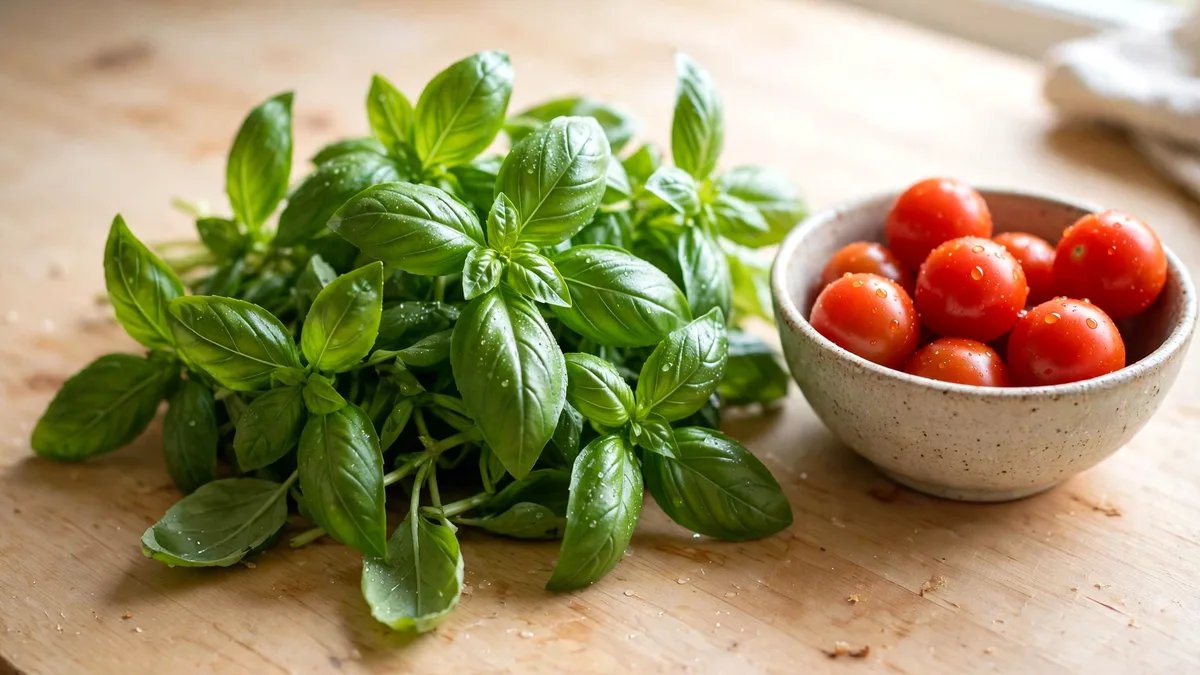
Sweet Genovese basil is the basil most people mean, and it is the best all-rounder in 2026. Its leaves are large, soft and bright green, with a sweet, slightly peppery flavour and the clove-like warmth that finishes a tomato salad. It is the basil for pesto, for torn leaves over pasta, for caprese, and for scattering over a pizza the moment it leaves the oven. Buy bunches with leaves the size of a thumb or larger, stems that snap rather than bend, and a scent you can smell. Small, pale leaves mean a young plant without full flavour.
2. Fresh Thai basil: the best for curries and stir-fries
Thai basil looks and tastes different, and that is why it earns its place. Its leaves are narrower and darker, its stems are purple, and its flavour carries a warm anise note. That anise edge makes it the best basil for Thai curries, Vietnamese noodle soups and fast stir-fries, where it holds up to heat and chilli. Sweet basil added to a hot curry goes dark and dull within a minute; Thai basil stays green. Look for firm purple stems and unspotted leaves, and use it in the last minute of cooking. Do not use it in a pesto or a caprese, where the anise flavour will fight the dish.

3. Fresh lemon basil: the best for fish and light dishes
Lemon basil is the quietest of the fresh basils, and the one most often overlooked. Its leaves are smaller and paler than sweet basil, and its flavour is a gentle citrus lift rather than a bold herbal punch. That restraint is its strength: it is the best basil for grilled fish, roast chicken, summer salads and cold drinks. A few leaves torn over grilled fish or stirred into a cucumber and tomato salad add brightness without shouting. It is harder to find, so buy it when you see it and use it the same day.
4. Fresh purple basil: the best for salads and garnish
Purple basil earns its place on looks as much as on flavour. Its deep burgundy leaves turn a plain green salad into something worth photographing, and they make a striking garnish on soups and grilled vegetables. The flavour is milder and slightly more clove-like than sweet basil, so it works best where it can be seen and tasted raw. There is one catch: its colour bleeds. Stir purple basil into a hot sauce and the sauce turns grey-green. Keep it raw, tear it rather than chop it, and pair it with pale ingredients where the colour can show. Buy bunches with evenly coloured leaves, and use it within a day or two.
5. Dried basil: the best for slow-cooked dishes
Dried basil is a different ingredient from fresh basil, and judging it by fresh standards is the mistake that gives it a bad name. It will never taste like a torn leaf over tomatoes, because drying removes the volatile oils that make fresh basil sing. What it does well is slow cooking: stirred into a tomato sauce at the start or simmered in a soup, it gives a steady, savoury background that fresh basil cannot. Buy it in a glass jar where you can see it: deep, even green, not brown or grey, and faintly sweet when you open the lid. Rub a pinch between your palms before you use it. Replace any jar older than a year.

6. Frozen basil: the best backup for cooked dishes
Frozen basil is the most useful form that most cooks never buy, and it deserves a place in the freezer as a backup. It is usually sold as cubes of pureed basil, sometimes with a little oil, and it keeps for months. Stirred into a simmering sauce or soup, a cube melts in and gives a genuine basil note that dried basil cannot match. The texture is the limitation: thawed basil is soft and dark, so it is useless raw or as a garnish. Buy cubes that list basil as the only ingredient, or basil and oil.
7. Living basil plants: the best for regular cooks
A living basil plant in a pot is the best buy for anyone who cooks with basil more than once a week, because it solves the freshness problem entirely. Instead of a bunch that starts wilting the moment you buy it, you have leaves at their peak whenever you need them. Buy a plant with dense, bushy growth and no yellow leaves, and avoid the tall, leggy ones. Put it in the brightest, warmest spot you have, water it when the top of the soil feels dry, and harvest by pinching the growing tips, which makes the plant branch and grow bushier. A plant on a sunny sill can supply basil for months. If you want to grow it from the start, our guide to herb gardens for the kitchen compares the pots and kits that suit basil best.
What to avoid when buying basil
The most common basil regret is not a bad variety but a bad bunch. Avoid bunches with black spots or blackened leaf edges, which mean the basil has been chilled or bruised. Avoid leaves that feel slimy or limp, and any bunch with a sour or musty smell. Avoid dried basil that is brown, dusty or scentless, because it is old and will add nothing but green specks. Avoid buying more fresh basil than you can use in three days, and avoid washing it until you are ready to use it, since wet leaves blacken and bruise. The same care applies to the sauces basil goes into: our guide to pestos that taste like they came from a garden explains why the quality of the basil separates a good jar from a poor one.
Checklist: buying basil
- Smell the bunch before you buy it: strong, sweet and peppery means flavour.
- Check every leaf for black spots, slime or limp stems, and put the bunch back if any are present.
- Match the type to the dish: sweet Genovese for pasta and salads, Thai for curries, lemon for fish.
- Buy dried basil in glass where you can see the colour, and replace any jar older than a year.
- Keep fresh basil in water on the counter like cut flowers, and never store it loose in the fridge.
- Use fresh basil within three days, add it at the end of cooking, and tear it rather than chopping it.
Frequently asked questions
Can dried basil replace fresh basil?
In slow-cooked sauces, soups and stews, yes, and it can be better, because it gives a steady background flavour that survives long cooking. In salads, pesto, caprese and any dish where basil is eaten raw, no: dried basil tastes flat and dusty, and no amount will reproduce a fresh leaf.
How long does fresh basil last after buying it?
About three days at its best, and up to a week if you store it well. Stand the stems in a glass of water on the counter, away from direct sun, and change the water every day or two. In the fridge it turns black, so keep it at room temperature.
Why has my basil gone black?
Basil hates the cold, and black leaves are usually cold damage from a fridge or a cold draught. Bruising does the same thing: leaves that are crushed, chopped roughly or washed and left wet blacken at the edges. Tear the leaves gently, add them at the end of cooking, and keep the bunch warm and dry.
Is Thai basil the same as sweet basil?
No. Thai basil has narrower, darker leaves, purple stems and a warm anise flavour, and it holds up to heat in curries and stir-fries. Sweet basil is softer, sweeter and more peppery, and it suits pasta, salads and pesto. They can be swapped in a pinch, but the dish will taste different.
Should I wash basil before using it?
Only if it is visibly dirty, and only just before you use it. Rinse the leaves gently, shake off the water and pat them dry. Washing basil hours before cooking, or leaving it wet in a bag, bruises the leaves.
Can I freeze fresh basil?
Yes, and it freezes better than most herbs. Blitz the leaves with a little olive oil, freeze the paste in an ice-cube tray, and use the cubes in sauces and soups. Frozen basil loses its raw texture, so it will not work in a salad, but its flavour in cooked dishes beats dried basil.
Bottom line
The best basil in 2026 matches the dish: fresh sweet Genovese for pasta and salads, Thai for curries, lemon for fish, purple for garnish, dried for slow sauces, frozen as a backup, and a living plant if you cook with it every week. Buy bunches that smell strongly and look bright and unbruised, store fresh basil in water on the counter, and add it at the end.


