
Best Spice Blends That Fix Bland Cooking in 2026
The best spice blends of 2026 fix bland cooking in a single spoonful. A good blend does the thinking for you: the proportions are already balanced, the flavours already work together, and all you have to do is add the right amount at the right moment. A bad blend does the opposite. It tastes mostly of salt, or of one loud spice shouting over the rest, and the dish still tastes flat even though you followed the recipe.
Key takeaways
- A spice blend is a pre-mixed combination of ground spices and dried herbs, designed to give a whole flavour profile in one spoonful.
- Buy blends where the named spices lead the ingredient list and salt sits well down it; a blend that tastes mostly of salt is a poor blend.
- Garam masala, curry powder, herbes de Provence, taco seasoning and Cajun seasoning cover most weeknight cooking between them.
- Bloom a blend in a little hot oil for thirty seconds before adding the main ingredients, so it tastes cooked rather than raw and dusty.
- Ground blends fade within six months, so buy small jars, store them cool and dark, and replace them rather than keeping a stale jar.
What a spice blend actually is
A spice blend is several ground spices, and sometimes dried herbs, mixed in fixed proportions so that one spoonful delivers a complete flavour. Garam masala is a blend. Curry powder is a blend. So are taco seasoning, herbes de Provence, Cajun seasoning, za’atar and Chinese five-spice. What they are not is a single spice with a confusing name. Allspice, for example, smells like cinnamon, nutmeg and clove rolled into one, but it is a single dried berry, not a mixture at all. That distinction matters when you are shopping, because a single spice does one job and a blend does several at once.
The point of a blend is balance. A curry powder is not just turmeric, and a taco seasoning is not just chilli powder. Each one is built around a lead flavour, supported by warmth, sweetness, heat and savoury depth in proportions that took somebody a long time to get right. When you buy a good one, you are buying that balance. When you mix your own, you are taking control of it: less salt, more heat, no sugar, exactly the way your household likes it.
The blend families worth knowing first
You do not need twenty blends. Five or six well-chosen ones cover almost everything a home cook makes in a week, and each family has a clear job. The table below is the shortlist to start from, with what each blend is for and what to watch out for.
| Blend | Lead flavours | Best for | Watch out for |
|---|---|---|---|
| Garam masala | Cinnamon, cardamom, cloves, cumin | Curries, lentils, roast vegetables | Add late; long cooking dulls it |
| Curry powder | Turmeric, coriander, cumin | Curries, soups, rice, eggs | Needs blooming in oil first |
| Herbes de Provence | Thyme, rosemary, oregano | Roast chicken, potatoes, vegetables | Lavender can taste soapy if overused |
| Taco seasoning | Chilli powder, cumin, paprika | Mince, beans, roasted sweetcorn | Many packets are very salty |
| Cajun seasoning | Paprika, cayenne, garlic | Chicken, prawns, rice, potatoes | Heat varies a lot between brands |
| Za’atar | Thyme, sumac, sesame | Flatbreads, yoghurt, cauliflower | Goes stale fast once opened |
| Chinese five-spice | Star anise, cinnamon, cloves | Pork, duck, roast squash | A little goes a very long way |
Garam masala is the most misunderstood blend on the shelf. It is a warm, aromatic mix built on cinnamon, cardamom and cloves, with cumin and coriander underneath, and it is usually added near the end of cooking, when its top notes are still bright. Curry powder is its bolder cousin: turmeric gives it colour and earthiness, coriander and cumin give it body, and it needs to be cooked in oil at the start so the raw, dusty edge disappears. The two are not interchangeable. A curry made with garam masala alone will taste warm but pale, while one made with curry powder alone can taste flat and one-note.
How to judge a blend before you buy it
The ingredient list tells you almost everything, and it is worth the ten seconds it takes to read. The spices should come first, in an order that matches the flavour you expect. A taco seasoning should lead with chilli powder and cumin, not with salt. Salt should season the blend, not dominate it, and sugar should not appear at all in most savoury blends. A short list of recognisable spices is a good sign. A long list full of anti-caking agents, flavourings and colourings is a sign that the spices themselves are doing less of the work.
Smell is the second test. A fresh blend smells strong from a few inches away, with separate notes you can pick out: warmth, sweetness, heat, herbs. A stale blend smells faintly of dust and old cardboard, and no amount of it will fix a dish, because the flavour that left the jar is not coming back. Colour helps too. Curry powder should be a rich golden yellow, paprika-based blends a deep rusty red, and herb blends a proper green rather than a greyish brown. Faded colour almost always means faded flavour.
Shop-bought or homemade: which is better
Shop-bought blends win on speed and consistency. A packet seasons a pan of mince in seconds, and the flavour is the same every time, which matters on a busy weeknight. The drawbacks are salt and control. Many packets are very salty, and because the salt is mixed in with the spices, you cannot add more seasoning without adding more salt. Some are also surprisingly sweet, and a few taste mostly of one spice with little character from the rest. The ingredient list is your defence: a short list of recognisable spices, with salt well down it, is the sign of a packet worth buying.
A homemade blend takes about five minutes and gives you full control over salt, heat and sweetness. If packets are too salty, leave the salt out of your mix and season the dish separately. If they are too hot, cut the cayenne and add more paprika. Mix a small batch first, cook with it once, and adjust before you make a full jar. Our guide to taco seasoning shows how that works for the blend most households use first, and the same five-minute method works for a curry powder or a Cajun mix.
How much to use, and when to add it
The usual starting point is one to two teaspoons of blend per serving, or about two tablespoons for a pan that serves four. That is a starting point, not a rule, because blends vary in strength and in salt. Taste as you go, and add the blend in two stages if you are unsure: half at the start, so it cooks into the dish, and half near the end, so the top notes stay bright. It is easy to add more and impossible to take it out, and a dish that is slightly under-seasoned can be fixed at the table, while one that is over-seasoned cannot.
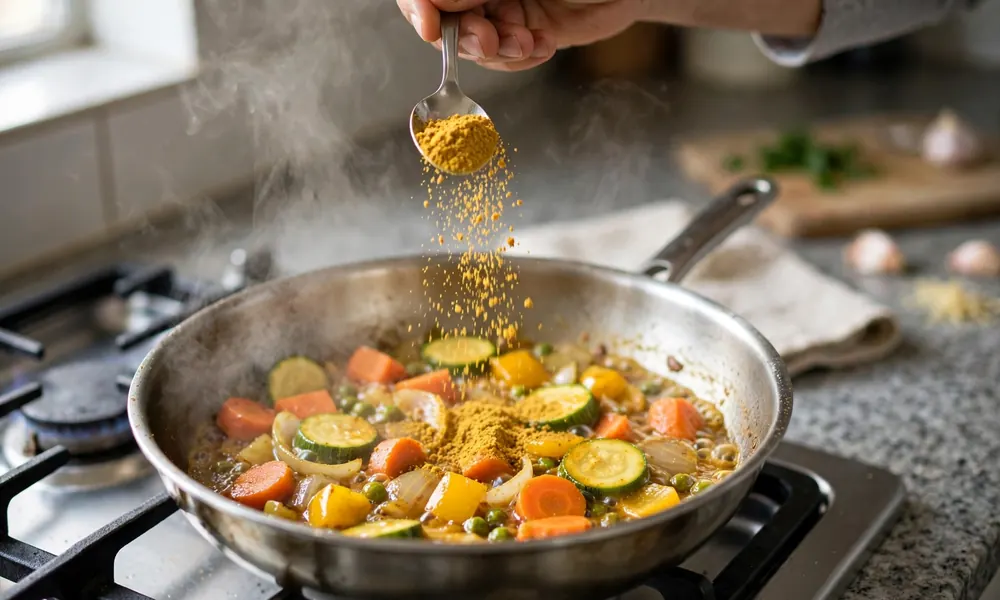
Blooming is the step most people skip, and it is the one that makes the biggest difference. Heat a little oil or butter in the pan, add the blend, and stir it for about thirty seconds until it smells warm and fragrant. The fat carries the flavour compounds that water cannot, and the heat takes the raw, dusty edge off the ground spices. Then add the onions, meat or vegetables and carry on as normal.
Storage: why good blends go stale so fast
A ground blend starts losing flavour the moment it is mixed, because grinding exposes the oils that carry aroma to air, light and heat. Whole spices keep for a year or more, but a ground blend is at its best for three to six months, and after that it fades steadily, however good the jar was when you bought it. That is why small jars beat large ones, and why a blend bought in January will not taste the same in December. Buy what you will use, use what you buy, and replace it without guilt when the smell has gone.
Storage is simple: airtight, dark and cool. A sealed jar in a cupboard away from the hob keeps a blend far longer than a jar left open above the stove. Label it with the date you opened it. For jars and the storage mistakes that ruin a collection, see our guide to spice jars that keep flavours fresh.

Mistakes that make blends taste bland
The most common mistakes are using too little, adding a blend at the very end where it tastes raw and dusty, storing the jar above the hob, and using one blend for everything. Keep three or four blends you know well, learn what each one is for, and reach for the right one rather than the nearest one. If a blend no longer smells of anything, throw it away: cooking with it wastes space in the dish that a fresh blend could have filled.
Checklist: buying and using spice blends
- Read the ingredient list: named spices first, salt well down, no sugar in savoury blends.
- Smell the blend: fresh means strong and layered, stale means dusty and faint.
- Buy small jars you will finish within six months, not large jars that sit for a year.
- Bloom the blend in hot oil for thirty seconds before adding the main ingredients.
- Add curry powder and Cajun seasoning early, garam masala and five-spice late.
- Store jars airtight, dark and cool, labelled with the date you opened them.
Frequently asked questions
What is the difference between a spice blend and a single spice?
A single spice comes from one plant, such as cinnamon bark. A blend is several ground spices and herbs mixed in fixed proportions, so one spoonful gives a complete flavour profile rather than a single note.
How long do spice blends last?
Most ground blends are at their best for three to six months after opening, then fade steadily. Buy small jars and replace them rather than keeping a stale jar.
Can I use a spice blend instead of the individual spices in a recipe?
Yes, if the blend matches the dish. A curry powder can stand in for the separate spices in a simple curry. Check the salt first, because a salty blend may mean the recipe needs no extra salt.
Why does my curry powder taste raw and dusty?
It was probably added without blooming. Ground spices need thirty seconds in hot oil before the main ingredients go in. Spices sprinkled onto a finished dish will always taste raw by comparison.
Is garam masala the same as curry powder?
No. Garam masala is warm and aromatic, built on cinnamon, cardamom and cloves, and usually added late. Curry powder is bolder and turmeric-led, and needs cooking in oil at the start.
What is the best first spice blend to buy?
Start with the food you cook most: garam masala and curry powder for curries, herbes de Provence for roasting, or a taco seasoning with a short ingredient list for tacos. One blend you use every week beats five you never open. For a wet alternative, our guide to curry paste explains when a paste gives a deeper result than a powder.
The bottom line
The best spice blends of 2026 are the ones that earn their shelf space by fixing bland cooking without fuss: named spices first on the label, salt in the background, a smell that is strong and layered, and a jar small enough to finish while it is still fresh. Start with garam masala, curry powder, herbes de Provence and one blend that matches the food you cook most, bloom them in oil, add them at the right moment, and store them dark and cool.


