
A Guide to Chair Cushions for Dining Chairs in 2026
Chair cushions are padded seat covers that turn a hard wooden dining chair into a seat you can sit on comfortably for a whole meal. A good chair cushion adds just enough softness to take the pressure off your sitting bones, stays in place while you eat, and washes clean when dinner ends up on it. The best chair cushions for dining chairs in 2026 fit the seat properly, hold their thickness after months of use, and fasten securely.
This guide covers chair cushions themselves: the pads that sit on dining chairs, office chairs and garden chairs, not cushion covers, which are removable cases for sofa cushions, and not meditation cushions, which are floor seats. It explains thickness, filling, ties, non-slip backs, fabrics and measuring, so you can buy once and sit comfortably for years.
Key Takeaways
- Measure the seat before you buy: a cushion should cover the seat without overhanging the edge or bunching at the back.
- Two to five centimetres of dense foam suits dining chairs; thinner pads go flat, thicker ones raise you too high.
- Ties or a non-slip backing are essential, because an unfastened cushion slides every time you sit down or stand up.
- Choose a washable cover for dining chairs, where spills are a matter of time rather than a possibility.
- Replace a cushion when it stays compressed overnight, or when the ties fray and it will not stay put.
The Main Types of Chair Cushion
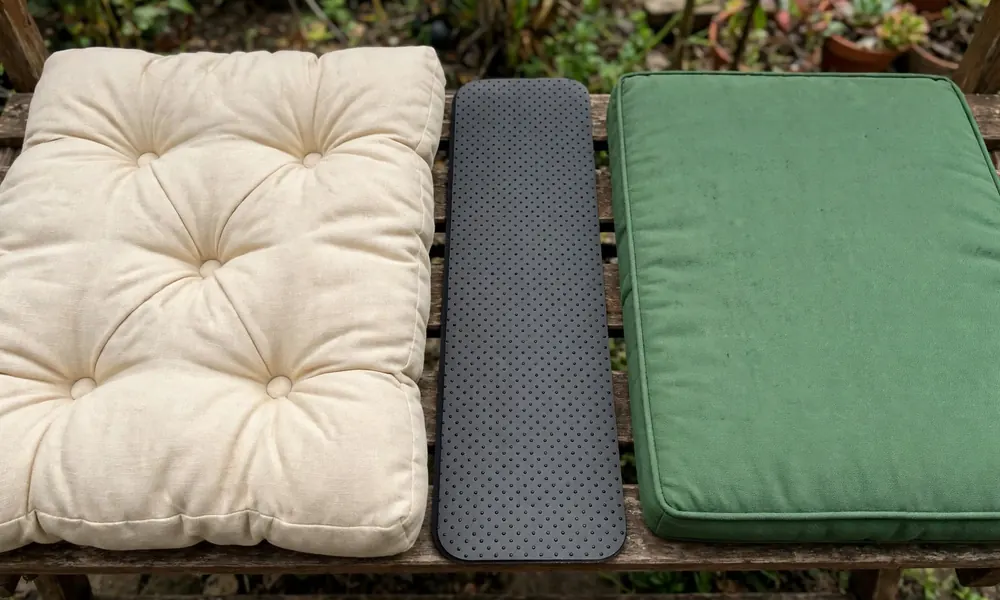
Most chair cushions fall into three groups, defined by where they are used. Dining chair cushions are flat, shaped pads that tie onto a wooden chair, usually square or slightly tapered. Office chair cushions are thinner, often contoured or wedge-shaped, designed to add comfort without raising you so high that your desk feels wrong. Garden chair cushions are thicker, weather-resistant and quick to dry.
| Type | Thickness | Fixing | Best for |
|---|---|---|---|
| Dining tie-on | 2 to 5 cm | Ties at the back | Wooden dining chairs |
| Office seat pad | 2 to 4 cm | Non-slip base | Desk and task chairs |
| Garden cushion | 5 to 8 cm | Ties or straps | Outdoor chairs and benches |
| Tufted pad | 4 to 6 cm | Ties at the back | Long meals, hard seats |
Thickness and Filling
Thickness decides comfort, and it is the number people get wrong: a pad under two centimetres feels like sitting on the bare chair after a week, while a pad over six centimetres raises you so high that the table feels low. For most dining chairs, three to five centimetres of dense foam is right.
Filling matters as much as thickness. Dense foam holds its shape for years and springs back when you stand up. Polyester fibre filling feels soft at first but flattens within months, especially on a chair used every day. Memory foam moulds to your shape and relieves pressure, but it can feel hot in summer. Whatever the filling, a cushion that stays dented after you press it will stay dented after you sit on it.
Ties and Non-Slip Backs
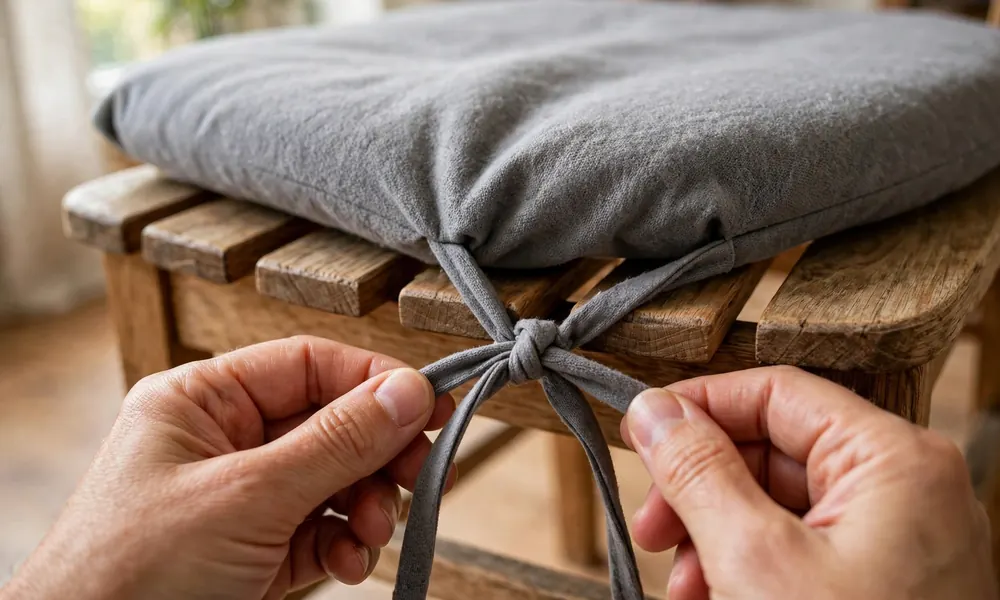
A cushion that will not stay put is the most common complaint, and the fix is in the fastening. Ties are two fabric straps at the back of the cushion that loop around the chair back and tie in a bow, and they suit dining chairs with a solid or slatted back. Check that the ties are long enough to tie easily and sewn firmly to the cushion.
Non-slip backs are the alternative for chairs without a suitable back to tie to, such as office chairs: the underside is coated with a grippy rubberised pattern that holds the pad to the seat, though it works poorly on a slatted or rush seat, where there is little surface to grip. Some cushions have both ties and a non-slip base, which is the most secure combination of all.
Measuring Your Chair
Measure the seat before you order, because chair seats vary far more than people expect: width at the widest point, depth from the front edge to the backrest, and whether the seat is square, tapered or rounded at the front. A cushion should be the same size as the seat or a centimetre smaller: one that overhangs looks untidy and catches on clothing, while a much smaller one leaves a hard rim of bare wood.
Shape matters as much as size: many dining chairs taper towards the back, so a square cushion bunches at the backrest, while a tapered cushion fits neatly, and a rounded front edge needs a cushion with a rounded front. If your dining set includes a bench as well as chairs, measure the bench separately; our guide to choosing a dining bench that fits your table covers seating that needs a longer pad rather than a set of individual cushions.
Fabrics and Washability
The fabric decides how a cushion looks after six months of real use. Cotton and linen look natural and feel pleasant, but they stain easily. Polyester and performance fabrics resist stains, wash well and dry quickly, which makes them the practical choice for a dining room. Outdoor fabrics are solution-dyed so the colour runs through the fibre, which stops them fading in the sun, and they shrug off rain.
Washability is what separates a cushion that lasts from one that ends up in the bin: a removable, machine-washable cover is the single most useful feature on a dining chair cushion, because a spill becomes a laundry load instead of a permanent mark. If the care label says dry-clean only, think twice, because a dining cushion will be washed often. Covers are a different product from cushions, though the two get mixed up online; our guide to cushion covers that survive kids and pets explains removable cases for sofa cushions.
Dining Chairs Specifically
Dining chairs are the hardest-working chairs in the house, used three times a day and pulled in and out constantly, so their cushions need to be tougher than they look. A dining cushion should be firm rather than soft, because a soft pad bottoms out under your weight by the end of the meal, and it should be easy to wipe after dinner.
Colour is a practical choice as well as a decorative one: dark or patterned fabrics hide the small marks a dining room produces, while pale plain fabrics show every drop of sauce. If you love a pale cushion, choose a washable cover and keep a spare set, and buy the whole set at once rather than adding one at a time.
Office Chairs
Office chair cushions solve a different problem: a desk chair that is fine for an hour becomes uncomfortable by the afternoon. A thin contoured pad, two to four centimetres thick, adds comfort without changing your sitting height enough to matter at the keyboard.
The chair itself matters more than the cushion, and a pad cannot fix a chair that is the wrong size or has no lumbar support. If your desk chair is the problem rather than the seat, our guide to the best office chairs covers chairs built for long days. For a good chair that just needs a softer seat, a non-slip pad is the right buy.
Garden Chairs
Garden chair cushions live outdoors, so they need to handle sun and rain: a water-resistant outer fabric, a filling that dries quickly, and ties or straps that hold the cushion in a breeze. Thick tufted pads are comfortable for long lunches outside but take longer to dry after rain, so bring them in when the weather turns.
Colour fading is the main complaint with garden cushions, and it is worth paying for solution-dyed fabric if the chairs sit in full sun: cheap printed fabric can fade in a single summer, while dyed fabric keeps its colour for years. Store cushions in a dry box or shed over winter, because a damp cushion stored wet will go musty.
What Goes Wrong
The most common problem is a cushion that goes flat, usually cheap fibre filling in a chair used every day, and the only fix is a denser foam cushion. The second problem is a cushion that slides: ties that are too short, a non-slip base worn smooth, or a cushion bought in the wrong shape. Check the ties before you blame the cushion, because a longer tie or a non-slip mat underneath often solves it cheaply.
The third problem is a cushion that will not wash clean. Stains set fast on natural fabrics, so blot spills immediately and wash covers promptly. A cushion that smells musty has usually been stored damp; air it outside and wash the cover. If the filling itself smells, the cushion is finished.
Care and Replacement
Care is simple: shake cushions out weekly, wash covers when they mark, and air the filling on a dry day every few months. Vacuum occasionally to remove crumbs, and spot-clean spills with a damp cloth before they set. A cushion with a clean cover looks new even when the filling is a year old.
Replace a cushion when it stays compressed after a night off the chair, when the filling has shifted to one side, when the ties have frayed, or when the fabric is stained beyond washing. A good foam dining cushion lasts two to three years of daily use; a cheap fibre one may last less than a year. Replacing a set together keeps the chairs looking matched.
Before You Buy: A Quick Checklist
- Measure the seat and buy a cushion the same size or a centimetre smaller.
- Choose two to five centimetres of dense foam for dining chairs, thinner for office chairs.
- Check the fastening: ties long enough to tie easily, or a non-slip base that grips your seat material.
- Pick a washable cover for dining chairs, and a water-resistant fabric for garden chairs.
- Choose a dark or patterned fabric for a busy dining room, and keep a spare set of covers if you can.
- Replace cushions when they stay flat overnight, the filling shifts, or the ties fray and will not hold.
Frequently Asked Questions
What thickness is best for a dining chair cushion?
Two to five centimetres of dense foam suits most dining chairs; thinner pads go flat within weeks, while pads over six centimetres raise you too high.
How do I stop a chair cushion sliding?
Use the ties: loop them around the chair back and tie them firmly. If your chair has no back to tie to, choose a cushion with a non-slip rubberised base.
Can I wash chair cushions in the washing machine?
Most covers can be machine washed on a gentle cycle, but the filling usually cannot. Remove the cover, wash it cold, and air-dry it; tumble drying can shrink cotton covers. Always check the care label first.
Are memory foam chair cushions worth it?
Memory foam relieves pressure well and suits long meals or long days at a desk, but it can feel hot in summer. Dense standard foam is cooler, cheaper and holds its shape well, so it is the better all-round choice for a dining room.
Do chair cushions fit any chair?
No. Seats vary in width, depth and shape, and a cushion bought without measuring will overhang, bunch or slide. Measure first and buy a cushion made for that shape, or a slightly smaller square one.
How long do chair cushions last?
A good foam dining cushion lasts two to three years of daily use, while a cheap fibre cushion may last less than a year. Replace any cushion that stays compressed overnight.
The Bottom Line
The best chair cushions for dining chairs in 2026 are dense foam pads, two to five centimetres thick, measured to the seat, tied on firmly and covered in a washable fabric. They cost little, transform a hard wooden chair, and last for years when washed and aired. Measure first, choose foam over fibre, and keep a spare set of covers.


