
Curry paste is the shortcut that turns a weeknight pan of vegetables or chicken into something that tastes like it simmered for hours. A spoonful bloomed in hot oil releases layer after layer of flavour — chilli heat, lemongrass brightness, galangal warmth, garlic depth — all at once, without a single spice jar leaving the shelf. It is the reason a Thai green curry tastes the way it does, and the fastest route to a proper curry when time is short. Yet many cooks buy a jar, use a spoonful once, and leave it to linger in the fridge. Here is how to choose it and use the whole jar in 2026.
Key takeaways
What curry paste actually is
Curry paste is made by pounding fresh aromatics — lemongrass, galangal, garlic, shallots, chillies — together with dried spices such as cumin, coriander and turmeric, plus salt and sometimes shrimp paste, into a thick, fragrant paste. The pounding matters: it breaks the fibres down so the flavour releases quickly in hot oil, which is why a curry made from paste tastes deep and rounded after twenty minutes, where a curry built from dry spices alone can taste raw and thin. The paste is dense, oily and intensely flavoured, and a tablespoon is usually enough to season a whole pan.
The flavour is not just heat. Good curry paste has a brightness that arrives first, then warmth, then a lingering savoury depth. Cheap versions skip the fresh aromatics and lean on chilli powder, salt and sugar instead, which is why they taste flat. The difference shows up the moment the paste hits the pan: a good paste smells fragrant and complex as it fries, while a poor one smells mostly of salt and raw chilli.
The main types, compared
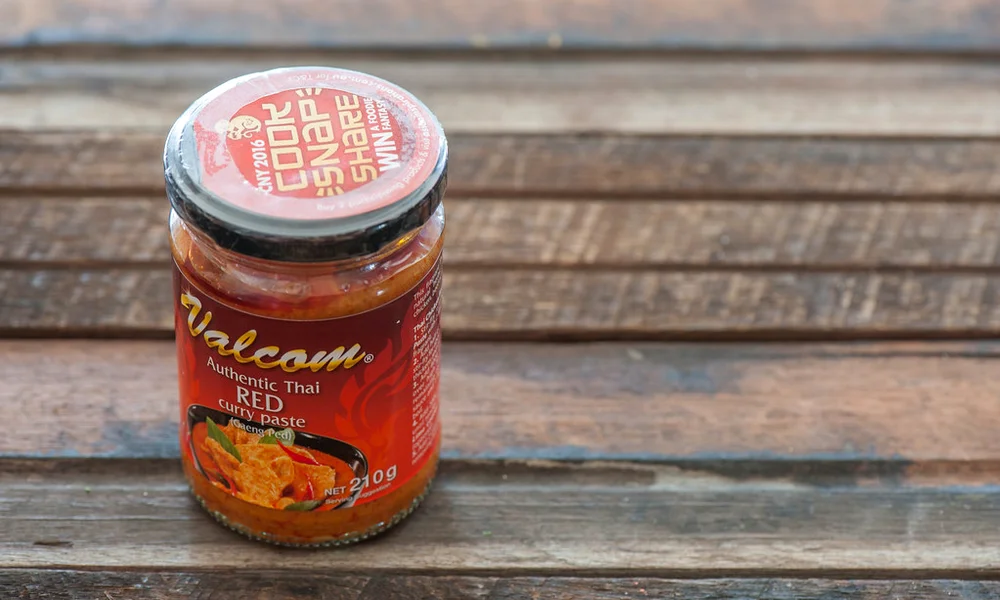
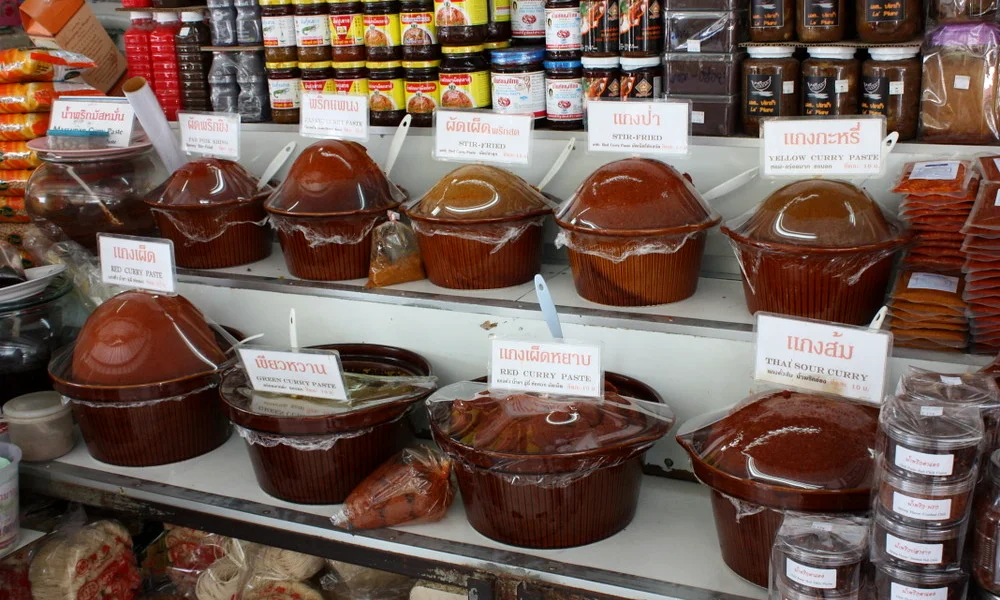
Red curry paste is the most versatile place to start. It is made with dried red chillies, which give it a rounded, slow-building heat and a deep brick-red colour, and it suits chicken, beef, duck and aubergine equally well. It is the paste behind the red curry on most Thai restaurant menus, and it is forgiving: a little too much still tastes good, and it takes coconut milk, stock or even plain water without falling apart. If you buy one jar, buy red.
Green curry paste is the freshest and usually the hottest of the three. It is made with fresh green chillies, and it carries a bright, almost herbal edge from the extra lemongrass and green chilli, with a sharper heat that arrives fast. It is the classic partner for chicken and for Thai aubergine, and it loves coconut milk, which softens its fire without dulling its flavour. Cooks who find red curry tame often find green curry exactly right.
Yellow curry paste is the mildest of the trio and the friendliest for children and for anyone who likes warmth more than fire. Its golden colour comes from turmeric, and its flavour leans warm and earthy, with cinnamon and cumin in the background. It suits potatoes, chickpeas and fish, and it makes a wonderful base for a soupy, comforting curry rather than a fiery one.
| Paste | Heat | Flavour | Best with |
|---|---|---|---|
| Red | Medium-hot | Rounded, deep, slow heat | Chicken, beef, duck, aubergine |
| Green | Hot | Fresh, herbal, sharp | Chicken, Thai aubergine, seafood |
| Yellow | Mild | Warm, earthy, turmeric | Potatoes, chickpeas, fish |
| Massaman | Mild | Sweet, spiced, nutty | Beef, lamb, peanuts, potatoes |
| Panang | Medium | Rich, peanut, slightly sweet | Beef, chicken, thick curries |
| Indian-style | Varies | Spiced, slow, deep | Lentils, lamb, slow-cooked dishes |

How to read a curry paste label
The ingredient list tells you almost everything. The first ingredients should be the aromatics themselves — lemongrass, galangal, garlic, shallots, chillies — in that order, and a good jar reads like a recipe rather than a chemistry set. Salt should appear, because paste needs it, but it should not be the first thing on the list. Shrimp paste is traditional in Thai pastes and adds a deep savoury note; if you avoid shellfish, look for a vegetarian paste, which swaps it out and is usually labelled clearly.
Sugar and oil are the two things to watch. A little oil is normal, because it carries flavour and keeps the paste from drying out, but oil listed first means the jar is mostly filler. Sugar high on the list is a warning sign: a good paste gets its sweetness from shallots and from the cooking, not from added sugar. Artificial colour is unnecessary — the red comes from chillies, the green from herbs, the yellow from turmeric.
The taste test: what to check in the first spoonful
Taste a little paste straight from the jar before you cook with it, and you will learn more in five seconds than the label can tell you. A good paste tastes layered: brightness first, then warmth, then a slow savoury depth, with salt in the background. A poor paste tastes of one thing only — usually salt, or raw chilli, or sugar — and the flavour falls flat the moment you swallow.
Then fry a spoonful. Heat a little oil, add the paste, and stir it for a minute: a good paste darkens slightly, smells wonderful, and the oil around it turns the colour of the paste. That frying step, called blooming, is where the flavour wakes up, and it is the single most important minute in any curry made from paste. A paste that stays pale and smells of nothing in hot oil will not improve later, however long the curry simmers.
Cooking with curry paste
The basic method is the same whatever paste you use. Heat a spoonful of oil, add the paste, and fry it for a minute or two until it smells fragrant and the oil takes on its colour. Then add your protein or vegetables, stir to coat, and pour in coconut milk for a Thai curry, or stock or water for a lighter one. Simmer until cooked, then balance the flavours: lime for brightness, a pinch of sugar for rounding, a splash of fish sauce for salt and depth.
A spoonful of paste bloomed in oil and loosened with coconut milk is the heart of a Thai curry, and the milk matters as much as the paste: a rich, full-fat milk softens the heat and carries the flavour, while a thin milk leaves the curry watery and sharp. Serve it over jasmine rice, whose fragrance and soft grains soak up the sauce, and finish with a dash of fish sauce if the curry needs salt and savoury depth. The three work as a set, and once you have them, a proper curry is twenty minutes away.
Making curry paste at home: the quick version
Homemade paste is better than any jar, and it is simpler than it sounds. The classic tool is a pestle and mortar, which bruises the aromatics and releases their oils, but a small food processor does a perfectly good job. Start with toasted cumin and coriander seeds, then add lemongrass, galangal or ginger, garlic, shallots and chillies, with a pinch of salt, and blend until you have a thick, slightly coarse paste.
Storing curry paste properly
An open jar belongs in the fridge, with the lid on tight, and it will keep for four to six weeks without any trouble. The surface may darken slightly as it ages, which is normal; stir it and use the paste underneath, and replace the jar if it ever smells sour or off. A clean spoon every time you dip in keeps the jar fresh far longer than a spoon that has been in the pan.
Mistakes that ruin good curry paste
The most common mistake is adding the paste to the liquid instead of frying it first. Paste stirred into cold coconut milk tastes raw and thin, because the aromatics never get the hot oil they need to release their flavour. Always bloom the paste in oil first, for at least a minute, until it smells fragrant and darkens a shade.
Your curry paste checklist
Frequently asked questions
How hot is curry paste?
It depends on the type and the brand. Green is usually the hottest, red sits in the middle, and yellow is the mildest, but brands vary widely. Start with a tablespoon per person and taste after five minutes; you can always add more paste or a fresh chilli, but you cannot take heat away.
Does curry paste go off?
An open jar keeps for four to six weeks in the fridge; a darkened surface is normal, so stir and use the paste underneath. Throw it away if it smells sour or off. For longer keeping, freeze it in an ice-cube tray, where it lasts three months.
Is curry paste the same as curry powder?
No. Curry paste is a wet blend of fresh aromatics and chillies pounded together, while curry powder is a dry blend of ground spices. Paste brings brightness and freshness that powder cannot, and powder brings a dry, toasty warmth. Use paste for Thai-style curries and quick dishes, and powder for slow-cooked Indian-style dishes.
Can I use curry paste if I am vegetarian?
Most Thai pastes contain shrimp paste, so check the label. Vegetarian pastes are widely available and swap the shrimp paste out, usually without losing much flavour. Indian-style pastes are often vegetarian already, and a vegetarian paste plus good vegetable stock makes a curry that needs no apology.
How much curry paste should I use?
A tablespoon per person is a good starting point for a curry, and a teaspoon is enough for a stir-fry or a marinade. It depends on the paste and on your taste for heat, so start low and add more after tasting. Remember the paste also carries salt, so season the finished dish only after it has cooked for a few minutes.
Can I make curry paste without a pestle and mortar?
Yes. A small food processor makes a very good paste, though the texture is slightly smoother and the flavour a touch less deep than a pounded paste. Add the ingredients in stages — dry spices first, then hard aromatics, then soft ones — and add a spoonful of oil if the blades struggle.
The bottom line
Curry paste is one of the hardest-working jars in any kitchen: a whole curry’s worth of flavour in a single spoonful, cheap, and long-lasting. Buy a red jar that lists real aromatics first, bloom it in oil, balance it with lime and a little sweetness, and let it season your curries, marinades and soups.


