
Canned tomatoes are the quiet workhorse of the kitchen, and they are also one of the easiest foods to buy badly. A good tin tastes like summer in February: ripe, a little sweet, a little sharp, with real tomato flavour that survives cooking. A bad one tastes thin and metallic, all acid and water, and no amount of simmering will rescue it. The best canned tomatoes in 2026 are not a single brand or style, but the right tin for the dish you are actually making, and the difference between whole, crushed and diced is bigger than most shoppers realise.
This guide explains how canned tomatoes are made, how the main styles differ, and how to read a label so you can tell a ripe, well-packed tin from a watery one. It covers whole peeled, crushed, diced, sauce and paste, the truth about San Marzano, acidity, the lining inside the can, and the best use for each style.
Key takeaways
- Whole peeled tomatoes are the most versatile style: crush them yourself and you control the texture, from chunky to smooth.
- Crushed tomatoes suit quick sauces, diced tomatoes hold their shape in soups and stews, and tomato paste is a flavour concentrate, not a substitute.
- Tomatoes should be the first and nearly only ingredient; a long list of flavourings or added sugar usually means thin tomatoes.
- San Marzano is a real variety and a protected name in Italy, but many tins borrow the words without the origin, so check for the DOP seal.
- Acidity varies by variety and harvest, and a longer simmer or a pinch of sugar balances a sharp tin better than buying the sweetest can.
What canned tomatoes actually are
Canned tomatoes are ripe tomatoes picked at their peak, peeled, packed in their own juice or a light puree, and sealed in a tin or jar before being heated to make them shelf-stable. The best canneries work close to the fields, so the tomatoes go from vine to tin within hours, and that short journey is the whole point: a tomato canned at its ripest in August can taste fresher in January than a pale fresh tomato shipped halfway around the world out of season.
Whole, crushed, diced and the rest, compared
The five styles you will see most often are whole peeled, crushed, diced, sauce and paste, and each one behaves differently in the pan. Whole peeled tomatoes are entire peeled tomatoes packed in juice. Crushed tomatoes are roughly milled, with a texture between a sauce and a chunk. Diced tomatoes are cut into cubes and usually treated so they keep their shape.
| Style | Texture | Best for | Watch out for |
|---|---|---|---|
| Whole peeled | Whole fruit in juice | Sauces, soups, stews | Needs crushing by hand |
| Crushed | Coarse, spoonable | Quick sauces, pizza | Can be watery if thin |
| Diced | Firm cubes | Chilli, soups, stews | Often contains calcium chloride |
| Tomato sauce | Smooth and thin | Pour-over sauces, braises | Easy to over-salt |
| Tomato paste | Thick concentrate | Deepening flavour | Burns fast; fry in oil first |
Whole peeled is the default to stock. Open the tin, crush the tomatoes with your hands or a spoon, and you have crushed tomatoes in seconds, with a fresher texture than most factory-crushed tins. Crushed is the convenience buy: it saves a minute and pours straight into a hot pan, which matters on a weeknight. Diced earns its place only when you want visible pieces that survive a long simmer, such as in a chilli or a bean stew.
San Marzano: what the name really means
San Marzano is the most famous name on a tomato tin, and also the most misused. True San Marzano tomatoes are a long, thin plum variety grown in the volcanic soil around Mount Vesuvius in Italy, and the genuine article carries a DOP seal, the words Pomodoro San Marzano dell’Agro Sarnese-Nocerino, and a certification number. They are prized because they have fewer seeds, thicker flesh and a natural sweetness that needs little balancing.

Most tins that say San Marzano on the front are not the genuine article. Some are the same variety grown elsewhere, which can still be a good tomato, and some are ordinary plum tomatoes wearing a borrowed name. A tin that claims the name with no DOP seal, no certification number and no Italian origin is one to treat with suspicion, while a tin that says San Marzano style is at least being honest about it.
How to read the label in thirty seconds
The label tells you almost everything, and it takes less than a minute. First, the ingredient list: it should read tomatoes, tomato juice or tomato puree, and salt, sometimes with a little citric acid or basil. If sugar, flavourings or starches appear, the cannery is dressing up thin tomatoes, and you are paying for the dressing.
Second, the drained weight, where it is printed. Two tins can hold the same total weight but very different amounts of actual tomato, because one is mostly juice. A tin with a high drained weight gives you more tomato for your money and a thicker sauce, while a tin that is mostly liquid will need longer simmering to reach the same body.
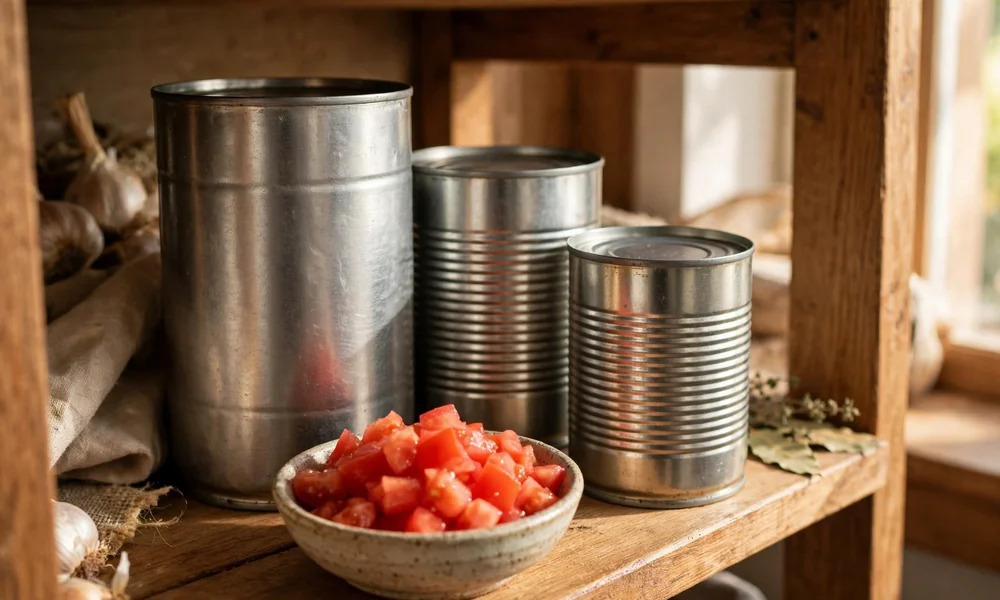
Third, the origin and the variety. A tin that names the variety, plum or Roma, and the place it was grown is a tin from a producer with something to be proud of. Salt is the last thing to check: sodium varies widely between brands, and a low-salt tin gives you control over seasoning instead of handing it to the cannery.
Acidity: the part most shoppers miss
Tomatoes are naturally acidic, and acidity is the first thing you notice when a tin tastes sharp or sour. The level varies by variety, by how ripe the fruit was when it was picked, and by the season, so two tins from the same brand can taste different from one year to the next. A sharp tin is not necessarily a bad tin: acidity is also what makes a tomato sauce taste bright rather than flat.
The can itself: lining, BPA and dents
Modern tomato tins are lined on the inside, because tomato acid would otherwise react with the metal and give the contents a metallic taste. Most manufacturers have moved away from BPA-based linings, and many tins now say BPA-free or BPA-NI on the label. If the label says nothing, the tin may still use a newer lining, but a brand that has made the switch usually says so.
Dents matter more than most people think. A small dent on the side is harmless, but a dent on a seam, on the rim, or one deep enough to crease the metal can damage the lining or the seal. A tin that is swollen, leaking, rusty, or that spurts or smells off when opened should be thrown away without tasting. Once opened, decant leftovers into a glass container, because an open tin in the fridge will pick up a metallic taste within a day.
Cooking with each style
Whole peeled tomatoes are the starting point for a proper sauce. Crush them by hand into a hot pan with olive oil and garlic, let them simmer for twenty to thirty minutes, and you have a sauce with body and texture that no jar of ready-made sauce can match. The key is patience: a sauce that simmers gently thickens by evaporation, while a sauce boiled hard will spit and taste harsh.

Crushed tomatoes suit the quick version. They pour straight into the pan, need only ten to fifteen minutes, and are ideal for a weeknight pasta or a pizza base. Diced tomatoes belong in dishes where they keep their shape: a chilli, a bean stew, a soup where you want to see the tomato pieces. Tomato paste is the seasoning: fry a spoonful in oil until it darkens, then add the tinned tomatoes on top, and the whole dish gains a bass note it would otherwise lack.
Storage and shelf life
An unopened tin of tomatoes keeps for two to five years in a cool, dry cupboard, and the best-before date is a quality guide rather than a safety deadline. Heat is the enemy: a tin stored above a cooker will age faster than one in a cool pantry. Once opened, decant the tomatoes into a glass container, cover them, and use them within three to four days in the fridge. Leftovers freeze well for three months, ready to be tipped frozen into a pan.
Canned tomatoes in context
Canned tomatoes are a pantry staple, and they make sense alongside the other staples that turn a tin into a meal. The pasta you pair them with matters as much as the tin itself, because a bronze-die pasta holds a tomato sauce in a way a smooth one never will. A tin of crushed tomatoes is also the base of most of the soups worth making at home, from a plain tomato soup to a minestrone. And if you want to see how a tomato product can go wrong, look at the ketchup on the same shelf, where sugar and vinegar too often bury the tomato entirely; a good tin of tomatoes is the opposite of that, tomato first and nothing to hide.
Buyer checklist
- Buy whole peeled as your default tin, and crush it yourself for sauces.
- Check the ingredients: tomatoes, tomato juice or puree, salt, and little else.
- Look for the drained weight, and prefer a tin with more tomato and less juice.
- For San Marzano, look for the DOP seal, the certification number and Italian origin.
- Choose low-salt tins when you can, so you control the seasoning.
- Skip dented, swollen, rusty or leaking tins, and decant leftovers into glass.
Frequently asked questions
Are canned tomatoes as healthy as fresh tomatoes?
Yes, and in some ways more so: the heating process makes lycopene, the antioxidant that gives tomatoes their red colour, easier for the body to absorb. The main thing to watch is sodium, so choose low-salt tins.
Whole, crushed or diced: which should I buy first?
Whole peeled. It is the most versatile, because you can crush it to any texture you want, and whole tomatoes are usually the best-quality fruit a cannery packs.
Do I need to worry about BPA in tomato tins?
Most major brands have moved to BPA-free linings, and many say so on the label. If the lining matters to you, choose a tin that says BPA-free or buy tomatoes in glass jars.
Why do my canned tomatoes taste metallic?
Usually because the tomatoes are thin or under-ripe, or because the tin was damaged or the contents were stored in the open tin. A longer simmer helps, and so does decanting leftovers into glass.
Can I use canned tomatoes instead of fresh ones?
In any cooked dish, yes, and they are often better out of season. In a raw dish such as a salad, fresh tomatoes win, because canned ones are soft and cooked by design.
How long do opened canned tomatoes keep?
Three to four days in a sealed glass container in the fridge, or up to three months in the freezer. Never store them in the opened tin, because the acid reacts with the metal.
The bottom line
The best canned tomatoes in 2026 are whole peeled tomatoes with a short ingredient list, a decent drained weight and a taste that is ripe rather than sharp. Crush them yourself, simmer them gently, season at the end, and keep a tin of crushed and a tube of paste beside them for the nights when time is short. A tin that tastes good cold, from a label you can read in thirty seconds, will make a better dinner than any brand name on the front.


