
The best pasta brands are the ones that cook like the real thing: firm to the bite, rough enough to hold sauce, and golden rather than pale. Most dried pasta looks the same in the packet, yet the difference on the plate is hard to miss. One brand stays springy and tastes faintly of wheat, while another turns soft and starchy within a minute of its cooking time. The gap comes down to the wheat, the dies the pasta is pushed through, and how slowly it is dried, and none of that is visible until you know what to look for.
Key Takeaways
- The best pasta is made from 100 percent durum wheat semolina, with no soft wheat or fillers in the ingredients.
- Bronze-die pasta has a rougher surface that grips sauce, while smooth Teflon-die pasta lets sauce slide off.
- Slow drying at low temperatures keeps the flavour and colour of the wheat; fast drying at high heat dulls both.
- Match the shape to the sauce: tubes and twists for chunky sauces, long strands for oil-based sauces, and small shapes for soup.
- Salt the water generously, never add oil to the pot, and finish the pasta in the sauce for the last minute.
What Makes a Pasta Brand Worth Buying
A good pasta starts with durum wheat semolina. Durum is a hard wheat with a high protein content, and that protein is what gives cooked pasta its bite. When you read the packet, the ingredient list should be short: durum wheat semolina and water, sometimes with egg in fresh-style dried pasta. If the list mentions soft wheat flour, or if wheat is not the first ingredient, the pasta is likely to cook soft and lose its shape, however pretty the packet looks.
Colour is the next clue, and it is one you can judge before you buy. Good dried pasta is a warm, deep gold, the colour of the wheat itself. Pasta that is very pale has usually been dried too fast at high temperatures, which bleaches the colour and flattens the flavour. Pasta that is grey or dull may have been made from lower-grade flour. Hold two packets side by side in the shop and the difference is usually obvious, even through the plastic.
The Texture Test You Can Do at Home
Break a piece of dry spaghetti and look at the snapped end. Good pasta snaps cleanly and shows a dense, glassy centre with no white spots or air holes. When it cooks, it should swell evenly and stay firm in the middle when you bite it, a quality Italians call al dente. If it goes limp at the edges while the centre is still hard, or turns mushy all at once, the wheat or the drying process was not up to standard, and no sauce will rescue it.

The Pasta Shapes That Matter Most
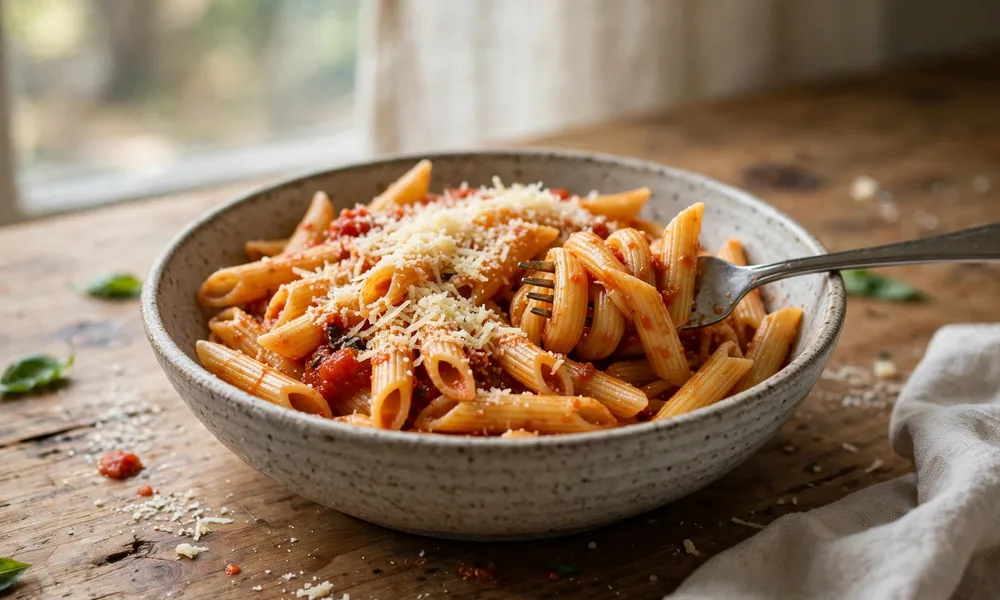
You do not need forty shapes in the cupboard. Six well-chosen ones cover almost every dinner, and each earns its place by doing a job the others cannot. Spaghetti is the everyday workhorse, best with sauces that coat rather than cling in chunks, such as garlic and oil, tomato, or a simple butter and sage sauce. Penne, with its hollow tubes and angled ends, traps chunky sauces and pieces of vegetable inside, which is why it works so well baked or with a rich ragu.
Fusilli is the shape for sauces with small pieces, because the twists catch bits of sausage, peas or chopped tomato and carry them to the fork. Tagliatelle, the wide flat ribbon, is the classic partner for slow-cooked meat sauces, since its broad surface holds a heavy sauce without sliding. Farfalle, the bow shape, is sturdy enough for cold pasta salads and creamy sauces, and its pinched centre stays firmer than the wings, giving a pleasant contrast. Finally, orzo, the tiny rice-shaped pasta, belongs in soups and salads, where it adds body without taking over the bowl.
Pasta Compared: What the Packet Tells You
Every packet carries the same information, but few shoppers read it. The table below shows what to look for and what each detail means for the pasta on your plate. Use it the next time you stand in the aisle, and you will be able to separate a genuinely good brand from a merely well-marketed one in under a minute.
| What to check | Best sign | Warning sign |
|---|---|---|
| Ingredients | 100% durum wheat semolina | Soft wheat flour or fillers |
| Colour | Warm, deep gold | Pale, grey or chalky white |
| Surface | Matte and slightly rough | Shiny and slippery smooth |
| Protein | 12 grams or more per 100 grams | Under 10 grams per 100 grams |
| Cooking time | 9 to 12 minutes for spaghetti | Under 7 minutes or over 14 |
| Break test | Clean snap, dense glassy centre | Crumbly break, white spots inside |
Bronze-Die, Slow-Dried and Other Words That Actually Mean Something
Two phrases on a packet are worth real money, and the rest are mostly decoration. Bronze-die pasta is pushed through dies made of bronze, which leave a microscopically rough surface on the pasta. That roughness is what lets sauce cling instead of sliding off into the bottom of the bowl. Teflon dies, by contrast, produce pasta with a smooth, almost shiny surface that looks neat in the packet and sheds sauce on the plate. If you have ever wondered why a restaurant pasta tastes so much better with the same sauce you make at home, the bronze die is often the reason.
Slow drying is the second phrase that matters. Traditional pasta is dried slowly at low temperatures, sometimes for a day or more, which preserves the wheat flavour and the golden colour. Industrial pasta is dried fast at high heat, which is cheaper and quicker but flattens the taste and can make the pasta brittle. Packets rarely print the drying time, but a brand that mentions slow drying, low-temperature drying, or drying over 24 hours is telling you something genuine about how it is made.
Cooking Pasta Properly
Good pasta can still be ruined in the pot, and the mistakes are always the same. The most common is too little water: pasta needs room to move, so use a large pot with at least a litre of water per 100 grams of pasta. The second mistake is not enough salt. The water should taste like the sea, roughly a tablespoon of coarse salt per litre, because this is the only chance to season the pasta itself. Sauce added later seasons the outside, not the inside.
Never add oil to the water. It does nothing to stop sticking and it coats the pasta in a thin film that stops sauce from clinging, which is the opposite of what you want. Stir the pasta in the first minute, when it is most likely to clump, and then leave it alone. Taste it a minute before the packet time ends, because packet times are a guide, not a rule, and your pot, your hob and your water all change the result. When it is ready, lift it straight into the sauce with tongs or a slotted spoon, and let it finish cooking in the pan for the last minute with a splash of the starchy pasta water. That water is liquid gold: its starch binds the sauce to the pasta and gives it a glossy, restaurant finish.
One more habit is worth breaking. Do not rinse cooked pasta unless you are making a cold salad. Rinsing washes away the starch that helps sauce cling, and it cools the pasta so the sauce never quite warms through. If you are cooking for a crowd, a good cookware set with a large stockpot makes the whole process easier, since a cramped pot is the fastest way to end up with a sticky clump.
Storing Pasta and Keeping It Fresh
Dried pasta is one of the most forgiving foods in the kitchen, and it keeps for years if you store it well. Keep it in a cool, dry cupboard away from the cooker, where steam and heat can soften it over time. Once a packet is open, fold the top down firmly or decant the pasta into a sealed jar, which also keeps it safe from pantry moths. A jar has a second benefit: you can see at a glance which shapes you have, so you stop buying a third packet of penne while the fusilli runs out unnoticed.
Pasta Buying Checklist
- Check the ingredients: 100 percent durum wheat semolina, nothing else except water or egg.
- Look for a warm golden colour and a matte, slightly rough surface on the pasta.
- Pick bronze-die pasta when you can find it, since it holds sauce far better than smooth pasta.
- Check the protein: 12 grams or more per 100 grams is the mark of good wheat.
- Buy six core shapes first, spaghetti, penne, fusilli, tagliatelle, farfalle and orzo, before adding anything unusual.
- Store open packets sealed or in jars, in a cool dry cupboard away from steam and heat.

Frequently Asked Questions
What is the best pasta brand for everyday cooking?
The best everyday brand is the one made from 100 percent durum wheat semolina, dried slowly and pushed through a bronze die, with at least 12 grams of protein per 100 grams. Several widely available brands meet that standard, and they cost only a little more than the cheapest packets. Judge the packet, not the price tag, and you will rarely go wrong.
Does bronze-die pasta really make a difference?
Yes, and it is easy to taste. Bronze dies leave a rough surface that grips sauce, so each mouthful carries more flavour. Smooth pasta made through Teflon dies looks polished but lets sauce slide off into the bowl. If you cook with tomato or oil-based sauces, the difference is obvious from the first bite.
Should I add oil to the pasta water?
No. Oil floats on the water and coats the pasta as you drain it, which stops sauce from clinging. The way to stop pasta sticking is plenty of water, a good stir in the first minute, and enough salt. Oil in the water solves a problem you do not have and creates one you do.
How much salt should go in the pasta water?
About a tablespoon of coarse salt per litre of water, which should make the water taste like the sea. Most of the salt stays in the water, so the pasta itself ends up seasoned rather than salty. Unsalted pasta tastes flat no matter how good the sauce is, and you cannot fix it afterwards.
Can I use any pasta shape with any sauce?
You can, but the result will be worse. Long strands suit smooth, coating sauces, tubes and twists suit chunky sauces, and small shapes suit soup. The shape is a tool, and using the right one means more sauce on the pasta and less of it left in the bowl.
How long does dried pasta keep?
Dried pasta keeps for two to three years in a cool, dry cupboard, and often longer, since it is a low-moisture food. Once open, seal the packet or use a jar to keep out moisture and pantry moths. Throw it away only if it smells musty, has visible mould, or has been stored somewhere damp.
The Bottom Line
The best pasta brands are not the most expensive or the most famous. They are the ones made from good durum wheat, shaped through a bronze die and dried slowly, and you can spot them by reading the packet for thirty seconds. Buy six shapes, salt the water, finish the pasta in the sauce, and keep a jar of it in the cupboard. If you want to take the next step, a pasta maker opens up fresh pasta at home, and a bottle of good olive oil turns a simple aglio e olio into something worth serving to guests. The pasta itself does the heavy lifting; your job is simply to pick the right packet.


