
A cookware set is the purchase that shapes almost every meal you cook, and the gap between a good set and a bad one shows up long before anything wears out. A good set heats evenly, so onions soften at the same pace across the pan and sauces thicken without catching in one hot spot. A bad set fights you from the first week: eggs stick in the middle, pasta water takes forever to boil, and the pan rocks on the hob because the base was never truly flat. The price on the box tells you very little, because some costly sets are poor and some modest sets last a decade.
This comparison puts the best cookware sets of 2026 head to head against the worst, judging them the way you would live with them: how evenly they heat, how long the surface lasts, how comfortable the handles feel when a pot is full, and how much of the set you will ever use. The best cookware sets of 2026 show what a well-made set looks like; this guide uses them as the benchmark, and it names the traps that turn a bargain box into a cupboard full of regrets.
Key Takeaways
- Four or five well-made pieces beat fifteen thin ones: a frying pan, two saucepans, a sauté pan and a stockpot cover almost all home cooking.
- Even heat is the first test — a good base spreads heat across the whole pan, while a thin base burns food in the centre and leaves the edges raw.
- Stainless steel lasts longest and browns best; nonstick is easiest to clean but wears out sooner and must be replaced when it flakes.
- Handles, lids and base thickness matter more than piece count: riveted handles, tight lids and a heavy flat base are worth paying for.
- Check hob compatibility before you buy, because not every set works on induction, and a set that does not fit your hob is useless however good it looks.
What Separates the Best Cookware Sets From the Worst
A cookware set is mostly metal, and the metal decides almost everything. A good set uses a thick base, often with a layer of aluminium sandwiched inside stainless steel, so heat spreads from the burner across the whole cooking surface instead of pooling in the middle. A poor set uses a thin stamped base that heats in a ring directly above the flame, which is why sauces catch, pancakes brown in patches, and rice sticks in one scorched circle.
The cooking surface is the second divide. Good stainless steel takes high heat, browns meat properly, and can be scrubbed back to clean without damage. Good nonstick releases eggs and fish with barely any oil, though even the best coating is a wearing part and will need replacing after a few years of daily use. Poor coatings look glossy in the shop and start to flake within months, especially if they have been used on high heat or scratched by metal utensils.
Handles, lids and the honesty of the piece count complete the picture. A good set has handles riveted through the pan wall, so they stay tight for years, and they stay cool enough to hold without a cloth on the hob. A bad set uses handles held by a single screw that works loose, or hollow handles that heat up and flex under a full pot. Lids should sit flat and seal well enough to hold steam; a lid that rattles and lets steam escape everywhere makes braises dry out and rice cook unevenly. And piece counts mislead more than any other claim: lids, inserts and even a spatula can count as pieces, so a twelve-piece set may hold only seven pans and pots.
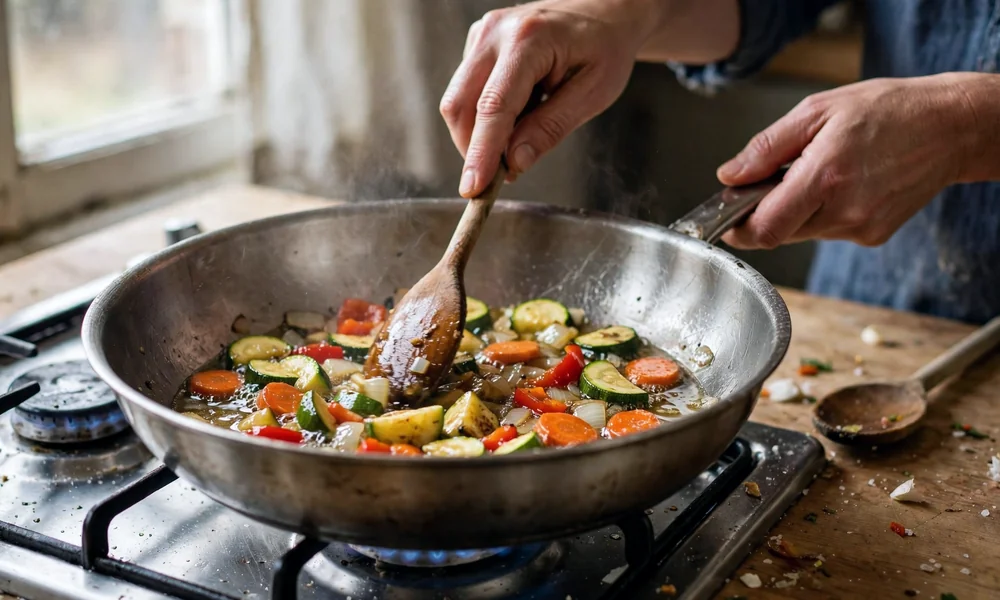
The Best Cookware Sets of 2026
The best cookware sets share a simple quality: they disappear into the background of cooking. Pans heat quickly and evenly, lids fit, handles stay cool and secure, and nothing in the box is there only to inflate the piece count. They are not always the most expensive sets on the shelf, but they are the ones built from honest materials with a base thick enough to do its job.
Even Heat and a Flat, Heavy Base
A good set starts with the base, because everything else follows from it. The best sets use a thick, fully clad or disc base that spreads heat to the edges, so a frying pan browns a whole batch of chicken thighs evenly and a saucepan simmers a sauce without a scorched ring. Put a pan on a flat worktop and it should not rock or spin; that flatness is what keeps it in full contact with the hob, which is where even heating begins. The best sets also work across hobs, including induction, because a magnetic stainless base is built in rather than added as an afterthought.
Surfaces That Last and Clean Up Well
The best stainless sets take whatever a busy kitchen throws at them. They go from hob to oven, they brown meat properly because they can take high heat, and they can be deglazed with wine or stock to lift the browned bits into a sauce. A quick soak and a scrub bring them back, and there is no coating to worry about scratching. The best nonstick sets are honest about being a wearing part: they use a thick, well-bonded coating on a heavy base, they release food with very little oil, and they survive years of careful use with wooden or silicone utensils and moderate heat.
Handles, Lids and Pieces That Earn Their Place
Comfort is not a luxury in cookware; it is safety. A good handle fits the hand without forcing the fingers into one position, stays grippy when wet, and stays cool enough to lift a full saucepan without a cloth. Riveted handles are the surest sign of a set built to last, because the rivets spread the load and do not work loose the way a single screw does. Lids should be heavy enough to sit flat and seal, with a handle that does not heat up, and ideally in glass or steel that lets you check a simmer without lifting it. A good set also gives you pieces you will actually use: a frying pan, a small and a medium saucepan, a sauté pan and a stockpot, each sized for real meals. The best vs worst knife sets of 2026 follow the same rule — a few good tools beat a drawer full of mediocre ones — and a cookware set is only as good as the pieces you reach for every day.
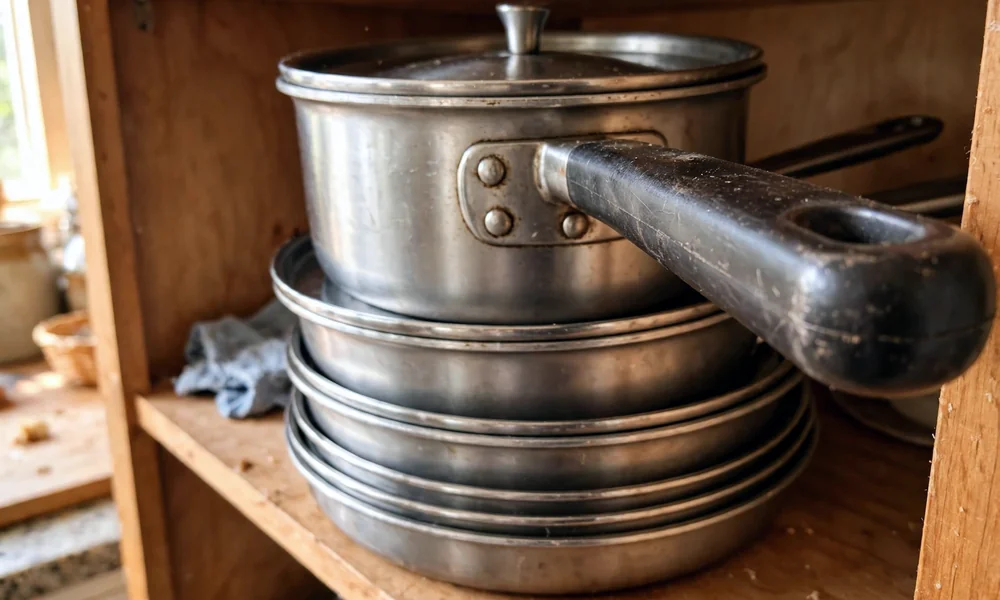
The Worst Cookware Sets of 2026
The worst cookware sets do not announce themselves. They arrive in a handsome box, the pans gleam under the kitchen lights, and the price feels like a bargain next to the famous brands. Then the first omelette sticks, the second pan warps, and by month three the coating is flaking into the food. The worst sets are not always the cheapest; some of the most disappointing are mid-priced sets that spend their budget on packaging and piece count instead of metal.
Thin Bases That Warp and Burn
The most common fault in a bad set is a thin base. It heats in a hot spot directly above the burner, so food burns in the centre while the edges stay pale, and it warps the first time it is heated empty or plunged into cold water. A warped pan rocks on the hob, oil pools to one side, and contact with the burner becomes patchy, which makes the hot spots worse. You can spot a thin base in the shop: press the middle of the pan and it flexes, or tap it and it rings thin and tinny instead of giving a dull, solid sound.
Coatings That Flake Within Months
A bad coating is the fault that ends a set soonest. Cheap nonstick is sprayed thinly onto a rough base, so it looks glossy at first and then starts to peel around the edges, bubble in the middle, or scratch through to bare metal after a few weeks of normal use. Metal utensils speed the damage, but a good coating should survive the occasional slip; a bad one flakes if you look at it wrong. Ceramic coatings fail differently: they lose their release gradually, so eggs that slid out on day one start to glue themselves down by month three, and no amount of scrubbing brings the surface back. Once a coating flakes, the pan is not just annoying, it is finished, because food sticks worse than it would on plain steel and the flakes end up in the cooking.
Loose Handles, Bad Lids and Filler Pieces
The rest of a bad set falls apart in the details. Handles held by a single screw work loose within months, and a handle that wobbles when you lift a full pot of pasta water is a burn waiting to happen. Hollow handles heat up on the hob, so you need a cloth for a pan that should be safe to grab. Lids are often the worst part: thin, light lids that rattle, let steam escape in every direction, and fit so loosely that they slide off when the pot is tilted. And the piece count is usually padded with filler — tiny pans nobody cooks in, lids counted as separate pieces, and utensils thrown in to reach a round number. The best vs worst cutting boards of 2026 show the same pattern in another part of the kitchen: the pieces that look like a bargain in the box are the ones that fail first in daily use.

The Verdict
The verdict is clear: buy metal, not marketing. The best cookware sets of 2026 win because they put their budget into a thick flat base, an honest cooking surface, and handles and lids that stay tight for years. They cost more up front, but they cook better from the first meal and they are still cooking well when a cheap set has already been replaced twice. The worst sets lose on the same points: thin bases that warp and burn, coatings that flake within months, and handles and lids that fail when a pot is full and hot. A set that fails even one of those tests is not a bargain, whatever the price on the box. Spend on the base and the surface, count the pans rather than the pieces, and choose the set that feels solid in your hand.
Who Each Side Is For
The best sets are for anyone who cooks most days and wants the pans to last: home cooks who sear, simmer and braise, families who need a stockpot that holds its heat, and anyone replacing a set they have already thrown away once. The worst sets are for nobody, really, though a very cheap set can serve a short-term rental or a student kitchen where it will be replaced within a year anyway. If that is your situation, buy the smallest cheap set you can find and spend the saving on one good frying pan. Everyone else should buy fewer, better pieces and keep them for a decade.


