Why a Garlic Keeper Keeps Bulbs Fresher for Weeks in 2026
Garlic keepers are the quiet heroes of the kitchen: a good one keeps whole garlic bulbs dry, dark and gently aired, so they stay firm and flavoursome for weeks instead of sprouting or turning soft and mouldy in the fridge. If you cook with garlic most nights, you have probably lost bulbs to the wrong storage — a sealed tub that traps damp, a sunny windowsill, or a plastic bag that sweats. A keeper solves all three at once, for less than a week of wasted garlic. This guide explains how the best garlic keepers of 2026 work, which materials help, and the mistakes that undo a good one.
Key Takeaways
- A garlic keeper balances airflow, darkness and dryness: holes let moisture out while the lid keeps light off the bulbs.
- Terracotta and unglazed ceramic breathe best, so they keep bulbs firm longest.
- Never store garlic in the fridge or a sealed container: cold and trapped damp trigger sprouting and mould.
- Buy a keeper sized to how fast you cook: one or two bulbs a week needs a small pot, not one that holds a month of garlic.
- Check bulbs weekly and use the softest first: no keeper can rescue a bulb already going soft.
What a Garlic Keeper Actually Is
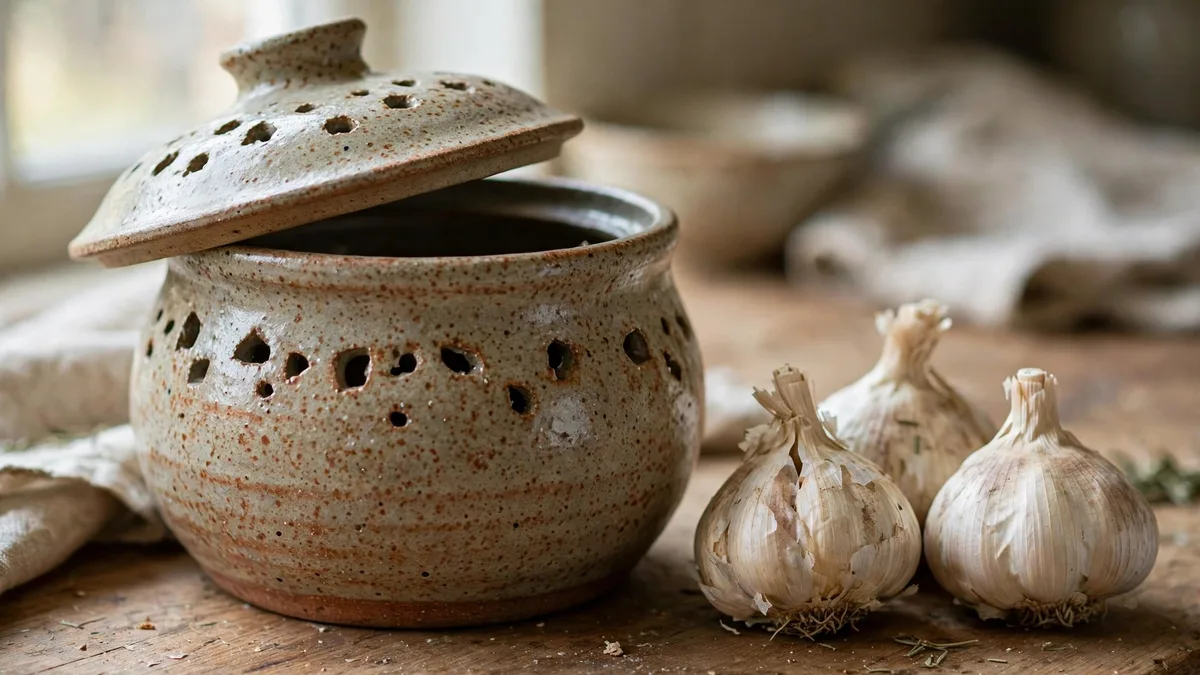
A garlic keeper is a small ventilated container for whole garlic bulbs — not cloves, minced garlic or garlic powder. The classic design is a squat ceramic or terracotta pot with holes through the sides and lid, just big enough for three or four bulbs. The holes are the whole point. Garlic is a living bulb that keeps breathing after harvest, giving off a little moisture as it sits. In a sealed tub that moisture has nowhere to go, so it condenses, softens skins and invites mould. In an open bowl the bulb dries out and light triggers sprouting. A keeper sits between the two: air moves through the holes and carries damp away, while the walls and lid keep bulbs dark.
That makes a keeper a different tool from its neighbours in the drawer. A garlic press crushes peeled cloves into a paste at the moment of cooking — preparation, not storage — and our guide to the garlic presses worth the drawer space in 2026 covers that side of things. Spice jars store ground and dried spices that are already dead and dry, and need airtight seals for the opposite reason — see our guide to spice jars that keep flavours fresh for months. And a keeper has nothing to do with growing garlic: it stores bulbs you have already bought. If your whole pantry needs a rethink, our guide to the best pantry organizers of 2026 covers the shelves and bins that keep a kitchen tidy around it.
Why Garlic Goes Bad in the First Place
Garlic goes bad for three reasons. The first is moisture. A bulb in damp air softens from the outside in: the skin goes limp, the cloves turn translucent and then mouldy, and the bulb smells sour instead of sharp. Fridges are the worst offenders: cold air plus a plastic bag means condensation, and the garlic comes out wet every time you open the bag. The second reason is light: it tells the bulb spring has come, so it spends its stored energy growing a green shoot. That shoot is not dangerous, but it tastes bitter and drains the clove, leaving it shrunken and papery. The third reason is heat: warm air speeds up every kind of decay, which is why garlic left next to the hob goes soft in days while the same bulb in a cool cupboard lasts for weeks.
The Main Types of Garlic Keeper
Every garlic keeper in 2026 is a variation on the same idea — a dark, breathing pot — but the material changes how well it works.
Unglazed Terracotta
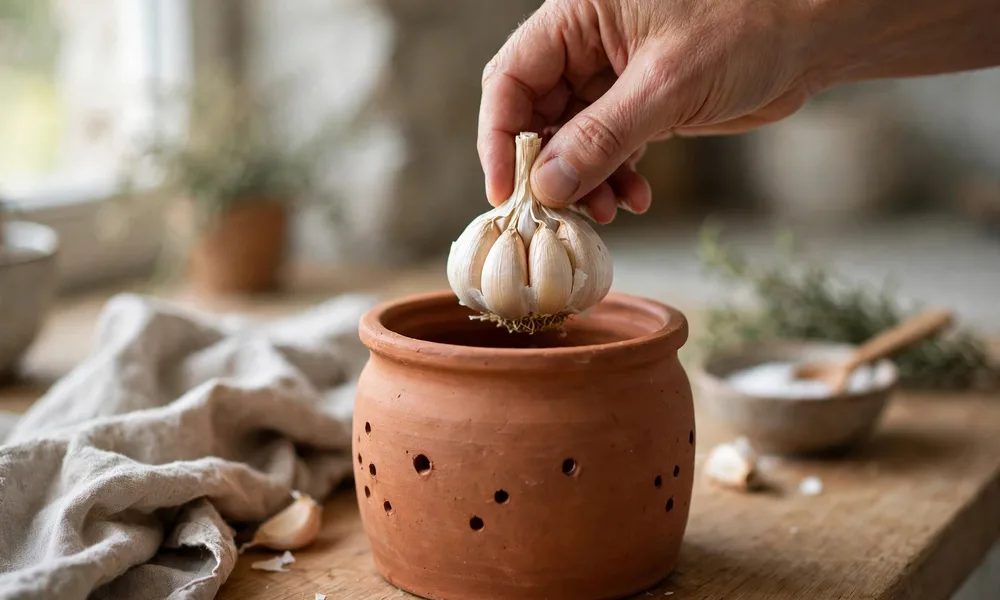
Terracotta is the traditional choice, and still the best at the actual job. Unglazed clay is porous, so the walls themselves breathe as well as the holes do, pulling a little moisture out of the air inside. That makes terracotta the most forgiving keeper for damp kitchens, and it keeps bulbs firm longest. The trade-offs are fragility and looks: it chips if knocked and stains easily. Wash it by hand and let it dry fully before refilling — a damp terracotta pot is worse than no pot at all.
Glazed Ceramic and Stoneware
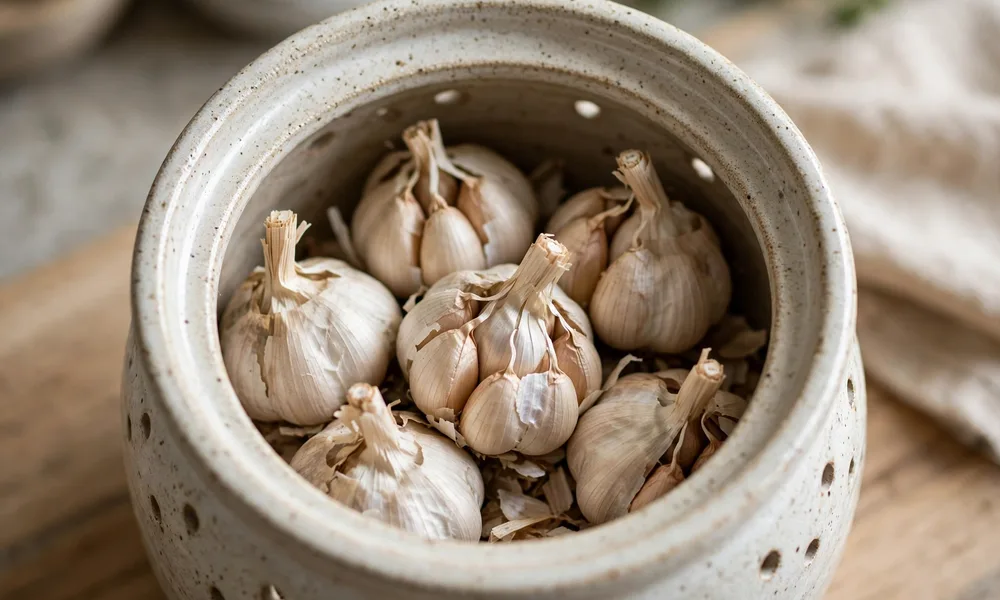
Glazed ceramic and stoneware keepers are the prettiest and easiest to clean. The glaze seals the surface, so they wipe clean, never stain, and come in colours that match a modern kitchen. The glaze also stops the walls breathing, so all the airflow must come through the holes — fine, provided they are generous and spread around the pot. A stoneware keeper with holes on the sides and lid performs almost as well as terracotta and survives the dishwasher. Check the lid sits loosely: one that seals airtight turns the pot into the damp trap you were trying to escape.
Wood and Bamboo
Wooden keepers, usually bamboo or acacia, are light, warm-looking and often cheaper than ceramic. Wood breathes a little, like terracotta, and a slatted or drilled box gives good airflow. The weakness is hygiene: wood absorbs moisture and garlic oils, and can hold smells long after the garlic is gone. It needs regular washing and thorough drying, and will not last as long as ceramic.
Metal and Mesh
Metal keepers, usually stainless steel with a mesh body, are the toughest: they never chip and clean in seconds. The mesh gives excellent airflow, sometimes too much — in a very dry kitchen it can let bulbs shrivel faster than ceramic would. The other problem is light: a wide mesh lets it in, so metal keepers belong in a dark cupboard.
Garlic Keepers Compared
| Type | Airflow | Keeps Bulbs Firm | Cleaning | Best For |
|---|---|---|---|---|
| Unglazed terracotta | Excellent | 6 to 8 weeks | Hand wash only | Damp kitchens, long storage |
| Glazed ceramic | Good | 5 to 7 weeks | Dishwasher safe | Everyday kitchens, easy care |
| Stoneware | Good | 5 to 7 weeks | Dishwasher safe | Modern kitchens, durability |
| Wood and bamboo | Good | 4 to 6 weeks | Hand wash, dry well | Light use, weekly shopping |
| Metal and mesh | Very good | 4 to 6 weeks | Very easy | Busy kitchens, cupboard storage |
No type wins on every row: terracotta on keeping quality, glazed ceramic on care, metal on toughness. Most cooks will be happiest with glazed ceramic or stoneware: it keeps bulbs firm for well over a month, cleans without fuss, and suits a shady corner of the worktop.
What to Look For Before You Buy
Five details matter more than brand or price. First, the holes: spread around the sides and lid, not just a few in the top, so air flows through the pot. Holes around 5 to 8 millimetres across are the sweet spot — big enough to move air, small enough that light stays mostly out. Second, the lid: loose-fitting, with a small gap or vent, lifting off with one hand. A tight lid traps damp. Third, size: three or four bulbs suits a household that cooks with garlic most nights; eight invites you to buy more than you can use before it ages. Fourth, the base: flat and stable, because a keeper lives on a shelf where it gets knocked, and terracotta does not survive a fall onto tiles. Fifth, cleaning: glazed pots go in the dishwasher, unglazed ones need hand washing and a full air-dry. If you will never hand wash it, do not buy terracotta.
How to Use a Garlic Keeper Properly
Using a keeper well is mostly about what not to do. Put whole, unpeeled bulbs in it, skins and all: the papery skin is the bulb’s own wrapper, and peeling it exposes cloves to air and damp. Do not wash bulbs before storing them; brush off loose dirt and leave them dry. Store the keeper in a cool, dark place — a cupboard or pantry shelf away from the hob, oven and sink. Room temperature is right; the fridge is wrong, and a sunny windowsill is worse. Check the bulbs once a week: if one is soft or has a green shoot, use it first and take it out so it does not sit against the healthy bulbs. When the keeper is empty, wash it and let it dry completely before refilling.
Mistakes That Ruin Good Garlic
The most common mistake is the fridge: cold plus a bag equals condensation, and condensation equals mould. The second is the sealed tub: a clip-lid plastic box with no holes is the worst home garlic can have, worse even than an open bowl, because it traps every drop of moisture the bulb breathes out. The third is buying peeled or pre-chopped garlic and expecting the keeper to save it — once the skin is off, the clock runs in days, and no pot changes that. The fourth is overfilling: bulbs packed tight cannot breathe, and the ones in the middle go soft first. The fifth is ignoring the first soft bulb: leave it there and the damp spreads.
Checklist: Buying the Right Garlic Keeper
- Holes spread around the sides and lid, about 5 to 8 millimetres across, so air flows through the pot.
- A loose-fitting lid that lifts off with one hand and never seals airtight.
- Size matched to your cooking: three or four bulbs for most households, not eight.
- A flat, stable base that will not tip on a shelf or worktop.
- A material you will actually clean: glazed ceramic for the dishwasher, terracotta only if you will hand wash it.
- Whole, firm bulbs on day one — a keeper cannot rescue garlic already soft or sprouting.
Frequently Asked Questions
How long does garlic last in a garlic keeper?
Five to eight weeks in a good keeper in a cool, dark cupboard, depending on the material and how fresh the bulbs were. Terracotta reaches the top of that range; mesh and wood sit nearer the bottom.
Should garlic be stored in the fridge?
No. The fridge is too cold and damp for whole garlic, and condensation inside a bag or tub encourages mould and sprouting. Keep whole bulbs at room temperature in a dark, ventilated keeper, and only refrigerate peeled cloves for a day or two.
Can I store onions in a garlic keeper?
You can, but not together. Onions give off moisture and gases that make garlic sprout faster, and garlic can pass its smell to onions. Give onions their own ventilated pot or basket.
Do garlic keepers really stop sprouting?
They slow it right down rather than stopping it entirely. Darkness switches off the light signal that triggers sprouting, and dry air keeps the bulb dormant, so a bulb that would sprout in a week on a sunny sill can stay quiet for six weeks.
Is terracotta better than ceramic for a garlic keeper?
For keeping quality, yes: unglazed terracotta breathes through its walls as well as its holes, so it handles damp kitchens best. For ease of care, glazed ceramic wins — it goes in the dishwasher and never stains.
How do I clean a garlic keeper?
Empty it, brush out loose skins, then wash glazed ceramic or metal in hot soapy water or the dishwasher. Wash terracotta and wood by hand and leave them to air-dry completely — a full day for terracotta — before putting garlic back in.
The Bottom Line
A garlic keeper is a small, cheap tool that pays for itself in bulbs saved Pick a glazed ceramic or terracotta pot with holes around the sides and a loose lid, sized to three or four bulbs, keep it in a cool dark cupboard, and never put garlic in the fridge or a sealed tub. Do that, and the garlic you buy on Saturday will still be firm, dry and full of flavour weeks later.