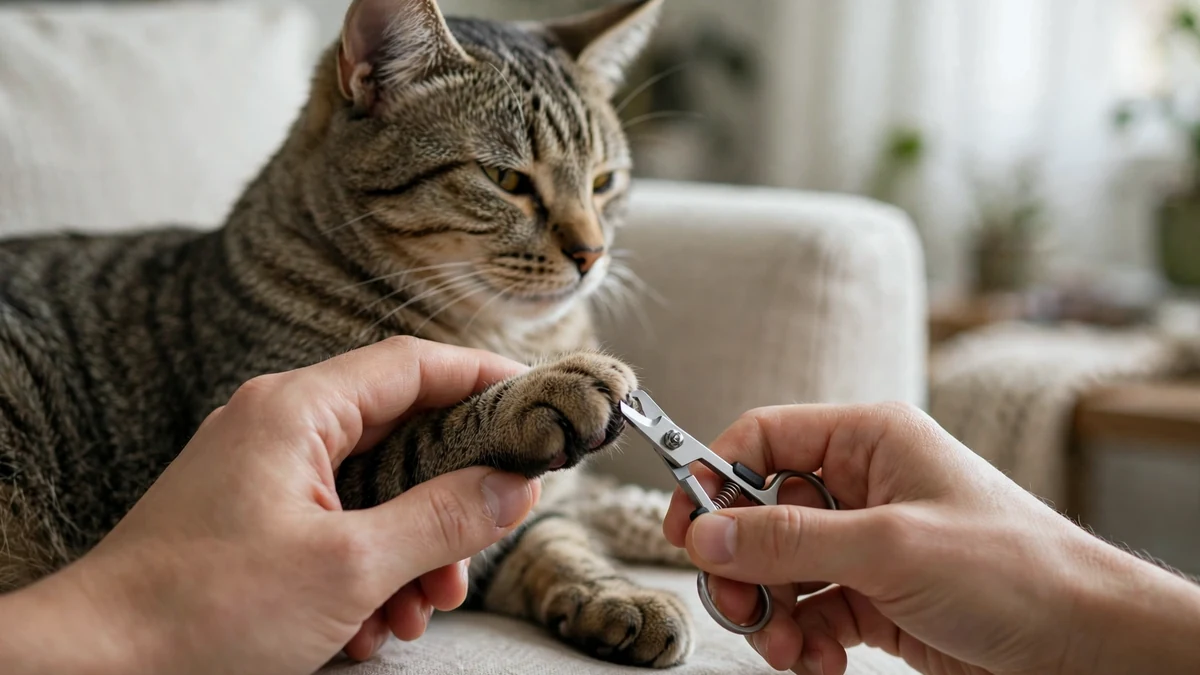
Best Dog Nail Clippers 2026
Trimming a dog’s nails at home sounds simple until you are holding a wriggling paw and a dog that has decided this is the worst afternoon of its life. A good pair of clippers cuts cleanly in one smooth squeeze, without crushing the nail or splitting the tip. A bad pair squeezes, tears, and turns a five-minute job into a stressful wrestling match.
This guide covers the best dog nail clippers of 2026 by type, size, and temperament: guillotine clippers for small and medium dogs, heavy-duty scissor clippers for big breeds, and grinders for nervous dogs and owners who fear cutting too short.
How We Chose the Best Dog Nail Clippers
A dog nail clipper has one job: cut the nail cleanly without crushing it. Many cheap clippers fail at exactly this, with dull blades, stiff springs, or handles that flex so the blades never meet squarely. We judged every type on blade sharpness and alignment, control, comfort in the hand, suitability by dog size, and durability. Stainless steel blades that stay sharp matter far more than a fancy handle.
The Three Types of Dog Nail Clippers
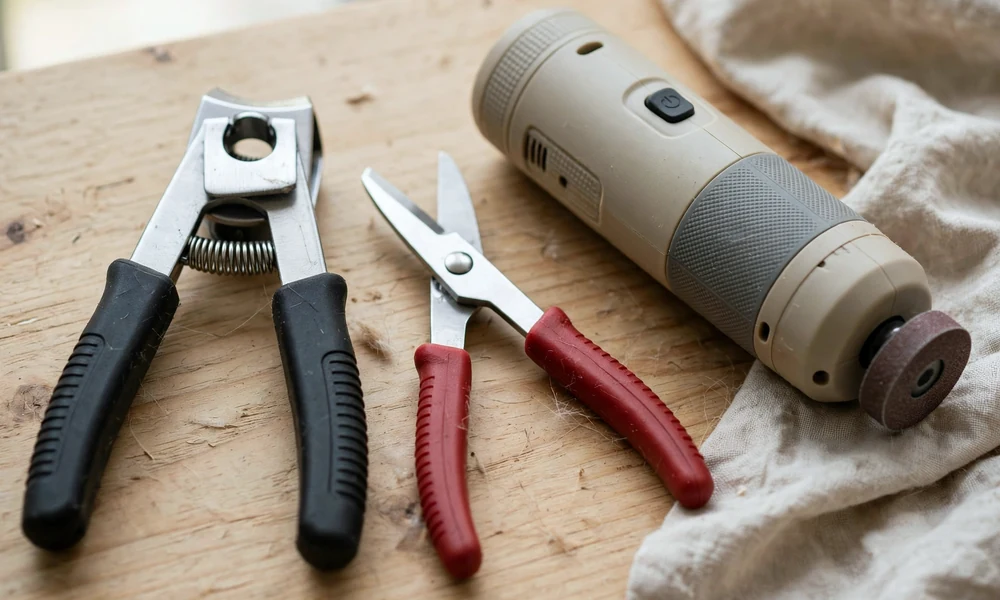
Almost every dog nail clipper falls into one of three families. Guillotine clippers have a hole the nail slides into, and a single blade slides across it when you squeeze. Scissor clippers work like scissors, with two blades closing from opposite sides. Grinders do not cut at all: they file the nail down with a spinning drum. Each has a clear best use.
Guillotine Clippers
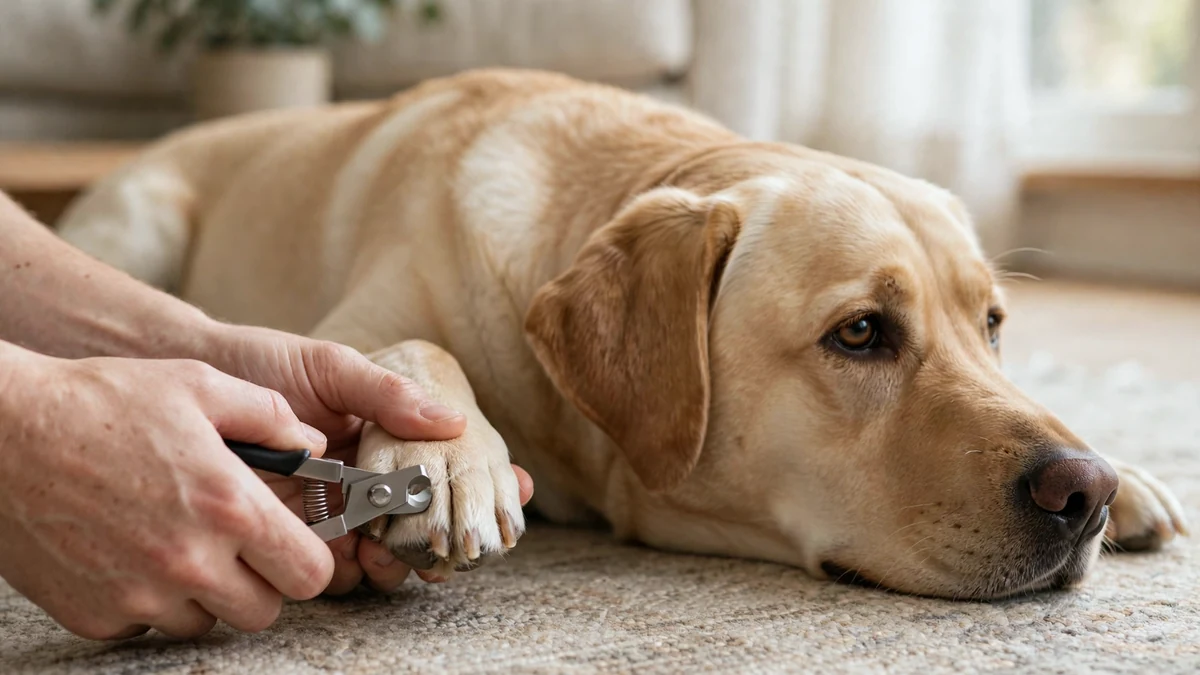
Guillotine clippers are the classic choice for small and medium dogs. You slide the nail into the hole, squeeze, and the blade slides across in one clean motion. They are simple, cheap, and easy to control. Their weakness is strength: on very thick nails the single blade can struggle, and a dull guillotine blade crushes instead of cutting, so keep replacement blades on hand.
Scissor Clippers
Scissor clippers, sometimes called plier-style clippers, are the workhorses for large dogs. Two blades close like scissors, giving you more leverage and a cleaner cut on thick, hard nails. The best ones have a safety stop and a spring that holds the blades open between cuts. They take a little more hand strength, but for a big dog they are usually the right tool.
Nail Grinders
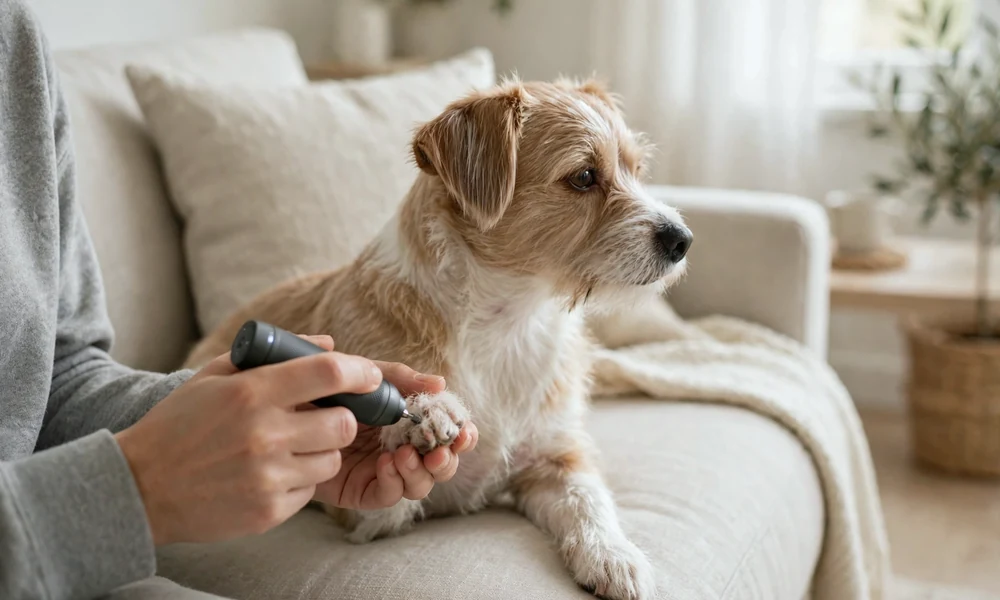
A nail grinder files the nail down gradually instead of cutting it, which removes the risk of a sudden bad cut almost entirely. Grinders are the best choice for nervous owners, for dogs with dark nails where the quick is hard to see, and for smoothing rough edges after clipping. Their downside is noise and vibration: some dogs hate the buzzing sound, so introduce a grinder slowly, with treats, before you switch it on near a paw. A good grinder is quiet and has at least two speeds.
Best Dog Nail Clippers 2026: Our Top Picks
Best Overall: A Quality Guillotine Clipper for Everyday Dogs
For the average dog, a well-made guillotine clipper is still the best all-round choice: light, simple, and easy to keep in a drawer. Look for stainless steel blades, a comfortable non-slip grip, and a safety guard behind the cutting hole, which stops the nail from sliding too far in. Test the action first: squeeze it empty a few times and check for a smooth, even motion. If the blade sticks, return it.
Best for Large Dogs: Heavy-Duty Scissor Clippers
Large dogs have thick, hard nails, and a small clipper will not cut them cleanly no matter how hard you squeeze. Heavy-duty scissor clippers with long handles give you the leverage to cut through a thick nail in one steady squeeze, and their wider blades spread the force so the nail does not split. Look for a safety stop, a locking mechanism, and rubberised handles that will not slip. With a large dog, cut in small slices and stop often to check how close you are to the quick.
Best Nail Grinder: A Quiet Rotary Grinder for Nervous Dogs
If your dog panics at the sight of clippers, or you panic at the thought of cutting the quick, a grinder is the kindest option. The best grinders in 2026 are noticeably quieter than older models, with a low-vibration motor and two speeds so you can start slow, and a cordless model is easier to handle than a corded one. Grinding takes longer than clipping, so keep sessions short: let your dog sniff the grinder while it is off, then switch it on across the room, then near the paw, rewarding calm behaviour.
Best for Small Dogs and Puppies: Small Clippers for Delicate Nails
Small dogs and puppies have thin, delicate nails, and an oversized clipper makes the job harder than it needs to be. A small guillotine or small scissor clipper gives you a clear view of the nail and lets you take off tiny amounts at a time. Start trimming puppy nails early, even if they barely need it: a few seconds of handling, a tiny trim, and a treat teach a puppy that nail care is a normal part of life.
Best Budget Pick: Simple Scissor Clippers That Just Work
You do not need to spend a lot on dog nail clippers. A basic pair of stainless steel scissor clippers, kept sharp and clean, will do a perfectly good job for years. The budget pick is not the cheapest pair on the shelf: it is the cheapest pair with straight, sharp blades, a spring that works, and handles that do not flex.

How to Trim Your Dog’s Nails Safely
Good clippers are only half the story; the other half is technique. Choose a moment when your dog is relaxed, ideally after a walk, and work in good light. Never rush: a calm ten minutes beats a frantic two minutes.
Hold the paw gently but firmly, and isolate one toe at a time. Push long fur aside so you can see the whole nail. Cut at a slight angle, taking off only the curved tip, in small slices. On light nails, stop before the pink quick. On dark nails, cut a little, check the cut surface, and repeat. When you see a dark dot or a grey oval in the centre, you are at the quick, so stop and move on.
If you do cut the quick, do not panic. It bleeds more than it hurts. Press styptic powder onto the tip and hold it there for thirty seconds. Give your dog a treat, take a break, and try again another day. One bad experience can undo weeks of patient training, so finish with three nails done well rather than forcing all eighteen.
How often you trim depends on your dog’s lifestyle. Dogs that walk on pavement wear their nails down naturally and may need a trim every four to six weeks; dogs that mostly walk on grass or stay indoors may need one every two to three weeks. If you can hear your dog’s nails clicking on a hard floor, they are too long. Long nails change how a dog stands and walks, and over time they can cause sore joints and splayed toes.
Choosing the Right Size
Clipper size matters more than most buyers expect. A clipper that is too small will not cut through the nail, and you will end up squeezing harder until the blade slips. A clipper that is too large will be clumsy on a small paw and hide the nail from view, which is exactly when mistakes happen. Toy and small breeds do best with small clippers, medium breeds with standard clippers, and large and giant breeds with heavy-duty scissor clippers or a powerful grinder. If you have dogs of very different sizes, own two pairs: the right size for each is cheaper than a vet visit to fix a bad cut.
Guillotine vs Scissor vs Grinder: Which Is Best for Your Dog?
Guillotine clippers suit small and medium dogs with normal nails. Scissor clippers suit large dogs and thick nails. Grinders suit nervous dogs and dark nails. Many owners keep two tools: clippers for the bulk of the job and a grinder or file for smoothing the edges afterwards.
Common Mistakes to Avoid
The most common mistake is cutting too much at once. Nails should be shortened gradually, especially if they have grown long: the quick grows with the nail, so cutting a long nail back in one go will hit the quick. Trim a little, wait a week, trim a little more, and the quick will recede. The second mistake is using dull clippers. If you have to squeeze hard, or the nail bends before it cuts, your blades are dull: replace them or replace the clipper. The third mistake is trimming when the dog is already stressed. If your dog is panting or pulling away, stop; one paw a day for four days beats forcing all four paws in one stressful session. Finally, do not forget the dewclaws: these small nails on the inside of the leg never touch the ground, so they never wear down, and they can curl into the skin if ignored.
How to Get Your Dog Used to Nail Trims
The best clippers will not help if your dog will not let you near its paws. Start by handling the paws during cuddles, touching each toe and giving a treat. Then introduce the clippers: let the dog sniff them, touch a nail with the closed clippers, and reward calm behaviour. Only when the dog is relaxed should you make a real cut, and then only one nail, followed by a treat and play. Keep early sessions to five minutes at most. Over a week or two, most dogs learn that nail trims end with something nice. For fearful dogs, a grinder introduced slowly can be the reset that makes nail care possible again.
Care and Maintenance of Your Clippers
Dog nail clippers last for years if you look after them. After each use, wipe the blades clean and let them dry fully. Store them in a dry place with the blades closed or locked. A drop of light machine oil on the pivot now and then keeps the action smooth. Check the blades for nicks or rust: a nicked blade catches instead of cutting. When a clipper starts crushing instead of cutting, retire it.
The Bottom Line
The best dog nail clippers of 2026 are not the most expensive ones. They are the ones that cut cleanly, fit your hands, and suit your dog’s size and temperament: a good guillotine clipper for a small or medium dog, heavy-duty scissor clippers for a large dog, and a quiet grinder for a nervous dog or for finishing. Buy the right size, keep the blades sharp, trim a little at a time, and keep styptic powder nearby. Your dog does not care about brands. It cares that the trim is quick, painless, and followed by a treat.
For a sense of how the same cutting logic applies to human nails, our guide to the best nail clippers covers blade sharpness and clean cuts, while the best baby nail clippers show how small, delicate nails are handled safely. And if you are building a wider pet-care kit, the worst pet supplies that waste money lists the common buys to skip.