A baby’s fingernails are tiny, thin and surprisingly sharp, and they grow faster than most new parents expect. In the first weeks, a newborn can scratch their own cheek during a feed or wake themselves with a flailing hand, and the nails seem to need attention again almost as soon as you have finished. The best baby nail clippers of 2026 are built for exactly that job: small, gentle tools that let a nervous parent trim a wriggling hand without nicking the skin, and that feel steady rather than fiddly when the baby decides to move at the worst possible moment.
Adult clippers are the wrong tool here. They are too wide for a fingertip the size of a pea, their cutting edge is too long, and the lever needs more force than a careful parent wants to use on a small hand. Baby clippers, by contrast, have a short, narrow blade, a rounded tip, a handle that fits between two fingers, and often a small magnifier or a light that helps you see where the nail ends and the fingertip begins. The difference sounds small until you try both, and then it is obvious.

Why Baby Nails Need Their Own Tool
Baby nails are not just smaller versions of adult nails. They are softer, thinner and more flexible, which means they bend under a blade instead of cutting cleanly, and they tear if the edge is blunt or the angle is wrong. A good baby clipper has a sharp, short cutting edge that makes a clean snip in one movement, so the nail does not split down the side or leave a jagged corner that catches on clothing and scratches the skin.
The Three Types Worth Knowing
Most baby nail care comes down to three types of tool, and most families end up owning at least two of them. The first is the classic safety clipper: a miniature version of a normal clipper with a short blade, a rounded end and a handle sized for an adult’s fingers rather than a baby’s. It is the fastest option, it needs no batteries, and it is the one most parents reach for once the baby is a few months old and the nails have firmed up a little.
The third is the electric trimmer, a small battery-powered tool with a soft, spinning filing head. It grinds the nail down gently instead of cutting it, and the head stops or slows when it presses against skin, which is reassuring for parents who are nervous about blades. It is slower than a clipper and it needs batteries or charging, but for a baby who will not sit still, the gentle vibration is often less alarming than the snap of a clipper. If you already own a general set of clippers, our guide to the best nail clippers of 2026 explains what makes a good cutting edge in general, but the baby versions below are designed around small hands and soft nails rather than adult ones.
How to Choose: The Five Things That Matter Most
Start with the size of the cutting head. It should be noticeably smaller than an adult clipper, with a blade short enough to fit across a single baby fingernail without covering the fingertip. A head that is too wide hides the nail you are trying to cut, which is how nicks happen. Hold the clipper up against your own little fingernail: if it looks oversized there, it will be oversized on a baby.
Then look at the handle and the lever. The handle should be easy to grip with damp hands, because you will often be trimming after a bath, and it should not slip when your fingers are tired. The lever should move smoothly with light pressure and spring back cleanly; a stiff lever makes you squeeze harder, and a hard squeeze is what makes a hand shake at the wrong moment. A slightly larger handle is often easier to control than a very small one, even though the cutting head itself should stay small.
The Best Baby Nail Clippers by Age
For a newborn in the first six weeks, a soft emery file is usually the best starting point. The nails are so thin that they often peel or bend rather than cut, and a file lets you shorten them a little at a time without a blade anywhere near the skin. File gently in one direction, check the edge with your own fingertip, and stop as soon as the sharp corner is gone. It takes longer than clipping, but a newborn’s nails are short, so the job is quick anyway.
From around two or three months, when the nails have thickened slightly and the baby is a little less fragile to handle, a small safety clipper becomes the best all-round choice. Look for a short, curved blade with rounded tips and a handle you can work with one hand. Clip straight across the fingernail, take off only a little at a time, and smooth any rough corner afterwards with the file. Most parents find that trimming once or twice a week is enough at this age, and that doing it after a bath, when the nails are softer, makes the cut cleaner.
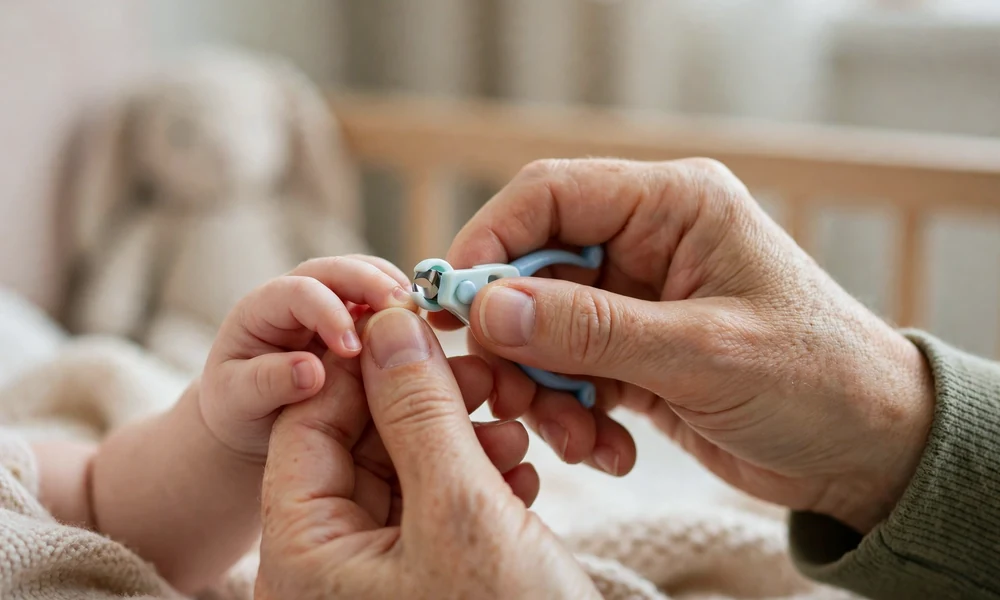
For a baby of six months and older, the same safety clipper still works well, but this is also the age when an electric trimmer earns its place. A six-month-old wriggles more, grabs at the tool, and has stronger opinions about being held still. A trimmer is quiet, it does not snap, and it lets you work in short bursts between wriggles. Keep the trimmer on its gentlest setting, use the finest filing head supplied, and stop often to check your progress rather than holding it in one place.
How to Trim Safely, Step by Step
Pick a calm moment rather than a convenient one. A baby who has just fed and is drowsy, or one who has just had a bath and is warm and relaxed, is a much better candidate than a baby who is hungry, tired or already upset. Sit somewhere with good light, ideally near a window, and have everything you need within reach before you start: the clipper, the file, a soft cloth and a spare muslin in case the baby needs settling halfway through.
Hold the baby’s hand in yours and press the pad of the finger gently away from the nail. This is the single most useful technique in baby nail care, because it creates a small gap between the nail and the skin and makes it much harder to catch the fingertip. With your other hand, bring the clipper up from underneath the nail rather than from above, so you can see the cutting edge and the nail at the same time.
Take off a small amount only. It is always better to trim too little and go back for a second pass than to cut too short and leave the nail bed tender. Clip straight across the fingernail and leave the corners slightly rounded rather than square, then run the file lightly over the edge to remove any roughness. Toenails grow more slowly than fingernails, so they usually need attention less often, and they can be trimmed straight across in the same way.
Mistakes to Avoid
The most common mistake is using adult clippers on a baby. They are too big, too strong and too hard to see around, and they are the tool most often involved when a parent nicks a fingertip. The second mistake is cutting the nails too short, right down to the skin. A baby’s nail bed is tender, and a nail cut too short can sting and can catch on fabric. Leave a thin rim of nail beyond the fingertip and the baby will be comfortable.
Cleaning, Storage and When to Replace
After each trim, wipe the blades with a clean, dry cloth and brush away any nail clippings caught in the hinge. If the clipper has been in contact with cream or lotion, wipe it with a slightly damp cloth and dry it straight away so the hinge does not stiffen. A drop of light oil on the hinge every few months keeps the action smooth, but wipe away any excess before the clipper goes back near the baby.
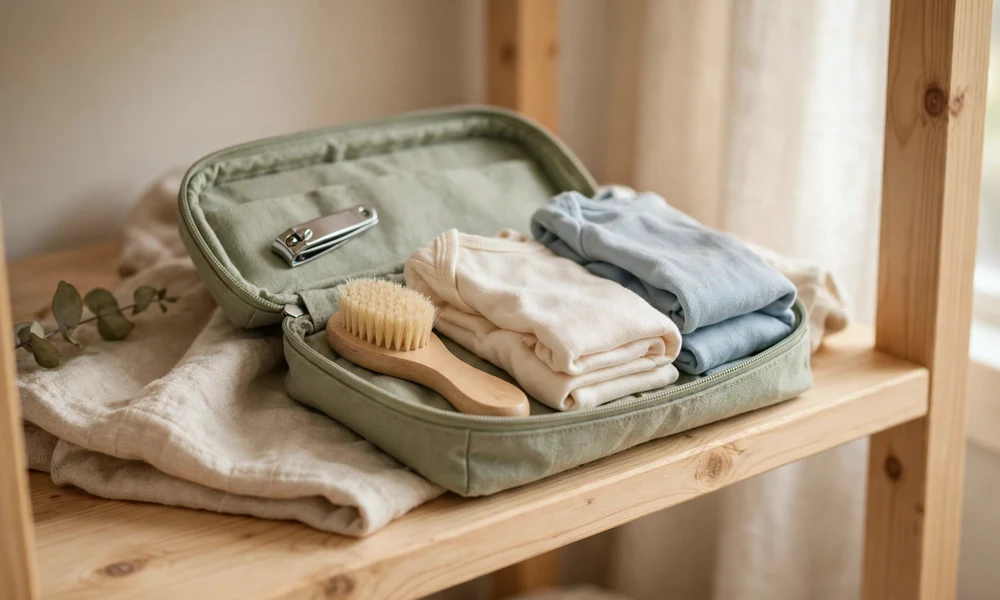
Files, Trimmers and Clippers Together
The best routine for most families is a combination rather than a single tool. The clipper does the main shortening, the file smooths the edge, and the trimmer covers the days when the baby will not sit still for a blade. Buying a small set that includes all three is often better value than buying them separately, and it means the file is always there when you need it rather than in another room.
When you compare sets, check the quality of each piece rather than the number of pieces. A set with a good clipper and a usable file is better than a set with five tools of which only one is any good. The file should feel fine and even, not coarse or scratchy, and the trimmer heads should be soft to the touch. A rough file can scratch the skin around the nail, and a coarse trimmer head can heat up if it is held in one place too long. For more on files themselves, our guide to the best nail files of 2026 covers what makes a file smooth rather than scratchy.
When to Ask a Paediatrician
Most baby nail care is straightforward, and most small nicks heal quickly with a little gentle pressure and a clean cloth. But there are times when it is worth asking a paediatrician rather than carrying on at home. If a nail looks very different from the others, if the skin around it stays red, swollen or sore for more than a day or two, or if the baby seems in pain when the hand is touched, get advice rather than guessing.
The Verdict
The best baby nail clippers of 2026 are the ones that make a small, fiddly job feel calm: a short, sharp blade with rounded tips, a handle that works with one hand, a clear view of the nail, and a file close by to smooth the edge. For newborns, start with a soft file; for babies of a few months, a small safety clipper is the best all-round tool; and for wriggly older babies, a gentle electric trimmer is a useful second option. Keep the tools clean, replace them when they blunt, trim in good light when the baby is calm, and ask a paediatrician if anything about the nails or the surrounding skin worries you.
That is really the whole secret. There is no single perfect clipper, only the right combination of a good tool, a steady hand and a patient moment, and once you have found a set that suits your baby, trimming becomes one of those small nursery routines that takes a minute and then is forgotten. Pair the clippers with the rest of the bath-time routine, and our guide to the best baby shampoo of 2026 covers the gentle wash that usually comes just before a trim.