
Nail Files That Shape Without the Splitting in 2026
The best nail files in 2026 shape without the splitting: they take off length smoothly, leave a sealed, rounded edge, and never leave your nails frayed, peeling or sore. A good file feels like it is doing almost nothing — a few light strokes, and the nail is neat. A bad file feels like sandpaper on a frayed rope, and the damage shows up days later as splits and peeling layers.
Nail files look like the simplest tool in the bathroom, and that is exactly why most people buy them badly. They grab whatever is cheapest, file back and forth like a saw, and then blame their nails for splitting. The truth is that the file matters more than the polish, the cuticle oil or the hand cream: it is the tool that decides the shape and the health of the edge, and a good one costs very little. Here is how to choose one, and how to use it properly.
Key takeaways
- File in one direction only, from the side toward the centre — sawing back and forth is the main cause of splitting and peeling.
- Glass and crystal files are the gentlest on natural nails and last for years; emery boards are cheap and handy but wear out fast.
- Match the grit to the job: coarse grits shorten, fine grits shape and seal, and a buffer finishes the edge.
- Never file wet, freshly soaked nails — they are soft, bend under the file, and split as they dry.
- Shape matters more than length: a slightly rounded or soft square edge resists breaks far better than a sharp point.
- Replace emery boards often and keep files clean — a clogged or blunt file tears instead of shaping.
Why nails split in the first place
Nails split because the edge frays. A nail is made of thin layers of keratin pressed together, and when the edge is torn rather than sealed, those layers start to separate. Water makes it worse: nails absorb water, swell, and then shrink as they dry, which loosens the layers. Filing a wet nail, or filing with a rough, sawing motion, tears the edge open and starts the peeling that shows up a few days later.
Nail file types compared
| Type | How it feels | Best for | Downsides |
|---|---|---|---|
| Glass / crystal | Very fine, smooth, gentle | Natural nails, weak or splitting nails | Can break if dropped; costs more |
| Emery board | Flexible, gritty, disposable | Everyday shaping, travel, quick fixes | Wears out fast; coarse ones tear |
| Metal | Hard, fast, long-lasting | Thick nails, shortening quickly | Too harsh for thin nails; can over-file |
| Ceramic | Fine, smooth, firm | Sealing edges, natural nails, gentle shaping | Breakable; slower at removing length |
| Foam / buffer block | Soft, cushioned, very fine | Smoothing ridges, finishing, shine | Not for shaping or shortening |
| Electric / drill file | Fast, powerful, precise | Acrylics, gels, heavy-duty work | Easy to damage natural nails; needs skill |
Glass files are the quiet heroes of the nail world. They are etched rather than coated, so the grit never wears away, and they file so finely that the edge comes out sealed and smooth. They last for years, rinse clean under water, and they are the kindest option for nails that split easily. Their one weakness is fragility: drop a glass file on a tiled floor and it can snap, so many come with a case, and it is worth using it.

How to file without causing splits
Start with dry nails. Never file straight after a shower, a bath or washing up, when nails are soft and swollen with water. Wait until they are fully dry, and if you have just removed polish, give them a few minutes to settle. Dry nails file cleanly; wet nails bend, tear and split as they dry.
File in one direction. Place the file at the side of the nail, and draw it toward the centre in smooth, light strokes, lifting it away between strokes. Do the other side the same way. Do not saw back and forth, and do not press hard — let the grit do the work. You should be able to hear a soft, even sound; a harsh scraping means you are pressing too hard or the file is too coarse.
Keep the file clean. A clogged file does not file — it drags and tears. Tap it after use, rinse a glass or ceramic file under warm water, and wipe a metal one clean. Emery boards cannot really be cleaned, which is another reason to replace them regularly. And keep your file to yourself: sharing files spreads bacteria, and a file used on someone else’s nails is not something to borrow casually.
Choosing the right file for your nails
Thin, weak or splitting nails need the gentlest file you can find: glass or ceramic, fine grit, used lightly. If your nails peel in layers, a glass file is the single most useful change you can make, because it seals the edge instead of tearing it. Avoid coarse emery boards and metal files entirely until the peeling stops, and file less often — once a week is enough for most people, with a light tidy-up in between only if a nail snags.
Thick, strong nails can take a firmer file. A metal file or a coarse emery board will shorten a thick nail quickly, but finish with a fine file or a glass one, because a coarse edge on a thick nail still frays. And if you wear polish, a well-shaped, sealed edge is what stops polish chipping at the tips, as our guide to nail polishes explains, because polish fails first where the edge is rough. For a polished finish, our guide to brow gel covers the small daily tools that make the biggest visible difference, and a good file belongs in that same category of quiet essentials. If your nails are hard and curved, a rigid file gives you more control than a flexible board, which bends around the curve and files unevenly.
Shapes that last — and shapes that break
Shape is not just fashion; it is engineering. An oval shape follows the natural curve of the fingertip, spreads pressure evenly, and has no corners to catch. It is the most forgiving shape, it suits almost every hand, and it is the easiest to maintain. A round shape is similar but shorter, with the edge following the fingertip closely — a good choice for people who work with their hands, because there is very little nail past the fingertip to snag.
File to the shape you want, rather than cutting to it and then filing. Clippers are for removing length quickly; the file is for shaping. Clip straight across, leaving a little extra, then file the shape in. This is gentler than clipping into a curve, which can split the nail at the clip point, and it gives you far more control over the final shape.

Looking after your nails between filings
Filing is only part of the story. Nails split less when they are kept moisturised: the nail plate and the skin around it dry out just like skin, and dry nails are brittle nails. Keep a fine file beside your other tools, too — our guide to tweezers explains why the right pair matters when a nail splits and leaves a snag. A drop of cuticle oil, or even hand cream massaged into the nails at night, makes a real difference over a few weeks. Wear gloves for washing up and cleaning, because water and detergents swell and dry the nails repeatedly, which is exactly the cycle that loosens their layers.
When a file is not enough
Sometimes splitting is not a filing problem. Nails that peel constantly, break at the same place, or split down the middle may be telling you something else: repeated water exposure, harsh cleaning products, a vitamin or iron shortage, or a nail condition that needs a professional eye. If a split keeps returning in the same nail despite gentle filing, or the nail looks discoloured, ridged or painful, it is worth asking a pharmacist or a doctor rather than filing harder.
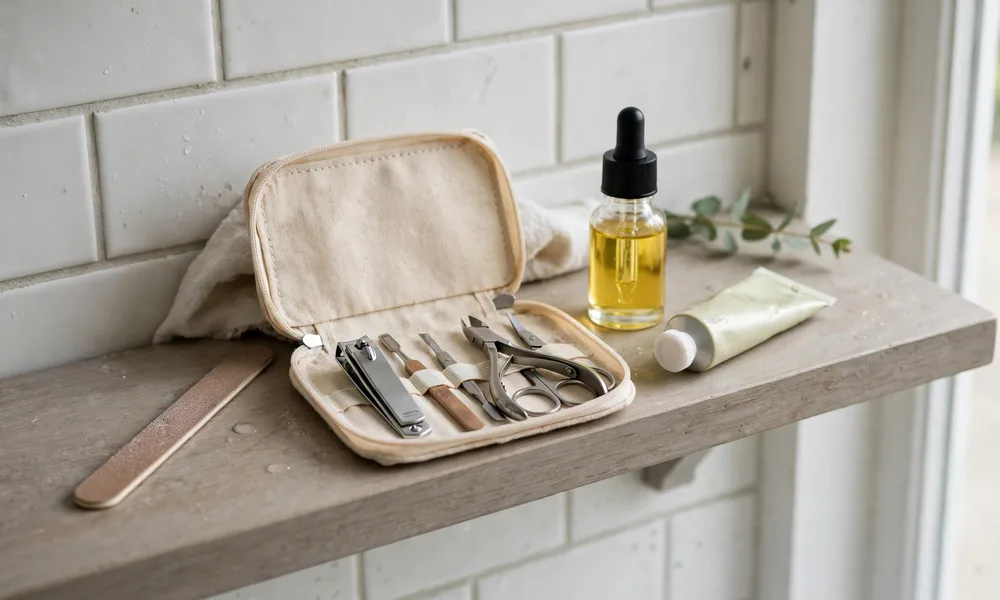
Mistakes that ruin good nails
The most common mistake is the sawing motion: back and forth, fast, hard. It feels productive and it is the worst thing you can do. The second is filing wet nails, straight after a shower or washing up, when they are soft and tear easily. The third is using a coarse file on thin nails, which takes off too much and leaves a frayed edge. The fourth is filing every day: nails need time between filings, and daily filing thins the edge until it splits on its own.
Checklist: choosing your nail file
- Start with a glass or ceramic file if your nails split — they seal the edge instead of tearing it.
- Pick fine grit for shaping and finishing; use coarse grit only to shorten thick nails.
- File dry nails only, in one direction, from the side toward the centre, with light pressure.
- Choose a rounded or soft-square shape — no sharp corners to catch and split.
- Finish the edge with the finest grit and check it by touch: smooth means sealed.
- Replace emery boards often, rinse glass and ceramic files clean, and store files in a case.
Frequently asked questions
Why do my nails keep splitting even though I file them?
Usually the filing itself is the cause: sawing back and forth, filing wet nails, or using a coarse file all tear the edge open. Switch to a fine glass file, file dry nails in one direction only, and finish the edge smoothly. If the splitting continues in the same nail, it may be a health or water-exposure issue rather than a filing one.
Are glass nail files really better than emery boards?
For natural nails, yes. Glass files are etched, so the grit never wears away, and they file so finely that the edge comes out sealed. Emery boards are cheaper and more portable, but they wear out fast and coarse ones tear. Keep a glass file at home and an emery board in your bag for emergencies.
How often should I file my nails?
Once a week is enough for most people, with a light tidy-up only if a nail snags. Filing every day thins the edge and invites splitting. Shorten with clippers when you need to remove real length, and use the file for shaping and sealing.
Can I file my nails when they are wet?
No — wait until they are completely dry. Wet nails are soft and swollen, they bend under the file, and they split as they dry. File before a shower, or wait a good while after washing your hands.
What shape is strongest for weak nails?
A short oval or round shape, with the edge following the fingertip. It has no corners to catch, spreads pressure evenly, and is the easiest shape to keep sealed. Avoid sharp squares and pointed shapes until your nails are stronger.
How do I clean a nail file?
Rinse glass and ceramic files under warm water with a little soap, and let them dry fully before putting them away. Wipe metal files clean after use. Emery boards cannot really be cleaned — replace them when the grit feels smooth or the board looks clogged.
The bottom line
The best nail files in 2026 are the gentle ones: fine glass or ceramic for natural nails, a good emery board for quick fixes, and nothing coarser than the job needs. File dry nails, in one direction, with light pressure, and finish the edge until it feels smooth. Do that, and your nails will stop splitting — not because they got stronger overnight, but because you finally stopped tearing the edge open.


