
Nail polish is the cheapest way to change how your hands look, and the quickest way to ruin them. A good polish makes short nails look neat, long nails look elegant, and bare hands look finished, all for the price of a coffee. A bad one chips before lunch, stains the nail underneath, smells like a chemistry set, and leaves you picking at the edges by mid-afternoon. The difference is rarely the brand on the bottle or the price on the shelf.
This comparison puts the best nail polishes of 2026 head to head against the worst, judging them the way you would actually wear them: how the colour looks in daylight, how smoothly the brush lays it down, whether it survives typing, washing up and a working week, and whether you reach for the same bottle again. The same honest testing sits behind our comparison of the best and worst lipsticks of 2026, because a beauty product earns its place the same way whatever it is: it has to work on a real person on a real day.
Key Takeaways
- The brush matters more than the bottle: a good brush paints a clean line in two strokes, while a bad one leaves streaks, floods the cuticle and needs constant fixing.
- Two thin coats always beat one thick one: thin coats dry faster, level better and chip later than a single heavy layer.
- Colour is a daylight decision: a shade that looks rich in the shop can look washed out or garish outside, so check it by a window.
- Wear is about the formula, not the finish: a polish that promises a week and chips in a day is worse than an honest one that lasts three.
- Removal tells the truth: a good polish comes off cleanly with remover, while a bad one stains the nail yellow or needs harsh scrubbing.
How Nail Polish Actually Works
A bottle of nail polish is mostly solvent, resin and pigment, with a little plasticiser to keep it flexible. The solvent keeps it liquid in the bottle and evaporates as it dries. The resin is the film that hardens on the nail and holds the colour in place. The pigment gives it colour. Change the balance and you change everything: too much solvent and the polish is thin and streaky, too much resin and it is thick and gloopy, too much pigment and it stains.
Finish is the second thing to understand, because it decides how a polish behaves on real nails. A creme finish is opaque, smooth and the easiest to judge, which is why it is the best test of a formula. A shimmer finish hides ridges and small mistakes but can look uneven in bright light. A glitter finish looks festive in the bottle and is the hardest to remove, often needing foil wraps and patience. A matte finish looks modern for a day and then shows every mark and scuff.
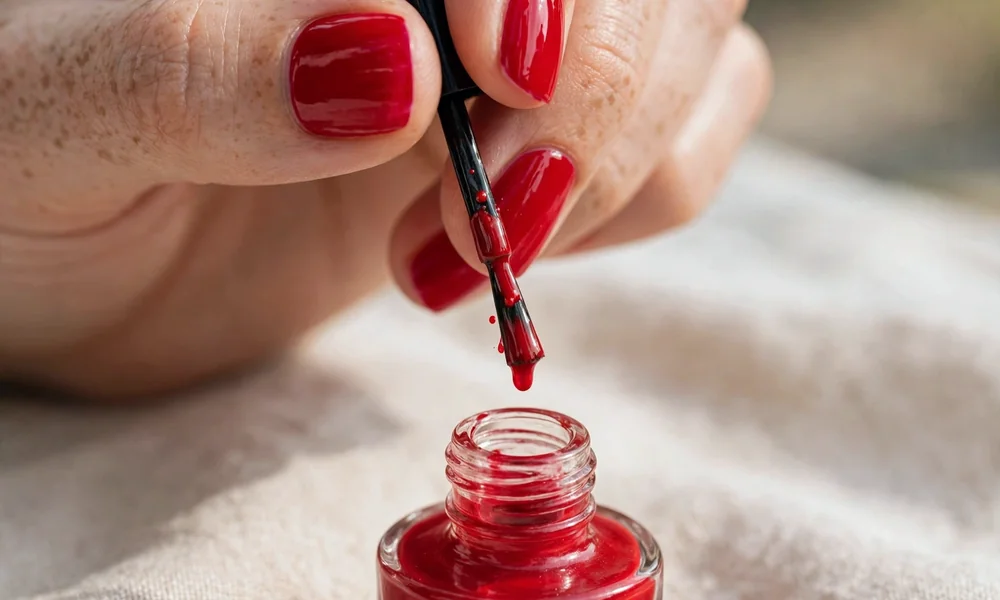
The brush is the third test, and it is the one most people ignore until they are already painting. A wide, flat brush covers a nail in two strokes and suits wide nails. A narrow brush gives control on small nails but takes longer. A fan-shaped or splayed brush is a defect, not a feature: it means the bristles have bent or the polish has dried into them. If the brush is wrong, even a good formula will look messy.
What Makes a Nail Polish One of the Best
The best nail polishes share one quality above all others: they behave. The first coat goes on evenly without dragging or pooling at the edges. The second coat deepens the colour without thickening it into a soft, dentable layer. The surface levels itself as it dries, so brush marks disappear instead of setting into ridges. You can paint a full hand in ten minutes, including a base coat, and walk out of the door without smudging a nail on your keys.
Colour is where the best polishes earn their money. A good red is a true red in daylight, not orange in the sun and not pink under office lights. A good nude is slightly deeper than your skin with a touch of rose or brown, so your hands look healthy rather than washed out. A good dark shade covers in two coats with no pale patches at the tips, and the colour you buy in March matches the one you bought last year.
Wear is the test that separates the good from the merely pretty. A good polish lasts four or five days on hands that type, wash dishes and open packaging, with wear showing first as a faint softening at the very tip rather than a dramatic chip. It does not peel off in sheets, which is a sign the film never bonded to the nail. It does not stain the nail underneath yellow or pink when you take it off, because the pigment is properly suspended and the base coat did its job. And it comes off in a minute or two with ordinary remover, without scrubbing. The best polishes are also kind to the nails underneath: they do not leave the nail thin, peeling or ridged after a week of wear, which matters most if you wear polish most weeks, because nails recover slowly.

What Makes a Nail Polish One of the Worst
The worst nail polishes announce themselves within a minute of opening the bottle. The polish is either so thin that three coats still show the nail through it, or so thick that it drags, clumps and sets before you can smooth it. The brush is the usual culprit: too few bristles, bristles that splay, or a brush so long it bends and floods the cuticle. You spend more time cleaning up the edges with a cotton bud than painting the nail itself, and the result still looks homemade in the worst way.
Colour is where bad polishes cheat. In the bottle the shade looks rich and deep; on the nail it is streaky, patchy or a completely different colour. Pale shades are the worst offenders, going on in visible stripes that no number of coats will fix. Dark shades pool at the cuticle and leave a bald patch at the tip. Some polishes change colour as they dry, turning a promising rose into a dull pink, or a warm red into something orange. If a polish needs four coats to look like the bottle, it has already failed.
Wear is where the worst polishes cost you the most time. They chip within a day, often in large flakes that take half the nail with them, and the chips always appear on the most visible nail first. They peel off in sheets after a shower, because the film never bonded properly. They stain the nail underneath, leaving a yellow or pink ghost that takes weeks to grow out. And they are often the hardest to remove as well: glitter polishes in particular can need foil, soaking and scraping, which damages the nail surface and puts you off ever painting them again.
The smell is a warning worth listening to. All nail polish smells of solvent, but the worst ones smell sharp and chemical long after they should have dried, and a polish that stays tacky for an hour is not drying slowly because it is rich; it is drying slowly because the formula is badly balanced, and it will dent and smudge in the meantime. The same lazy chemistry shows up in our comparison of the best and worst foundations of 2026, where a formula that will not set properly ruins everything else it does well.

How to Test a Nail Polish Before You Commit
Test one nail, not the whole hand. Paint the nail of your index finger with a base coat and two thin coats, and wear it for three days while you do everything normally. Check it in daylight each morning: does the colour still look like the bottle, has the tip started to wear, is there a chip or a peel? A polish that survives three days on one nail will survive a week on ten, and a polish that fails in a day will not improve with a top coat.
Watch the first coat, because it tells you almost everything. A good first coat is sheer but even, with no dragging and no pooling at the edges. If the first coat is streaky, the second will not fix it; it will only hide it under a thicker, slower-drying layer that chips sooner. If the polish floods the cuticle, wipe the brush on the neck of the bottle and use less: a brush loaded with polish is the most common cause of a messy manicure, and it is a habit, not a formula problem.
Choose the shade in daylight, and choose it against your skin, not against the bottle. Hold the bottle against the back of your hand by a window. A nude that is paler than your skin will make your hands look tired; one slightly deeper, with a touch of warmth, will make them look healthy. A red that looks good on a pale hand may look harsh on a deeper skin tone, and the reverse is also true. The right shade flatters your hands the way the right scent flatters the person wearing it, which is why our comparison of the best and worst perfumes of 2026 makes the same point: the product has to suit you, not just smell or look good in the shop.
Prep decides the result more than the polish does. Nails should be clean, dry and free of oil before you start, so wash your hands and wait ten minutes, or wipe each nail with remover first. A base coat is not optional if you wear dark colours: it stops staining and helps the polish grip. A top coat is not optional either if you want wear past day three: it seals the tip, where chips always start, and adds the shine that makes a cheap polish look expensive. Paint the tip of the nail as well as the top, wrapping the free edge, because that is where wear begins.
Finally, store polish properly and it will last far longer. Keep bottles upright, out of sunlight and away from heat, and wipe the neck clean before you close the cap. A bottle kept in a hot bathroom will thicken in months; the same bottle kept in a cool drawer will paint well for a year.
The Verdict
The best nail polishes of 2026 are not the most expensive ones, and they are not the ones with the prettiest bottles. They are the ones that paint smoothly in two thin coats, dry in a sensible time, hold their colour in daylight, and last four or five days without chipping, peeling or staining. They treat your nails gently, come off cleanly, and still work properly a year after you opened them. Buy one of those and the rest of the routine, base coat, top coat, daylight test, becomes easy.
The worst nail polishes fail at the first step and keep failing: streaky colour, a brush that fights you, chips within a day and stains underneath. No top coat rescues them, and the money you save on the bottle you spend again in time, remover and frustration. Spend a little more on a polish that behaves, test it on one nail first, and your hands will look better for longer with far less effort.


