
Black beans are the quiet bargain of the pantry: cheap, filling, and far more versatile than their humble reputation suggests. A good tin or a well-cooked pot of dried beans tastes creamy and earthy, with a firm skin and a soft centre, and turns into tacos, bowls, salads and soups with almost no effort. A bad one tastes grey and mushy, or arrives swimming in salty liquid that drowns every other flavour. The best black beans in 2026 are the ones that match the dish you are actually making
This guide explains what black beans are, how canned and dried compare, and how to read a label so you can tell a firm, well-seasoned tin from a soft, salty one. It covers texture, sodium, protein and fibre, cooking dried beans properly, and the best uses for tacos, bowls, salads and soups, plus storage and the mistakes that turn a good bean into a bad one.
Key takeaways
- Canned black beans are the weeknight answer: rinse them well and they are ready in minutes, with a firm texture and no planning.
- Dried black beans cost less per serving and taste better when cooked well, but they need soaking or a longer simmer and a little planning.
- Look for beans, water and salt on the label, and little else; a long list of flavourings or firming agents usually means the beans are being dressed up.
- A cooked cup of black beans gives about 15 grams of protein and 15 grams of fibre for roughly 230 calories, which is why they anchor a meal so well.
- Rinse canned beans to cut the sodium by about a third, and season dried beans with salt only near the end of cooking, or the skins stay tough.
What black beans actually are
Black beans are a variety of the common bean, Phaseolus vulgaris, the same species as kidney beans, pinto beans and cannellini, but with a small, dark, shiny seed and a flavour that is earthier and less sweet than its cousins. They are a staple across Latin America and the Caribbean, where they appear in everything from feijoada to gallo pinto, and they have become a weeknight staple elsewhere because they are cheap, filling and endlessly adaptable.
What makes a black bean good is texture above all. The skin should be intact and slightly firm, the centre creamy rather than chalky or mushy, and the bean should hold its shape in a taco or a salad rather than collapsing into a paste. That texture is decided by the bean itself, by how it was cooked, and by how long it has been sitting in a tin, and it is the first thing to check when you open a can.
Canned vs dried, compared
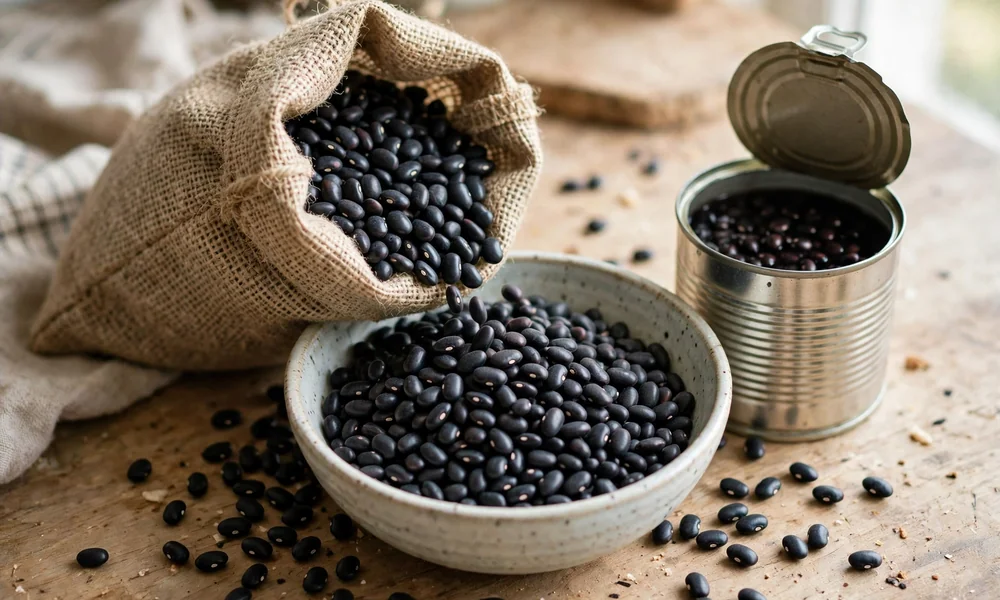
Canned and dried black beans are the same food in two different forms, and the right choice depends on the night you are having. Canned beans are cooked, salted and ready to eat: open, rinse, and they are in a taco within minutes. Dried beans are raw, cheap and unseasoned, and they need water, time and a little attention before they are edible, but they reward that attention with a better texture and a flavour you control.
| Factor | Canned black beans | Dried black beans |
|---|---|---|
| Time | Ready in minutes | 45 to 90 minutes, plus soaking |
| Cost per serving | Higher, but still cheap | About a third of the canned price |
| Texture | Softer, sometimes mushy | Firmer, creamier when cooked well |
| Sodium | High unless rinsed | None until you add it |
| Flavour control | Limited; the tin decides | Full; season as you cook |
| Best for | Weeknights, tacos, salads | Weekends, big pots, freezing |
How to read the label in thirty seconds
The label on a tin of black beans should be almost boring: black beans, water, salt, and sometimes a little calcium chloride to keep the beans firm. If the list runs longer, with flavourings, colourings, starches or added sugar, the cannery is dressing up a mediocre bean, and you are paying for the dressing rather than the bean.
Sodium is the number that varies most between brands, and it varies a lot: a serving can carry anywhere from 100 milligrams to more than 400. Rinsing the beans under cold water for thirty seconds cuts the sodium by roughly a third and washes away the starchy liquid that makes beans taste tinny, so it is worth doing even with a low-salt tin. Low-sodium or no-salt-added tins are the better buy if you season your own food, because they hand the control back to you.
How to cook dried black beans properly
Dried black beans do not strictly need soaking, but soaking helps. Cover them with cold water, leave them for eight hours or overnight, and they will cook in about forty-five minutes; without soaking, expect an hour and a half, and a less even result. The quick-soak method works too: boil the beans for two minutes, take the pan off the heat, leave it covered for an hour, then drain and cook as normal.
Texture: the test that decides everything
Texture is what separates a good tin of black beans from a mediocre one, and it is easy to test. Tip the beans into a bowl, rinse them, and pick one up: it should be whole, with a shiny skin and no cracks, and it should give slightly when pressed. A bean that falls apart at a touch is overcooked, and a bean that is hard and chalky inside is undercooked or old.
In a taco, texture matters most, because a mushy bean turns a crisp tortilla soggy within minutes, while a firm bean holds its place and gives the taco something to bite against. In a salad the same rule applies: a bean that holds its shape stays distinct among the other ingredients, while a soft bean disappears into a paste. In a soup or a stew, a softer bean is fine, because it thickens the liquid and nobody is asking it to hold a shape.
Protein, fibre and what a serving gives you
A cooked cup of black beans, about 170 grams, gives roughly 15 grams of protein, 15 grams of fibre and 230 calories That combination is why beans anchor a meal so well: the protein and fibre keep you full, the slow carbohydrates release energy steadily, and the meal stays satisfying long after a plate of plain rice or pasta would have left you hungry again.
Black beans in tacos
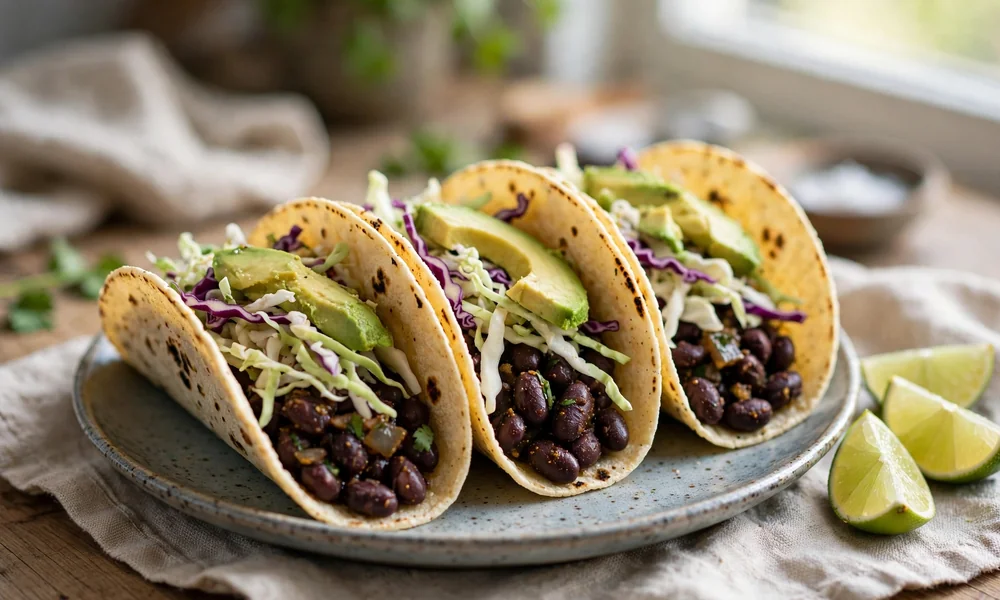
Tacos are the best showcase for black beans, because the bean is the main event rather than a side. Warm the rinsed beans in a pan with oil, garlic, cumin and a little smoked paprika, mash a third of them roughly with a fork so the filling holds together, and pile them into a warm corn tortilla with shredded cabbage, avocado, pickled onion and lime. The contrast is the point: warm, earthy beans against cool, crisp cabbage and rich avocado.
Black beans in bowls and salads
A burrito bowl is a taco with the tortilla taken away, and black beans are its backbone. Rice, beans, corn, diced tomato, greens and a lime dressing, layered in a bowl, make a lunch that keeps well, travels well and costs very little. The key is proportion: a generous scoop of beans, a smaller scoop of rice, and plenty of fresh vegetables on top, so the bowl tastes fresh rather than starchy.

Storage and shelf life
Dried black beans keep for a year or more in a sealed jar in a cool, dry cupboard, but they cook more slowly as they age, so use them within that year and buy from a shop with a fast turnover. Canned beans keep for two to five years unopened, and the best-before date is a quality guide rather than a safety deadline. Once opened, both kinds need the same treatment: into a glass container, into the fridge, and used within three to four days.
Black beans in context
Black beans sit in a family of pantry staples, and knowing the neighbours helps you choose. The lentils on the same shelf cook faster and need no soaking, which makes them the better choice on a night when even forty-five minutes is too long, though they break down where a black bean holds its shape. The rice you serve them with matters just as much as the bean, because a fragrant long-grain rice turns beans and rice from a filler into a dish worth eating on its own. And the quinoa in the next aisle offers a complete protein in fifteen minutes, a useful swap when you want a grain that carries the meal by itself. Beans, lentils, rice and quinoa are not rivals; they are a rotation, and black beans are the cheapest, most forgiving member of it.
Buyer checklist
- Choose canned beans for weeknights and dried beans for weekend batch cooking.
- Check the label: beans, water and salt, with little else added.
- Rinse canned beans for thirty seconds to cut sodium by about a third.
- Buy dried beans from a busy shop and use them within a year.
- Season dried beans near the end of cooking, and add acid only once they are tender.
- Freeze leftover cooked beans in portions with a little cooking liquid.
Frequently asked questions
Are canned black beans as healthy as dried?
Almost: the beans themselves are the same, and the main difference is sodium, which rinsing largely fixes. Dried beans win on texture and price, canned beans win on time, and nutritionally the gap is small once the tin is rinsed.
Do I have to soak dried black beans?
No, but it helps: soaking cuts the cooking time roughly in half and gives a more even result. The quick-soak method, two minutes at a boil then an hour covered, works when you have forgotten to soak overnight.
Why are my dried beans still hard after an hour?
Usually because the beans are old, or because salt or acid went in too early. Old beans may never soften properly, so buy fresh ones, hold the salt until the last twenty minutes, and keep the acid until the beans are tender.
Can I eat black beans straight from the tin?
Yes, they are fully cooked, but they will taste better rinsed and warmed with garlic and cumin. Rinsing removes the starchy liquid and about a third of the sodium, which is worth thirty seconds every time.
How much protein do black beans have?
About 15 grams per cooked cup, along with 15 grams of fibre and roughly 230 calories. Eat them with rice, corn or wheat over the course of the day and the amino acids complement each other.
Do black beans cause bloating?
They can, because of the fibre and the oligosaccharides in the skins. Rinsing canned beans, soaking dried beans, and building up portions gradually over a couple of weeks usually solves it, and the gut adjusts with regular eating.
The bottom line
The best black beans in 2026 are the ones you will actually cook with: a good tin, rinsed well and warmed with garlic and cumin, for the weeknights, and a pot of dried beans cooked gently and seasoned late, for the weekends and the freezer. Look for a short label, rinse the tin, salt late, and fry the beans briefly when a tin turns out soft. In tacos, in bowls, in salads and in soups, a firm, well-seasoned black bean earns its place as the cheapest, most reliable protein in the pantry, and it asks for nothing more than ten minutes and a hot pan.


