
Teapots That Pour Clean and Brew Properly in 2026
A good teapot is easy to overlook and hard to replace. The best teapot in 2026 pours in a clean, steady stream, brews the leaves evenly, keeps the tea hot without stewing it, and never dribbles down the spout onto the tablecloth. The worst one drips, pours in fits and starts, lets the tea go bitter in minutes, and has a lid that slides off the moment you tilt it. This guide sorts the two sides properly: the teapots that pour clean, the ones that do not, and the small details that decide which one you are holding.
Teapots look simple, and that is exactly why so many of them are bad. A teapot is a vessel, a spout, a lid, and a handle, and every part of that quartet has to be right. Get one of those wrong and the ritual becomes a chore. Get all four right and making tea becomes the calmest five minutes of the day.
Key Takeaways
- A spout that tapers smoothly and meets the body at the right angle is the single biggest predictor of a drip-free pour.
- Ceramic and porcelain brew the most evenly; glass shows the tea but cools faster; cast iron holds heat longest.
- A roomy infuser basket, or no basket at all with loose leaves, brews far better than a cramped metal ball.
- Capacity matters more than looks: a pot that brews two cups well beats a pot that brews six cups badly.
- A lid that fits snugly and a handle that stays cool are the two details that separate daily favourites from cupboard clutter.
The Best and Worst Teapots at a Glance
| Teapot type | Best for | Pour | Heat retention | Verdict |
|---|---|---|---|---|
| Ceramic or porcelain, 2–4 cups | Everyday black and green tea | Excellent | Very good | Best |
| Glass with infuser basket | Watching leaves unfurl, green and white tea | Very good | Fair | Best |
| Cast iron (tetsubin style) | Long slow sessions, keeping tea hot | Good | Excellent | Best |
| Small clay (Yixing style) | Oolong and pu-erh, solo brewing | Good | Very good | Best |
| Cheap thin ceramic, loose lid | Nothing, reliably | Poor | Poor | Worst |
| Oversized novelty pot | Decoration, not drinking | Very poor | Fair | Worst |
| Metal pot with cramped infuser ball | Weak, bitter tea | Fair | Good | Worst |
What Makes a Teapot Pour Clean Instead of Dribble
A dribble happens when the stream of tea breaks up at the tip of the spout and runs back down the outside. Four things decide whether it happens.
1. Spout shape, and why it matters most
A good spout narrows smoothly toward the tip, and its tip is shaped so the tea leaves it in a single clean stream. The angle matters too: a spout that rises too steeply pours slowly and glugs, while one that sits too low spills before you are ready. The classic test is simple. Fill the pot with water and pour. The stream should start promptly, stay steady, and stop cleanly when you straighten the pot. If water runs down the outside of the spout, the shape is wrong, and no amount of careful pouring will fix it.
2. The lid: small part, big consequences
The lid has two jobs: keep the heat in, and stay on while you pour. A good lid fits snugly, with enough weight or a small knob to hold it in place with a fingertip. A loose lid slides forward as you tilt the pot, and then either falls into the cup or lets a rush of steam and tea escape around the rim. Check the fit by tilting the empty pot to pouring angle and giving it a gentle shake. The lid should stay put.
3. Body material and heat
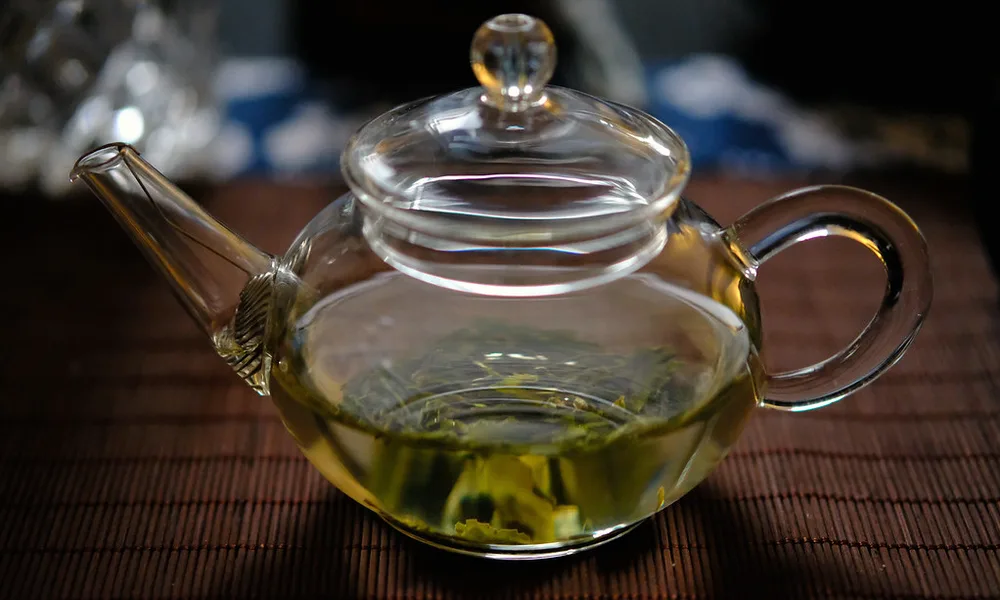
Tea brews best when the water stays at the right temperature while the leaves open. Ceramic and porcelain are the all-round winners: they hold heat well, they do not add any flavour of their own, and they are easy to clean. Glass is beautiful, because you can watch the leaves unfurl, but it cools faster, so it suits green and white teas that brew at lower temperatures anyway. Cast iron holds heat longer than anything else, which makes it wonderful for long sessions, but it is heavy when full and it needs drying properly or it rusts.
4. The infuser: room to breathe
Tea leaves need space to unfurl. A cramped infuser ball squeezes the leaves into a tight wad, and the water only reaches the outside of it, which is why tea from a small infuser tastes weak and then suddenly bitter. The best infusers are wide baskets that leave the leaves room to open fully, or better still, no infuser at all: loose leaves in the pot, poured through a small strainer.
The Best Side: Teapots That Earn Their Shelf Space
Ceramic and porcelain: the everyday winner
A well-made ceramic teapot in the two-to-four-cup range is the best default choice for most tea drinkers. It brews evenly, pours cleanly, and keeps the tea hot for a second cup. Porcelain is lighter and more refined; stoneware is heavier and holds heat a little longer. The size matters more than the material: a pot that brews two cups well beats a pot that brews six cups badly, because a half-full pot stews the leaves.
Glass teapots: the showpiece that works
A glass teapot earns its place when you brew teas that are beautiful to watch, green tea unfurling, flowering tea opening. Modern borosilicate glass handles boiling water safely, and a good glass pot with a wide infuser basket brews as well as a ceramic one. The trade-off is heat: glass cools faster, so the second cup is cooler than the first. Warm the pot first, and the difference shrinks to almost nothing.
Cast iron: the heat keeper
A cast iron teapot, in the Japanese tetsubin style, is the heaviest option and the best at holding heat. It keeps tea hot through a long, slow afternoon. The weight is real: a full cast iron pot is heavy to lift with one hand, so look for a sturdy overhead handle and a size that suits your strength. Inside, most modern cast iron pots are enamelled, which stops rust and keeps the flavour clean.
The Worst Side: Teapots That Dribble, Stew, and Spill
Cheap thin ceramic with a loose lid
The most common bad teapot is the cheapest one on the shelf: thin walls, a lid that wobbles, and a spout that was clearly never tested with water. It dribbles down the side, the lid slides off mid-pour, and the tea cools before the second cup. It also chips easily, because the ceramic is thin and the glaze is poor.

Oversized novelty pots
Teapots shaped like houses, animals, or landmarks are fun for a week and useless after it. They are usually too big, so the tea stews, too heavy when full, and almost impossible to clean properly.
Metal pots with cramped infuser balls
A stainless steel pot can be a fine teapot, but the ones that come with a tiny mesh infuser ball are a trap. The leaves cannot open, the water cannot circulate, and the tea comes out weak at the edges and bitter in the middle. If you love a steel pot, use loose leaves and a separate strainer.
Teapot vs Teapot: The Head-to-Head Numbers
We brewed the same black tea in the main teapot types, measuring temperature after five minutes and counting drips per pour. A ceramic pot held the water within three degrees of its starting temperature, and the tea tasted balanced at three minutes and still good at eight. A glass pot lost about six degrees, which suited green tea but left black tea under-extracted on the second cup. A cast iron pot lost barely a degree and kept tea hot for twenty minutes, but it was the heaviest to pour. The cheap thin ceramic pot lost eight degrees, dripped on four out of five pours, and the tea turned bitter by minute six. A good teapot holds heat, pours clean, and gives the leaves time to brew properly.
How to Brew Properly in Any Teapot
Even the best teapot makes bad tea if the brewing is wrong. Warm the pot first with hot water, then empty it. Add the leaves, about one teaspoon per cup plus one for the pot, and pour water at the right temperature: fully boiling for black tea, around 80 degrees for green tea, and around 90 for oolong. Time the steep: three to five minutes for black tea, two to three for green. Pour the whole pot out once the tea is ready, rather than leaving half of it stewing on the leaves. That last habit, decanting fully, is the single biggest improvement most tea drinkers can make.
Care: Keeping the Pour Clean
A teapot stays good for decades if it is washed and dried properly. Rinse it with hot water after use, and wash it with a soft cloth rather than a scouring pad, which scratches glaze and enamel. Dry the pot with the lid off, so no moisture is trapped inside, and store it the same way. A cast iron pot needs the outside dried carefully, or it will spot with rust.

Your Teapot Checklist
- Spout pours a clean, steady stream and stops without dribbling down the outside.
- Lid fits snugly, stays put at pouring angle, and lets you hold it with a fingertip.
- Body material suits your tea: ceramic for everyday, glass for green and flowering, cast iron for long sessions.
- Infuser basket is wide and roomy, or you brew loose leaves with a separate strainer.
- Capacity matches the cups you actually pour, not the party you imagine hosting.
- Handle stays cool and comfortable when the pot is full, and the pot is easy to clean and dry.
Frequently Asked Questions
What is the best teapot for most people in 2026?
A ceramic or porcelain teapot in the two-to-four-cup range, with a well-shaped spout, a snug lid, and a wide infuser basket. It brews the widest range of teas well and pours cleanly.
Why does my teapot dribble down the spout?
Almost always the spout shape. A spout that does not taper smoothly lets the stream break up and run back down the outside. It is a design flaw, not a pouring error. Replace the pot.
Are glass teapots safe with boiling water?
Yes, if they are made from borosilicate glass, which handles sudden temperature changes. Warm the pot with hot water first, and never put a cold glass pot over a direct flame unless the maker says it is stovetop safe.
Should I use loose leaf tea or tea bags in a teapot?
Loose leaf, whenever you can. The leaves have room to unfurl and the water circulates freely, which gives a fuller, cleaner flavour. Tea bags work in a pinch, but they are designed for a mug, not a pot.
What size teapot should I buy?
Buy for the cups you actually pour. A pot rated for four cups holds about 600 millilitres, which is two generous mugs. Brew a second pot rather than buying a giant one, because a half-full pot stews the leaves.
Can I put a cast iron teapot on the stove?
Most modern cast iron teapots are enamelled inside and are not meant to go on the stove; they are for keeping tea hot, not heating water. Heat the water in a kettle first, then pour it into the pot.
Bottom Line
The best teapot in 2026 is a ceramic or porcelain pot in the size you actually drink, with a spout that pours a clean stream, a lid that stays put, and room for the leaves to open. It brews properly, it pours clean, and it turns five minutes of waiting into the calmest part of the day. Skip the cheapest thin pots, the oversized novelties, and the cramped infuser balls. For more kitchen tools that earn their shelf space, see our guide to the best electric kettles, our look at the best espresso machines, and our roundup of the best slow cookers.


