The best electric kettles in 2026 do one simple job extremely well: they heat water quickly, safely, and to the right temperature, then they get out of the way. A good kettle should boil a litre of water in about three minutes, pour without dripping, switch itself off, and feel comfortable in your hand every morning. The best electric kettles 2026 buyers can choose from add useful refinements, including variable temperature controls and interiors that are easier to clean.
That sounds straightforward, yet the differences between models are larger than they first appear. A cheap kettle may boil fast but splash, rattle, or leave a metallic taste in delicate tea. A beautiful kettle may still be awkward to fill, heavy when full, or difficult to descale. The best choice depends on how you use hot water, whether that means one mug of tea before work, a full pot for breakfast, or careful pours for coffee.
This guide compares the types that matter most, explains the features worth paying for, and shows how to avoid the common mistakes that turn a simple purchase into a daily annoyance. It focuses on real daily use, so you can choose a kettle that suits your kitchen and your drinks.
Key takeaways
- Choose a 1.7-litre kettle for a household, or a 1-litre kettle for one or two drinks at a time.
- Variable temperature control matters most for green tea, coffee, and delicate herbal infusions.
- Stainless steel interiors are the easiest to keep clean and the least likely to affect flavour.
- A gooseneck spout gives the most control for pour-over coffee, while a wide spout fills a teapot faster.
- Look for automatic switch-off, boil-dry protection, a cool-touch handle, and a stable base.
Best Electric Kettles at a Glance
The table below gives a quick view of the three types that suit most homes. Each one solves a different problem, so the right pick depends on your drinks, your kitchen space, and how many people you serve.
| Type | Best for | Capacity | Key strength |
|---|---|---|---|
| Best overall | Everyday tea and coffee | 1.7 litres | Fast, quiet, and easy to clean |
| Best gooseneck | Pour-over coffee | 0.9 litres | Precise, slow, controlled pouring |
| Best variable temperature | Tea lovers | 1.7 litres | Accurate settings for each drink |
If you only buy one kettle, the best overall type is the safest choice: it handles the widest range of drinks and is large enough for a teapot.
How We Judged the Best Electric Kettles
A kettle earns its place through daily performance, not through a list of features on a box. Boiling speed matters, but only up to a point: a kettle that boils thirty seconds faster is no help if it drips, rattles loudly, or is hard to clean. We weighed pouring control, balance, noise, cleaning, and safety alongside speed.
Build quality also matters more than it seems at first. A lid that opens smoothly, a handle that stays cool, and a base that sits flat all reduce small daily frustrations.
Boiling speed and power
Most full-size kettles use between 2,200 and 3,000 watts, and they boil a litre of water in roughly two and a half to three and a half minutes. A kettle that is only half full will always boil faster than a full one, so heat only the water you plan to use. That habit also saves energy and reduces limescale.
Temperature control
Plain kettles boil water to 100 degrees Celsius and then switch off. Variable temperature kettles let you choose a lower setting, which is useful because green tea tastes best at around 70 to 80 degrees, while coffee is usually brewed at about 92 to 96 degrees. If you drink mostly black tea, temperature control is a luxury; if you drink green tea or pour-over coffee daily, it is worth the extra cost.
Materials and build quality
Stainless steel is the most common choice for good reason: it is durable, it heats evenly, and it does not stain easily. Plastic kettles are lighter and cheaper, although the best ones use food-safe materials. Whatever the finish, look for a smooth interior with few hidden corners, because that makes descaling quick.
The Best Electric Kettles of 2026
The picks below are organised by the job each kettle does best. Each one represents the strongest balance of speed, control, safety, and ease of use for its purpose, so you can match the recommendation to your own routine.
Best overall: the 1.7-litre stainless steel kettle
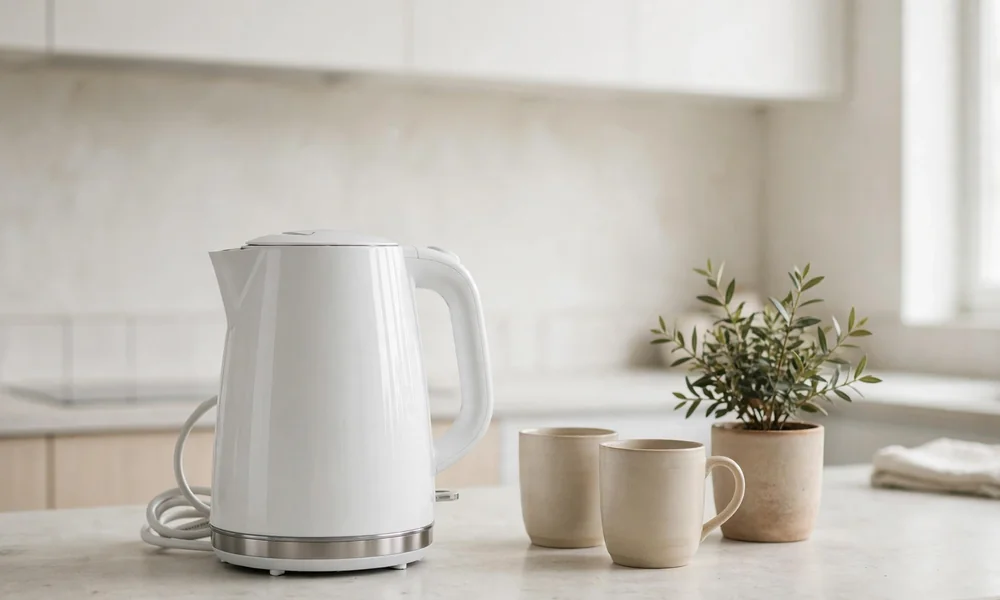
The best overall electric kettle is a 1.7-litre stainless steel model with a concealed element, a wide opening, and a comfortable handle. It boils a full kettle in about three minutes, pours smoothly without spilling, and is large enough for a family teapot yet light enough for everyday use. The concealed element means no exposed coil traps limescale, and the flat base wipes clean in seconds.
Best gooseneck: the precision pour-over kettle
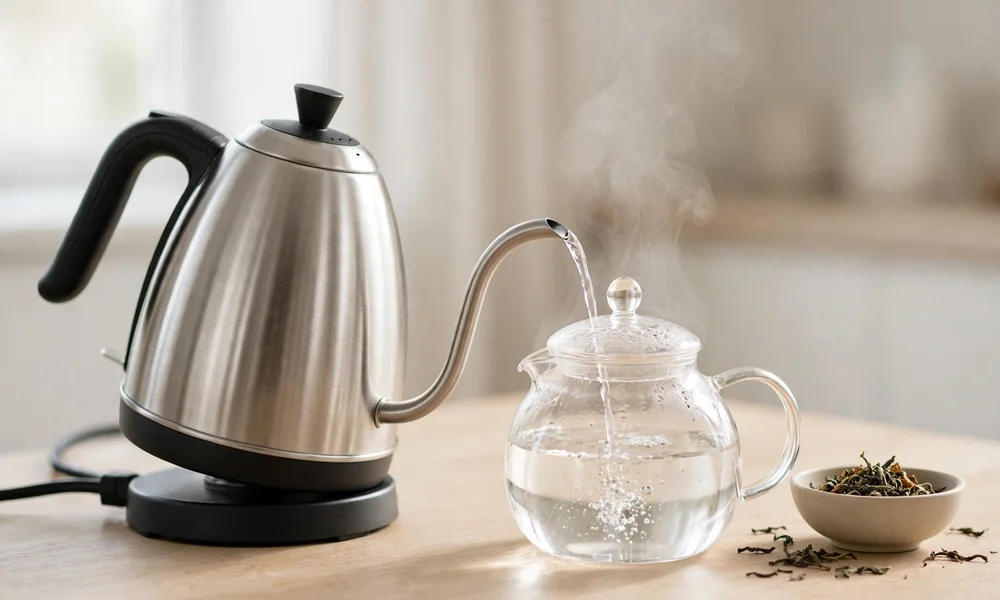
A gooseneck kettle has a long, narrow spout that gives slow, steady control over the flow of water. That control matters for pour-over coffee, where a fast, uneven pour can flood the grounds and produce a bitter, uneven cup. With a gooseneck kettle, you can pour in slow circles and stop the flow cleanly. The trade-off is capacity: most hold between 0.8 and 1.0 litres, and they fill a large teapot slowly. They also cost more and take a little practice. For coffee lovers, the difference in the cup is real. A good pour-over setup starts with the kettle, and the best coffee makers for home reward the same care with water temperature and pouring.
Best variable temperature: the tea lover’s kettle
A variable temperature kettle lets you set the water to the temperature your drink needs, rather than boiling it and waiting for it to cool. Green tea, white tea, and delicate herbal infusions taste noticeably better when the water is not boiling. Many models offer preset buttons for common drinks, plus a keep-warm function that holds the temperature for twenty or thirty minutes. The extra controls add cost and a little complexity. Even so, this is the best choice for anyone who drinks several cups of tea a day. Look for clear temperature markings, a hold function you can switch off, and a lid that opens wide.
Gooseneck or Standard Spout: Which Is Right for You?
The spout shapes how water leaves the kettle, and that shapes the drink. A standard spout is wide and fast, so it fills a teapot or a pan quickly. A gooseneck spout is narrow and slow, so it gives precise control over a small stream. If you mainly make tea or heat water for cooking, a standard spout is faster and more practical. If you make pour-over coffee, a gooseneck spout is the better tool.
Capacity, Power, and Everyday Practicalities
Capacity is the first practical decision. A 1.7-litre kettle serves a family or guests, while a 1-litre kettle suits one or two people. A larger kettle is not always better: a full 1.7-litre kettle is heavy, and heating water you do not use wastes energy. Boil only what you need, using the minimum fill line as your guide.
Noise is another point that is easy to overlook until the kettle is in your kitchen. Some kettles rumble loudly as they approach boiling, while others stay noticeably quieter. If you make tea early in the morning, a quieter model is worth seeking out. The handle should stay cool, the lid should open easily with one hand, and a 360-degree swivel base lets you replace the kettle from any angle. The same attention to everyday convenience pays off across the kitchen, which is why the best espresso machines for home are also judged on how easy they are to fill, clean, and use every morning.
Materials, Safety, and Cleaning
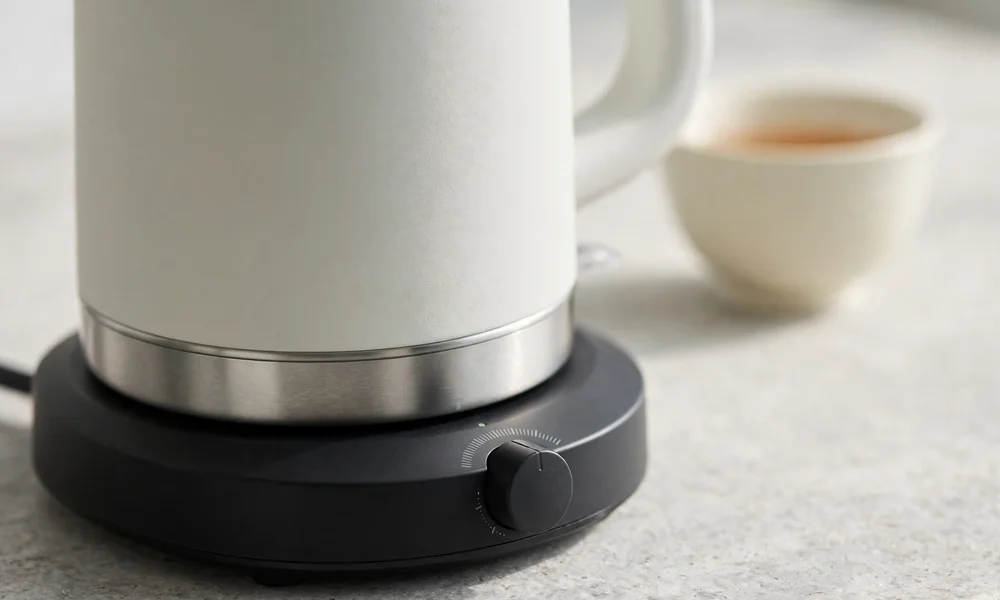
Safety features should be non-negotiable. Every kettle should switch itself off when the water boils, and it should have boil-dry protection that cuts the power if it is switched on without water. A cool-touch handle and a stable base reduce the risk of burns, and a snug lid prevents hot water from splashing when you pour. Keep the cord tidy and never overfill past the maximum line.
Cleaning is simple if you do it regularly. Limescale builds up fastest in hard water areas, and it slows boiling, affects flavour, and shortens the life of the element. Descale every few weeks with water and white vinegar or citric acid, following the instructions for your model. Rinse thoroughly and boil a fresh kettle of water before making a drink. A kettle with a wide opening and a smooth interior is much easier to descale. With regular care, a good kettle should last for years.
Before You Buy: A Quick Checklist
Use this checklist before you order.
- Capacity: choose 1.7 litres for a household, or 1.0 litre for one or two people.
- Temperature: decide whether you need variable settings for tea or coffee.
- Spout: pick a gooseneck for pour-over coffee, or a standard spout for tea and cooking.
- Safety: check for automatic switch-off, boil-dry protection, and a cool-touch handle.
- Cleaning: look for a wide opening, a concealed element, and a smooth interior.
- Fit: measure your counter space and check that the kettle feels balanced when full.
Frequently Asked Questions
These are the questions people ask most often when choosing an electric kettle.
How long should an electric kettle take to boil?
A good full-size kettle boils one litre of water in about two and a half to three and a half minutes. A full 1.7-litre kettle usually takes about three to four minutes. If yours takes much longer, it may need descaling.
Is a variable temperature kettle worth the extra cost?
It is worth the cost if you drink green tea, white tea, or pour-over coffee regularly, because those drinks taste better at lower temperatures. If you mostly drink black tea or instant coffee, a standard kettle is enough.
What is the best material for an electric kettle?
Stainless steel is the best all-round choice because it is durable, easy to clean, and does not affect flavour. Glass is attractive and lets you see the water level, while good-quality plastic is lighter and cheaper.
How often should I descale my kettle?
Descale every four to eight weeks in a hard water area, and less often in a soft water area. If you see white deposits inside or boiling becomes slower, descale sooner. Regular descaling keeps the flavour clean and extends the kettle’s life.
Can I leave water in my kettle overnight?
You can, but it is better to empty the kettle and refill it with fresh water each morning. Standing water can taste stale, and it encourages limescale. Boiling only the water you need also saves energy.
Are electric kettles energy efficient?
Electric kettles are efficient because they heat only the water you use and switch off as soon as it boils. To save the most energy, boil only the amount you need and keep the kettle descaled. A kettle is usually more efficient than boiling water in a pan on a hob, just as the best air fryers save energy by heating a small space quickly rather than a whole oven.
The Bottom Line
The best electric kettle for most homes in 2026 is a 1.7-litre stainless steel kettle with a concealed element, automatic switch-off, and a comfortable, balanced handle. Choose a gooseneck model if pour-over coffee is your daily ritual, and choose variable temperature control if you drink green tea often. Boil only the water you need, descale it regularly, and it will serve you well every day.