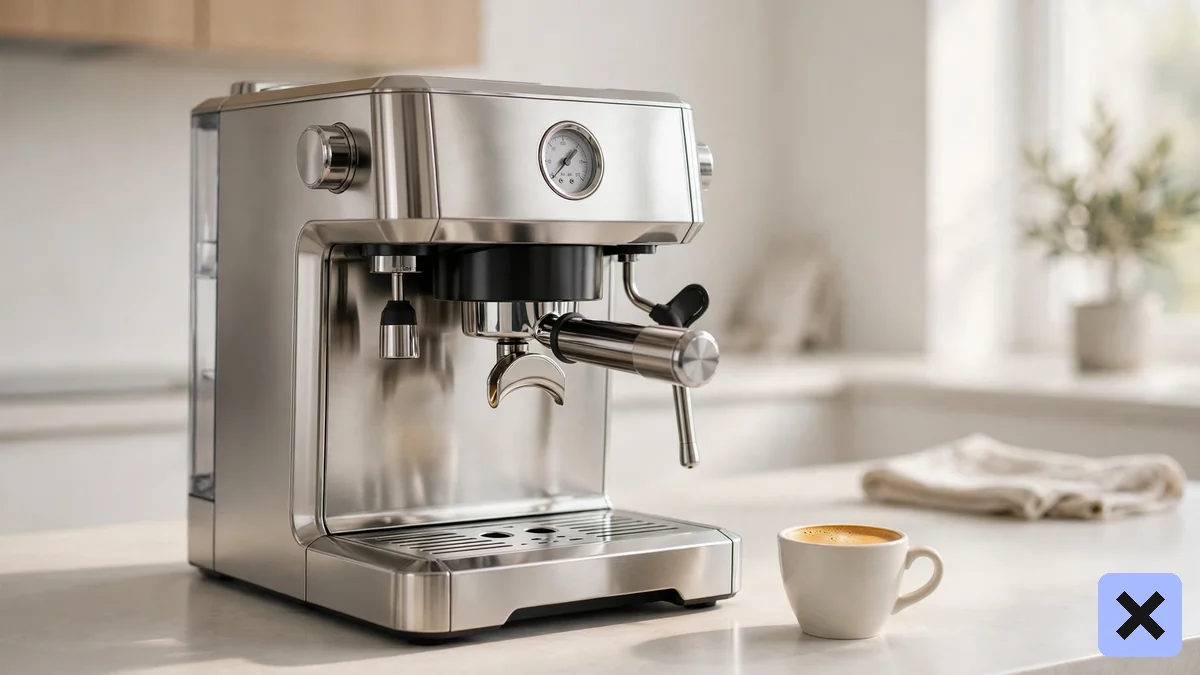
The best espresso machines for home in 2026 make cafe-quality coffee possible without a cafe-sized budget or a barista course. A good home machine pulls a rich, balanced shot with thick golden crema, steams milk into smooth microfoam, and does it the same way every morning.
The difference comes down to a few details that are easy to check before you buy: stable brewing temperature, steady pressure, a grinder that matches the machine, and controls that suit how you actually make coffee. Home espresso has improved greatly in recent years, with features from commercial equipment moving into machines made for kitchen counters.
This guide focuses on what changes the taste in the cup. It compares the top picks for different homes and habits, explains the features that matter, and ends with a practical checklist to use before you spend anything.
Key takeaways
- Stable temperature and consistent nine-bar pressure matter far more than extra features or a premium badge.
- A built-in grinder is convenient, but a separate grinder gives more control and an easier upgrade path.
- Match the machine to your drinks: milk lovers need a strong steam wand, while straight-espresso drinkers can spend less.
- Measure your counter space and check the water tank, drip tray and cup clearance before you buy.
- Budget for fresh beans and regular cleaning, because both affect flavour more than a small step up in machine price.
What Makes a Great Home Espresso Machine
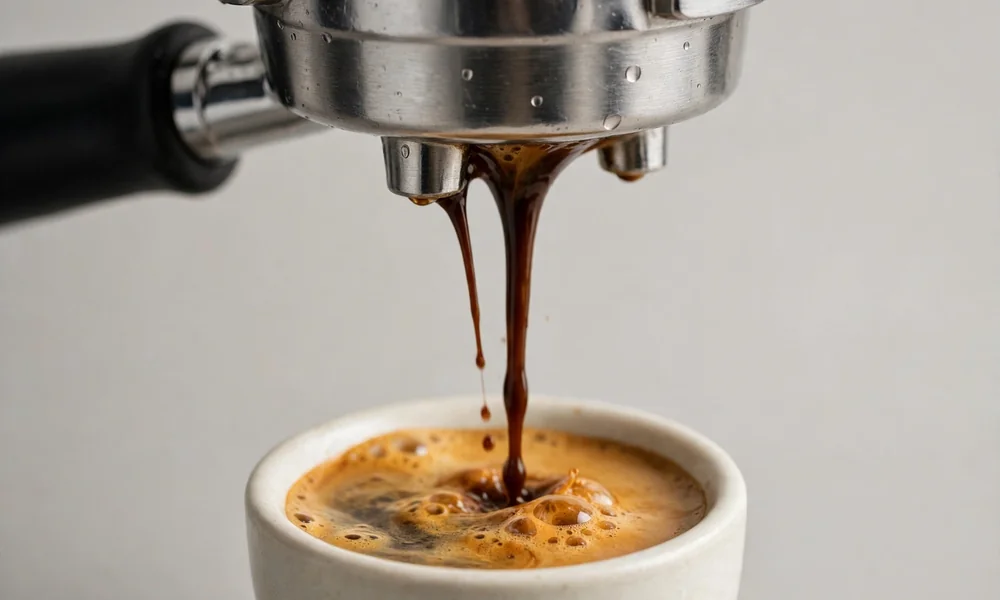
Espresso is a small drink with very little room to hide mistakes. Around 25 to 30 millilitres of water pass through finely ground coffee in about 25 to 30 seconds, and everything about that short window shapes the result.
Espresso is traditionally brewed at around nine bars of pressure, and a pump that can reach that level is essential. What matters is steady pressure, plus gentle pre-infusion, a short low-pressure soak that wets the coffee evenly first.
Pressure and Temperature Stability
Temperature stability is just as important as pressure. Water that is too cool produces sour, thin espresso, while water that is too hot brings out bitterness. PID controllers, which hold the boiler at a set temperature, are far more consistent than simple thermostats.
A single boiler is simple and affordable, yet it usually asks you to wait between brewing and steaming. A heat exchanger lets you brew and steam with less waiting.
The Grinder Question
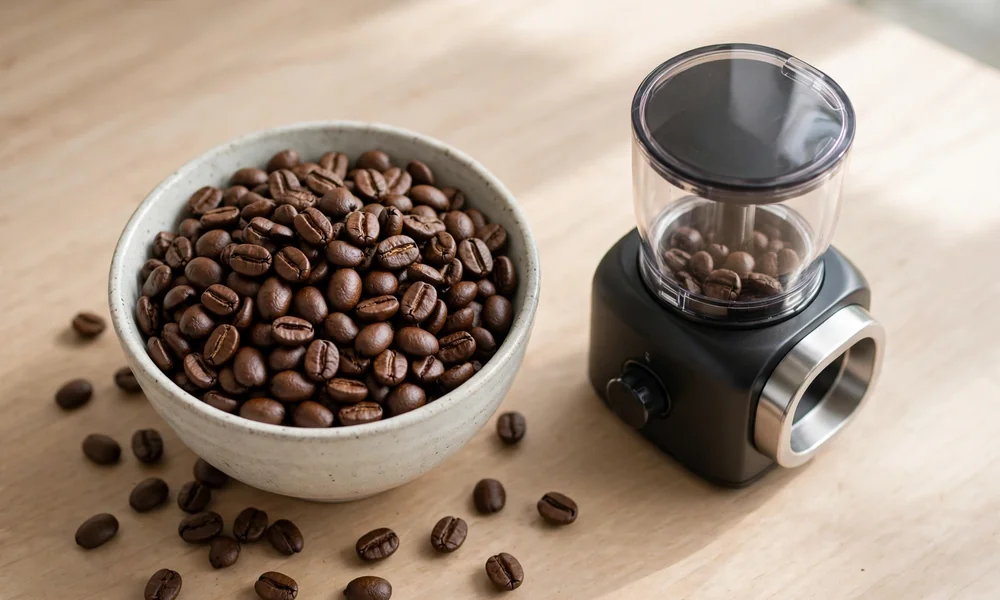
The grinder shapes your espresso almost as much as the machine itself. Espresso needs a fine, even grind, and small changes in grind size shift the shot from sour to balanced to bitter. Built-in grinders are convenient: they save counter space and dose directly into the portafilter. A separate grinder gives finer adjustment, easier cleaning and a clearer upgrade path.
Whatever route you choose, buy fresh beans and grind just before brewing. Pre-ground coffee loses aroma quickly, and even the best machine cannot recover flavour that has already faded. If a shot runs too fast and tastes sour, grind finer; if it runs too slowly and tastes bitter, grind coarser.
The Best Espresso Machines for Home in 2026
The picks below cover the main ways people make espresso at home. Each one suits a different kind of drinker, so the best machine is the one that matches your habits rather than the one with the highest price.
| Pick | Type | Best for | Milk steaming | Skill needed |
|---|---|---|---|---|
| Best overall | Semi-automatic with PID | Daily espresso and milk drinks | Strong steam wand | Low to medium |
| Best for beginners | Super-automatic | One-touch drinks, no learning curve | Automatic frother | Very low |
| Best budget | Compact semi-automatic | Straight espresso on a budget | Basic steam wand | Medium |
| Best for milk drinks | Heat exchanger | Back-to-back flat whites and lattes | Excellent, fast steam | Medium |
| Best compact | Slim thermoblock | Small kitchens and single servings | Modest steam | Low |
| Best for enthusiasts | Dual boiler | Precise control and light roasts | Excellent, independent | High |
Best Overall: A Semi-Automatic With PID Control
The best all-round home machine is a semi-automatic with a PID temperature controller, a 58-millimetre portafilter and a capable steam wand. It gives you control over dose, grind and shot time without demanding expert skill, and the PID keeps the temperature steady from the first shot to the third.
Best for Beginners: A Super-Automatic Machine
A super-automatic machine grinds, doses, brews and often froths milk at the touch of a button. It is the best choice when convenience matters most, when several people with different tastes share the kitchen, or when nobody wants to learn about grind size and tamping.
Best Budget: A Compact Semi-Automatic
A good budget machine proves that you do not need to spend a fortune to make proper espresso. Compact semi-automatics heat water quickly, pull a respectable shot, and fit on a crowded counter. They usually come with a pressurised basket, which forgives an imperfect grind and helps beginners get crema from the start. The compromise is temperature stability and steam power: the shot may vary a little more, and steaming milk takes longer and produces looser foam.
Best for Milk Drinks: A Heat Exchanger Machine
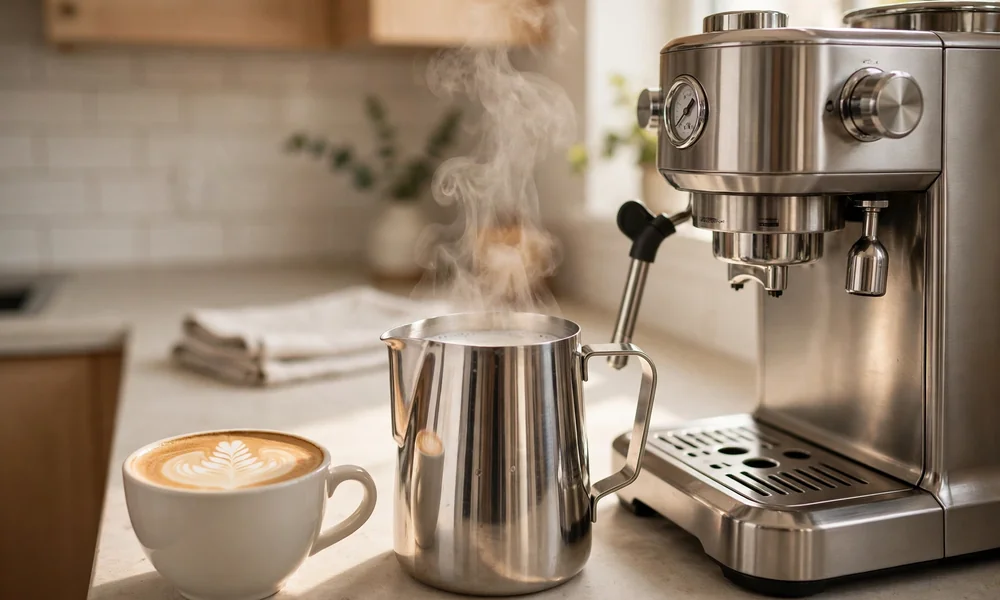
If your household runs on flat whites, lattes and cappuccinos, a heat exchanger machine is the most practical upgrade. It brews espresso and steams milk with minimal waiting between the two, so making three or four drinks in a row feels relaxed rather than rushed.
Best Compact: A Slim Thermoblock Machine
Small kitchens need a machine that earns its footprint. Slim thermoblock machines heat water on demand, warm up in under a minute, and slide into a narrow gap between the kettle and the wall.
Best for Enthusiasts: A Dual Boiler Machine
A dual boiler machine is the top of the home range, built for people who treat espresso as a hobby. Separate boilers for brewing and steaming mean you can set the brew temperature precisely, steam milk at full power at the same time, and repeat the same shot all day without drift.
How to Choose the Right Machine for Your Home
Start with your drinks, not with a price list. If you drink a double shot or an Americano, you can spend less on steaming and more on temperature control and the grinder.
Next, measure the space honestly. Espresso machines are deeper than they look in photographs, and they need clearance above for filling the tank and room at the side for the portafilter handle. Choosing between coffee or tea for morning energy is a personal call, but once coffee wins, the quality of the water and the beans decides how good the result tastes.
Beans, Grind and Technique
A fine machine cannot rescue stale beans or a careless grind, and that is good news, because beans and technique cost far less than hardware. It is also worth knowing which coffee trends are not worth the price, so you spend on beans and equipment that improve the cup instead of fashions that do not.
Dialling In Your First Shots
Start with a dose the basket is designed for, usually 18 grams for a double basket, and aim for about 36 grams of liquid espresso in the cup. Taste before changing anything. If it is sour and sharp, the coffee is under-extracted, so grind a little finer. If it is bitter and dry, it is over-extracted, so grind a little coarser. For milk, start cold and stop steaming at around 60 to 65 degrees, when the pitcher feels hot but not painful to hold.
Cleaning and Maintenance
Cleaning is shorter than most people expect. Rinse the portafilter and basket after every shot, wipe the steam wand immediately after steaming, and purge the wand for a few seconds so milk never dries inside it. Backflush a semi-automatic with water weekly and with a cleaning tablet as often as the manual suggests.
Common Mistakes to Avoid
The most common mistake is buying too much machine. A dual boiler with endless settings looks impressive, but if you want a quick coffee before work, you will use a fraction of what it offers and resent the warm-up time and the cleaning. The second mistake is the opposite: buying the cheapest machine available and pairing it with stale coffee, then concluding that home espresso is not worth the effort. A good setup also needs a little space for the grinder and a tamper mat, which is why many coffee lovers also research the best stand mixers for baking when they plan their kitchen.
Checklist: Before You Buy an Espresso Machine
- List the drinks you make most often, and choose steam power and automation to match them.
- Measure your counter space, including height, depth and room for the portafilter handle.
- Decide between a built-in grinder and a separate grinder, and budget for fresh beans.
- Check the water tank size, how it fills, and whether your tap water needs filtering.
- Confirm the cup clearance fits your usual mugs and that the drip tray is easy to empty.
- Read the cleaning routine and the descaling schedule, and be honest about whether you will follow them.
Frequently Asked Questions
How much should I spend on a home espresso machine?
A good starting point is a compact semi-automatic paired with fresh beans and a capable grinder. Spending more buys better temperature control, stronger steam and faster warm-up, but it does not fix stale coffee or a poor grind.
Do I need a separate grinder?
Not always. A built-in grinder is convenient and saves space, and it suits most beginners well. A separate grinder gives finer adjustment, easier cleaning and a simpler upgrade path.
What is the difference between a semi-automatic and a super-automatic machine?
A semi-automatic lets you control the grind, dose and shot time, while a super-automatic handles those steps at the touch of a button. Semi-automatics give more control, while super-automatics give more convenience with almost no learning curve.
How long does a home espresso machine last?
A well-built machine that is cleaned regularly and descaled on schedule can last many years. The parts that wear first are usually gaskets, seals and grinder burrs, and all of them are replaceable on a good machine.
Can a home machine make coffee as good as a cafe?
Yes, with fresh beans, a good grinder and a little practice. Cafes have an advantage in experience and equipment, but the gap is smaller than it used to be. A home machine with PID temperature control and a proper steam wand can produce drinks that match a good cafe.
Is a pod machine a better choice for a busy household?
A pod machine is faster and simpler, and it suits a household that values speed above all else. It costs more per cup, offers less control over flavour, and produces more waste than a bean-to-cup setup.
The Bottom Line
The best espresso machine for home in 2026 is the one that matches your drinks, your kitchen and your patience for learning. For most people, that is a semi-automatic with PID temperature control, a 58-millimetre portafilter and a strong steam wand, paired with fresh beans and a capable grinder. Whatever you choose, measure the space, check the cleaning routine, and spend as much care on beans and technique as on the machine itself.