The best throw pillows for bedrooms in 2026 make the bed look finished without making it a chore to use. A good pillow adds colour, texture and shape, comes off in seconds at night and goes back on just as fast in the morning. The wrong ones slide around, clash with the bedding or end up stuffed in a cupboard.
This guide covers the fabrics, sizes and fillings that hold their shape, the colours that suit calm sleep spaces, and the arrangements that look polished on queen and king beds. Every recommendation is practical and chosen for comfort as well as looks.
Start with the size of your bed, pick a fabric you enjoy touching, and let the colours follow the room you already have.
Key takeaways
- Choose throw pillows by bed size first: two to three for a double, three to five for a queen, and five to seven for a king.
- Velvet and linen are the most versatile bedroom fabrics, cotton is the easiest to wash, and boucle adds instant texture.
- Mix sizes: large euros at the back, standard squares in the middle, and a lumbar pillow at the front.
- Pick a pillow insert one size larger than its cover so the pillow looks full instead of flat and saggy.
- Limit the palette to three colours drawn from the bedding, curtains or artwork already in the room.

What Makes a Great Bedroom Throw Pillow
A bedroom throw pillow has a different job from a sofa cushion. Seen up close and handled twice a day, it needs softness, quiet colours and easy care more than bold statements. The best ones feel good against the skin, keep their shape, and blend with the bedding.
Shape matters as much as fabric. A pillow that holds a neat, plump outline makes the whole bed look tidy, while a limp one drags the look down whatever the cover cost. A feather and down blend gives a soft, squashy look, while polyester holds a firmer shape with less upkeep.
Comfort Comes First
Bedroom pillows are touched, leaned on and sometimes slept against, so comfort is not optional. Rough or stiff fabrics quickly become annoying, however good they look in a photograph. Washed linen softens with every wash, cotton velvet stays smooth and warm, and modern boucle is far softer than older versions. If a fabric feels unpleasant in the shop, it will feel worse at home.
Durability and Easy Care
Bedroom pillows pick up dust and skin oils, so washable covers are worth prioritising. Removable covers with a hidden zip let you refresh a room for the cost of a new cover, not a new pillow. Machine-washable cotton and linen are the easiest to live with, while velvet usually needs a gentle cycle or a specialist clean.
The Best Throw Pillows for Bedrooms in 2026
The strongest bedroom pillows this year share natural-looking fabrics, calm colours, generous filling and removable, washable covers. Velvet is the favourite for luxury, in deep green, rust and dusty blue; linen suits relaxed, airy rooms; cotton is the reliable all-rounder; and boucle brings the cosy texture of current bedroom styling.
The same thinking applies beyond the bedroom: the guide to throw pillows for couches shows how these sizes and fabrics translate to a living room sofa, useful when you want the two rooms to feel connected without matching exactly.
| Pillow style | Best for | Feel | Care |
|---|---|---|---|
| Velvet | Luxurious, cosy bedrooms | Soft, smooth, warm | Gentle wash or dry clean |
| Linen | Relaxed, airy bedrooms | Cool, textured, breathable | Machine washable |
| Cotton | Everyday family bedrooms | Soft, smooth, sturdy | Machine washable |
| Boucle | Texture and warmth | Nubby, plush, cosy | Spot clean or gentle wash |
| Silk or satin | A single accent pillow | Smooth, cool, glossy | Delicate wash or dry clean |
Velvet Throw Pillows
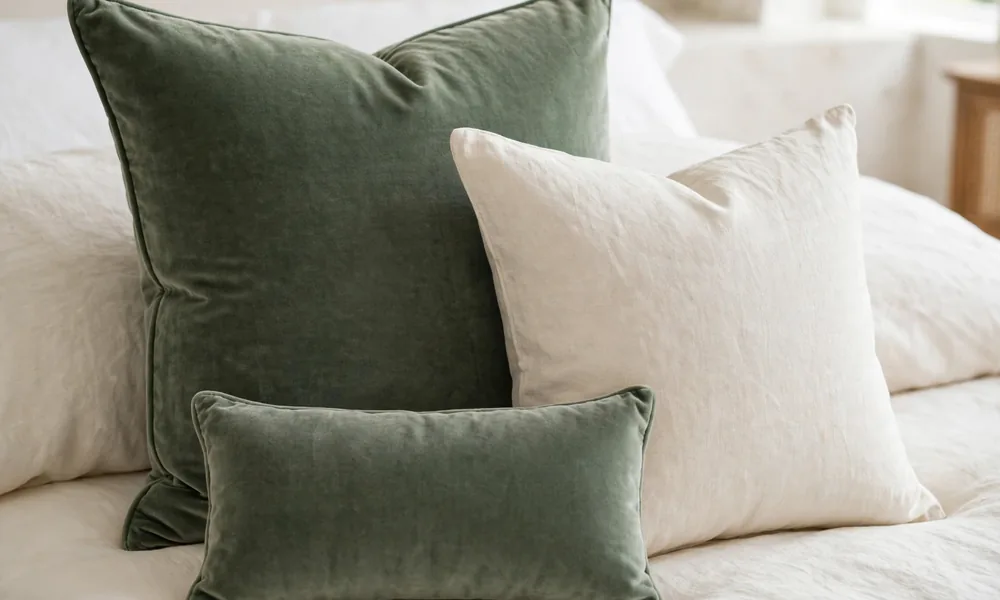
Velvet is the easiest way to make a bedroom feel expensive. It catches the light, adds depth to plain bedding and comes in the rich, muted colours that suit sleep spaces. Cotton velvet is the most practical choice, being more breathable and easier to care for than silk velvet. Use it for one or two pillows: a pair of velvet squares in front of plain white sleeping pillows gives a finished, hotel-like look.
Linen Throw Pillows
Linen is the natural partner for white and cream bedding. It breathes well, never feels clammy, and its slightly uneven texture adds character without pattern. Washed linen is soft from the first use and only gets better. It wrinkles, and that is part of its charm, though a linen-cotton blend holds a neater edge if you prefer a crisper look.
Cotton and Boucle Throw Pillows
Cotton is the workhorse of bedroom pillows: affordable, washable, available in every colour and comfortable in all seasons. A good cotton cover with a feather-blend insert looks far more expensive than its price, and it is the safest choice when buying online. Boucle works beautifully as a single lumbar pillow at the front of the bed.
How Many Throw Pillows Should a Bed Have?
The right number depends on bed size and how much time you want to spend making it. A double looks best with two or three throw pillows, a queen with three to five, and a king with five to seven. Too many turn the morning routine into a chore.
Think in layers: sleeping pillows at the back, larger throw pillows next, smaller squares, then a single lumbar pillow at the front. If you share the bed, agree together: three pillows that actually get used beat seven that live on a chair.
Sizes That Work on a Real Bed
Size is where most people go wrong, usually by choosing pillows that are too small for the bed. A large bed needs large pillows, or the arrangement looks lost against the headboard. Euro pillows of 26 inches square work at the back of a queen or king bed, 20 inch squares suit the middle layer, and a lumbar pillow of around 14 by 36 inches finishes the front.
The Oversized Insert Trick
Buy an insert one size larger than the cover: a 22 inch insert inside a 20 inch cover fills the corners, gives a plump, full look and stops the cover from sagging. If a pillow you already own looks flat, try a larger insert before replacing the whole thing.
Fabrics and Fillings Compared
Fabric sets the mood of the bed, while filling sets the shape. A natural-fibre cover with a feather and down blend insert gives a soft, lived-in look, while a high-quality polyester insert suits allergies or easier washing. Feather inserts need regular plumping; polyester needs less effort but can go flat over time.
A cheap cover with a good insert almost always looks better than an expensive cover with a flat insert.
Choosing Colours and Patterns
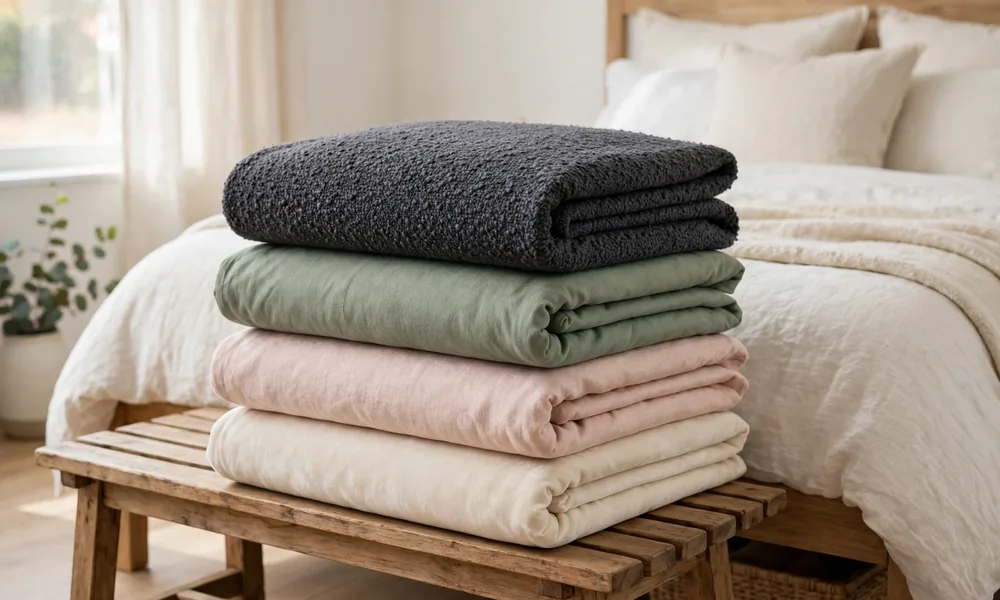
Take three colours from the room you already have: one from the bedding, one from the curtains or a rug, and one from a piece of artwork. Use the lightest for the largest pillows and the strongest for the smallest accent. Calm bedrooms suit muted tones such as sage, dusty blue, warm beige, soft blush and charcoal.
A single pattern, such as a subtle stripe or a small geometric print, adds interest without making the bed look busy. Two patterns can work if they share a colour and differ in scale, but three usually fight each other. For a seasonal refresh, use lighter linen and pale colours in spring and summer, and velvet and deeper tones in autumn and winter.

Matching Pillows to Bedding and Curtains
The pillows should relate to the bedding, not match it exactly. White bedding works with every colour, while patterned bedding needs plainer pillows in colours picked from the pattern. Curtains are the other big block of colour, and the guide to curtains for bedrooms is a useful companion, because the curtain colour often sets the tone the pillows should follow.
How to Arrange Throw Pillows on a Bed
Follow a simple order: sleeping pillows at the back, large euros next, standard squares in the middle, and a lumbar pillow at the front. Lean the back row upright against the headboard and centre the lumbar pillow. For a king, try two euros, two squares and one lumbar; for a queen or double, two squares and one lumbar is enough.
Care and Maintenance
Shake and plump the inserts every morning, and air them by an open window once a month. Vacuum the covers with a soft brush attachment every few weeks, which matters most for velvet and boucle. Wash removable covers according to the label, close the zip first, and dry naturally where possible, as tumble drying can shrink linen and cotton.
When winter bedding comes out, check whether the pillow arrangement still suits the room. Heavier duvet covers for winter change the colour and texture of the bed, and a quick pillow swap can keep everything coordinated.
Bedroom Throw Pillow Checklist
- Measure the bed and headboard before choosing sizes.
- Pick two or three colours from the bedding, curtains or artwork in the room.
- Choose removable, washable covers with a hidden zip.
- Buy inserts one size larger than the covers for a full look.
- Mix sizes in layers: large at the back, small at the front.
- Test the fabric by hand and check the care label before you buy.
Frequently Asked Questions
How many throw pillows should I put on a queen bed?
Three to five is the sweet spot. Two standard squares with a lumbar pillow look tidy and take seconds to arrange, while a pair of euros at the back gives a fuller look. More than five usually means pillows end up on the floor.
What size throw pillows look best on a bed?
Large pillows look best: euros of 26 inches at the back, 20 inch squares in the middle, and a lumbar pillow of around 14 by 36 inches at the front. Small pillows below 16 inches can look lost on a large bed, so save those for single and guest beds.
Are throw pillows on a bed practical or just decorative?
They are both. They protect the sleeping pillows from daylight and dust, make the bed look finished, and are useful for sitting up in bed to read. Keep the number low enough that removing them at night takes only a few seconds.
What is the best filling for bedroom throw pillows?
A feather and down blend gives the softest, most luxurious look and is easy to plump back into shape. A good polyester fill suits allergy sufferers and anyone wanting a firmer shape with less maintenance.
How do I keep throw pillows from sliding off the bed?
Lean them upright against the headboard or the sleeping pillows, and use a lumbar pillow at the front to hold the row in place. Heavier inserts slide less, and a textured throw across the foot of the bed helps hold the front row steady.
Can I mix patterns and solid colours on a bed?
Yes, and it usually looks better than using solids alone. Use one pattern as the accent, keep the rest solid, and make sure the pattern shares a colour with the solid pillows. Stripes, small geometrics and subtle botanical prints are the easiest to mix.
The Bottom Line
The best throw pillows for bedrooms in 2026 are soft, washable, well filled and chosen in colours that already belong in your room. Start with the size of your bed, layer large pillows at the back and smaller ones at the front, and let one good lumbar pillow tie it together. Get those basics right and the bed will look polished every morning.