The best curtains for bedrooms do far more than dress a window. They control the light that wakes you, hush outside noise, keep warm air in on cold nights, and set the mood of the room where you rest. Choose well and your bedroom feels calmer, darker, and more finished.
Finding the best curtains for bedrooms in 2026 means balancing three things at once: how much light you want to block, how the fabric looks and feels, and how the curtains hang. A heavy velvet panel suits deep sleep but can overwhelm a small room, while a sheer voile looks airy yet will not help you sleep past sunrise. The right answer depends on your window, your sleep habits, and your home.
This guide compares the strongest options for every bedroom, from blackout curtains for light sleepers to sheer curtains for bright rooms, with a comparison table, measuring advice, and a checklist to use before you buy.
Key Takeaways
- Blackout curtains are best for sleep, blocking up to 99 percent of outside light and cutting draughts.
- Linen-look curtains offer the best balance of style, softness, and light control for most bedrooms.
- Hang curtains 10 to 15 centimetres above the window frame and let them fall to the floor for a taller, more polished look.
- Choose a curtain width at least twice the width of your window so the panels gather properly when closed.
- Thermal and velvet curtains add insulation, keeping bedrooms warmer in winter and cooler in summer.
Why the Right Bedroom Curtains Matter
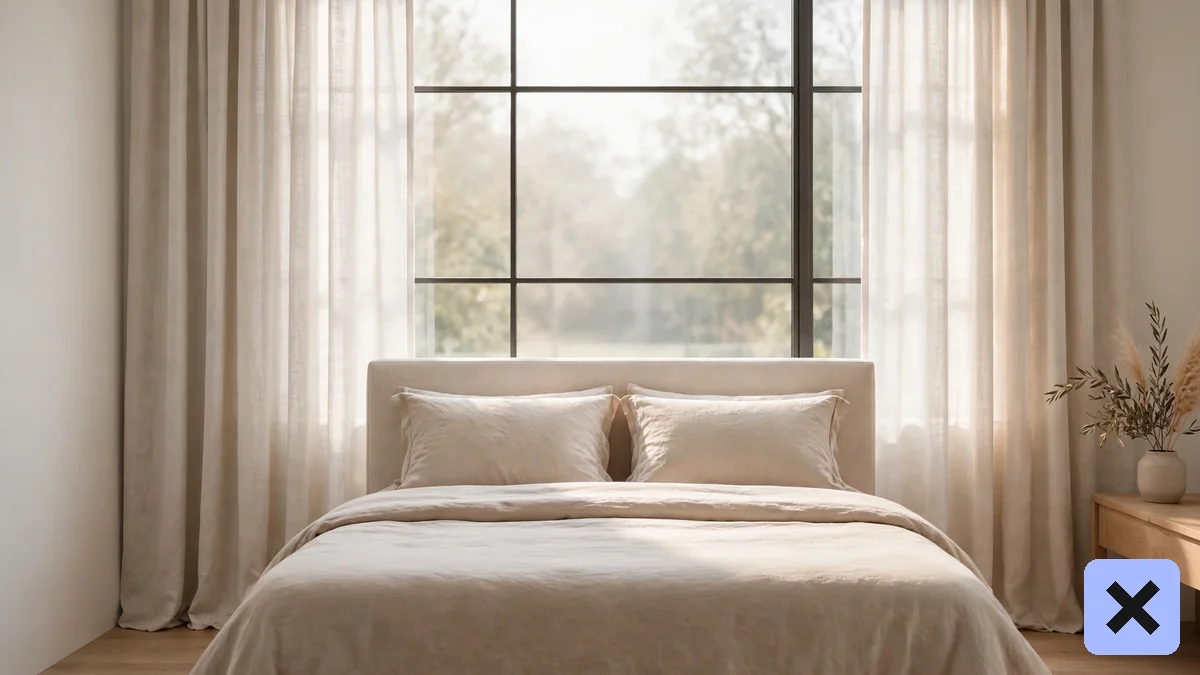
Bedrooms ask more of curtains than any other room in the house. A living room curtain mostly needs to look good; a bedroom curtain must also protect your sleep. Light leaking around the edges of a thin curtain can wake you before your alarm, and a room that never gets properly dark makes deep sleep harder to reach.
Good bedroom curtains also shape how the room feels during the day. Heavy, well-lined panels soften sound, so traffic and neighbours fade into the background, and they insulate the window, often the coldest surface in the room.
The Best Curtains for Bedrooms in 2026
We judged fabric quality, light blocking, insulation, ease of care, and how each style looks once hung.
Best Overall: Linen-Look Blackout Curtains
Linen-look blackout curtains are the best all-round choice for most bedrooms in 2026. They combine the relaxed texture of linen with a built-in blackout lining, giving the soft look of real linen without light leaking through. They hang beautifully and suit almost any bedroom style, from modern to country.
They block around 95 to 99 percent of light, enough for most sleepers, while feeling light and breathable rather than heavy and stiff. The fabric hides dust and creases well, and most versions are machine washable. Choose a sewn-in lining over a coating that can crack after washing, and a warm white, soft grey, or oatmeal shade for a calm palette.
Best for Sleep: Triple-Weave Blackout Curtains
If you are a light sleeper, work night shifts, or live on a bright street, triple-weave blackout curtains are the strongest option available. Three layers of tightly woven fabric are bonded together, blocking up to 99 percent of outside light. Streetlights, car headlights, and early sunrises simply do not get through.
Triple-weave curtains also help with noise and temperature, as the dense fabric dampens outside sound and insulates the window. Because the fabric is heavy, choose a sturdy rod and hang the panels wide enough to overlap the frame, which stops light sneaking in at the edges.
Best for Light and Air: Sheer Voile Curtains
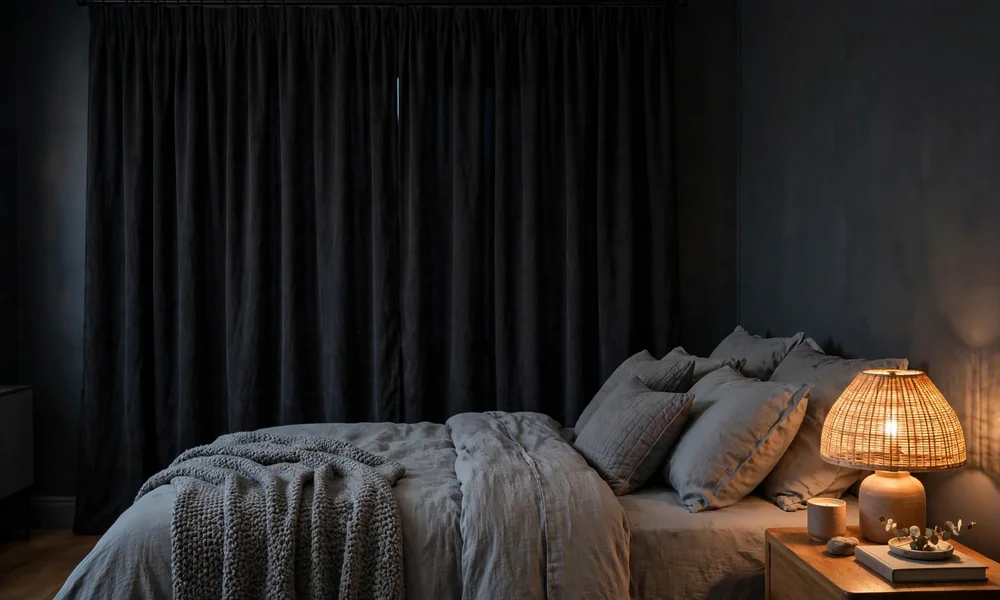
Sheer voile curtains are the best choice if your bedroom gets good natural light and you want to keep it. The fine, translucent fabric softens harsh sunlight, adds daytime privacy, and keeps the room bright and airy. They suit bedrooms facing a garden or quiet street, where total darkness matters less than soft, glowing light.
Voile works on its own in summer and layered behind heavier curtains in winter: sheer panels stay closed by day for privacy and soft light, then blackout panels close at night. Choose white or a pale warm tone, keep panels at least twice the window width, and handle the fine weave gently, as it can snag.

Best for Warmth: Velvet Thermal Curtains
Velvet thermal curtains are the best option for cold bedrooms and draughty windows. The dense pile traps air and blocks draughts, while a thermal lining adds a further barrier against cold. Together they can make a bedroom feel several degrees warmer, a comfort on winter nights that can even help with heating bills.
Beyond warmth, velvet brings a luxury that suits a bedroom perfectly, catching light in soft waves and giving the room a cocooned, hotel-like feel. Deep shades such as forest green and navy look especially good. Velvet is heavy, so use a strong rod with centre support, and check the care label, as most velvet needs dry cleaning or a gentle cold wash.
Best Budget Pick: Polyester Room-Darkening Curtains
Polyester room-darkening curtains are the best budget choice for bedrooms in 2026. They cost far less than linen or velvet, block around 85 to 95 percent of light, and come in a huge range of colours and sizes. For a spare bedroom, a rented home, or a first set of curtains, they are hard to beat.
Modern polyester has a soft, matte finish that looks convincing once hung, and resists wrinkling, fading, and shrinking. Most are machine washable and dry quickly. Buy panels at least twice as wide as your window, hang them to the floor, and choose a simple eyelet header for neat, even folds.
Bedroom Curtains Compared
The table below compares the five options at a glance.
| Curtain Type | Light Blocking | Warmth | Care | Best For |
|---|---|---|---|---|
| Linen-look blackout | 95–99% | Good | Machine wash | Most bedrooms |
| Triple-weave blackout | Up to 99% | Very good | Machine wash | Light sleepers |
| Sheer voile | Low | Low | Gentle wash | Bright, airy rooms |
| Velvet thermal | 90–95% | Excellent | Dry clean | Cold bedrooms |
| Polyester room-darkening | 85–95% | Moderate | Machine wash | Budget bedrooms |
How to Choose the Right Curtains for Your Bedroom
Choosing bedroom curtains starts with your sleep, not your decor. If you wake at the first sign of light, blackout fabric should be your first filter. If you sleep soundly and your room faces north, prioritise fabric and style instead. A busy road calls for heavier fabric; a quiet room gives you more freedom.
Next, consider the room itself. A small bedroom benefits from light colours and lighter fabrics, which keep the space feeling open. A large bedroom can carry darker, heavier curtains that add warmth and drama. Before you settle on a style, it helps to weigh the practical differences, which is why many readers compare curtains vs blinds for bedrooms before they commit to either option.
Measure First, Then Buy
Measuring correctly is the single most important step, and it takes only a few minutes. Measure the window width, then add 10 to 15 centimetres on each side for the rod, because curtains should cover the frame, not just the glass. Then double that total, since gathered fabric needs at least twice the window width to look full. For length, measure from the top of your rod to where you want the curtains to end. Floor-length curtains, ending about one centimetre above the floor, look the most polished and make the room feel taller.
Hanging and Styling Tips
How you hang bedroom curtains matters as much as the fabric you choose. Mount the rod 10 to 15 centimetres above the window frame and extend it the same distance beyond each side. This makes the window look larger, lets in more light when the curtains are open, and stops the panels blocking the glass.
Use a rod that matches the weight of your curtains. Light voile needs only a slim rod, but velvet or triple-weave blackout panels need a sturdy rod with brackets spaced no more than 120 centimetres apart, plus a centre support for wide windows. Keep bedding and curtains in the same colour family for a calm feel, and remember that soft layers such as the best duvet covers for winter can make the whole bedroom feel warmer alongside new curtains.
Bedroom Curtain Care and Maintenance
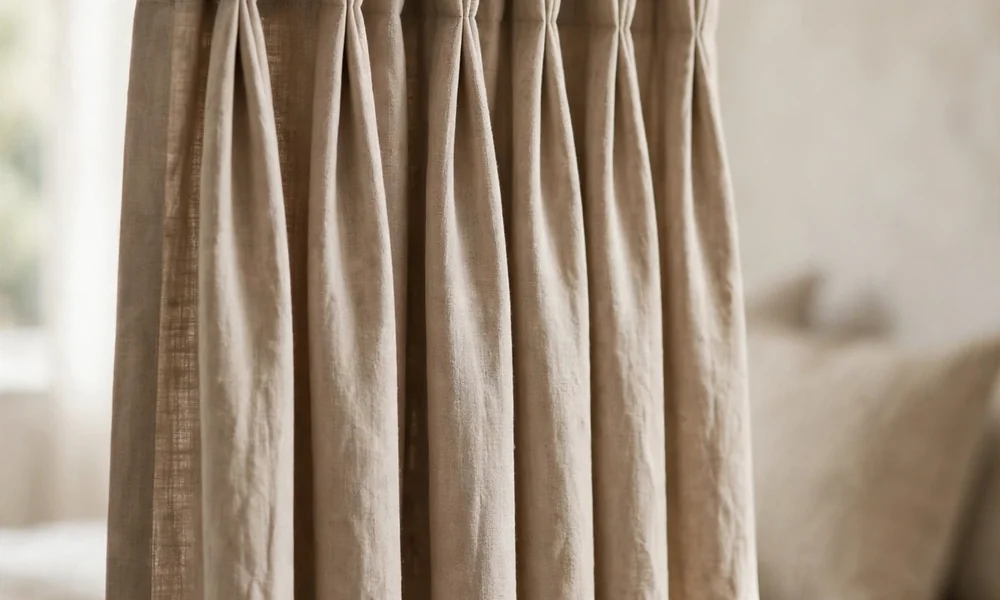
Bedroom curtains collect dust, so a little regular care keeps them looking fresh and helps with allergies. Shake or vacuum them lightly every couple of weeks with a brush attachment. Most machine-washable curtains need washing only every three to six months, unless the room is dusty or you have pets.
Always check the care label before washing. Wash curtains on a gentle cycle with mild detergent, and avoid overloading the machine, as cramped fabric creases badly. Hang curtains back on the rod while still slightly damp so the weight pulls out creases. Good curtains should last five to ten years with normal care.
Checklist: Before You Buy Bedroom Curtains
- Decide your priority: total darkness, warmth, light, or budget, and filter by that first.
- Measure the window width and add 10 to 15 centimetres on each side for the rod.
- Buy panels with a combined width at least twice the window width for proper fullness.
- Choose floor length, ending about one centimetre above the floor, for the most polished look.
- Check the care label and make sure the washing instructions suit your household.
- Order a fabric sample first if you are buying online, so you can check the colour and weight in your own light.
Frequently Asked Questions
What are the best curtains for bedrooms?
Linen-look blackout curtains are the best overall choice for most bedrooms, as they combine a soft, natural look with strong light blocking. Light sleepers should choose triple-weave blackout curtains, while bright rooms suit sheer voile, and cold rooms benefit from velvet thermal curtains.
Should bedroom curtains be blackout or sheer?
Blackout curtains block up to 99 percent of light and keep the room dark and quiet. Sheer curtains suit bedrooms where privacy and soft light matter more than darkness. Layering both gives you the benefits of each.
How long should bedroom curtains be?
Bedroom curtains should usually fall to the floor, ending about one centimetre above it. Floor-length curtains make the room look taller and more finished. Sill length works for small windows or windows above furniture.
How wide should bedroom curtains be?
The combined width of your panels should be at least twice the window width, and two and a half times is better for a full, gathered look. Add the widths together before you buy.
Do curtains help keep a bedroom warm?
Yes. Curtains add insulation over the window, usually the coldest part of the room. Velvet thermal and lined blackout curtains work best, especially when they cover the whole frame with no gaps at the sides.
How often should bedroom curtains be washed?
Most need washing every three to six months, depending on dust, pets, and allergies. Vacuum them lightly every couple of weeks, and follow the care label, as velvet and lined curtains need gentler treatment than polyester or cotton.
The Bottom Line
The best curtains for bedrooms in 2026 match how you sleep and how your room is used. For most bedrooms, linen-look blackout curtains strike the best balance of style, darkness, and easy care. Light sleepers should go for triple-weave blackout, cold rooms call for velvet thermal, and bright rooms shine with sheer voile. Measure carefully, buy wide enough for proper fullness, and hang the rod high and wide for a calmer, warmer, better-finished bedroom. Once the windows are sorted, consider the floor too, by weighing up carpet vs hardwood floors for bedrooms as the next step in your bedroom refresh.