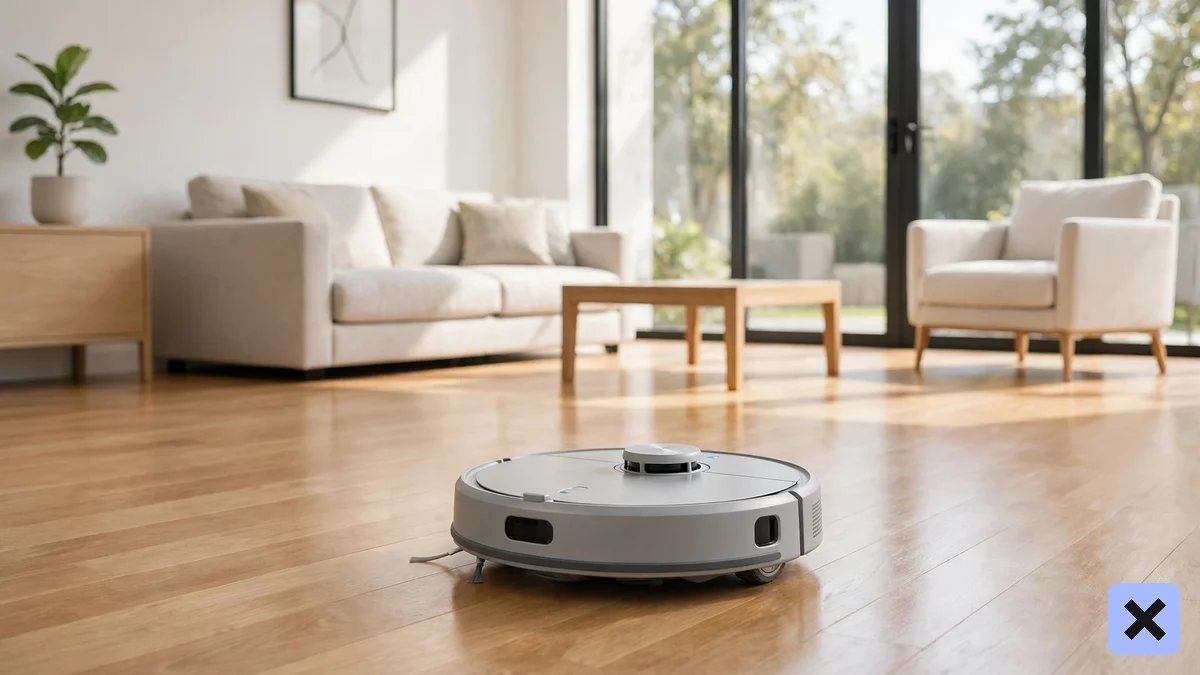
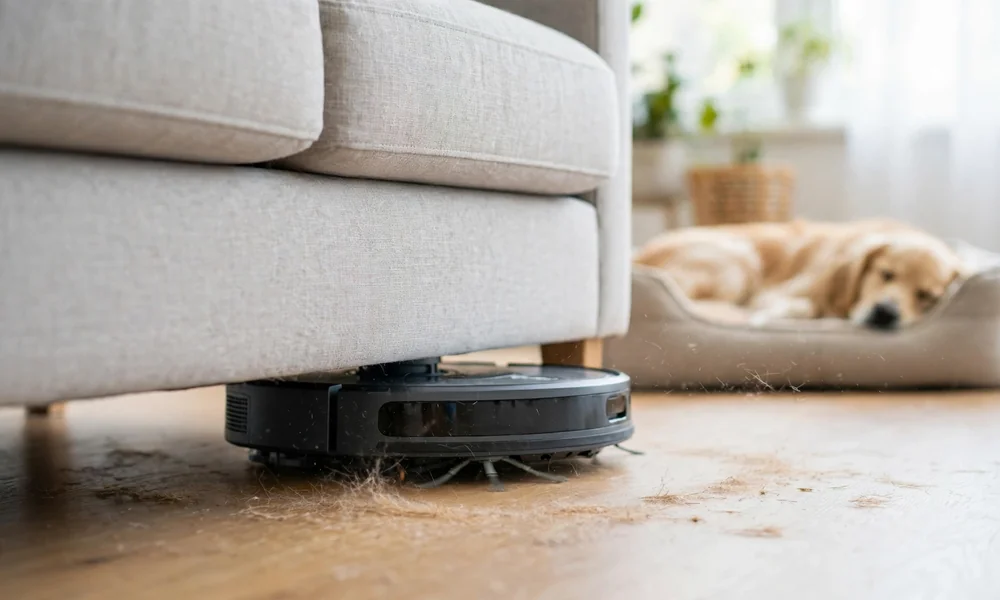
Pet owners know a truth no cleaning advert will ever show: the fur never really stops. The moment you finish vacuuming, a dog shakes by the door, a cat grooms itself on the sofa, and a fresh drift of hair settles across the floor you just cleaned. The Best Robot Vacuums for Pet Owners 2026 are built for exactly this reality, and they are very different from generic robot vacuums that look fine in a showroom but choke on the first week of real pet hair.
A good pet robot vacuum does more than move dirt around. It lifts embedded hair from carpet fibres, reaches the dust that gathers under beds and sofas, avoids the water bowl and the chew toy, and keeps running day after day without its brushroll turning into a tangled mess. It should also be quiet enough that a nervous dog or cat does not hide every time it starts a cleaning run.
This guide explains what matters when you buy a robot vacuum for a pet home, compares the main types side by side, and ends with a simple buying checklist. The right machine turns pet hair from a daily chore into a background task.
Key takeaways
- Strong suction with a carpet boost matters most, because pet hair embeds itself deep in carpet fibres.
- Tangle-free brushrolls and self-emptying docks save the most time, turning daily emptying into a monthly job.
- Sealed HEPA-style filtration traps dander and fine allergens instead of blowing them back into the room.
- Good obstacle avoidance protects the vacuum and your pets, steering around bowls, toys, beds, and accidents.
- Daily scheduled cleaning beats one big weekly clean, because fresh pet hair is easier to lift.
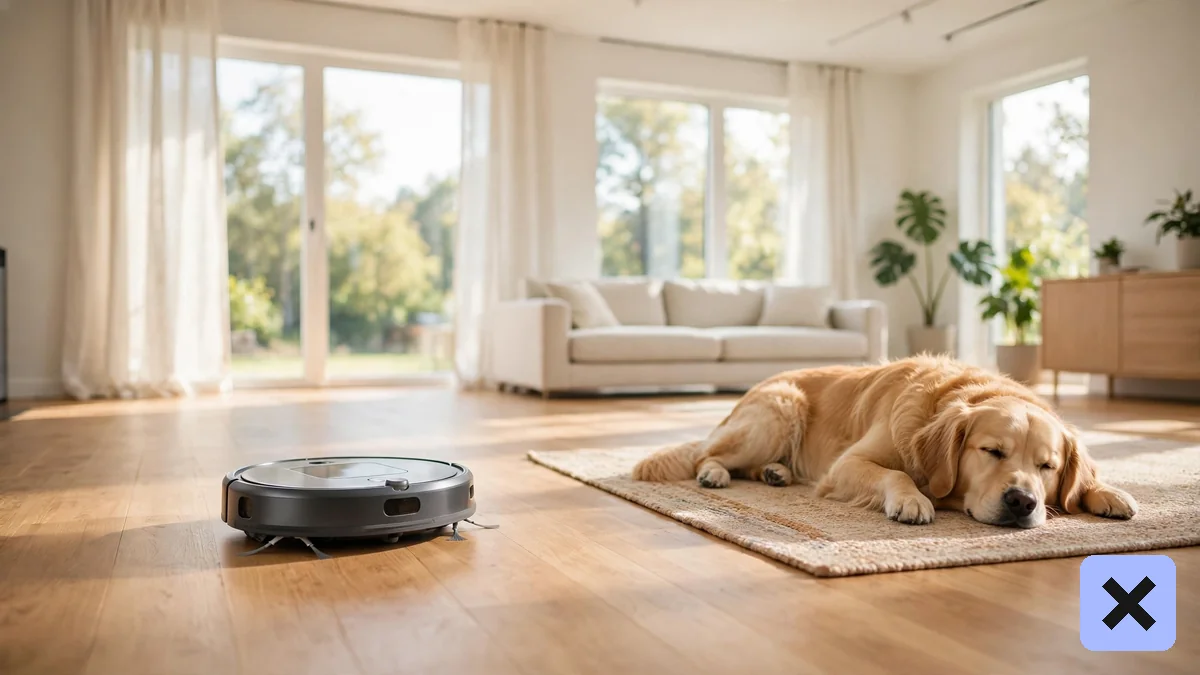
Why Pet Homes Need a Different Robot Vacuum
Pet hair is not ordinary dust
Pet hair is light and clingy. It wraps around brushrolls, mats into carpet pile, and drifts into corners where ordinary suction cannot reach it. A single medium-sized dog can shed enough hair in a week to fill a standard dustbin several times over, so a small bin without a self-emptying dock means the vacuum cleans less effectively with every pass.
The daily shedding cycle
Dogs and cats shed every day, and they shed more during seasonal coat changes in spring and autumn, when the volume can double almost overnight. A vacuum that runs once a week will always be playing catch-up, while a daily run keeps the load manageable and stops hair working its way deep into carpets and rugs.
What to Look for in a Robot Vacuum for Pet Owners
Six things decide whether a machine thrives in a pet home or ends up in a cupboard: suction, brush design, filtration, bin capacity, navigation, and noise level.
Suction power and carpet boost
Suction is measured in pascals, and for pet homes the numbers mean something. Budget models often deliver around 2,000 to 3,000 pascals, which is fine for hard floors but struggles with hair pressed into carpet. Mid-range and premium models in 2026 commonly offer 5,000 pascals or more, and that extra power makes a visible difference on rugs and medium-pile carpet. Look for automatic carpet boost, which raises suction on carpet and drops it back down on hard floors to save battery. That is the standard the best robot vacuums built for pet hair are measured against, in tests on real pet hair rather than rice and sand.
Tangle-free brushrolls
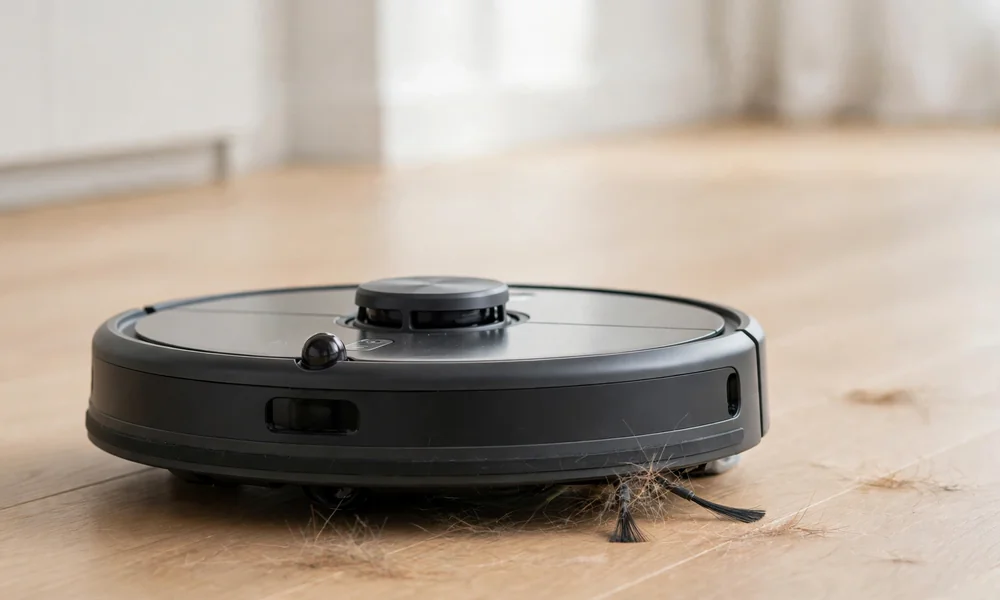
The brushroll is where pet hair goes to cause trouble. Traditional bristle brushes grab hair and wind it tighter with every rotation, until you are cutting it free with scissors once a week. Rubber or silicone finned brushrolls are far better in a pet home, because hair slides off them instead of wrapping around, and what does wrap is easy to pull away. Some premium models add anti-tangle systems that comb the brush as it spins.
Filtration and allergies
Pet dander is tiny, and it is the main reason pet homes can feel stuffy even when the floors look clean. A vacuum with a sealed filtration system and a HEPA-style filter traps those fine particles instead of exhausting them back into the air. This matters most if anyone in the home sneezes or wakes up congested. Check the filter every couple of weeks, because a clogged filter quietly halves suction.
Self-emptying docks
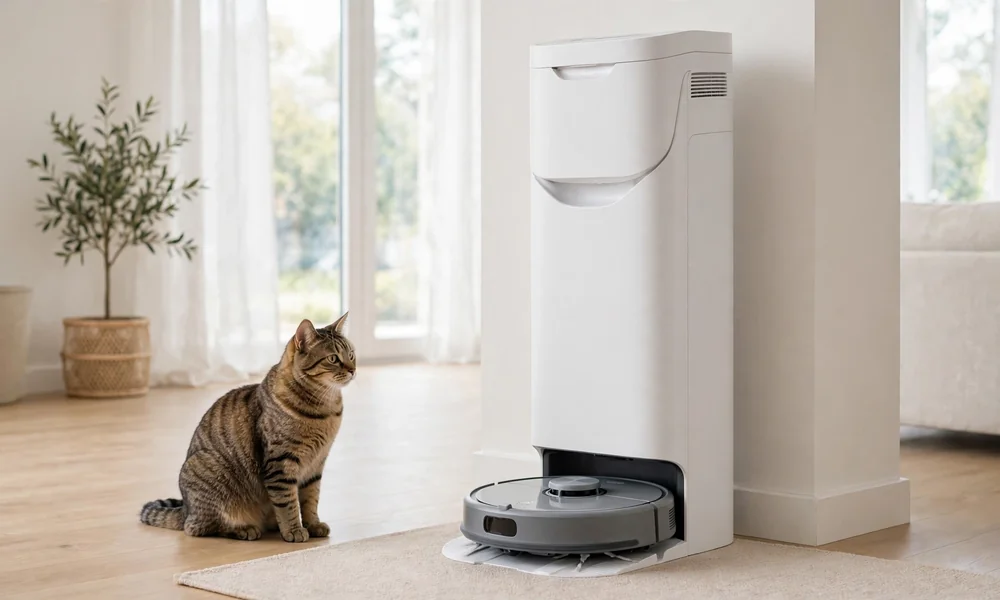
A self-emptying dock is a tall charging station with a dust bag or chamber inside. After each run, the vacuum docks and the station sucks the contents of its small onboard bin into the larger container, which holds several weeks of pet hair. For owners of heavy shedders, this is the feature that turns a robot vacuum from a gadget into a genuine household appliance.
Obstacle avoidance and pet safety
A pet home is an obstacle course. Water bowls, chew toys, charging cables, pet beds, and the occasional accident are all part of daily life, and a vacuum with only basic bump navigation will push through them all. Modern obstacle avoidance uses cameras or laser sensors to recognise objects and steer around them, and the better systems can spot a pet toy or a bowl from a distance and give it a wide berth. Several leading models also add dedicated pet-waste recognition, worth paying for if you have a puppy or an elderly pet, though a quick scan of the floor before a run is still good practice.
The Best Robot Vacuums for Pet Owners 2026 at a Glance
The table below compares the main types of pet-ready robot vacuum, so you can see at a glance which category fits your home. Prices vary through the year, so use this as a guide to features and trade-offs rather than a fixed price list.
| Type | Best for | Suction | Self-emptying | Pet waste avoidance |
|---|---|---|---|---|
| Budget pet vacuum | Hard floors, one short-haired pet | Moderate | Rarely | Basic |
| Mid-range all-rounder | Mixed floors, one or two pets | Strong | Often available | Good |
| Premium flagship | Heavy shedders, multi-pet homes | Very strong | Yes, bagged or bagless | Advanced |
| Vacuum and mop combo | Muddy paws, hard floors | Strong | Often, with mop washing | Good |
| Compact slim model | Low furniture, flats, small homes | Moderate to strong | Sometimes | Basic to good |
As you move up the range, you gain suction, smarter navigation, and hands-free emptying. The detailed best robot vacuums of 2026 cover the wider market if you want to compare pet-specific models against the best general-purpose machines.
Best for Heavy Shedders
If you live with a German shepherd, a husky, or a long-haired cat, you know heavy shedding means tumbleweeds of fur in every corner. For these homes the priority list is short: maximum suction, a tangle-free rubber brushroll, a self-emptying dock with a large capacity, and a filter you can maintain easily. Run the vacuum daily where your pets spend the most time.
Hardwood, Carpet, and Mixed Floors
Hard floors are the easiest case: hair sits on the surface and even a modest machine does a good job. Carpet is the real test, because hair works its way between fibres and only strong suction combined with a brush that agitates the pile can pull it out. This is why carpet boost matters.
Mopping After the Mess
Pet mess is rarely dry. Muddy paw prints and spilled water all need more than suction. Vacuum and mop combinations handle this by dragging a damp pad behind the vacuum, and the better models in 2026 lift the pad when they detect carpet and wash the pad at the dock. For homes with hard floors and muddy paws, a combo machine can replace a separate weekly mop entirely. If mopping matters to you, the robot mops designed for pet hair go deeper into pads, water tanks, and dock washing.
Keeping the Noise Down
Many pets are frightened of vacuums, and a robot that appears without warning can be stressful for a nervous animal. The good news is that most pets adjust within a week or two if the introduction is gentle. Start with short runs in one room while you are present, let the pet watch from a safe distance, and reward calm behaviour. Never chase a pet with the vacuum, and never lock a frightened animal in the room with it.
Maintenance That Keeps It Working
A robot vacuum in a pet home needs regular care to keep working well. Empty the bin or check the dock bag weekly, clean the brushroll of wrapped hair, wipe the sensors and camera lens so navigation stays accurate, and wash or replace the filter on schedule. Check the wheels for trapped hair, and rinse the mop pad after every mopping run.
Checklist Before You Buy
Use this checklist when you compare models, and do not buy until you can tick every box that matters for your home.
- Suction of at least 5,000 pascals with automatic carpet boost, if you have rugs or carpet.
- Tangle-free rubber or silicone brushroll, so you are not cutting wrapped hair free every week.
- Self-emptying dock with a bag or chamber large enough for two to four weeks of pet hair.
- Sealed HEPA-style filtration, especially if anyone in the home has allergies or asthma.
- Obstacle avoidance that recognises bowls, toys, cables, and pet waste, not just walls.
- Mapping with room selection, no-go zones, and daily scheduling, so the vacuum cleans the pet zones most.
Frequently Asked Questions
Are robot vacuums good for pet hair?
Yes, the right ones are excellent. Strong suction, a tangle-free brushroll, and a daily schedule remove hair before it embeds itself in carpet and fabric, which beats a weekly manual vacuum. Choose a model designed for pet homes and run it daily where your pets spend the most time.
Do robot vacuums work on pet hair on carpet?
They do, provided the suction is strong enough and the brush agitates the carpet pile. Look for at least 5,000 pascals and automatic carpet boost, and expect two passes on thick rugs. Very deep pile is the hardest surface for any robot vacuum, and even the best models leave some hair behind there.
How often should a robot vacuum run in a pet home?
Daily is ideal, even if each run is short. Fresh hair is far easier to lift than hair walked into carpet for a week, so run a full clean daily in the main living areas and a deeper clean of bedrooms two or three times a week.
Will a robot vacuum scare my dog or cat?
Most pets adjust within a week or two if the introduction is gradual. Start with short runs while you are present, let the pet observe from a safe distance, and choose quieter settings at first. Very nervous animals may always prefer the vacuum to run while they are in another room, and that is fine.
Is a self-emptying dock worth it for pet owners?
For most pet owners, yes. A standard bin fills with pet hair in a single run, so without a dock you are emptying it daily. A self-emptying dock holds several weeks of hair and turns emptying into a monthly job, the single biggest time saving a pet vacuum offers.
Can a robot vacuum handle pet accidents?
Modern premium models include pet-waste recognition and steer around accidents, but no system is perfect. A quick scan of the floor before a scheduled run is still the best protection, especially with puppies or elderly pets. If an accident does happen, clean the vacuum thoroughly before its next run.
The Bottom Line
The best robot vacuum for pet owners is the one that matches your home: strong suction and a tangle-free brush for the hair, a self-emptying dock for the volume, sealed filtration for the dander, and obstacle avoidance smart enough to respect bowls, toys, and pets. Buy the best suction and brush design your budget allows, run it daily, and keep it maintained. Your floors stay cleaner, the air feels fresher, and you get back the time you used to spend chasing fur with a manual vacuum.