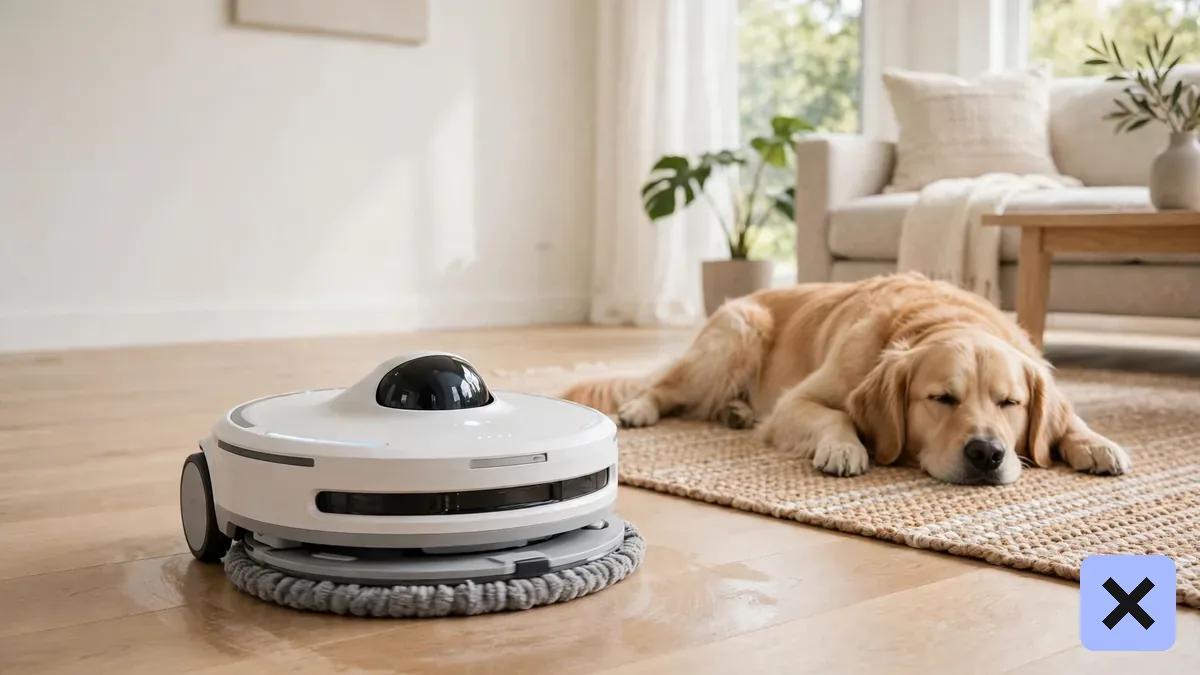
Pet hair never stops. A golden retriever can shed enough in one afternoon to cover a hallway, and a long-haired cat leaves fine strands on every hard floor. The best robot mops for pet hair in 2026 vacuum up loose hair before they mop, so the pad never pushes a wet mat of fur across your floor.
What separates a good robot mop from a great one is a handful of details: strong suction that picks up hair before the pad touches it, a tangle-free brush, and a mop that lifts clear of carpet. Add a dock that empties the dustbin and washes the pads, and daily cleaning becomes something you barely think about.
This guide compares the robot mops that handle pet hair best right now, explains which features matter most with shedding dogs and cats, and shows you how to set one up so your floors stay clean.
Key Takeaways
- The best robot mops for pet hair vacuum first and mop second, so hair lands in the dustbin instead of being smeared by a wet pad.
- Look for suction of at least 8,000 Pa, a rubber tangle-free brush, and a mop that lifts 10 mm over carpet.
- A self-emptying dock with mop washing is worth the extra cost in a pet home, because hair builds up fast.
- Rotating mop pads clean dried paw prints better than a flat pad, which is quieter and uses less water.
- Run the robot daily where your pet spends the most time, and rinse the pads twice a week.
Why Pet Hair Is the Hardest Test for a Robot Mop
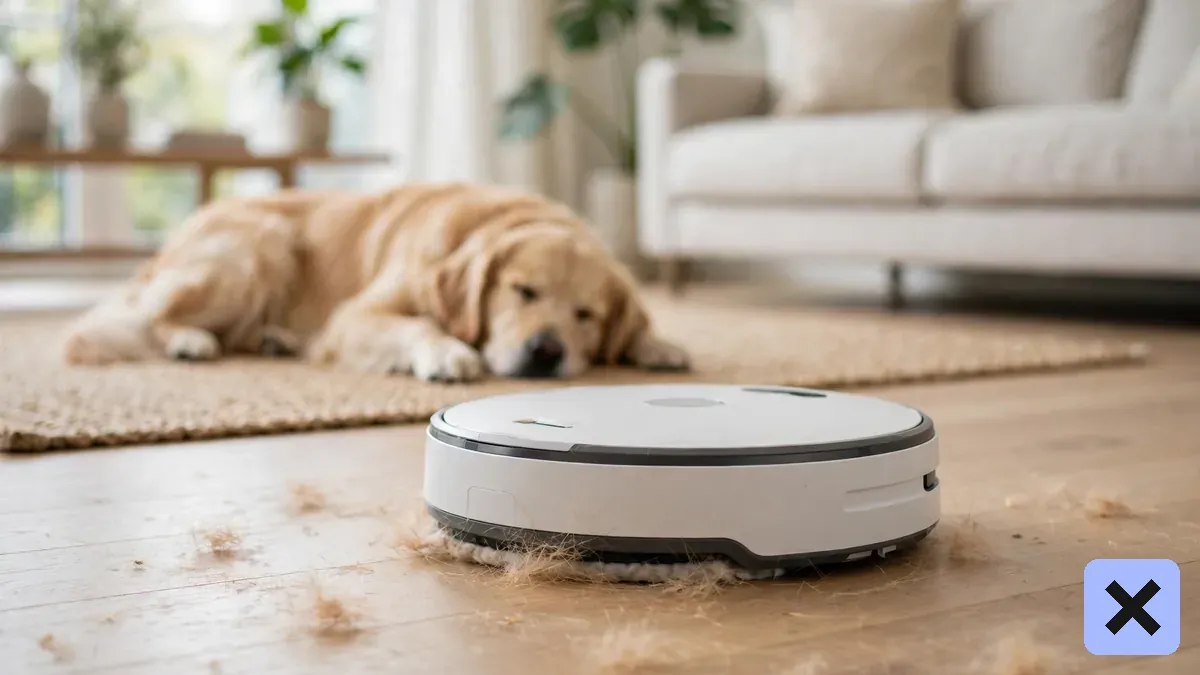
A robot mop faces a harder job in a pet home than anywhere else. Hair is light, it drifts into corners, it clings to baseboards with static, and it wraps itself around anything that spins. A machine that copes with dust on a bare floor can fail badly once a shedding dog arrives.
Hair Wraps, Tangles, and Clogs
The first thing that goes wrong is the brush. Bristle brushes act like a spool for long hair: strands wind around the roller, tighten with every pass, and eventually stall the motor. The best robot mops for pet hair use a solid rubber roller or dual counter-rotating brushes that shed hair into the dustbin. Fine undercoat hair also packs into filters and narrow inlets, slowly strangling suction, so a large dustbin and washable filter help.
Pet Messes Are More Than Hair
Hair is only half the story. Pets bring muddy paw prints, spilled water bowls, food crumbs, and the occasional accident. A robot that only vacuums well leaves the paw prints behind, and one that only mops well smears hair into damp clumps. The winners do both jobs in one pass: the vacuum clears loose hair and grit, then the mop lifts sticky residue. Obstacle avoidance matters more here too, since a robot that cannot recognise a pet toy will drag it across the room.
The Best Robot Mops for Pet Hair in 2026
Every model below vacuums and mops in one run, lifts its pads over carpet, and resists hair tangles better than average. The table is the quick comparison.
| Model | Best For | Suction | Mopping | Dock |
|---|---|---|---|---|
| Roborock Qrevo CurvX | Best overall | 18,500 Pa | Spinning pads | Hot-water wash |
| Dreame X50 Ultra | Heavy shedders | 20,000 Pa | Spinning pads | Hot-water wash |
| Ecovacs Deebot T30S Combo | Best value | 11,000 Pa | Rotating pads | Hot-water wash |
| iRobot Roomba Combo j9+ | Mess avoidance | Rubber rollers | Retractable pad | 60-day capacity |
| Shark Matrix Plus 2-in-1 | Best budget | Strong suction | Sonic pad | Bagless base |
| Eufy X10 Pro Omni | Quiet cleaning | 8,000 Pa | Spinning pads | Pad washing |
Best Overall: Roborock Qrevo CurvX
The Qrevo CurvX is the most complete pet-hair package of the year. Its 18,500 Pa suction pulls hair from cracks and grout lines, the dual spinning pads scrub dried paw prints off hard floors, and the rubber brush stays tangle-free even with a long-haired dog. The dock washes and dries the pads itself.
Best for Heavy Shedders: Dreame X50 Ultra
Homes with two or three heavy shedders need raw power, and the Dreame X50 Ultra delivers it. Its 20,000 Pa suction is the strongest here, and the extendable side brush reaches corners where hair collects. The pads lift 10.5 mm over carpet, so rugs stay dry. The dock is large, so measure first.
Best Value: Ecovacs Deebot T30S Combo
The Deebot T30S Combo gives nearly flagship performance at a mid-range price. Suction of 11,000 Pa is plenty for daily pet hair, the rotating pads clean sticky messes well, and the dock washes and dries the pads. Its bonus is a detachable handheld vacuum in the dock, useful for stairs and sofas a robot cannot reach.
Best for Pet Mess Avoidance: iRobot Roomba Combo j9+
No brand has spent longer on pet accidents than iRobot, and the Combo j9+ shows it. Its camera-based avoidance steers around pet waste, cords, and small toys, and the mop pad retracts fully over carpet, so rugs stay dry. The dual rubber rollers resist hair wrap better than any rival. It costs more, but that confidence is worth it.
Best Budget Pick: Shark Matrix Plus 2-in-1
The Shark Matrix Plus proves you do not need to spend a fortune to beat pet hair. Its self-cleaning brushroll removes wrapped hair as it cleans, and the sonic mopping pad scrubs at high speed to lift dried-on paw prints. The bagless self-empty base keeps running costs down, and the package costs far less than the flagships above. For a smaller home with one pet, it is hard to beat.
Best for Quiet Daily Cleaning: Eufy X10 Pro Omni
If your pet is nervous around loud machines, the Eufy X10 Pro Omni is the gentlest option here. It runs noticeably quieter than most rivals, its 12 mm mop lift is the highest in this roundup, and the dock handles emptying, washing, and drying. Suction of 8,000 Pa suits light to moderate shedding, not a house full of huskies.
What to Look For in a Robot Mop for Pet Hair
Shopping is easier when you know which specifications matter and which are marketing noise. The four features below decide whether a robot will cope with your pet.
Suction Power and Brush Design
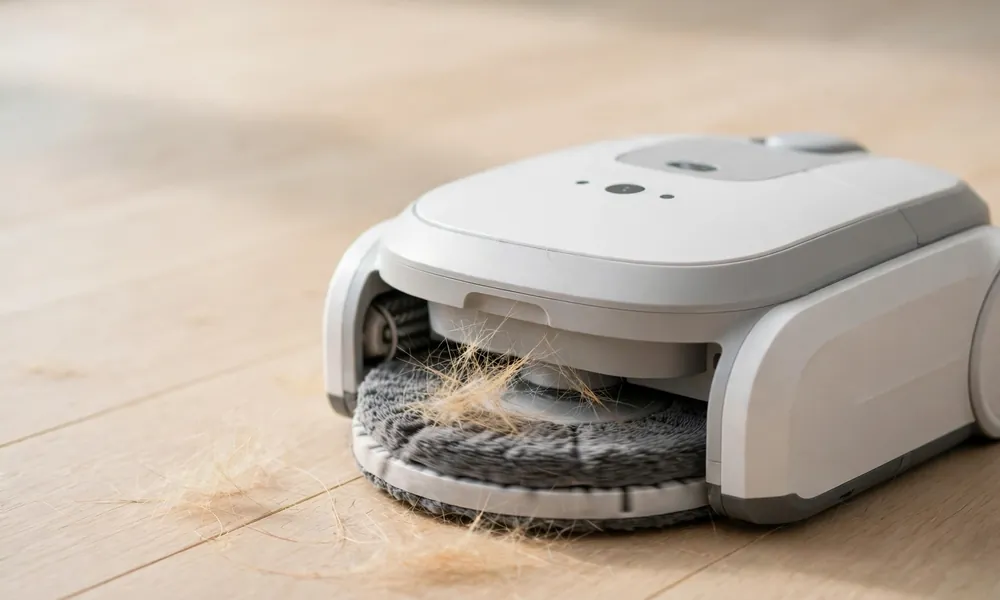
For pet hair on hard floors, look for at least 8,000 Pa; for carpets or heavy shedders, 10,000 Pa and above is better. But suction alone is not enough: a bristle brush will wrap with long hair no matter how strong the motor is, so favour a solid rubber roller or dual-roller design, and check the side brush is tangle-resistant too.
Mop Lift and Pad Type
A robot that cannot lift its pads will drag a damp, hairy pad across rugs. Look for a lift of at least 10 mm, or a pad that retracts fully. Rotating pads clean sticky paw prints better than a flat vibrating pad, while a flat pad is quieter and gentler on delicate floors. The pads should be washable and easy to remove.
Dock, Dustbin, and Water Tanks
In a pet home, the dock does the dirty work. A self-emptying dock pulls hair out of the robot after every run, and one that washes the pads means you are not rinsing a filthy mop by hand every evening. Look for a dustbin of at least 400 ml if you skip the self-empty base, and a clean-water tank large enough for your whole hard floor. Our roundup of the best robot mops of 2026 compares the leading models across all floor types. If your home is mostly carpet, see our guide to robot vacuums built for pet hair.
Navigation and Obstacle Avoidance
A good map is the difference between a robot that cleans every corner and one that bumps around the same room. LiDAR builds an accurate floor plan and cleans in tidy rows, while camera-based avoidance spots pet toys, bowls, and accidents. Set no-go zones around the litter tray and food bowls, and keep cables off the floor until you trust the map.
How to Get the Best Results in a Pet Home
Even the best robot mop needs a little help. Run it daily in the rooms your pet uses most, rather than once a week across the whole house: short daily runs keep hair from building into drifts that overwhelm the dustbin. Schedule the run for when your pet is settled or outside.

Clear the floor before the first run of the day: pick up chew toys, socks, and cables, and move the food and water bowls if they sit on a hard floor. A two-minute tidy is the difference between a robot that cleans the whole room and one that spends its battery nudging the same shoe. If your pet sheds heavily in one spot, set a zone clean there twice a day. Set a higher water flow in the kitchen and by the back door, and a lighter one on sealed wood. For homes where hardwood is the main floor, our guide to robot mops designed for hardwood floors explains which settings protect wood while still lifting pet hair.
Maintenance Checklist for Pet Owners
A robot mop in a pet home needs more upkeep than one in a pet-free house, but the routine is short.
- Empty the dustbin or check the self-empty bag every two or three runs.
- Rinse the mop pads at least twice a week, and machine-wash them monthly if allowed.
- Remove the main brush weekly, pull off wrapped hair, and rinse the brush.
- Wipe the cliff and obstacle sensors with a dry cloth.
- Empty and rinse the dirty-water tank after every run, and refill the clean-water tank.
- Check the filter monthly, tap out the dust, and replace it every few months.
Frequently Asked Questions
Do robot mops really work for pet hair?
Yes, if the model is designed for it. A good robot mop vacuums hair into the dustbin before the pad touches the floor, uses a tangle-free brush, and has enough suction for your floor type. Cheap mops with weak suction and bristle brushes smear it around.
Should I choose a robot mop or a robot vacuum if I have pets?
If your home is mostly hard floors, choose a vacuum-mop combination for hair pickup and paw-print cleaning in one run. If it is mostly carpet, a vacuum-only robot pulls more hair from the fibres.
How often should a robot mop run in a pet home?
Daily is ideal. Pet hair builds up fast, and a short daily run keeps the dustbin from overfilling and the pads from overloading. In shedding season, add a second zone clean where your pet sleeps.
Will a robot mop spread pet accidents around the house?
It can, which is why obstacle avoidance matters. Models with camera-based pet-waste avoidance recognise and steer around accidents. Even so, keep the robot away from the litter tray with a no-go zone.
Are self-emptying docks worth it for pet owners?
For most pet owners, yes. A dustbin fills with hair in one or two runs, and a self-emptying dock keeps suction strong without daily emptying. A dock that also washes and dries the pads saves time and stops them from smelling.
Can robot mops handle long pet hair without tangling?
The best ones can. Solid rubber rollers and dual counter-rotating brushes resist wrapping far better than bristle brushes, and several models include hair-removal combs. Check the brush weekly; it should take seconds, not a session with scissors.
The Bottom Line
The best robot mop for pet hair in 2026 is the Roborock Qrevo CurvX: it combines the strongest all-round cleaning with a dock that washes and dries its own pads, so daily pet hair never becomes a chore. Heavy shedders should look at the Dreame X50 Ultra, value hunters at the Deebot T30S Combo, and budget buyers at the Shark Matrix Plus. Pick strong suction, a tangle-free brush, and a mop that lifts clear of carpet, run it daily, and keep the pads and brush clean.