Hardwood floors look their best when they are clean, but they are also the easiest floors in the home to damage with too much water. That is why the best robot mops for hardwood floors 2026 matter: the right machine keeps oak, maple and walnut gleaming with a barely damp pad, while the wrong one leaves streaks and swollen boards behind.
This guide compares the strongest robot mops for sealed hardwood, from flagship self-washing models to slim budget machines. Every pick was judged on water control, soft pads, scrubbing pressure, and navigation that avoids rugs, cords and pet bowls.
No robot mop replaces a proper deep clean. What these machines do brilliantly is maintenance: a light, frequent mop that stops dust and grime building up, so hardwood stays beautiful between manual cleans. Choose adjustable water flow, mop-pad lifting, and a dock that washes its own pads, and your floors will thank you every day.
Key Takeaways
- The best robot mops for hardwood floors use precise, adjustable water control so wood is never soaked.
- Rotating or vibrating mop pads clean dried-on spills far better than simple drag pads.
- Mop-pad lifting and carpet detection keep rugs dry when the robot crosses from wood to carpet.
- A self-washing dock saves the most time, but it costs more and takes up space.
- Daily light mopping beats weekly heavy mopping for keeping hardwood floors looking new.
How We Picked the Best Robot Mops for Hardwood Floors
We started with the features that protect wood. Hardwood is a sealed surface, and its enemy is standing water, so water control came first. The best robot mops for hardwood floors let you choose low, medium or high water flow for each room, and they stop dispensing water when they pause. Models that dump a fixed amount of water on every pass were cut.
Next came cleaning power and navigation. A robot that only drags a damp cloth can dust a floor, but it will not shift a dried coffee ring or a muddy paw print. Rotating dual pads and vibrating pads scrub with real motion. The best machines also map the home with lidar, remember room layouts, and recognise shoes, cables and pet waste, so they finish the job instead of getting stuck.
The Best Robot Mops for Hardwood Floors in 2026
Each model below earned its place by protecting wood first and cleaning second. For a broader look, our roundup of the best robot mops of 2026 covers machines built mainly for tile and laminate.
| Pick | Best For | Mopping Style | Water Control | Dock |
|---|---|---|---|---|
| Best Overall | Most hardwood homes | Dual rotating pads | 3 levels, per room | Self-washing |
| Best for Pet Hair | Homes with pets | Rotating pads + vacuum | 3 levels, per room | Self-washing |
| Best Budget | Small flats | Vibrating pad | 2 levels | Charging only |
| Best Self-Cleaning Dock | Hands-free cleaning | Dual rotating pads | 4 levels, per room | Self-washing + drying |
| Best for Large Homes | Big open-plan floors | Rotating pads + vacuum | 3 levels, per room | Self-washing |
Best Overall: The Flagship Self-Washing Mop
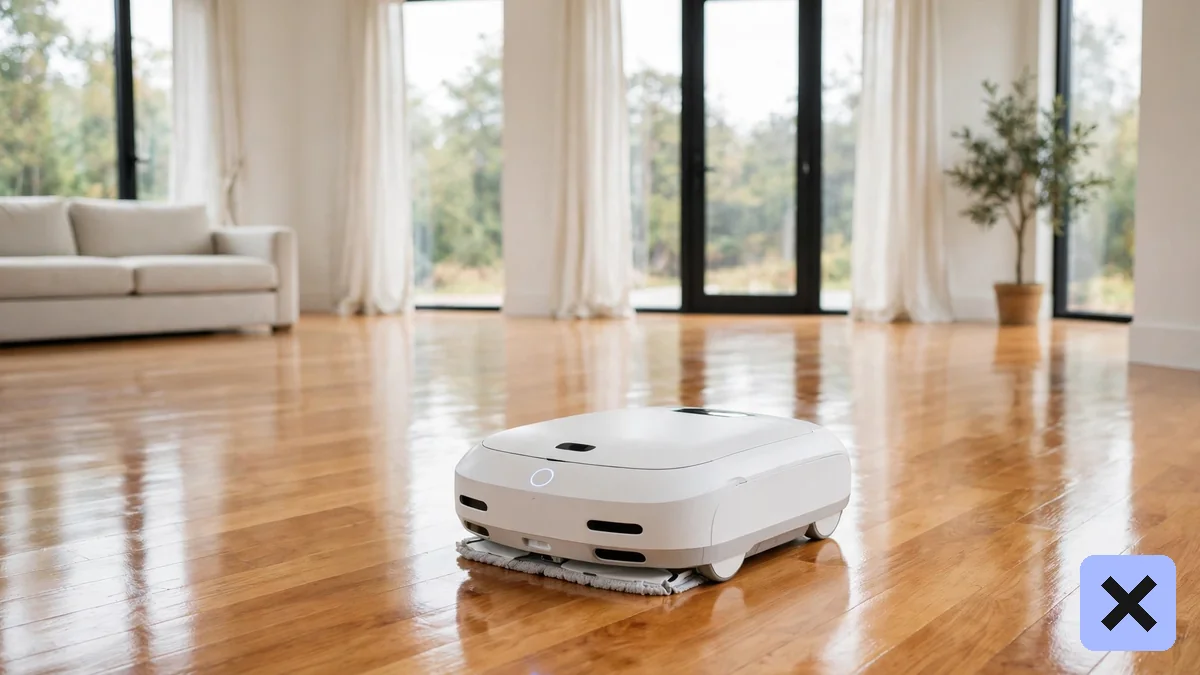
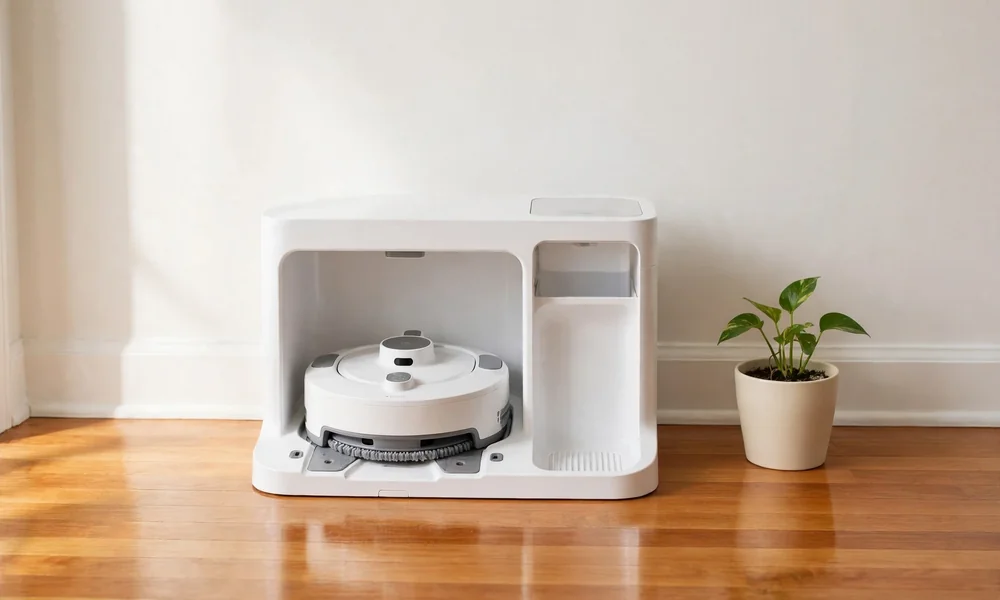
Our best overall pick pairs dual rotating mop pads with a dock that washes and dries them after every run. The pads spin fast enough to scrub dried juice and muddy footprints, and the robot presses them down firmly, so a single pass usually does what cheaper machines need two passes to achieve. Water flow is adjustable room by room.
What sets this pick apart is its pad-lifting system. When it detects carpet, the pads rise by more than a centimetre, so rugs stay dry while the robot vacuums them. The dock is the real time saver: it rinses the pads, dries them with warm air, and leaves them fresh for the next clean. For a busy household with hardwood throughout, it is the easiest to live with.
Best for Pet Hair: The Vacuum-and-Mop Hybrid
Pet owners need strong suction for hair and a mop that can handle muddy paws, and this hybrid does both in a single run. Its brush resists tangles, and the dustbin is larger than average. On hardwood, its rotating pads are gentle on the finish but firm on dirt, and the water control leaves floors dry within minutes.
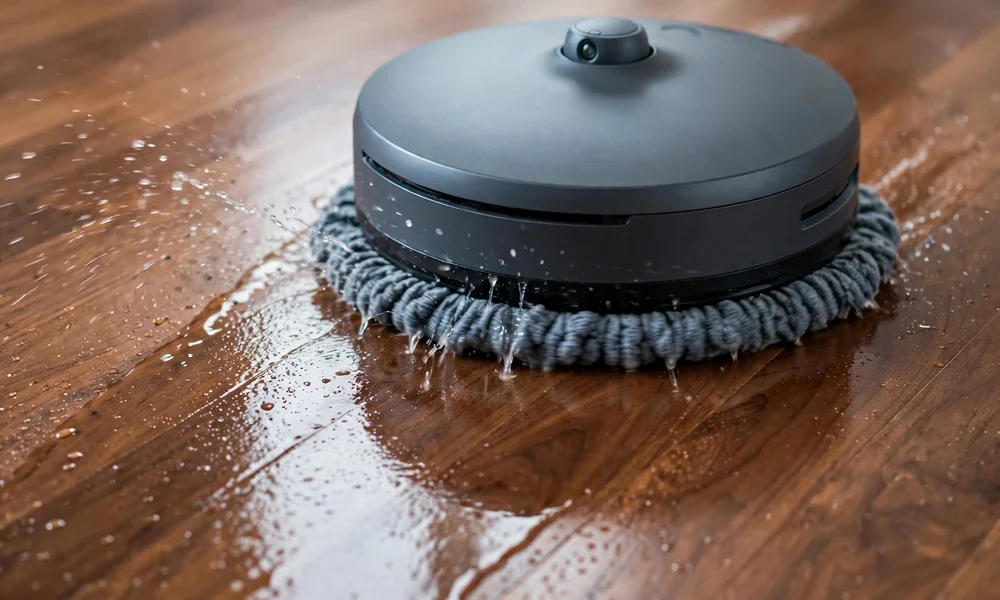
The app lets you set no-go zones around water bowls and litter areas, and you can schedule a quick mop after every walk, so mud never dries into the grain. If you share your home with animals and hardwood floors, this pick will make the biggest daily difference.
Best Budget: The Slim Vibrating-Pad Mop
You do not need flagship money to keep hardwood clean. This budget pick uses a vibrating mop pad that scrubs back and forth several hundred times a minute, and it is surprisingly effective on everyday dust, footprints and light spills. It is also one of the slimmest robots on this list, so it slides under low sofas and beds.
The trade-off is the dock. This is a charging-only dock, so you wash the reusable pads yourself and refill the small water tank by hand. Water flow has two settings, and the low setting is ideal for hardwood, leaving only a faint damp trail that dries in a couple of minutes. For a small home with mostly hardwood, this is the best value on the list.
Best Self-Cleaning Dock: The Hands-Free Workhorse
If your goal is to think about floor cleaning as rarely as possible, this is the machine to buy. Its dock does almost everything: it washes the mop pads, dries them with warm air, empties the dustbin, and refills the robot’s water tank.
The robot itself is a strong performer on hardwood. Dual rotating pads scrub with steady pressure, and four levels of water control let you fine-tune the dampness for different rooms and finishes. It recognises rugs and lifts its pads automatically, and it can mop the kitchen twice while giving the hallway a single light pass. The dock is large, so measure your space first.
Best for Large Homes: The Long-Running Mapper
Big homes punish robots with small batteries and small tanks. This pick is built for them, with a long runtime, a large water tank, and a mapping system that stores several floor plans. It cleans in efficient rows, recharges when needed, and resumes where it stopped.
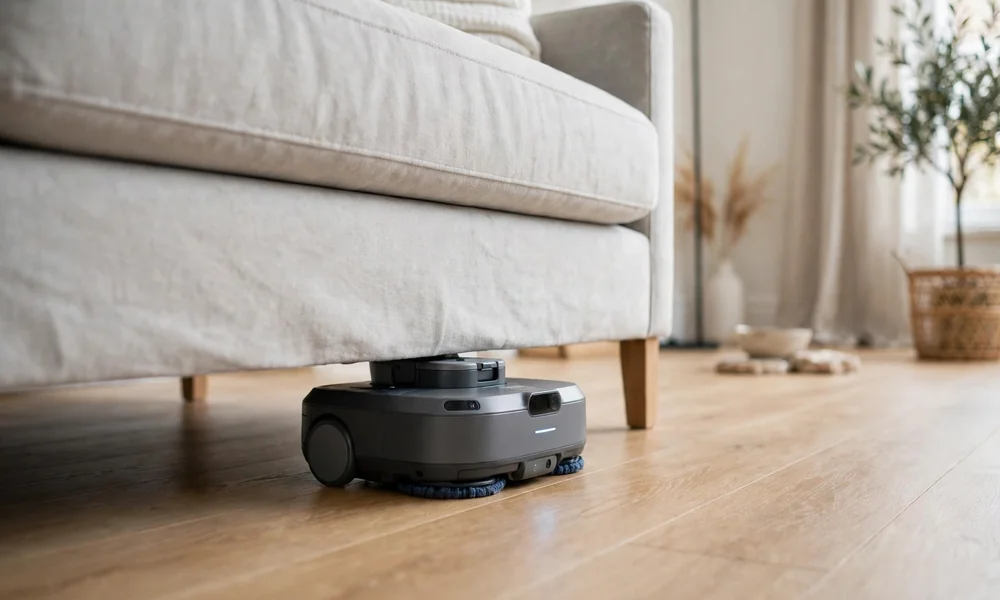
Its slim profile helps in large homes too, because it reaches under beds, sideboards and sofas without getting stuck. The rotating pads handle the daily dust that settles on wide open floors, and the vacuum function picks up the crumbs and hair that collect along skirting boards. For large hardwood homes, this is the pick that will actually finish the job.
What Makes a Robot Mop Safe for Hardwood Floors
Hardwood floors are finished with lacquer, oil or wax, and that finish is what you are cleaning. A robot mop is safe when it respects that finish: a small amount of water, a soft pad, and gentle pressure. The danger is standing water seeping into seams, which can swell boards and cloud the finish.
Water Control Matters Most
Look for a robot with at least two or three water-flow settings, and use the lowest setting that still gets the floor clean. On sealed hardwood, a barely damp pad is enough for daily cleaning. If you can see puddles or wet streaks that take more than a few minutes to dry, the flow is too high. Never add harsh cleaners to the tank unless the manufacturer allows it.
Pad Material and Pressure
Microfibre pads are the standard for hardwood because they lift dust and dirt without scratching. Replace or wash pads regularly, because a pad full of grit can drag sand across the finish like sandpaper. Pressure matters too: a pad that presses down firmly removes dried spills without needing extra water, which is exactly what wood needs.
Robot Mop vs Robot Vacuum: Which Do Hardwood Floors Need?
Hardwood floors show everything: dust, hair, crumbs and footprints are all visible on a shiny surface. A robot vacuum is excellent at removing loose debris, and on hardwood it picks up far more than it would on carpet. But vacuuming alone leaves a fine film of dust, which is why a mop makes such a visible difference.
If you can only buy one machine, choose based on your home. A home with pets or children generates enough loose dirt that a hybrid is the smarter single purchase, because it handles both jobs in one pass. A home that is already vacuumed regularly will benefit more from a dedicated mopping robot. Our guide to the best robot vacuums will help if the vacuuming side needs more power first. Whatever you choose, vacuum before you mop, because mopping over grit can dull the finish.
How to Get the Best Results on Hardwood
Start with a clean floor. Before the first run, vacuum or sweep the hardwood properly and wash the mop pads, so the robot begins with a clean slate. Then let the robot map the home, so you can set room-by-room water levels, no-go zones, and schedules.
Schedule short, frequent cleans rather than one long weekly session. Hardwood stays in the best condition when dust and spills are dealt with daily, and a fifteen-minute mop after breakfast will do more for your floors than an hour-long deep clean once a week. The comparison of carpet vs hardwood floors for bedrooms is a useful reminder that hardwood needs different care in different rooms. Finally, look after the robot: wash pads every few runs and keep sensors and wheels free of hair and dust.
Buying Checklist: Before You Order
- Measure the dock space: self-washing docks need a clear spot against a wall.
- Check pad lifting: the robot must lift its pads or avoid rugs so carpets stay dry.
- Confirm water control: look for at least two flow levels, ideally adjustable per room.
- Measure furniture clearance: a slim robot cleans under low sofas and beds.
- Count your floors: multi-floor homes need a robot that stores several maps.
- Check pad costs: reusable washable pads are cheaper over time than disposable ones.
Frequently Asked Questions
Are robot mops safe for hardwood floors?
Yes, when they are used correctly. Choose a model with adjustable water flow and only mop sealed hardwood. Never let water pool on the floor.
Will a robot mop damage the finish on my wood floors?
A robot mop with clean microfibre pads will not damage a properly sealed finish. Damage usually comes from dirty pads carrying grit, or from too much water. Wash pads regularly.
Can a robot mop clean dried-on spills on hardwood?
Yes, if it has rotating or vibrating pads. These scrub with real motion and can lift dried coffee, juice and muddy footprints. Simple drag-pad models suit light daily dusting better.
Do I still need to vacuum if I have a robot mop?
Yes. Mopping works best on a floor that is already free of loose dirt. Vacuum-mop hybrids handle both jobs in one run, but a dedicated mop should always follow a vacuum, not replace it.
How often should a robot mop clean hardwood floors?
Daily light mopping is ideal for busy households, and every other day is enough for quieter homes. Short, frequent cleans are gentler on the wood than one long, wet weekly session.
Are self-washing docks worth the extra cost?
For most hardwood homes, yes. A self-washing dock keeps pads clean for every run, which protects the floor finish and saves you from washing pads by hand. The dock costs more and takes up more space.
The Bottom Line
The best robot mops for hardwood floors in 2026 share the same priorities: gentle water control, soft pads, real scrubbing motion, and navigation that keeps rugs dry. Our best overall pick is the flagship self-washing mop. If you have pets, pick the hybrid; if your budget is tight, the slim vibrating-pad model will still keep your floors looking wonderful. Run it often, keep its pads clean, and your hardwood will stay gleaming for years.