The best electric motorcycles for commuting in 2026 are no longer a compromise. The leading models now cover a working week of city riding on a single charge, recharge overnight from a standard home socket, and cost far less to run than a petrol bike.
Commuting is where electric motorcycles make the most sense. Most daily rides are short, stop-start journeys under 30 miles, which suits an electric motor perfectly: instant torque, no clutch work, no gears to shuffle, and almost no energy wasted while idling. The result is a calmer, cheaper ride through the city.
This guide picks the best electric motorcycles for commuting in 2026 on what actually matters to daily riders: honest city range, charging speed, running costs, comfort and practicality. Every pick is judged as a commuter first, because the bike that wins on a weekend ride is not always the one you want at 7am on a wet Tuesday.
Key Takeaways
- 75 to 130 miles of real city range, so most riders charge two or three times a week.
- Home charging saves the most money: a full charge costs a fraction of a tank of petrol.
- Light, upright models with a low seat are easiest in stop-start traffic.
- Look for a removable battery or a standard home charger if you cannot install a wall box.
- Budget for gear and insurance too, not just the bike.

What Makes an Electric Motorcycle Good for Commuting
A good commuter is judged differently from a weekend toy. Peak power matters far less than range you can trust, a comfortable riding position, and charging that fits around your life. The best commuter bikes are the ones you stop thinking about.
Weight is the first thing to check. A bike under 200 kg is much easier to push around a car park, filter through traffic and hold upright at a junction. Upright bars, a low seat and a narrow waist all help, and flat-footing the bike builds confidence.
Range That Matches Your Round Trip
Range is the number every buyer worries about, and the one most often misunderstood. Manufacturers quote city, highway and combined figures, and the city number is the one that matters for commuting. Electric motorcycles are most efficient at city speeds, where regenerative braking recovers energy.
The practical rule: your bike should cover your round trip twice over without charging, giving you a buffer for cold weather, detours and a forgotten charge. If your round trip is 30 miles, look for at least 60 miles of city range. If it is 50 miles, aim for 100.
Charging That Fits Your Routine
Charging is the easier half of the range question. Most electric motorcycles charge from a standard home socket overnight, so you wake up to a full battery every morning. A full charge typically takes four to eight hours on a standard socket, less on a faster home charger.
Workplace charging changes the maths further. If you can plug in at the office, even a modest top-up effectively doubles your usable range, and some employers provide free or subsidised charging. Before you buy, check your home and workplace charging options.
The Best Electric Motorcycles for Commuting in 2026
The bikes below are the strongest commuter choices for 2026, covering every budget and daily ride. Each is judged on city range, charging, comfort, running costs and practicality. Prices vary, so confirm the latest price with a dealer.
Best Overall Commuter: Zero S
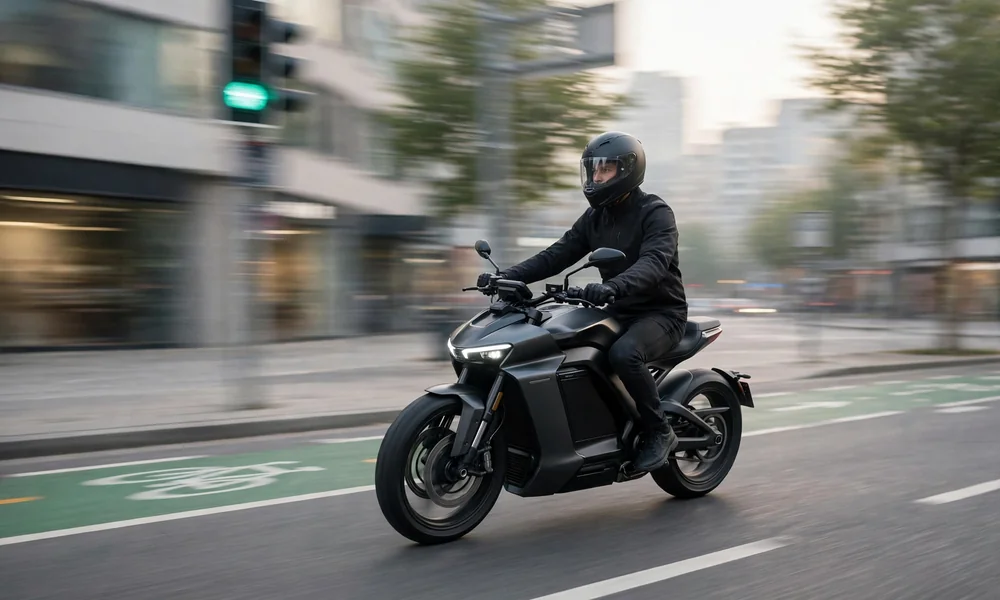
The Zero S remains the benchmark for electric commuting. Light, narrow and easy to ride, with a relaxed upright position that suits traffic perfectly, it offers over 100 miles of city range on the larger battery and charges from a standard home socket in a few hours. With no clutch and no gears, the daily crawl becomes genuinely relaxing, and smooth instant torque makes gaps in traffic easy to take. Storage is the only weak point, so add a top box.
Best Budget Commuter: Ryvid Anthem
The Ryvid Anthem is the best value electric commuter of 2026. Its city range is around 75 miles, covering most commutes with room to spare, and its lightweight frame makes it one of the easiest bikes here in heavy traffic. The adjustable seat height suits shorter riders, and the removable battery can be carried indoors to charge anywhere with a socket, a huge advantage without a garage. The trade-off is modest motorway performance.
Best Premium Commuter: LiveWire S2 Del Mar
The LiveWire S2 Del Mar is the premium pick for commuters who want a bike that feels special every day. Beautifully built, with a flat-track inspired design, it offers around 110 miles of city range, enough for a working week of short rides. The motor is punchy and refined, and the handling makes even a dull commute engaging. It earns its price in the details: a crisp touchscreen, excellent brakes and quality suspension.
Best Lightweight City Commuter: Can-Am Pulse
The Can-Am Pulse is built specifically for city riding, and it shows. Compact, light and very easy to handle, with a low seat and a design that shrugs off potholes and tight parking spaces, it offers around 100 miles of city range and charges overnight from a standard socket. It is also one of the most practical bikes here, with a riding position that keeps you visible in traffic. If your commute is short, the best electric bikes for commuting are worth a look too, covering the same trips with even less weight.
Best Long-Range Commuter: Energica Experia
The Energica Experia suits commuters whose daily ride is longer than most, or who want one bike for the commute and the weekend. Its combined range is around 130 miles, with motorway capability most electric commuters cannot match and fast DC charging that adds useful range in under half an hour. Bigger and heavier than the others here, it suits confident riders and faster roads. In return you get genuine touring ability, excellent wind protection and comfortable ergonomics.
Best Electric Motorcycles for Commuting: Comparison Table
| Motorcycle | Best For | City Range (approx.) | Charging | Weight (approx.) |
|---|---|---|---|---|
| Zero S | Overall commuting | 100+ miles | Home socket, optional fast charge | ~185 kg |
| Ryvid Anthem | Budget commuting | ~75 miles | Removable battery, home socket | ~150 kg |
| LiveWire S2 Del Mar | Premium commuting | ~110 miles | Home socket, optional fast charge | ~195 kg |
| Can-Am Pulse | Lightweight city riding | ~100 miles | Home socket | ~175 kg |
| Energica Experia | Long-range commuting | ~130 miles | Home socket, DC fast charge | ~260 kg |
Figures are approximate; check the latest specifications with a dealer.
Running Costs: What Commuting Really Costs
Running costs are where the savings add up fastest. Electricity is far cheaper than petrol per mile, and a full charge often costs less than a coffee. Over a year of daily riding, the fuel saving alone can run into hundreds.
Servicing is simpler because an electric motorcycle has far fewer moving parts: no oil to change, no clutch to wear out, no exhaust to corrode and no gearbox to service. The main consumables are tyres, brake pads and the drive belt. The battery is the big-ticket item, but most makers warranty it for five years or more.
The honest comparison depends on how you ride. Our guide to electric vs petrol motorcycles works through the full cost picture, from purchase price to servicing. For most daily commuters, electric works out cheaper, and the gap grows with every mile.
Charging at Home and at Work
Charging is the part of electric ownership new riders overthink and experienced riders barely notice. For most commuters the routine is simple: ride home, plug in, wake up to a full battery. A standard home socket is enough for most bikes here, and a wall box simply makes it faster and tidier.
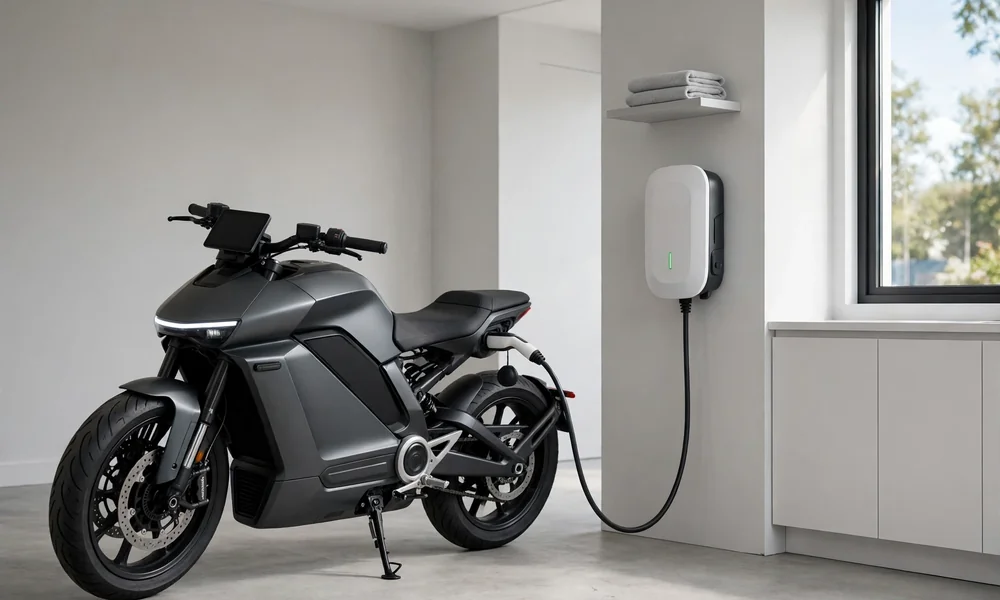
If you cannot charge at home, the picture is still workable but needs more planning. A removable battery, like the Anthem’s, lets you charge indoors anywhere with a socket. Public charging is growing, and many workplaces offer charging points. Before you buy, map your nearest public chargers and ask your employer about workplace charging.
Charging speed matters most on long days. Slow overnight charging is fine if you always charge overnight, but not on the day you need a quick top-up. Fast charging is worth having as an option even if you rarely use it.
Gear and Safety for the Daily Ride
The right gear matters more for commuters, who ride in all weathers, at all hours, and often in heavy traffic. A good helmet is the single most important purchase, so choose one that fits properly and suits daily use. Our roundup of the best motorcycle helmets covers the strongest options for 2026.
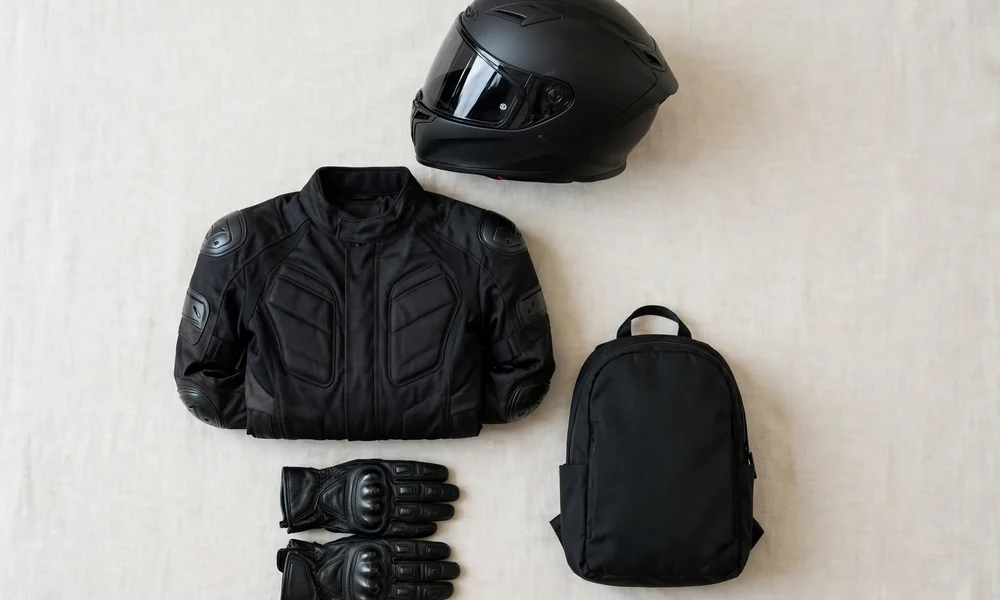
Beyond the helmet, the essentials are an armoured jacket with good ventilation, waterproof over-trousers, gloves that work in the rain, and boots with ankle protection. High-visibility details help, and a top box or backpack keeps your work gear dry. Technique matters too: electric bikes are quiet, so ride as if you are invisible, and use the rain and eco modes in the wet, where instant torque can break traction.
Commuter Checklist: 6 Things to Do Before You Buy
- Measure your real commute, then choose a bike whose city range covers your round trip twice over.
- Check your charging options: home, work, or both, and whether a removable battery or a wall box suits you.
- Test ride in traffic: a bike that feels great on a country lane can feel heavy in town.
- Check insurance and licensing before you buy: get a quote and confirm the licence category you need.
- Budget for gear and storage: a helmet, waterproofs, a top box or backpack, and a lock.
- Ask about the battery warranty: how long it lasts, what it includes, and whether the dealer services electric bikes.
Frequently Asked Questions
Are electric motorcycles good for commuting?
Yes, commuting is the strongest use case for an electric motorcycle. Daily rides are usually short and stop-start, which suits instant torque, regenerative braking and low running costs. Most commuters charge at home overnight.
How far can an electric motorcycle go on one charge?
The best commuter bikes in 2026 offer roughly 75 to 130 miles of city range. Motorway speeds reduce range, while gentle city riding often beats the quoted figure. Cold weather can cut range by 10 to 20 percent.
How long does it take to charge an electric motorcycle?
A full charge from a standard home socket usually takes four to eight hours, fine for overnight charging. A wall box is faster, and bikes with DC fast charging can add useful range in 30 minutes or less at a public charger.
Are electric motorcycles cheaper to run than petrol bikes?
Yes, for most daily riders. Electricity costs far less per mile than petrol, and servicing is simpler with no oil, clutch, exhaust or gearbox to maintain. The purchase price is usually higher, so savings build over time, and the more you ride, the faster the bike pays for itself.
Do I need a special licence for an electric motorcycle?
The licence you need depends on the bike’s power output, as with a petrol motorcycle. Lower-powered electric bikes can be ridden on a standard licence in most countries, while more powerful models need a full licence. Check your country’s rules.
What happens if the battery runs out?
Running out of charge is rarer than most people fear: the bike warns you well in advance, and most commutes are far shorter than its range. If it happens, you will need roadside assistance, so keep your breakdown cover up to date.
The Bottom Line
The best electric motorcycles for commuting in 2026 make the daily ride cheaper, calmer and more enjoyable than a petrol bike. For most riders, the Zero S is the best all-round choice, the Ryvid Anthem is the best value, and the LiveWire S2 Del Mar is the premium pick. Measure your real commute, check your charging options, and take a city test ride before you choose.