Science fiction can take you to a distant planet or an alien first contact before breakfast, and the best sci-fi books to read in 2026 span every corner of that territory. This year’s list mixes towering classics that still feel shockingly modern with newer novels that have earned a permanent place on the shelf. Whether you want a sprawling space opera, a tight hard-science thriller, or a quiet story about artificial intelligence, there is a book here for you.
What makes a science fiction novel worth your time in 2026 is not how many gadgets it packs in, but how well it uses the future to say something true about the present. The strongest books here pair a big idea with characters you care about, and they stay with you long after the last page.
This guide brings together ten standout titles, chosen for storytelling, ideas, and staying power. Read them in any order, and use the comparison table below to find the one that fits your mood tonight.
Key Takeaways
- The best sci-fi books to read in 2026 range from epic space opera to intimate AI stories.
- New readers should start with Project Hail Mary or The Martian.
- Classics like Dune and Neuromancer still shape the genre and reward patient readers.
- First contact stories like The Three-Body Problem offer the biggest sense of wonder.
- Pair reading with a comfortable setup: good light, a quiet corner, and a format you enjoy.

How We Picked the Best Sci-Fi Books for 2026
A good science fiction list needs balance. We looked for books that have stood the test of time, books critics and readers consistently recommend, and books from different corners of the genre. No single style dominates, because science fiction is at its best when varied.
We also weighed readability. A book can have brilliant ideas and still be a chore to finish, so every title here is genuinely enjoyable, not just impressive to discuss. Some demand patience early on, and we say so honestly; others grab you on page one.
Finally, we considered variety of length and tone: short, propulsive novels beside longer epics, hopeful stories beside darker ones. If you enjoy a good puzzle alongside your science, the best mystery novels to read in 2026 make a strong companion shelf between sci-fi reads.
The Best Sci-Fi Books to Read in 2026
The ten books below are the heart of this list, each earning its place for a different reason. Use the table to compare them at a glance, then read the notes to find your next favourite.
| Book | Author | Best For | Feel |
|---|---|---|---|
| Dune | Frank Herbert | Epic world-building | Grand and political |
| Project Hail Mary | Andy Weir | First-time sci-fi readers | Funny and fast |
| The Three-Body Problem | Cixin Liu | Big ideas | Mind-bending |
| Neuromancer | William Gibson | Cyberpunk fans | Stylish and gritty |
| Ender’s Game | Orson Scott Card | Young adult crossover | Tense and clever |
| Klara and the Sun | Kazuo Ishiguro | Literary readers | Gentle and moving |
Dune by Frank Herbert
Dune remains the gold standard for epic science fiction. On the desert planet Arrakis, the only source of the spice melange, Paul Atreides is drawn into a struggle for control of the planet. Herbert builds an entire ecology, religion, and political system around one world.
What keeps Dune at the top of best sci-fi lists is its depth: beneath the sandworms and stillsuits lie hard questions about power, prophecy, and the environment. The opening is dense, but give it a hundred pages and it clicks into place.
Project Hail Mary by Andy Weir
If Dune is the genre’s great epic, Project Hail Mary is its most purely enjoyable modern adventure. Ryland Grace wakes up alone on a spaceship with no memory of who he is or why he is there, and the slow reveal of his mission is one of the most satisfying setups in recent science fiction. Weir makes hard science feel like a puzzle the reader solves alongside the hero.
This is the easiest recommendation on the list: funny, warm, and genuinely thrilling, with a friendship at its centre that readers remember long after finishing. If you have never read science fiction before, start here.
The Three-Body Problem by Cixin Liu
The Three-Body Problem opens with a secret military project during China’s Cultural Revolution and expands into a first-contact story on a scale few novels attempt. When an astrophysicist receives a message from a distant civilisation, the consequences unfold across decades and entire worlds.
Expect a slower, ideas-driven pace and some passages of real physics. The reward is a sense of wonder that is hard to match, and this first book stands on its own even though the trilogy grows stranger from here.
Neuromancer by William Gibson
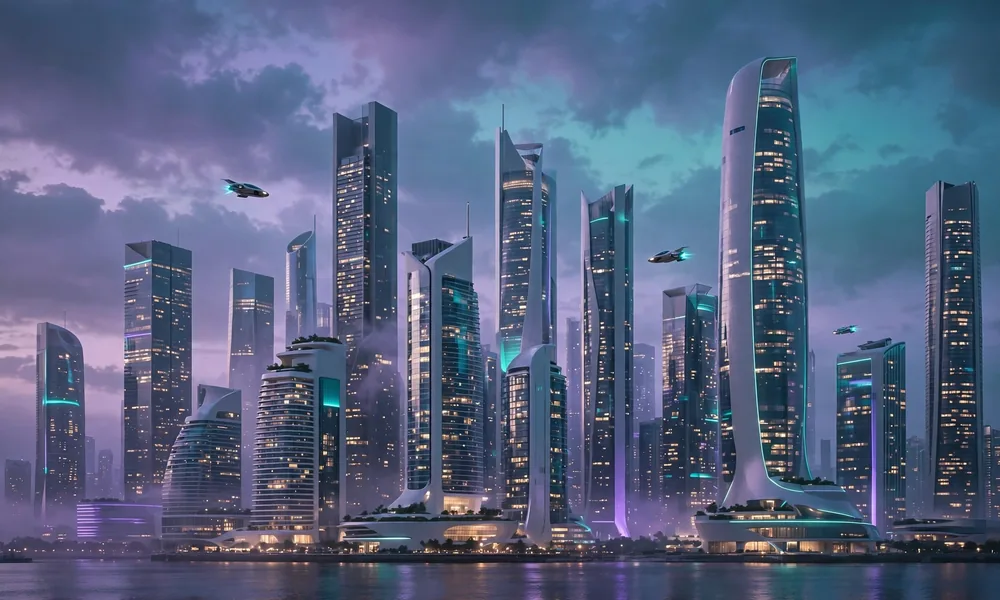
Neuromancer invented much of the visual language of cyberpunk. Published in 1984, it gave us cyberspace, hackers, artificial intelligence, and a rain-slicked future city that countless films and games have copied since. Case, a washed-up computer cowboy, is hired for one last run against an impossibly powerful AI.
Gibson’s prose is dense, and the opening chapters can disorient first-time readers. Stick with it: the atmosphere is unmatched, and the predictions about networks, virtual reality, and corporate power have aged remarkably well.
Ender’s Game by Orson Scott Card
Ender’s Game follows a child prodigy recruited to a military academy in orbit, where gifted children train through war games to fight an alien enemy. Beneath the premise lies a novel about leadership, empathy, and the cost of using children as weapons, and the final twist reframes everything that came before.
This is one of the most accessible classics on the list, with clear prose and a propulsive plot that works for teenagers and adults alike. It is often the book that turns a casual reader into a lifelong fan, and the first book is complete on its own.
The Left Hand of Darkness by Ursula K. Le Guin
Le Guin’s masterpiece sends an envoy to the frozen planet Gethen, whose people are ambisexual, living most of their lives without fixed gender. His mission is to persuade Gethen to join an interstellar league, but the novel is really about how gender shapes politics, friendship, and trust.
The book’s cold, beautiful world is rendered with Le Guin’s elegance, and the long trek across the ice is one of the genre’s great journeys. Readers who want thoughtful, humane science fiction rather than action will find it deeply rewarding.
Hyperion by Dan Simmons
Hyperion borrows its structure from The Canterbury Tales: seven pilgrims travel to the Time Tombs, each telling their story along the way. Their tales range from military science fiction to horror to romance, and all circle the same mystery, the Shrike, a creature that moves through time.
The result contains several novels in different styles, and it works far better than that sounds. Simmons writes with confidence and range, and the final chapters tie the stories together with real emotional force.
Children of Time by Adrian Tchaikovsky
Children of Time spans thousands of years, following humanity’s last survivors as they search for a new home while a terraforming experiment goes gloriously wrong. The spiders that inherit that world evolve intelligence, culture, and technology across generations.
The dual narrative, human desperation against spider civilisation, gives the novel its momentum. It is a book about evolution and what intelligence means, and it makes readers care deeply about characters with eight legs.
Klara and the Sun by Kazuo Ishiguro
Klara is an Artificial Friend, a solar-powered companion bought to keep a sick girl company. Told entirely from her point of view, the novel is a quiet meditation on love, loyalty, and what makes a person a person, and Ishiguro’s restrained prose makes the science fiction feel almost ordinary.
This is the gentlest book on the list, and the most moving. There are no space battles, only a machine learning what it means to care for someone, and readers who rarely pick up science fiction often love it best.
The Martian by Andy Weir
The Martian strands astronaut Mark Watney alone on Mars with limited supplies and no way to call home, then turns his survival into engineering problems solved with humour and stubbornness. His log entries are funny and resourceful, and the science is solid enough that real engineers have praised it.
Like Project Hail Mary, this is a perfect entry point for new readers. The tension is constant but never grim, the ending is deeply satisfying, and it will keep you up late.
Best Sci-Fi Books by Mood
Not sure where to start? Match the book to your mood. For pure fun, pick Project Hail Mary or The Martian. To feel small beneath the stars, choose The Three-Body Problem or Children of Time. For atmosphere and style, Neuromancer is waiting, and for a story that will quietly break your heart, choose Klara and the Sun.
For a long, immersive read, choose between Dune and Hyperion: Dune is the richer world, Hyperion the more varied journey. Both repay the time they ask for.
Reading format matters too, and our Kindle vs tablet for bedtime reading comparison can help you decide which device suits late-night chapters best. Whatever you choose, the books do the heavy lifting.
Your 2026 Sci-Fi Reading Checklist
A good reading habit is mostly small, repeatable choices. Use this checklist to make 2026 the year you finish the books on your list.
- Pick one book from the table above and set a start date this week.
- Read for twenty minutes a day, ideally at the same time each day.
- Keep a simple list of books finished and one line about each.
- Try one subgenre you have never read, such as cyberpunk or first contact.
- Join a friend or an online group to discuss at least one book.
- Set up a comfortable reading corner with warm light and a good chair.
That last point deserves attention: a warm, well-placed light matters more than most readers expect, and the best bedside lamps for reading in 2026 can turn a spare corner into the place you look forward to each evening. Good light, a comfortable chair, and a book you love are the whole system.

Frequently Asked Questions
What is the best sci-fi book to read first?
Project Hail Mary is the best starting point for most readers: fast, funny, and friendly to newcomers, showing off the genre’s strengths without demanding prior knowledge. The Martian is a close second.
Which sci-fi book should I read in 2026 if I only pick one?
Choose Dune for depth and lasting influence, or The Three-Body Problem for the biggest sense of wonder. Both are essential, and both lead to excellent sequels.
Are these books suitable for teenagers?
Most of them are. Ender’s Game, The Martian, and Project Hail Mary are popular with teenagers, Dune, Neuromancer, and The Three-Body Problem suit older teens, and Klara and the Sun works for thoughtful readers of any age.
Do I need to read the sequels?
No. Every book here works as a standalone read. Dune, The Three-Body Problem, Hyperion, and Children of Time all have sequels, but each first book tells a complete story.
What is the difference between hard sci-fi and space opera?
Hard science fiction, like The Martian and Project Hail Mary, sticks closely to real physics and engineering. Space opera, like Dune and Hyperion, uses a larger canvas of empires and ancient mysteries, and worries less about scientific accuracy.
Where should I read science fiction at home?
Anywhere comfortable and free of interruption. A quiet corner with warm light and a supportive chair is ideal, and many readers prefer the evening, when a long chapter feels like a reward.
The Bottom Line
The best sci-fi books to read in 2026 offer something for every reader, from the epic sweep of Dune to the quiet heart of Klara and the Sun. Start with one title that matches your mood, and let the genre take you somewhere new and bring you back seeing the world differently.