The best biographies to read in 2026 remind us that the most gripping stories are the ones that actually happened. A great biography does more than list dates and achievements; it puts you inside another person’s decisions, doubts, and turning points, and it leaves you seeing your own life a little differently.
What makes this a particularly good year for biography readers is the sheer range on offer. Classic lives that have stood the test of decades sit beside fresh, deeply researched portraits of figures we thought we already knew. The result is a shelf where a statesman can sit next to a comedian, and both can be equally hard to put down.
This guide gathers the strongest biographies to read in 2026, organised by the kind of life that interests you most. It groups the books by subject, explains what each one does best, and helps you choose where to start.
Key takeaways
- The best biographies to read in 2026 cover leaders, artists, scientists, athletes, and business builders, so start with the kind of life that fascinates you.
- A great biography balances careful research with vivid storytelling; facts alone are not enough, and drama without evidence does not last.
- Long, classic biographies reward patience, while shorter modern lives are ideal if you are new to the genre or short on time.
- Memoirs offer a first-person view, while biographies give you the fuller picture, including the parts the subject would rather forget.
- Pick one book, not ten: finish a single life story and you will learn far more than a shelf of half-read volumes can teach you.

What Makes a Biography Worth Your Time
A biography is a promise: that a real life, told honestly and well, can be as absorbing as any novel. The best ones keep that promise by combining three things. First, serious research, so the scenes you read actually happened and the quotes are real. Second, narrative skill, so the research reads like a story rather than a lecture. Third, judgement, so the author can tell you what mattered about this life and why it still matters now.
The Research Behind the Story
The strongest biographies rest on years of digging through letters, diaries, archives, and interviews. Ron Chernow spent years in the archives before writing about Alexander Hamilton, and the depth shows on every page. When you read a biography, you are trusting the author with the truth of someone’s life, so the quality of the research is the foundation everything else stands on.
The Storytelling That Keeps You Reading
Research alone does not make a book readable. The biographers readers love most are the ones who can shape a life into a story with momentum: a childhood that explains the adult, a crisis that tests everything, a late triumph or a tragic fall. Look for an opening chapter that pulls you in. If the first twenty pages feel like homework, the next four hundred will not improve.
Why These Lives Still Matter
A life story earns its place on your shelf when it changes how you think. Reading about how Marie Curie worked in a leaking shed with no funding, or how Nelson Mandela held on to his principles through twenty-seven years in prison, recalibrates what difficulty means. These are not stories about perfect people. They are stories about flawed, stubborn people who kept going, and that is precisely what makes them useful. The same instinct applies elsewhere: the best science fiction books to read in 2026 work because their imagined futures are grounded in real human choices.
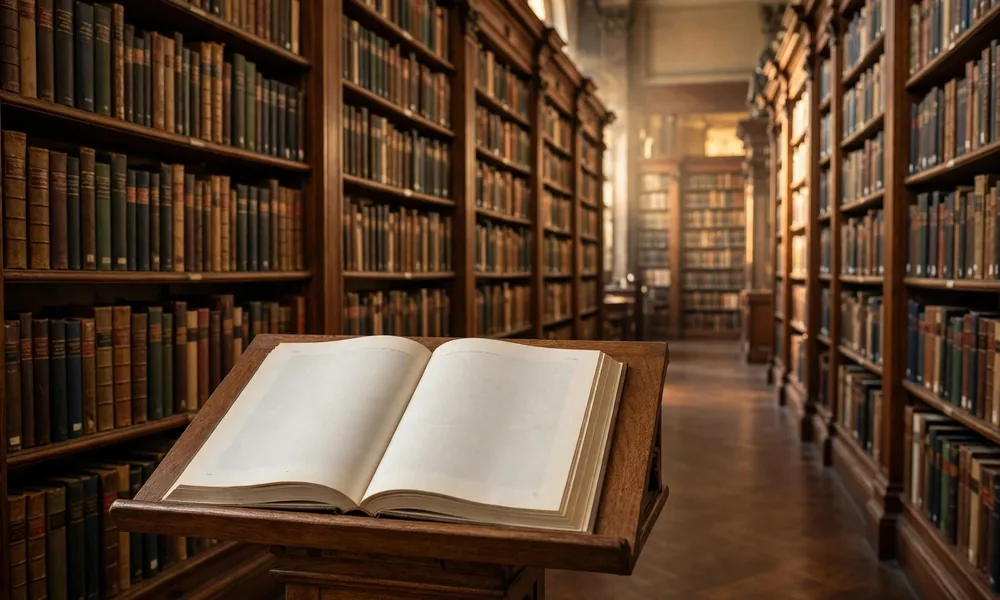
The Best Biographies to Read in 2026
The books below are grouped by the kind of life they tell. Each book has earned its reputation over years of readers, reviews, and reprints.
Leaders and Statesmen
David McCullough’s John Adams remains the standard for political biography: a portrait of a prickly, principled founder who was right about more than his contemporaries admitted, and whose marriage to Abigail Adams gives the book its emotional core. For a twentieth-century statesman, Nelson Mandela’s Long Walk to Freedom is essential, carrying the reader from a rural childhood through the armed struggle, the long imprisonment, and the negotiations that ended apartheid.
Artists and Writers
Hayden Herrera’s Frida tells the story of Frida Kahlo with the same intensity Kahlo brought to her paintings: the accident that shattered her body, the stormy marriage to Diego Rivera, and the art that turned pain into images the world still recognises instantly. Walter Isaacson’s life of Leonardo da Vinci offers a different creative portrait, showing a painter, engineer, and anatomist whose curiosity connected all of it.
Scientists and Innovators
Walter Isaacson’s Einstein: His Life and Universe follows a patent clerk who rewrote physics and then spent the rest of his life wrestling with the consequences. The science is explained clearly, and Einstein’s rebellious personality keeps the pages turning. Robert Kanigel’s The Man Who Knew Infinity tells the stranger story of Srinivasa Ramanujan, a self-taught mathematician whose formulas baffled the professors at Cambridge. Readers who enjoy a puzzle will find the same satisfaction here as in the best mystery novels to read in 2026, except that the mystery is real and the solution changed mathematics.
Athletes and Adventurers
Andre Agassi’s Open is the finest sports memoir of recent decades: honest about hating the game that made him famous, about the pressure of a father who built his childhood around tennis, and about the long road back to loving it. For adventure of a different kind, David McCullough’s The Wright Brothers shows two bicycle mechanics from Ohio teaching the world to fly, through wind, crashes, and stubborn experiments.
Business Builders
Walter Isaacson’s Steve Jobs remains the benchmark for business biography: built on dozens of interviews with Jobs and with the people who loved and loathed him, it shows a founder whose brilliance and cruelty were inseparable. Phil Knight’s Shoe Dog takes the opposite approach, a founder telling his own story with unusual candour about debt, doubt, and near-collapse. Nike’s rise looks inevitable in hindsight; Knight shows how close it came to falling apart.
Memoirs That Read Like Novels
Michelle Obama’s Becoming moves from a childhood on the South Side of Chicago to the White House with warmth and directness. Tara Westover’s Educated is more harrowing: a girl raised in a survivalist family with no formal schooling who teaches herself enough to reach Cambridge. Trevor Noah’s Born a Crime brings humour to a childhood under apartheid, where his very existence was illegal under the law.
Best Biographies at a Glance
If you want a quick way to choose, this table compares six of the strongest titles across the groups above. Each one is a safe first pick in its category.
| Book | Author | Subject | Best for |
|---|---|---|---|
| John Adams | David McCullough | Founding father | Readers who love history told as story |
| Long Walk to Freedom | Nelson Mandela | Anti-apartheid leader | Readers seeking inspiration and moral clarity |
| Frida | Hayden Herrera | Artist Frida Kahlo | Readers drawn to art and passionate lives |
| Einstein: His Life and Universe | Walter Isaacson | Physicist | Readers curious about science and genius |
| Steve Jobs | Walter Isaacson | Apple co-founder | Readers interested in business and ambition |
| Born a Crime | Trevor Noah | Comedian and writer | Readers who want humour with their history |
There is no single best biography, only the best biography for the reader you are right now. A history lover and a business reader will choose differently, and both will be right.

How to Choose Your Next Biography
Choosing a biography is easier when you start with yourself rather than with a list. Ask what you are curious about: a period of history, a field like science or art, or a person you have always wondered about. Length matters too, and there is no shame in starting short. A four-hundred-page life will teach you more than an eight-hundred-page one you abandon on page ninety.
Read the First Chapter Before You Commit
The first chapter of a biography tells you nearly everything you need to know about whether the book will work for you. Does the author open with a scene or with a lecture? Do the sentences move, or do they plod? Most bookshops and libraries let you sample before you buy, so use that freedom. Audiobooks deserve a mention as well: a well-narrated biography can turn a commute or a long walk into a reading session.
A Simple Checklist Before You Buy
Use this short checklist to avoid a disappointing purchase and to make sure the biography you choose fits the reading time you actually have.
- Check the author: has this writer published respected work before, or is this a rushed cash-in on a famous name?
- Check the sources: does the book list archives, interviews, and notes, or does it ask you to take everything on trust?
- Check the length: does the page count match the time you can realistically give it in the next few weeks?
- Check the opening: read the first chapter and ask whether you want to keep going or feel obliged to continue.
- Check the balance: does the author show the subject’s flaws as well as their triumphs, or is this a flattering tribute?
- Check the format: would print, ebook, or audiobook suit your reading habits best for a book of this size?
Biography, Memoir, and Autobiography: What Is the Difference
A biography is written by someone else about a person’s whole life, from birth to death, using research the subject never controlled. That distance is its strength: the author can include the failures, the critics, and the context the subject might have left out. A memoir is written by the person themselves, usually about a part of their life rather than the whole of it. Its strength is intimacy: nobody else can tell you what it felt like to be there. An autobiography is the full-life version of a memoir, covering the author’s life from beginning to end in their own voice.

Frequently Asked Questions
What is the best biography to read first if I am new to the genre?
Start with Born a Crime by Trevor Noah or Educated by Tara Westover. Both are fast-moving, emotionally direct, and shorter than the classic doorstop biographies.
Are long biographies worth the time?
Yes, when the subject and the author both earn it. A long biography like John Adams or Steve Jobs rewards patience with depth, and the ending lands harder.
Should I read a biography or a memoir about the same person?
If both exist, read the biography first for the full picture, then the memoir for the inside view. The biography gives you the facts and the context; the memoir gives you the voice and the feeling.
What makes a biography reliable?
Look for named sources, endnotes, and an author with a track record in the field. Reliable biographies show their working: they cite letters, interviews, and archives, and they acknowledge where the evidence is thin.
Can I enjoy a biography about someone I know nothing about?
Often those are the best ones. Knowing nothing about Ramanujan or the Wright brothers before you start means every chapter brings a surprise, and a skilled biographer will give you all the context you need.
Where can I find more recommendations after finishing these?
Follow the authors, not just the subjects. If you loved Isaacson on Einstein, try his Leonardo da Vinci or Steve Jobs. And if you prefer true stories on screen, the best documentaries to watch in 2026 offer the same pleasure in a different form.
The Bottom Line
The best biographies to read in 2026 are the ones that turn a real life into a story you cannot put down, Pick the life that sparks your curiosity, whether it belongs to a president, a painter, a physicist, or a comedian, and give it your full attention. Start with one book, finish it, and the next one will choose itself.


