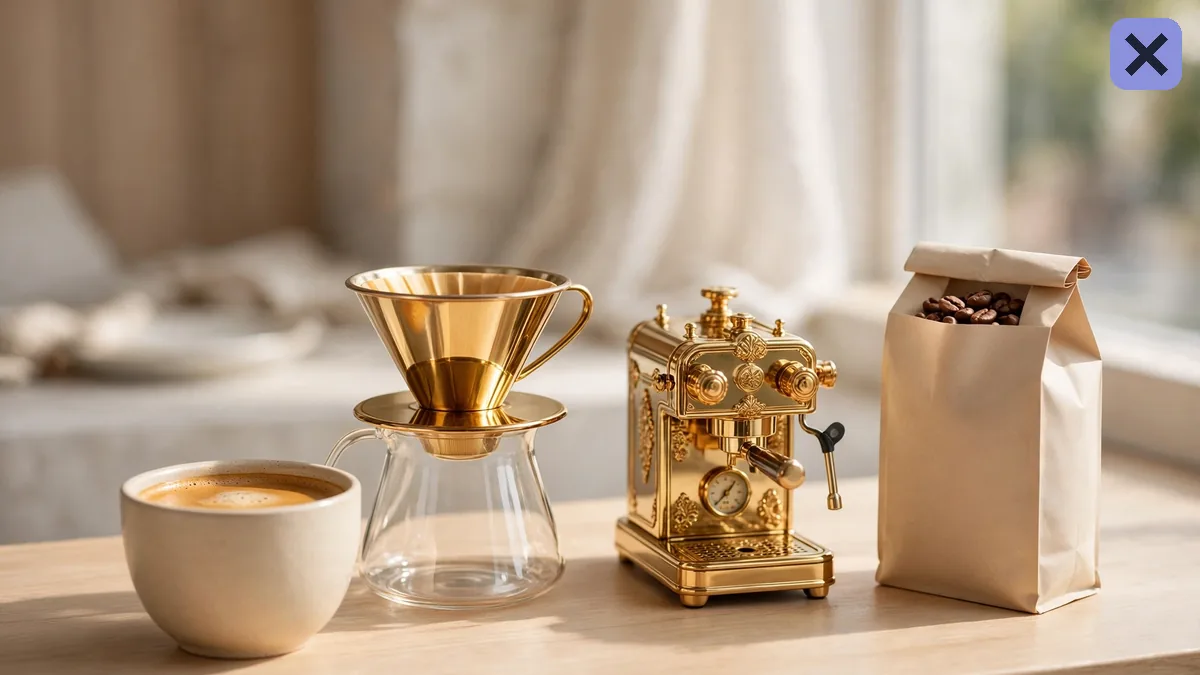
The worst coffee trends that are not worth the price all make the same promise. They will transform your morning cup, unlock flavours you have never tasted, and turn an ordinary routine into a small daily luxury. Then the bill arrives, and the coffee in the cup tastes only slightly different from the one you made last week for a tenth of the cost.
Much of that enthusiasm is genuine: better beans, careful brewing, and a good grinder really do improve the cup. But the coffee world now runs on trends, designed to be bought, photographed, and replaced. A new gadget, a rare bean, or a fashionable cafe drink appears every season, each priced as though it were the missing piece of a perfect morning.
This guide names the worst offenders by price, by how little they change the taste, and by how quickly they are forgotten. Some are good products sold at a silly price. Others are novelties that were never worth the money at any price. If a coffee trend costs a lot and changes almost nothing about your cup, it does not deserve your money.
Key takeaways
- The worst coffee trends charge luxury prices for changes most drinkers cannot taste.
- Gold-plated gear, rare beans, and elaborate cafe drinks are the biggest money traps.
- A good grinder and fresh beans improve coffee far more than any fashionable gadget.
- Before buying a trend, work out its cost per cup and compare it with a simpler setup.
- The best coffee routine is boring: fresh beans, clean water, a steady method, repeated daily.
Why Coffee Trends Get Expensive So Fast
Coffee is a daily habit, which makes it a perfect market for trends. A small purchase feels harmless when it is repeated every morning, and a premium price feels justified when the product promises a better start to the day. A bag of beans that costs four times the supermarket price is still only a few pounds more per week, so the buyer barely notices the total.
Gold-Plated Gear That Brews Ordinary Coffee
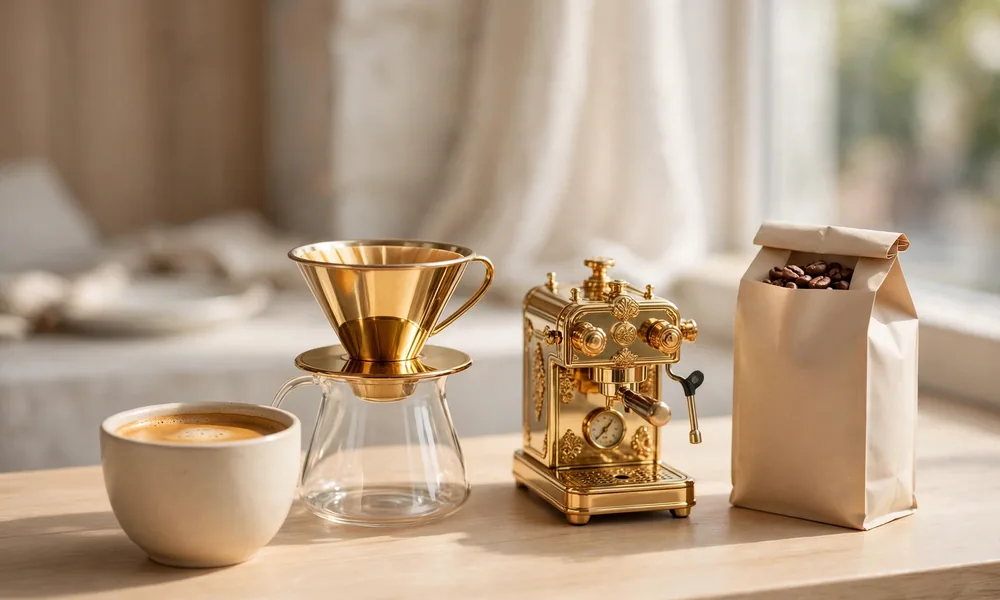
The most visible coffee trend of recent years is luxury brewing equipment. Pour-over drippers, kettles, and espresso machines now come in gold, copper, and hand-finished metals, priced like jewellery. They look wonderful on a kitchen shelf, and they brew coffee that tastes exactly like coffee brewed in a plain ceramic dripper.
The Gold Pour-Over Set
A gold pour-over set typically includes a plated dripper, a matching stand, and a glass server, sold as a complete ritual. The set can cost ten or twenty times as much as a standard ceramic dripper and a glass jug. The coffee it produces is identical in every way that matters, because the brewing physics are the same.
Designer Espresso Machines
At the top of the market, espresso machines are sold as furniture as much as appliances. Hand-polished brass, custom paint, and limited editions push prices into the thousands. Some of these machines are genuinely excellent, with stable temperatures and good steam power. Many are not, and the price reflects the finish rather than the engineering.
Beans That Cost More Than the Drink
Rare coffee beans are the second great money trap. A small harvest from a famous farm, a competition-winning lot, or a variety with an exotic name can sell for astonishing prices per bag. Some of these coffees are genuinely remarkable, with flavours that surprise even experienced drinkers. Most are very good coffees sold at prices that no cup can justify.
Ultra-Rare Single Origins
Ultra-rare single origins are sold in tiny bags with detailed stories about altitude, soil, and processing. The stories are often true, and the coffee is often excellent. But the price reflects scarcity, not taste. A bag that costs eight times the price of a good everyday single origin does not taste eight times better. It tastes a little different, perhaps a little brighter or sweeter, and that difference fades quickly once the novelty wears off.
Celebrity and Collaboration Roasts
These roasts also tend to disappear quickly, which creates artificial urgency. Buyers rush to try a coffee before it sells out, then discover it tastes much like any other medium roast. A good local roaster with a steady range will serve you better for years, at a lower price, with no countdown timer. The best fine dining value comes from places that invest in the food rather than the fame attached to it, and coffee works the same way: pay for what is in the cup, not for whose name is on the bag.
Cafe Drinks Priced Like Cocktails
The third trap is the fashionable cafe drink. In recent years, cafes have introduced elaborate drinks that cost as much as a cocktail: coffees infused with unusual ingredients, layered drinks with flavoured foams, and seasonal specials loaded with syrups, creams, and toppings. They are fun to try once. As a habit, they are one of the worst ways to spend money on coffee.
Syrup-Loaded Seasonal Specials
Seasonal specials arrive with every holiday, each one sweeter and more elaborate than the last. A drink that starts as a latte ends up as a flavoured milkshake with a shot of coffee in it. The price climbs with every addition, and the coffee becomes the least important ingredient in its own drink.
Gold Leaf and Luxury Toppings
Gold leaf on coffee is the purest example of a trend that is not worth the price. Edible gold has no flavour, adds no texture, and passes through the body unchanged. Its only purpose is to be seen, and it can double the price of a drink. The same applies to other luxury toppings: rare salts, truffle shavings, and exotic garnishes that cost more than the coffee they decorate.
Subscriptions and Gadgets That Never Pay Off
Coffee subscriptions and single-purpose gadgets are quieter money traps, because their cost arrives in small amounts. A monthly subscription that sends beans you did not choose, or a gadget that does one narrow job, can drain hundreds of pounds a year without ever producing a noticeably better cup.
Single-Use Brewing Gadgets
Before buying any gadget, count how often you will realistically use it. Once a week is not enough to justify a large purchase, and once a month is a clear sign to skip it. The worst kitchen gadgets that waste counter space follow the same pattern: a big footprint, a narrow job, and a drawer or shelf where they sit unused. Coffee gadgets are no different, and the counter space they take is space your daily brewer could use.
Smart Coffee Makers
Smart coffee makers promise to brew your coffee from bed, on a schedule, or by voice command. In practice, they add an app, a connection, and a subscription to a job that takes three minutes by hand. The coffee they make is no better than a simple machine, and the smart features are the first things to break or become unsupported.
How to Judge a Coffee Trend Before You Pay
The simplest way to judge any coffee trend is to work out what it changes and what it costs. If it changes the flavour in a way you can taste blind, and the price is reasonable for that change, it may be worth it. If it changes the appearance, the story, or the status of your coffee without changing the taste, it is almost certainly not worth the price.
| Trend | Typical cost | Flavour gain | Verdict |
|---|---|---|---|
| Gold pour-over set | Very high | None | Skip |
| Designer espresso machine | Very high | Small | Only for the looks |
| Ultra-rare beans | High per bag | Small | Try once, not weekly |
| Syrup-loaded cafe specials | High per cup | Hidden by sugar | Skip |
| Gold leaf toppings | Very high | None | Skip |
| Smart coffee maker | High | None | Skip |
| Good grinder + fresh beans | Moderate | Large | Worth it |
Checklist: Before You Pay for a Coffee Trend
Use this checklist whenever a new coffee trend tempts you. If an item fails more than one point, walk away and spend the money on better beans instead.
- Work out the cost per cup over a full year, including beans, filters, and maintenance.
- Ask whether you could taste the difference in a blind test against your current setup.
- Check whether you will use it at least three times a week for the next six months.
- Confirm it improves the coffee itself, not just the look of your kitchen or your photograph.
- Compare it with spending the same money on a better grinder or fresher beans.
- Wait a week before buying, and see whether you still want it once the novelty fades.
Frequently Asked Questions
Are expensive coffee beans ever worth the price?
Sometimes, as a one-off experience. A rare or competition-winning coffee can be a genuine pleasure, and trying one is a reasonable treat. As a weekly purchase, expensive beans are rarely worth it, because the flavour difference over a good mid-priced bean is small and the cost difference is large.
Does a gold-plated dripper brew better coffee?
No. The material of a dripper has almost no effect on the flavour. Water temperature, grind size, and pouring technique decide the result, and those are the same whether the dripper is gold, ceramic, or plastic. A gold dripper brews the same coffee as a standard one and costs many times more.
What is the best money to spend on home coffee?
A good burr grinder first, then fresh beans from a roaster you trust, then clean filtered water. Those three purchases improve every cup you make, every day, for years. A grinder matters most, because uneven grinding ruins even the best beans, while a good grind lifts even modest beans into a decent cup.
Are coffee subscriptions worth it?
A flexible subscription from a roaster you like can be worth it, especially if it offers beans you choose, easy pauses, and a fair price. A rigid subscription that sends beans you did not pick, charges a premium, or delivers faster than you drink is not worth it. If beans are piling up unopened, cancel and buy beans when you need them.
Why do fancy cafe drinks cost so much?
Fancy cafe drinks cost more because of theatre, not coffee. Elaborate presentation, unusual ingredients, syrups, toppings, and seasonal marketing all add cost, while the espresso underneath is often the same as in a plain drink. That is fair as an occasional treat but poor value as a daily habit.
How can I tell a good coffee trend from a bad one?
Ask whether it improves the coffee in the cup, whether you could taste the difference blind, and whether you will still use it in six months. Good trends pass all three tests easily. Bad trends, such as gold leaf, fail all three. Menus that pile on novelty follow the same trap, as the worst menu overload shows.
The Bottom Line
The worst coffee trends that are not worth the price share a single flaw: they charge a luxury price for a change you can barely taste. Gold gear, rare beans, elaborate cafe drinks, and smart gadgets all promise a better morning and deliver far less than they cost. The money they take would buy months of fresh beans from a good roaster, and those beans would improve every cup.
Keep your coffee routine simple and spend where it counts. A good grinder, fresh beans, clean water, and a method you enjoy will beat any trend on the shelf. When the next fashionable coffee arrives, ask what it changes in the cup, work out what it costs per cup, and wait a week. Most of the time the answer will be the same: skip the trend, and enjoy a better coffee for less.


